

Image of 1963 Mercury Meteor, Note: These illustrations use artistic license and may differ from actual historical models.
Performance Metrics
Fundamental Metrics
Emotional Appeal
MMP Rating
| Engine Specifications | |
|---|---|
| Engine: | 170 CID I6, 260 CID V8, 289 CID V8 |
| Displacement: | 170-289 cubic inches |
| Horsepower: | 101-210 hp |
| Torque: | 156-300 lb-ft |
| Compression Ratio: | 8.7:1 - 9.0:1 |
| Ignition System: | Conventional, distributor |
| Cooling System: | Liquid-cooled |
| Performance Specifications | |
| 0-60 Time: | 10-12 seconds |
| 1/4 Mile Time: | 17-19 seconds |
| Top Speed: | 105-115 mph |
| Transmission and Drive | |
| Drive Type: | Rear-wheel drive |
| Transmission Type: | 3-speed manual, 2-speed automatic, 4-speed manual |
| Fuel and Efficiency | |
| Fuel System Type: | Carburetor |
| MPG: | 15-20 mpg |
| Dimensions and Brakes | |
| Brakes: | Drum brakes |
| Wheelbase: | 115 inches |
| Weight: | 3000-3500 lbs |
Note: Specifications for classic cars are given to the best of our ability, considering the limited and variant data available.
1963 Mercury Meteor: A Mid-Size Mercury at a Turning Point
The 1963 Mercury Meteor brought Mercury style to the fast-growing mid-size market, pairing a roomier-than-compact body with easier maneuverability than the big full-size cars of its day. Built by Ford Motor Company’s Mercury division, it shared its basic structure with the Ford Fairlane, but wore its own grille, trim, and interior details. The Meteor’s brief U.S. run makes it an intriguing bridge between Mercury’s older, larger cars and the more compact models that followed.
The name had already shifted roles by 1963. Mercury first used Meteor in the United States in 1961 for a full-size entry-level model. For 1962, the Meteor moved to the Fairlane’s intermediate platform, where it remained for its final U.S. model year. One notable chapter came with the 1963 Meteor S-33, a sportier version that gave buyers a more youthful alternative to the line’s family-oriented sedans and wagons.
Fairlane Bones, Mercury Character
The Meteor’s proportions hit a useful middle ground: a long hood, a clean roofline, and enough cabin and trunk space for family duty without the bulk of a full-size Mercury. Its basic body structure was shared with the Ford Fairlane, but Mercury dressed the car differently with distinct front and rear styling and brand-specific trim. The result was familiar under the skin, yet more upscale in presentation than its Ford relative.
For 1963, the styling was crisp rather than flamboyant. A broad grille, bright chrome accents, and restrained side trim gave the Meteor a formal look, while its modest dimensions kept it from seeming ponderous. The hardtop’s pillarless profile was especially attractive: with the windows down, it opened up the cabin and delivered the airy look that made two-door hardtops so popular in the early 1960s.
Body styles included two-door and four-door sedans, a two-door hardtop, and station-wagon versions. The two-door hardtop is often the most visually striking choice today, especially in S-33 trim. The S-33 added a sportier appearance and a more driver-focused character, though it was not a dedicated high-performance muscle car in the later sense. The Meteor range also included 600 and 800 series models, with equipment and trim varying by version.
Interior Comfort and Period Technology
Inside, the Meteor offered a straightforward, wide dashboard with large, legible instruments and controls that were easy to reach. Depending on trim and options, buyers could get upgraded upholstery, extra brightwork, a more elaborate radio, and comfort features such as power steering and power brakes. Materials were typical of a well-equipped American car of the period: durable vinyl and cloth were common, with more decorative trim in higher-spec versions. It was practical rather than lavish, but the Mercury detailing helped give the cabin a step-up feel.
Technology was conventional for 1963, and that was part of the car’s appeal. The Meteor used a front-engine, rear-wheel-drive layout, a separate steering column and wheel arrangement, and familiar manual or automatic transmissions. Comfort and convenience options could include an AM radio, heater and defroster, and power accessories. Safety equipment was also changing in this era, but features such as seat belts were not yet the universal standard they would become.
Factory paint choices varied by series and production details, with solid colors and two-tone combinations available. Period favorites included red, white, blue, silver, and darker shades that suited the Meteor’s restrained chrome. A well-chosen two-tone scheme can make a hardtop or wagon especially eye-catching, though exact color names and availability should be checked against the car’s data plate or factory records.
A Mid-Size Car with a Timely Mission
The Meteor’s importance lies less in a single breakthrough than in what it represented. By the early 1960s, American buyers were showing growing interest in cars that offered more space and power than a compact without the size and expense of a full-size model. The intermediate class answered that demand, and the Meteor gave Mercury a way to compete in it while keeping the brand’s more polished image.
Sharing its platform with the Fairlane also reflected a wider industry strategy: use common engineering underneath, then distinguish brands through styling, trim, and equipment. That approach helped manufacturers offer more choices without designing every model from the ground up. The Meteor did not create the mid-size category, but it was part of the movement that made intermediate cars a permanent and influential part of the American market.
The Meteor’s short U.S. production life is another part of its story. After 1963, Mercury dropped the nameplate in the United States as its product lineup changed. The Meteor name continued in Canada, where it was used on Mercury-related models for years afterward. That cross-border afterlife is a reminder that model names and lineups could differ substantially between the U.S. and Canadian markets.
Engines, Acceleration, and Road Manners
Engine availability depended on model and specification, but the 1963 Meteor range included a 170-cubic-inch inline-six and V8 choices that included 221- and 260-cubic-inch engines. The 170 was rated at about 101 horsepower, while the 260 V8 was commonly quoted at roughly 164 gross horsepower. Those are period gross-horsepower figures, measured under a different standard from the net ratings used today. Transmission choices included a three-speed manual and automatic options, with availability varying by configuration.
Performance figures depend heavily on engine, transmission, axle ratio, body style, and vehicle condition. As a practical estimate, a six-cylinder Meteor may take roughly 14 to 17 seconds to reach 60 mph, while a 260 V8 car might manage it in about 10 to 13 seconds. Top speed is similarly configuration-dependent, but a healthy V8 example could generally approach the upper 90s or around 100 mph; six-cylinder cars were slower. These are broad estimates rather than guaranteed factory test results.
On the road, the Meteor feels like a classic American intermediate: relaxed, comfortable, and built for steady cruising more than sharp cornering. Its front coil-spring suspension and rear leaf springs soak up ordinary road imperfections reasonably well, though worn bushings, tired shocks, or old tires can make a surviving example feel loose or floaty. On winding roads, the car’s size and period steering geometry call for smooth inputs. It will not corner like a modern sedan, but a sound example can feel composed when driven at a sensible pace.
The six-cylinder produces a measured, workmanlike note. The V8 adds the deeper burble many classic-car fans want, especially when accelerating through the gears. Steering is usually lighter and more precise with power assist, while manual-steering cars ask for more effort at parking speeds. Drum brakes were typical for the era, so stopping distances and repeated hard braking are not comparable to a modern car’s. The best driving experience comes from anticipating traffic, maintaining extra following distance, and enjoying the Meteor’s unhurried character.
Living with a 1963 Meteor
Today, Meteors are used mainly as weekend cruisers, show cars, and restoration projects. A tidy sedan can make a distinctive vintage driver, while a hardtop or S-33 often attracts more attention at local shows. The station wagons have their own appeal, particularly for enthusiasts who want a usable classic with a less common body style.
Routine mechanical work is generally approachable for an experienced home mechanic. The engines and basic systems use familiar period technology, and many service parts are shared with related Ford products. That shared foundation can make maintenance easier than the Meteor’s lower profile might suggest. The bigger challenge is often finding model-specific trim, badges, glass, and interior pieces in good condition. Rust deserves careful inspection, especially around floors, lower body panels, wheel openings, and structural areas. A complete car is usually a better starting point than a cheap project missing hard-to-find pieces.
Quick Facts and Common Criticisms
The Meteor’s S-33 is the model to know if you want the sportiest 1963 version, but it should not be confused with a full-fledged muscle car. Its appeal is a blend of youthful trim, intermediate size, and available V8 power. The name also outlived its U.S. run: Mercury continued using Meteor in Canada, giving the badge a longer history north of the border.
There is no widely recognized speed, endurance, or sales record that defines the 1963 Meteor. Its significance is quieter: it was part of Mercury’s effort to meet the demand for mid-size cars during a major shift in the American market. Common criticisms include modest performance in six-cylinder form, period drum-brake limitations, and the difficulty of sourcing certain Mercury-specific parts. Its lower profile can also mean fewer reproduction trim options than owners of more popular Ford models enjoy.
Collector Values and Availability
Exact production totals are not consistently reported across every body style and trim level, so any single figure should be treated cautiously. A reasonable estimate for total U.S. 1963 Meteor production is in the neighborhood of 60,000 to 80,000 cars. That makes the model uncommon today, but not so rare that examples never appear on the market. Sedans are generally easier to find than well-preserved hardtops, wagons, or documented S-33 cars.
As a broad 2026 collector-market guide, a rough project may sell for about $3,000 to $7,000. A usable driver in fair condition might bring roughly $8,000 to $16,000, while a clean, well-restored example could fall around $18,000 to $30,000. Particularly attractive, original, or well-documented S-33 and wagon examples can command more, sometimes reaching the $30,000 to $40,000 range. Actual prices vary substantially with rust, originality, restoration quality, paperwork, and local demand.
The Meteor has generally been a steady-interest classic rather than a high-flying investment car. Values are supported by its distinctive Mercury identity and relative scarcity, but it does not have the broad name recognition of a Mustang or a high-performance Fairlane. Good examples may appreciate gradually, especially if they retain desirable factory equipment, but condition and documentation matter more than speculation. Buy the best, most complete car you can find, and regard any increase in value as a bonus.
Why the 1963 Meteor Still Matters
The 1963 Mercury Meteor combined Fairlane-based practicality with Mercury styling at a time when American buyers were embracing the mid-size car. Its trim, comfortable ride, range of body styles, and available V8 made it a versatile alternative to both compact and full-size models. The sporty S-33 adds a welcome dash of personality, while the Meteor’s short U.S. run gives it an appealing sense of rarity.
It may not be the loudest name in the classic-car world, but that is part of its charm. The Meteor is a reminder that automotive history is shaped not only by legends and record-setters, but also by well-designed everyday cars that captured a changing moment in the road ahead.
1963 Mercury Meteor Catalog of Parts
 1963 Mercury Meteor Power Steering Stop Insulator. Die stamped. 1-7/16" O.D-BN 107-APower Steering Stop Insulator. Die stamped. 1-7/16" O.D., 1-1/16" I.D., .808 thick. Each
 1963 Mercury Meteor Shock Absorber Grommet. 1-1/4" bottom O.D., 1" high-BN 12Shock Absorber Grommet. 1-1/4" bottom O.D., 1" high., with 3/4" I.D. Each
 1963 Mercury Meteor Stabilizer Bar Bushings-BN 32-DStabilizer Bar Bushings. 1-9/16" long X 1-1/2" wide X 1-5/8" high, 15/16" I.D. Pair
 1963 Mercury Meteor Hood Bumper. Made with steel core. Held by screw. Each-HF 40Hood Bumper. Made with steel core. Held by screw. Each
 1963 Mercury Meteor Generator Boot. Replaces OEM #C1AZ10170B-RP 2-FGenerator Boot. Replaces OEM #C1AZ10170B. Note: Notch may have to be cut by purchaser. Each
 1963 Mercury Meteor Door Lock Knob. Black Rubber. Each-RP 306Door Lock Knob. Black Rubber. Each
 1963 Mercury Meteor Door Lock Knob. 1-1/2" high. Made of red rubber. Each-RP 306-ADoor Lock Knob. 1-1/2" high. Made of red rubber. Each
 1963 Mercury Meteor Door Lock Knob. 1-1/2" high. Made of blue rubber. Each-RP 306-BDoor Lock Knob. 1-1/2" high. Made of blue rubber. Each
 1963 Mercury Meteor Door Lock Knob. 1-1/2" high. Made of turquoise rubber-RP 306-CDoor Lock Knob. 1-1/2" high. Made of turquoise rubber. Each
 1963 Mercury Meteor Door Lock Knob. 1-1/2" high. Made of beige rubber. Each-RP 306-DDoor Lock Knob. 1-1/2" high. Made of beige rubber. Each
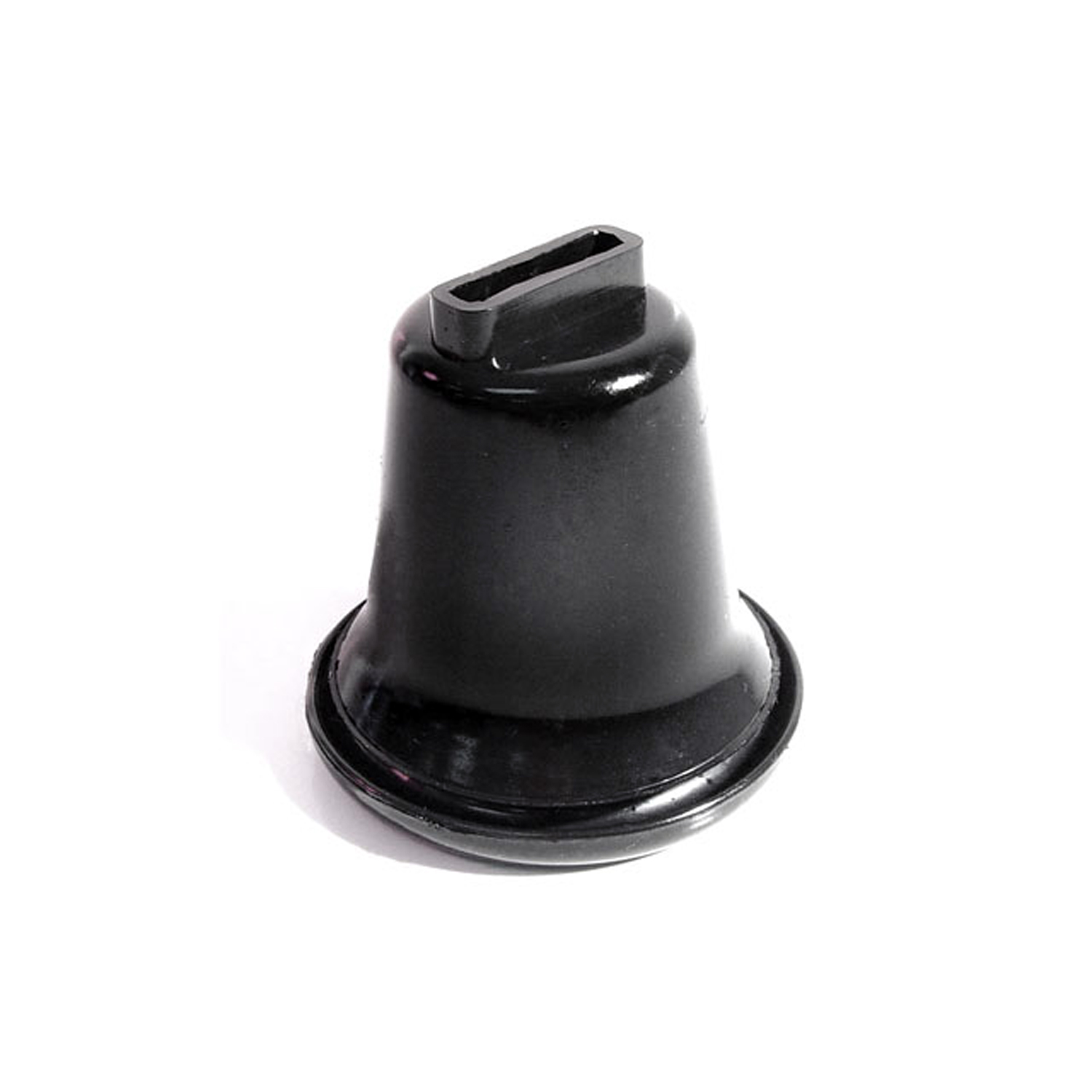 1963 Mercury Meteor Brake Booster Boot. Each-RP 32-AABrake Booster Boot. Each
 1963 Mercury Meteor Deck Lid Bumper. Replaces OEM #C20Z-6243634A. Each-SB 30-BDeck Lid Bumper. Replaces OEM #C20Z-6243634A. Each
 1963 Mercury Meteor Hood Bumper. Snap-in wire base like original. Each-SB 89-AHood Bumper. Snap-in wire base like original. Each
 1963 Mercury Meteor Door & Tailgate Bottom Drain Seal-SM 64-ADoor & Tailgate Bottom Drain Seal. Uses up to 10 per car or 12 per station wagon. Replaces OEM #C3AZ6220700B. 3" Long. Each
 1963 Mercury Meteor Windshield Seal Fits 62-65 Fairlane 2&4 Door Sedan And Wagon-VWS 0619This windshield seal fits all styles except for the 2 door hardtops. This gasket works with chrome trim.
 1963 Mercury Meteor Flexible Sweeper. Made of rubber-WC 23-/FTFlexible Sweeper. Made of rubber. Seal for outside of side window. Sold by the foot
 1963 Mercury Meteor Flexible Sweeper. Made of rubber-WC 23-48Flexible Sweeper. Made of rubber. Seal for outside of side window. 48" Piece. Each
 1963 Mercury Meteor Flexible Sweeper. Made of rubber-WC 23-96Flexible Sweeper. Made of rubber. Seal for outside of side window. 96" Piece. each
Why Choose Metro?
For over 100 years, Metro Moulded Parts has been the pinnacle of quality in classic car restoration parts. Our commitment to precision and authenticity in every component ensures a perfect fit and an OEM-level appearance.
- Expert Craftsmanship & Quality: Each part is a testament to our dedication to reliability and perfection, crafted from original designs and thoroughly tested.
- Advanced Technology: We use cutting-edge techniques to create flawless, long-lasting parts that surpass others in performance.
- SuperSoft Sponge – The Ultimate Door Seal: Not only are our door seals 30% softer than competitors', but they're also guaranteed to never leak. They effectively reduce wind and road noise, enhancing your classic car's comfort and driving experience.
- Proudly American: Our parts are a product of American craftsmanship, made in the USA with a spirit of excellence and heritage.
- Unrivaled Warranty: We back our products with a 30-year industry-leading warranty, a testament to our confidence in their quality.
Join us in preserving the legacy of classic cars with parts that are crafted for perfection, not just made.