

Image of 1964 Mercury Cyclone, Note: These illustrations use artistic license and may differ from actual historical models.
Performance Metrics
Fundamental Metrics
Emotional Appeal
MMP Rating
| Engine Specifications | |
|---|---|
| Engine: | 289 CID V8 |
| Displacement: | 289 cubic inches (4.7 liters) |
| Horsepower: | 210-271 hp |
| Torque: | 305 lb-ft |
| Compression Ratio: | 10.5:1 |
| Ignition System: | Conventional, distributor |
| Cooling System: | Liquid-cooled |
| Performance Specifications | |
| 0-60 Time: | 8 seconds |
| 1/4 Mile Time: | 16 seconds |
| Top Speed: | 115 mph |
| Transmission and Drive | |
| Drive Type: | Rear-wheel drive |
| Transmission Type: | 4-speed manual |
| Fuel and Efficiency | |
| Fuel System Type: | Carburetor |
| MPG: | 15-20 mpg |
| Dimensions and Brakes | |
| Brakes: | Drum brakes |
| Wheelbase: | 114 inches |
| Weight: | 3,200 lbs |
Note: Specifications for classic cars are given to the best of our ability, considering the limited and variant data available.
1964 Mercury Cyclone: The Comet’s Sporty Side
The 1964 Mercury Cyclone brought a sharper edge to the compact Comet, pairing clean mid-century styling with V8 power in a handsome two-door hardtop. Built by Mercury, Ford Motor Company’s mid-market division, the Cyclone was a sporty Comet model rather than a separate car line. Its combination of manageable size, bucket-seat character, and available V8 engines made it an appealing alternative to larger American performance cars.
The timing mattered. Detroit was leaning into performance, and the new Ford Mustang was about to reshape the market. The Cyclone arrived in that same energetic era, giving Mercury buyers a more athletic Comet before the name became a standalone model. One especially intriguing piece of its story is that Comet-based factory-backed drag racers used the Cyclone identity while carrying highly modified competition hardware, including powerful 427-cubic-inch V8s. Those race cars were a world apart from a production Cyclone, but they helped put the Comet name in the performance conversation.
1964 Cyclone Styling and Interior
The Cyclone wore the Comet’s compact proportions with a noticeably more sporting attitude. Its long hood, short rear deck, and low two-door hardtop roof gave it a purposeful profile. Up front, a broad grille and paired headlamps created a confident face, while bright trim and Cyclone-specific details distinguished it from more ordinary Comets. The styling was crisp rather than overdone, a good match for a car meant to look quick without pretending to be a full-size muscle machine.
Inside, the Cyclone emphasized driver appeal. Bucket seats, distinctive trim, and a sportier instrument-panel presentation gave the cabin a more personal feel than the Comet’s basic transportation models. Depending on equipment, buyers could add a floor console and choose a manual floor shifter or an automatic transmission. Materials were typical of a mid-priced American car of the period: vinyl was common, with patterned or contrasting upholstery details adding visual interest. The interior was durable and straightforward, though it lacks the soft-touch finishes and extensive sound insulation expected in a modern car.
Mercury offered the Cyclone in a range of period paint colors, including strong reds, blues, greens, black, white, and metallic shades. Availability varied by factory and order combination. Red and black cars suit the Cyclone’s sporting character especially well, while lighter colors show off its brightwork and clean body lines. As with many survivors, original paint and trim combinations can be as important to collectors as the car’s mechanical specification.
For 1964, the Cyclone was offered as a two-door hardtop. It was not yet a broad family of body styles, and there was no Cyclone convertible in this model year. That single-body approach helped give the car a clear identity: a stylish, relatively compact coupe built around the driving experience.
Why the Mercury Cyclone Mattered
The 1964 Cyclone occupies an interesting place in the development of American performance cars. It was not the first compact with a V8, nor was it a direct rival in size to the biggest muscle cars. Its significance lies in how it helped make performance a more accessible part of Mercury’s compact lineup. Buyers could enjoy a sporty roofline and V8 power without stepping up to a heavier, more expensive full-size car.
Its timing also connects it to the transition from sporty compacts to the pony-car boom. The Cyclone was a Comet trim level, but its name and performance image proved strong enough to grow into a separate Mercury model later in the decade. That evolution shows how automakers were learning that appearance, equipment, and a performance story could be just as important as outright horsepower.
The racing connection adds another layer. Mercury-backed Comet drag cars helped build the model’s reputation, but it is important to distinguish those purpose-built machines from street cars. A production Cyclone did not leave the factory as a 427-powered drag racer. The competition cars were extensively modified, and their fame helped raise awareness of the Comet-based performance program rather than making every Cyclone a race-bred special.
Engines, Speed, and Road Manners
The 1964 Cyclone’s engine lineup centered on V8 power. The 260-cubic-inch V8 was a common starting point, while buyers could select a 289-cubic-inch V8 for stronger performance. Exact output figures depend on the engine and equipment combination; published specifications commonly place the 260 around 164 horsepower and a standard 289 version around 200 to 210 horsepower. Transmission choices included a manual gearbox and Mercury’s Merc-O-Matic automatic, with availability depending on the car’s specification.
Performance figures vary with engine, gearing, transmission, condition, and test method. A healthy 289-equipped Cyclone is generally estimated to reach 60 mph in roughly nine to ten seconds, with a top speed in the neighborhood of 110 mph. A 260 car is typically slower. These are best treated as period-car estimates rather than guaranteed figures for any particular survivor, especially after six decades of wear, restoration, and mechanical changes.
On the road, the Cyclone feels compact by 1960s American standards, though it is still a traditional body-on-frame car with a soft, comfortable suspension. It absorbs ordinary bumps well and cruises pleasantly, but it is not a modern sports coupe. On winding roads, the steering is less precise and the body leans more than a contemporary performance car. The brakes, tires, suspension bushings, and alignment make a major difference to how confidently a surviving example drives.
The V8 is a big part of the appeal. It delivers the familiar low, burbling idle and a fuller growl as the throttle opens. The driver feels connected through a relatively simple cabin, clear sightlines, and, in manual cars, a direct mechanical shift. It is a relaxed cruiser at moderate speeds, with enough power to make highway merging and passing enjoyable when the engine is in good health.
Living With a 1964 Mercury Cyclone
Today, most Cyclones are enjoyed as weekend drivers, show cars, or additions to collections focused on Mercury and Comet history. A well-sorted example can handle local cruising and occasional longer trips, but many owners preserve them rather than rely on them as daily transportation. Modern traffic, fuel consumption, old-car braking distances, and the availability of replacement parts all favor recreational use.
Mechanically, the Cyclone shares much with other Ford and Mercury products of its era, which helps with routine service. The engines are conventional pushrod V8s, and many common maintenance jobs are within reach of a capable home mechanic with the correct shop manual and tools. Tune-ups, brake work, cooling-system repairs, and suspension refreshes are familiar tasks for a classic-car specialist.
The harder part can be finding correct Cyclone-specific trim, interior pieces, and body details. Some mechanical components are easier to source than model-specific cosmetic parts, so a complete car is often a better starting point than a cheap project missing its distinctive equipment. As with any 1960s car, inspect carefully for rust, previous repairs, worn steering components, and signs of an engine or transmission swap.
Rare Comets, Racing, and Cyclone Trivia
The Cyclone name began as a sporty Comet model in 1964 and later became a distinct Mercury model line. That makes early cars particularly interesting to collectors who want to follow the name from its Comet roots through its later performance years.
Production is commonly reported at approximately 7,454 Cyclones for the 1964 model year. That makes the car much less common than a mass-market Mustang or a basic Comet, though it is not so scarce that examples never appear for sale. Exact counts can vary among reference sources, so treat the figure as a useful estimate rather than a definitive total.
The most colorful part of the Cyclone’s history is the Mercury Comet drag-racing program. Factory-supported racers used altered, lightweight, and highly modified Comet-based cars to compete in drag racing. Their engines and bodywork differed substantially from showroom cars, but the program gave the Cyclone and Comet a memorable performance association.
There are also fair criticisms. The Cyclone is not as instantly recognizable as a Mustang, and its compact interior offers less room than a full-size Mercury. Its handling is period-correct rather than sharp, and some owners find that restoring unique trim takes patience. For enthusiasts, those drawbacks are balanced by the car’s rarity, clean styling, and more unusual place in Mercury history.
1964 Mercury Cyclone Values and Collectibility
Collector values depend heavily on originality, rust, drivetrain, documentation, and restoration quality. As a broad U.S. market guide, a project car may sell for roughly $5,000 to $12,000, while a solid driver often falls around $15,000 to $30,000. A very good or professionally restored example can bring about $30,000 to $50,000 or more, particularly when it retains desirable factory equipment and has strong documentation. Exceptional cars can exceed those ranges, while modified or incomplete examples may sell for less.
The Cyclone is an uncommon classic, but parts availability and name recognition are not as strong as they are for better-known Ford performance models. That can keep prices below those of comparable Mustangs, even when a Cyclone is rarer. Values have generally benefited from growing interest in overlooked Mercury and Comet models, though condition and originality remain more important than simply waiting for the market to rise.
For buyers, the best value is often a complete, honest car with sound structure and a documented engine and transmission. A correct restoration can be rewarding, but sourcing unique trim and finishing details may cost more time and money than expected. A well-preserved driver can deliver much of the experience without the expense of a concours-level build.
The Cyclone’s Lasting Appeal
The 1964 Mercury Cyclone blends compact dimensions, V8 character, and restrained sporty styling in a way that feels distinctly of its time. It was an important early chapter in the Cyclone name’s performance story, while its Comet roots place it close to the dawn of the American pony-car era. It is not the most famous classic coupe of the 1960s, and that is part of its charm: the Cyclone rewards enthusiasts who look beyond the obvious badges.
With its hardtop profile, rumbling V8 options, and genuine Mercury racing connections, the 1964 Cyclone is more than a stylish footnote. It is a distinctive piece of the moment when American automakers began making everyday cars feel a little more exciting.
1964 Mercury Cyclone Catalog of Parts
 1964 Mercury Cyclone Power Steering Stop Insulator. Die stamped. 1-7/16" O.D-BN 107-APower Steering Stop Insulator. Die stamped. 1-7/16" O.D., 1-1/16" I.D., .808 thick. Each
 1964 Mercury Cyclone Shock Absorber Grommet. 1-1/4" bottom O.D., 1" high-BN 12Shock Absorber Grommet. 1-1/4" bottom O.D., 1" high., with 3/4" I.D. Each
 1964 Mercury Cyclone Stabilizer Bar Bushings-BN 32-DStabilizer Bar Bushings. 1-9/16" long X 1-1/2" wide X 1-5/8" high, 15/16" I.D. Pair
 1964 Mercury Cyclone Hood Bumper. Made with steel core. Held by screw. Each-HF 40Hood Bumper. Made with steel core. Held by screw. Each
 1964 Mercury Cyclone Generator Boot. Replaces OEM #C1AZ10170B-RP 2-FGenerator Boot. Replaces OEM #C1AZ10170B. Note: Notch may have to be cut by purchaser. Each
 1964 Mercury Cyclone Door Lock Knob. Black Rubber. Each-RP 306Door Lock Knob. Black Rubber. Each
 1964 Mercury Cyclone Door Lock Knob. 1-1/2" high. Made of red rubber. Each-RP 306-ADoor Lock Knob. 1-1/2" high. Made of red rubber. Each
 1964 Mercury Cyclone Door Lock Knob. 1-1/2" high. Made of blue rubber. Each-RP 306-BDoor Lock Knob. 1-1/2" high. Made of blue rubber. Each
 1964 Mercury Cyclone Door Lock Knob. 1-1/2" high. Made of turquoise rubber-RP 306-CDoor Lock Knob. 1-1/2" high. Made of turquoise rubber. Each
 1964 Mercury Cyclone Door Lock Knob. 1-1/2" high. Made of beige rubber. Each-RP 306-DDoor Lock Knob. 1-1/2" high. Made of beige rubber. Each
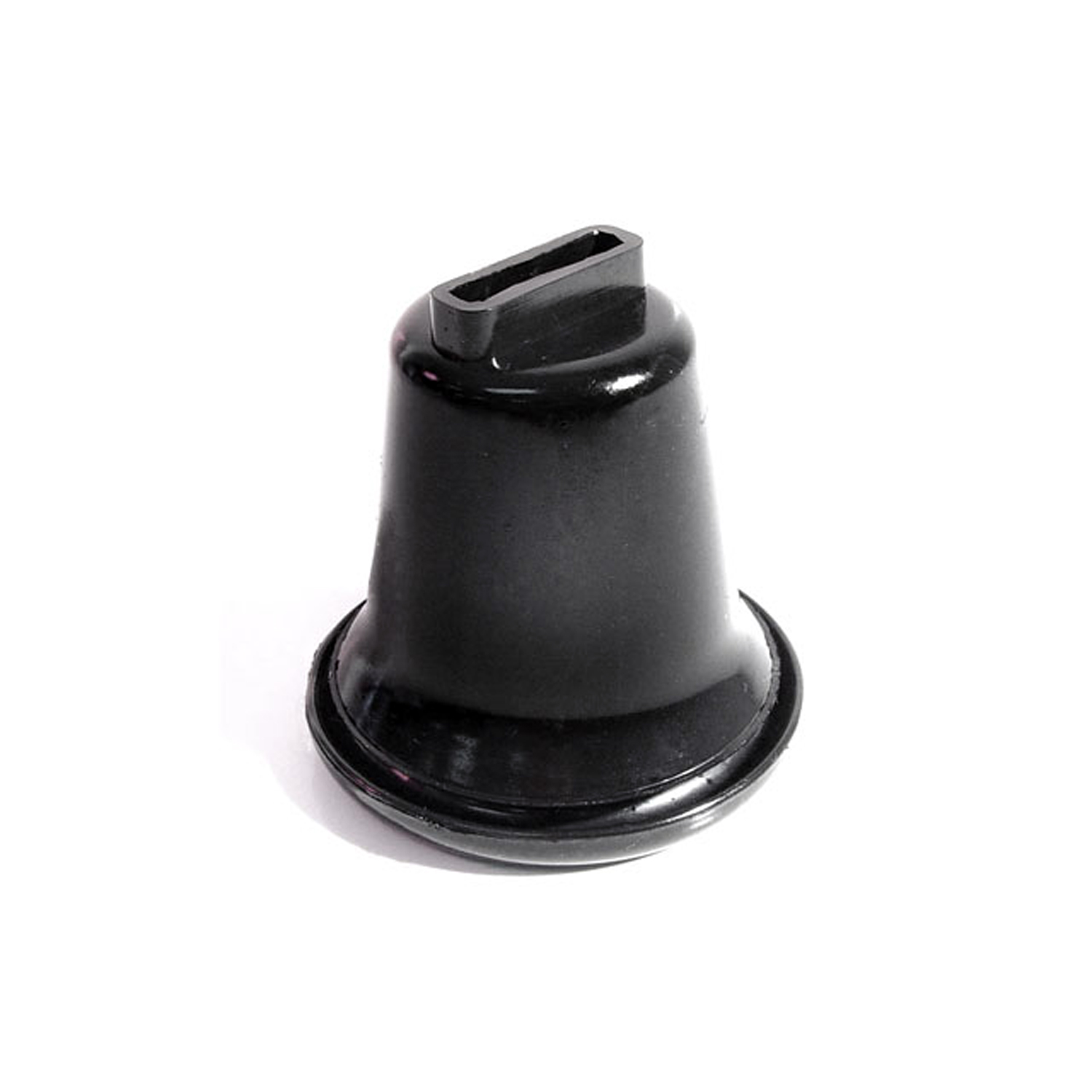 1964 Mercury Cyclone Brake Booster Boot. Each-RP 32-AABrake Booster Boot. Each
 1964 Mercury Cyclone Hood Bumper. Snap-in wire base like original. Each-SB 89-AHood Bumper. Snap-in wire base like original. Each
 1964 Mercury Cyclone Flexible Sweeper. Made of rubber-WC 23-/FTFlexible Sweeper. Made of rubber. Seal for outside of side window. Sold by the foot
 1964 Mercury Cyclone Flexible Sweeper. Made of rubber-WC 23-48Flexible Sweeper. Made of rubber. Seal for outside of side window. 48" Piece. Each
 1964 Mercury Cyclone Flexible Sweeper. Made of rubber-WC 23-96Flexible Sweeper. Made of rubber. Seal for outside of side window. 96" Piece. each
Why Choose Metro?
For over 100 years, Metro Moulded Parts has been the pinnacle of quality in classic car restoration parts. Our commitment to precision and authenticity in every component ensures a perfect fit and an OEM-level appearance.
- Expert Craftsmanship & Quality: Each part is a testament to our dedication to reliability and perfection, crafted from original designs and thoroughly tested.
- Advanced Technology: We use cutting-edge techniques to create flawless, long-lasting parts that surpass others in performance.
- SuperSoft Sponge – The Ultimate Door Seal: Not only are our door seals 30% softer than competitors', but they're also guaranteed to never leak. They effectively reduce wind and road noise, enhancing your classic car's comfort and driving experience.
- Proudly American: Our parts are a product of American craftsmanship, made in the USA with a spirit of excellence and heritage.
- Unrivaled Warranty: We back our products with a 30-year industry-leading warranty, a testament to our confidence in their quality.
Join us in preserving the legacy of classic cars with parts that are crafted for perfection, not just made.