

Image of 1964 Mercury Marauder, Note: These illustrations use artistic license and may differ from actual historical models.
Performance Metrics
Fundamental Metrics
Emotional Appeal
MMP Rating
| Engine Specifications | |
|---|---|
| Engine: | 390 CID V8, 427 CID V8 |
| Displacement: | 390-427 cubic inches |
| Horsepower: | 250-425 hp |
| Torque: | 375-480 lb-ft |
| Compression Ratio: | 10.5:1 - 11.6:1 |
| Ignition System: | Conventional breaker-point ignition system |
| Cooling System: | Liquid-cooled |
| Performance Specifications | |
| 0-60 Time: | 7.5 - 8.5 seconds |
| 1/4 Mile Time: | 15.5 - 16.5 seconds |
| Top Speed: | 120-130 mph |
| Transmission and Drive | |
| Drive Type: | Rear-wheel drive |
| Transmission Type: | 3-speed automatic, 4-speed manual |
| Fuel and Efficiency | |
| Fuel System Type: | Carburetor |
| MPG: | 10-12 mpg |
| Dimensions and Brakes | |
| Brakes: | Drum brakes |
| Wheelbase: | 119 inches |
| Weight: | 3,600 - 3,800 lbs |
Note: Specifications for classic cars are given to the best of our ability, considering the limited and variant data available.
1964 Mercury Marauder: The Full-Size Fastback
The 1964 Mercury Marauder brought the long, low look of a fastback to a full-size American car, pairing head-turning roofline with the kind of V8 power that made Mercury a serious player on both the highway and the NASCAR oval. Built by the Ford Motor Company’s Mercury division, the Marauder was not a separate model line so much as a distinctive two-door hardtop body style offered within Mercury’s full-size range.
Its roots reached back to the 1963 model year, when Mercury added the sloping fastback roof to its Monterey and Montclair lines. For 1964, the Marauder continued as part of a broader lineup that also included the upscale Park Lane. The name suited the car’s mission: this was a substantial, comfortable cruiser with a performance-minded image. A particularly intriguing part of its story is its connection to the 1960s stock-car scene, where Mercury’s big fastbacks helped give the brand a more competitive, muscular identity.
Fastback Styling and Cabin Comfort
The Marauder’s defining feature is its roof. Instead of the more upright profile common on many full-size cars, the roof sweeps smoothly down toward the rear deck, giving the car a long, purposeful silhouette. The broad grille, quad headlights, sculpted sides, and generous chrome trim keep it unmistakably an early-1960s Mercury, while the fastback glass and tapered rear profile add a sportier edge. It looks imposing without appearing clumsy, especially when viewed in profile.
Inside, the Marauder balances American-car spaciousness with trim that could be dressed up according to the model and options selected. Buyers could find durable vinyl, cloth-and-vinyl combinations, and more richly finished interiors on higher-trim versions. A full-width front bench seat was typical, with bucket seats and a console available on some configurations. The cabin’s appeal is less about intricate sports-car detailing and more about generous room, a wide dashboard, and a comfortable place to settle in for a long drive.
Technology was period-appropriate rather than futuristic. Depending on equipment, buyers could order conveniences such as power steering, power brakes, air conditioning, an automatic transmission, and an AM radio. These features helped make a large, powerful car easier to live with. The Marauder’s fastback roof was its most visible innovation: it gave Mercury a distinctive silhouette and a more aerodynamic-looking profile, although appearance alone should not be confused with modern wind-tunnel efficiency.
Mercury offered the car in a range of factory colors, from understated black, white, and silver-toned finishes to brighter reds, blues, and other period hues. Exact colors varied by trim and production details. Red and blue examples tend to draw attention today, while white and black cars emphasize the Marauder’s formal, substantial lines. The essential body style was the two-door fastback hardtop, available across different Mercury trim levels rather than as a range of separate Marauder body types.
Why the Marauder Mattered
The 1964 Marauder arrived when American manufacturers were sharpening the performance image of their full-size cars. Ford and Mercury were competing not only in showrooms but also in stock-car racing, where production-based cars helped turn engineering into advertising. Mercury’s big fastbacks offered a useful combination of room, V8 power, and a roofline that looked at home in a competition setting.
What set the Marauder apart from many contemporaries was the way it blended two seemingly different roles. It was a comfortable, well-equipped full-size car, yet its fastback shape and available high-performance engines gave it a credible sporting personality. It did not invent the fastback, nor did it transform the industry’s technology, but it helped establish a memorable Mercury design identity during an era when rooflines and racing credentials mattered. Its influence is best understood as part of the wider 1960s movement toward performance-flavored family and personal cars.
V8 Power and Road Manners
Engine choices varied by trim and specification. The lineup included 390-cubic-inch V8s in different states of tune, while a 427-cubic-inch V8 was available for buyers seeking serious performance. Horsepower ratings depended on the exact engine and carburetion. The 427 was the headline option, with period ratings reaching as high as 425 horsepower in certain configurations. Because surviving cars may have been modified or rebuilt, the engine code and documentation matter more than a badge or seller’s description.
Performance figures also depend on engine, transmission, axle ratio, vehicle condition, and testing method. As a broad period-style estimate, a 390-powered Marauder could reach 60 mph in roughly 8 to 10 seconds, while a properly equipped 427 car could do it in around 6 to 7 seconds. Top speed was similarly specification-dependent, but a sound, high-performance example could approach or exceed 120 mph. These are estimates, not guaranteed figures for every car, and modern traffic conditions are no place to test them.
On ordinary roads, the Marauder feels like the large American car it is: quiet, roomy, and more relaxed than nimble. Its length and weight are noticeable on tight, winding roads, where careful steering and a measured pace suit it better than abrupt inputs. Over bumps, the suspension gives the car a traditional cushioned ride, though worn shocks, tired springs, or old bushings can make an example feel loose. Crosswinds and uneven pavement also remind the driver that this is a broad, substantial car rather than a modern sports coupe.
The driving experience is part of the appeal. A V8 produces a deep, unmistakable burble at idle and a fuller roar under acceleration, while the long hood and broad bench seat create the classic big-Mercury perspective. The steering and brakes feel more direct when the car is properly maintained, but they still ask for more involvement than modern power-assisted systems. A good Marauder feels composed and confident, not delicate or dainty.
Living With a 1964 Marauder
Today, Marauders are most often used as weekend cruisers, show cars, and classic-car tour machines. A well-sorted 390 car can also handle occasional regular driving, especially if it has reliable brakes, sound tires, and a cooling system suited to modern traffic. The 427 versions are more likely to be treasured as high-value performance cars than used for routine commuting.
Mechanical work is generally approachable for an owner familiar with carbureted American V8s. The Ford FE-family engines and many mechanical components are well known among classic-car specialists, and replacement parts are available through the vintage Ford market. The biggest ownership challenges are often condition-related: rust, decades of repairs, worn suspension, electrical gremlins, and trim pieces that are harder to source than basic engine parts. Before buying, inspect the frame and body carefully, verify the engine and transmission, and check that the brakes and cooling system work as they should.
Marauder Facts and Myths
The Marauder name was tied to Mercury’s full-size fastback body style, not to a single engine or one exclusive trim level. That distinction matters when shopping: a car advertised as a “Marauder” might have a modest 390, a more powerful configuration, or a rare 427, and those cars are not interchangeable in value or performance.
The fastback’s competition-era image is another reason it attracts enthusiasts. Mercury campaigned large V8-powered cars during the intense NASCAR battles of the 1960s, and the Marauder’s shape fit that performance story. It is safer, however, to distinguish the production car from purpose-prepared racers: competition cars could receive extensive changes, and a street Marauder is not automatically a factory race car.
Common criticisms are familiar for a full-size car of its era. It is heavy, fuel consumption can be substantial, and its size makes tight parking and narrow roads less convenient. Braking, handling, and safety equipment also reflect 1964 rather than modern expectations. Those compromises are part of the ownership equation, not defects that can be judged fairly by current-car standards.
Collector Values and Rarity
There is no single, widely accepted production total for the 1964 Marauder as a standalone model because Marauder identified a body style offered within Mercury’s larger model range. A reasonable estimate is that roughly 30,000 to 40,000 Marauder-style cars were built across the applicable trims, but this should be treated as an informed estimate rather than a definitive factory total. Today, surviving cars are considerably less common than the original production figure suggests, especially in unmodified condition.
In the 2025–26 U.S. collector market, a project or rough driver might fall around $10,000 to $20,000. A presentable, mechanically sound 390 car could bring roughly $20,000 to $40,000, while a clean, well-restored example may reach $40,000 to $65,000 or more. A documented, authentic 427 car can command a substantial premium, potentially ranging from about $60,000 into six figures depending on originality, history, condition, and the strength of the sale. These are broad estimates, not appraisals; regional demand and verification of a rare engine can shift the price dramatically.
Values for classic American performance cars have moved unevenly, and the Marauder is a more specialized market than headline-grabbing muscle cars. Well-preserved examples and genuine high-performance specifications have the strongest prospects, while ordinary cars needing expensive restoration may be slow to appreciate. Buyers should prioritize condition and documentation over ambitious claims. A correct, honest car is often a better purchase than a flashy restoration with uncertain history.
A Mercury With Real Presence
The 1964 Mercury Marauder combined a distinctive fastback roof, full-size comfort, and a range of V8 power that reached its peak with the 427. It was not a lightweight sports car or a technological revolution, but it captured a moment when American manufacturers were giving everyday-sized family cars a serious performance edge.
With its long profile, rumbling V8, and strong connection to Mercury’s racing-era image, the Marauder remains more than just a handsome old cruiser. It is a reminder that in 1964, a car could be spacious enough for the family, powerful enough to command the highway, and stylish enough to turn heads before the engine even started.
1964 Mercury Marauder Catalog of Parts
 1964 Mercury Marauder Power Steering Stop Insulator. Die stamped. 1-7/16" O.D-BN 107-APower Steering Stop Insulator. Die stamped. 1-7/16" O.D., 1-1/16" I.D., .808 thick. Each
 1964 Mercury Marauder Shock Absorber Grommet. 1-1/4" bottom O.D., 1" high-BN 12Shock Absorber Grommet. 1-1/4" bottom O.D., 1" high., with 3/4" I.D. Each
 1964 Mercury Marauder Stabilizer Bar Bushings-BN 32-DStabilizer Bar Bushings. 1-9/16" long X 1-1/2" wide X 1-5/8" high, 15/16" I.D. Pair
 1964 Mercury Marauder Front stabilizer bar to frame bushings-BN 32-FFront stabilizer bar to frame bushings, '59-'66 Ford and Mercury passenger car, station wagon and sedan delivery models, pair. Replaces OEM # B9A-5493-B.
 1964 Mercury Marauder Hood Bumper. Made with steel core. Held by screw. Each-HF 40Hood Bumper. Made with steel core. Held by screw. Each
 1964 Mercury Marauder Generator Boot. Replaces OEM #C1AZ10170B-RP 2-FGenerator Boot. Replaces OEM #C1AZ10170B. Note: Notch may have to be cut by purchaser. Each
 1964 Mercury Marauder Door Lock Knob. Black Rubber. Each-RP 306Door Lock Knob. Black Rubber. Each
 1964 Mercury Marauder Door Lock Knob. 1-1/2" high. Made of red rubber. Each-RP 306-ADoor Lock Knob. 1-1/2" high. Made of red rubber. Each
 1964 Mercury Marauder Door Lock Knob. 1-1/2" high. Made of blue rubber. Each-RP 306-BDoor Lock Knob. 1-1/2" high. Made of blue rubber. Each
 1964 Mercury Marauder Door Lock Knob. 1-1/2" high. Made of turquoise rubber-RP 306-CDoor Lock Knob. 1-1/2" high. Made of turquoise rubber. Each
 1964 Mercury Marauder Door Lock Knob. 1-1/2" high. Made of beige rubber. Each-RP 306-DDoor Lock Knob. 1-1/2" high. Made of beige rubber. Each
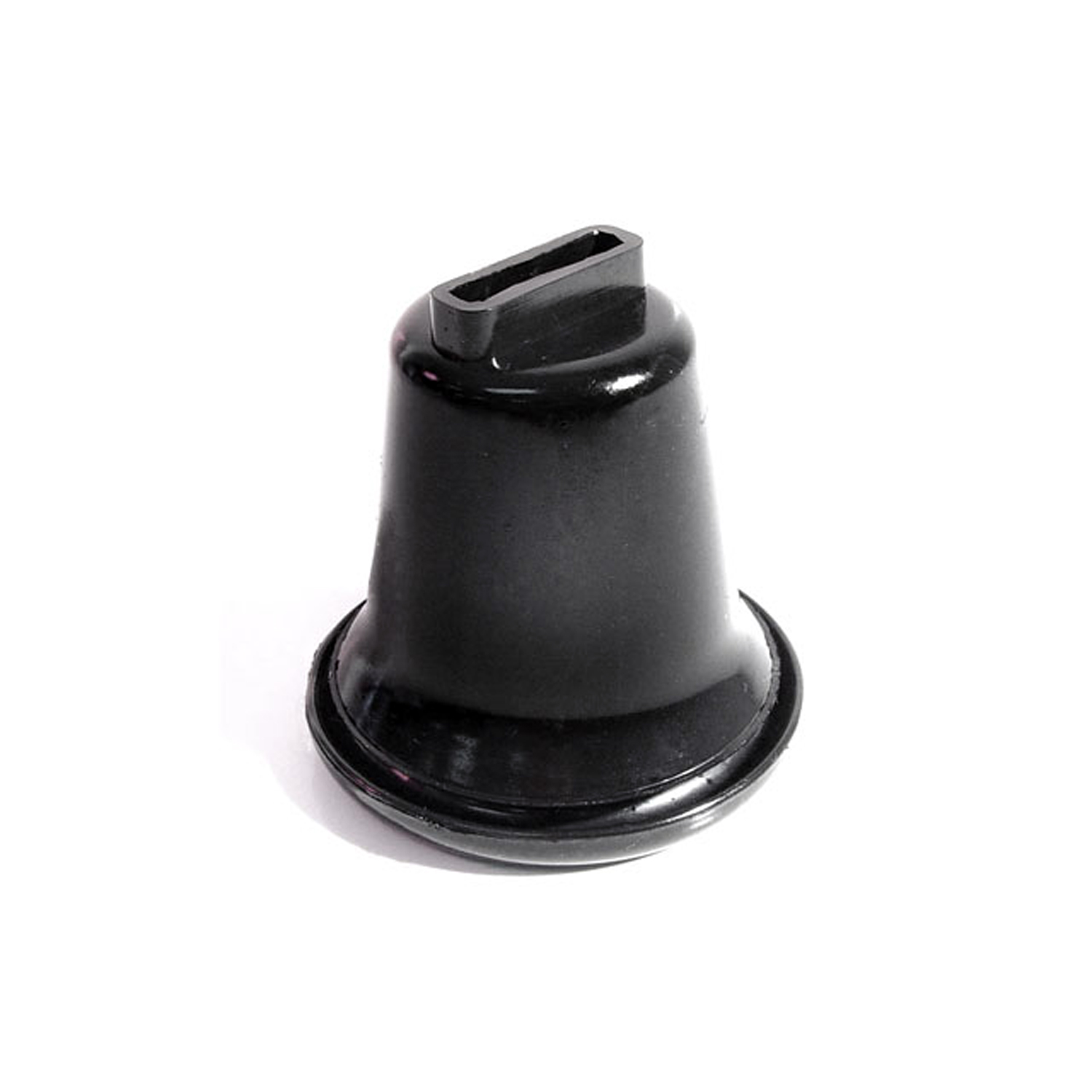 1964 Mercury Marauder Brake Booster Boot. Each-RP 32-AABrake Booster Boot. Each
 1964 Mercury Marauder Hood Bumper. Snap-in wire base like original. Each-SB 89-AHood Bumper. Snap-in wire base like original. Each
 1964 Mercury Marauder Flexible Sweeper. Made of rubber-WC 23-/FTFlexible Sweeper. Made of rubber. Seal for outside of side window. Sold by the foot
 1964 Mercury Marauder Flexible Sweeper. Made of rubber-WC 23-48Flexible Sweeper. Made of rubber. Seal for outside of side window. 48" Piece. Each
 1964 Mercury Marauder Flexible Sweeper. Made of rubber-WC 23-96Flexible Sweeper. Made of rubber. Seal for outside of side window. 96" Piece. each
Why Choose Metro?
For over 100 years, Metro Moulded Parts has been the pinnacle of quality in classic car restoration parts. Our commitment to precision and authenticity in every component ensures a perfect fit and an OEM-level appearance.
- Expert Craftsmanship & Quality: Each part is a testament to our dedication to reliability and perfection, crafted from original designs and thoroughly tested.
- Advanced Technology: We use cutting-edge techniques to create flawless, long-lasting parts that surpass others in performance.
- SuperSoft Sponge – The Ultimate Door Seal: Not only are our door seals 30% softer than competitors', but they're also guaranteed to never leak. They effectively reduce wind and road noise, enhancing your classic car's comfort and driving experience.
- Proudly American: Our parts are a product of American craftsmanship, made in the USA with a spirit of excellence and heritage.
- Unrivaled Warranty: We back our products with a 30-year industry-leading warranty, a testament to our confidence in their quality.
Join us in preserving the legacy of classic cars with parts that are crafted for perfection, not just made.