

Image of 1965 Mercury Cyclone, Note: These illustrations use artistic license and may differ from actual historical models.
Performance Metrics
Fundamental Metrics
Emotional Appeal
MMP Rating
| Engine Specifications | |
|---|---|
| Engine: | 289 CID V8 |
| Displacement: | 289 cubic inches (4.7 liters) |
| Horsepower: | 200-225 hp |
| Torque: | 282-305 lb-ft |
| Compression Ratio: | 10.0:1 |
| Ignition System: | Conventional, distributor |
| Cooling System: | Liquid-cooled |
| Performance Specifications | |
| 0-60 Time: | 8 seconds |
| 1/4 Mile Time: | 16 seconds |
| Top Speed: | 120 mph |
| Transmission and Drive | |
| Drive Type: | Rear-wheel drive |
| Transmission Type: | 4-speed manual |
| Fuel and Efficiency | |
| Fuel System Type: | Carburetor |
| MPG: | 15-20 mpg |
| Dimensions and Brakes | |
| Brakes: | Front disc and rear drum brakes |
| Wheelbase: | 113.0 inches |
| Weight: | 3,000 lbs |
Note: Specifications for classic cars are given to the best of our ability, considering the limited and variant data available.
1965 Mercury Cyclone: A Comet with a Sporting Streak
The 1965 Mercury Cyclone gave the everyday Comet a sharper edge, pairing clean mid-1960s styling with V8 power and a more driver-focused character. Built by the Mercury division of Ford Motor Company, it sat between a practical family car and the more expensive performance machines of the era.
The Cyclone grew out of Mercury’s compact Comet line. By 1965, the Comet had moved onto a larger intermediate platform related to Ford’s Fairlane, giving the Cyclone more room and a more substantial road presence than the earliest Comets. Its timing was significant: American buyers were increasingly drawn to sporty coupes, and manufacturers were finding ways to offer performance without requiring a full-size car.
One point worth clearing up for shoppers: the 1965 Cyclone was a V8-powered sporting model, but it was not automatically a factory 427-powered muscle car. Its main production engine was the 289-cubic-inch small-block V8. The famous high-powered Comets associated with drag racing were specialized race cars, not representative of the ordinary 1965 Cyclone you are likely to find today.
1965 Cyclone Styling and Interior
The Cyclone’s shape is all about proportion. A long hood leads into a compact passenger compartment, while the roofline sweeps back over a short rear deck. Mercury gave the Comet a more formal, polished look than many compact competitors, with a broad front grille, bright trim, crisp body creases, and distinctive rear detailing. The result is sporty without being overly aggressive.
Inside, the Cyclone leaned toward a personal-car feel. Bucket seats, a center console, carpeting, and extra brightwork helped distinguish it from more basic Comets, though equipment depended on how the car was ordered. Upholstery was typically vinyl, with trim and color combinations matched to the exterior. It was a handsome, durable cabin by the standards of the day, rather than a luxury interior filled with soft-touch materials.
Buyers could choose from a range of period colors, including red, white, blue, dark shades, and metallic tones. Bright red and white cars make especially striking examples today, while darker colors emphasize the Cyclone’s restrained, almost upscale lines. Exact paint names and availability varied by model and ordering details, so a factory build sheet is useful when checking an individual car for originality.
The Cyclone was offered as a two-door hardtop and a convertible. The hardtop is the more familiar silhouette, with its uninterrupted roofline and clean side glass. The convertible adds open-air appeal and is generally harder to find. Both gave buyers a sportier alternative to a standard Comet sedan.
Engines, Equipment, and Period Technology
The Cyclone’s core engine was Ford’s 289-cubic-inch V8. Depending on specification, the 289 was offered in versions commonly rated at about 200 or 225 gross horsepower. Those period ratings were measured differently from modern net-horsepower figures, so they should not be compared directly with current manufacturer numbers.
Transmission choices included a manual gearbox and Mercury’s Merc-O-Matic automatic, with a four-speed manual available for drivers who wanted more involvement. Other equipment could include power steering and power brakes. The Cyclone was not defined by cutting-edge electronics, but it benefited from proven mid-1960s engineering: a front-engine, rear-wheel-drive layout, independent front suspension, and a solid rear axle supported by leaf springs.
Why the 1965 Cyclone Matters
The Cyclone captured an important transition in American performance cars. It offered V8 power and sporty styling in an intermediate-sized package, at a point when buyers wanted more excitement than a basic compact but did not necessarily need a large, costly full-size performance car. In that sense, it helped Mercury compete in the growing market for personal and performance-oriented coupes.
Its appeal was also rooted in balance. The Cyclone borrowed familiar Comet practicality while adding the visual and mechanical cues buyers expected from a sporting model. It was not as widely celebrated as the Mustang or as dominant in public memory as later muscle cars, but it shows how Ford’s Mercury division developed its own performance identity. The Cyclone name would continue to evolve, becoming closely associated with more powerful models later in the decade.
1965 Mercury Cyclone Performance and Handling
With a healthy 289 V8, a manual transmission, and suitable gearing, a 1965 Cyclone could reach 60 mph in roughly 8 to 10 seconds. A period-style estimate for top speed is around 110 to 120 mph, though actual results depended on engine tune, axle ratio, transmission, tires, and vehicle condition. Treat those figures as a general guide, not a guarantee for every surviving car.
On the road, the Cyclone feels like a classic American rear-wheel-drive coupe: relaxed and stable on a straight highway, with a V8 that delivers its power smoothly rather than in a modern rush of turbocharged torque. The engine note is one of its best features, a low burble at idle that becomes a fuller growl as the revs rise. A four-speed car makes the most of that character, while the automatic is easier to live with in traffic.
Its suspension favors comfort over sharp cornering. The front end absorbs ordinary road imperfections well, while the rear leaf-spring setup can hop or feel unsettled over rough pavement, especially if the shocks, bushings, or springs are worn. On a winding road, the Cyclone is enjoyable at a sensible pace, but its age shows in body roll, steering feel, and braking performance compared with a modern car. Good tires and properly refreshed suspension make a major difference.
Living with a Cyclone Today
Today, a 1965 Cyclone is most often used as a weekend cruiser, local show car, or vintage-event driver. A well-maintained example can handle occasional errands and longer trips, but using one as a daily driver means accepting old-car realities: less effective safety equipment, higher fuel consumption, and greater sensitivity to weather and traffic.
Routine mechanical work is generally manageable for an owner comfortable with classic-car maintenance. The 289 V8 is part of a widely supported Ford engine family, and many service parts are available through specialist suppliers. The larger challenge is often finding correct Cyclone-specific trim, interior pieces, and body details. Before buying, inspect the floors, trunk, lower body panels, and frame or structural areas for corrosion, and check that the engine, transmission, and rear axle match the seller’s claims.
Reliability depends heavily on the condition of the individual car. A sound example with a cooling system in good order, fresh ignition components, and a properly rebuilt carburetor can be dependable for recreational use. Overheating, fuel-system trouble, electrical gremlins, and worn suspension parts are common problems in neglected cars, rather than unique flaws in the Cyclone design.
Rare Details and Common Misconceptions
The Cyclone’s most important trivia may be what it was not: a standard 1965 street Cyclone was not the same thing as the extreme Comet drag racers that made headlines with specialized engines and race-focused modifications. Mercury and its racing partners used the Comet name in competition, helping build the model family’s performance reputation, but race-car specifications should not be assumed to apply to a production Cyclone.
Another useful distinction for collectors is the body style. Convertibles are less commonly encountered than hardtops and can command a premium when they are sound and well restored. Production figures for individual trims and body styles can differ among published references, but a reasonable working estimate is about 14,000 Cyclones across the 1965 hardtop and convertible offerings, with the hardtop making up the larger share.
Common criticisms are straightforward: the Cyclone is less famous than a Mustang, its handling is not especially sharp by modern standards, and correct restoration parts can take time to locate. Those points also help explain its appeal. It offers a less predictable choice than the best-known Ford performance cars, with period styling and a genuine V8 character of its own.
1965 Mercury Cyclone Collector Values
As a broad U.S. market estimate, a project car may sell for roughly $5,000 to $12,000, depending on completeness and rust. A usable driver might bring about $15,000 to $25,000, while a clean, well-presented example can fall in the $25,000 to $40,000 range. A high-quality restoration, especially a desirable convertible with strong documentation, may reach $45,000 to $65,000 or more. These are approximate ranges, not appraisals; originality, condition, location, and the quality of the work matter enormously.
The Cyclone is relatively uncommon compared with the Mustang, but it is not so rare that buyers should expect every car to be a museum piece. Hardtops appear more often in the market, while convertibles are scarcer. Values have generally benefited from growing interest in lesser-known 1960s performance cars, though Cyclones tend to trail the best-known models in price and liquidity. The strongest examples are likely to hold value better than rough projects, while restoration costs can easily exceed the finished car’s market value.
A Distinctive Mercury Worth Remembering
The 1965 Mercury Cyclone combined Comet practicality, polished styling, and accessible V8 performance at a moment when American buyers were embracing sporty cars. It was comfortable enough to cruise, engaging enough to enjoy, and distinctive enough to stand apart from the most familiar classics. For collectors who want a genuine mid-1960s Mercury with character beyond the usual suspects, the Cyclone remains a compelling find.
1965 Mercury Cyclone Catalog of Parts
 1965 Mercury Cyclone Power Steering Stop Insulator. Die stamped. 1-7/16" O.D-BN 107-APower Steering Stop Insulator. Die stamped. 1-7/16" O.D., 1-1/16" I.D., .808 thick. Each
 1965 Mercury Cyclone Shock Absorber Grommet. 1-1/4" bottom O.D., 1" high-BN 12Shock Absorber Grommet. 1-1/4" bottom O.D., 1" high., with 3/4" I.D. Each
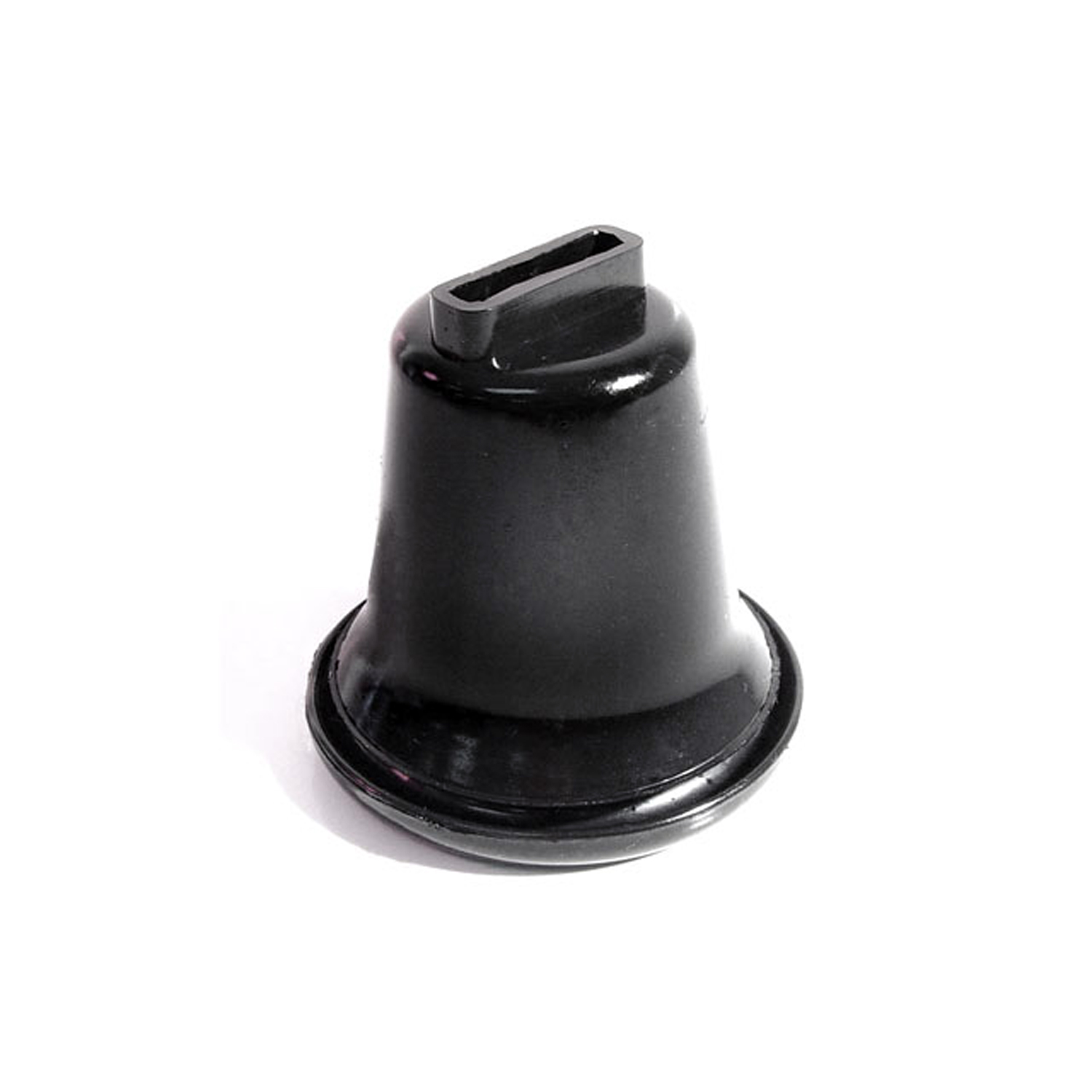 1965 Mercury Cyclone Brake Booster Boot. Each-RP 32-AABrake Booster Boot. Each
 1965 Mercury Cyclone Hood Bumper. Snap-in wire base like original. Each-SB 89-AHood Bumper. Snap-in wire base like original. Each
Why Choose Metro?
For over 100 years, Metro Moulded Parts has been the pinnacle of quality in classic car restoration parts. Our commitment to precision and authenticity in every component ensures a perfect fit and an OEM-level appearance.
- Expert Craftsmanship & Quality: Each part is a testament to our dedication to reliability and perfection, crafted from original designs and thoroughly tested.
- Advanced Technology: We use cutting-edge techniques to create flawless, long-lasting parts that surpass others in performance.
- SuperSoft Sponge – The Ultimate Door Seal: Not only are our door seals 30% softer than competitors', but they're also guaranteed to never leak. They effectively reduce wind and road noise, enhancing your classic car's comfort and driving experience.
- Proudly American: Our parts are a product of American craftsmanship, made in the USA with a spirit of excellence and heritage.
- Unrivaled Warranty: We back our products with a 30-year industry-leading warranty, a testament to our confidence in their quality.
Join us in preserving the legacy of classic cars with parts that are crafted for perfection, not just made.