

Image of 1965 Mercury Marauder, Note: These illustrations use artistic license and may differ from actual historical models.
Performance Metrics
Fundamental Metrics
Emotional Appeal
MMP Rating
| Engine Specifications | |
|---|---|
| Engine Options: | 390 cu in (6.4 L) FE V8, 410 cu in (6.7 L) MEL V8, 428 cu in (7.0 L) FE V8 |
| Displacement Range: | 390-428 cu in |
| Horsepower Range: | 250-345 hp |
| Torque: | 365-462 lb-ft |
| Compression Ratio: | 10.5:1 |
| Ignition System: | Conventional breaker-point ignition system |
| Cooling System: | Liquid-cooled |
| Performance Specifications | |
| 0-60 Time: | 8.0 seconds |
| 1/4 Mile Time: | 16.0 seconds |
| Top Speed: | 120 mph |
| Transmission and Drive | |
| Drive Type: | Rear-wheel drive |
| Transmission Type: | 3-speed automatic, 4-speed manual |
| Fuel and Efficiency | |
| Fuel System Type: | Carburetor |
| MPG: | 10-12 mpg |
| Dimensions and Brakes | |
| Brakes: | Front disc and rear drum brakes |
| Wheelbase: | 119.0 inches |
| Weight: | 3,800 lbs |
Note: Specifications for classic cars are given to the best of our ability, considering the limited and variant data available.
1965 Mercury Marauder: The Full-Size Ford with a Fastback Attitude
The 1965 Mercury Marauder took the long, confident proportions of a full-size American car and gave them a roofline that looked ready to slice through the air. Built by the Mercury division of Ford Motor Company, it combined upscale cabin appointments with the visual punch of a sweeping fastback and, when ordered with a big-block V8, serious straight-line performance.
One important detail for shoppers and historians: in 1965, Marauder was not a completely separate model line. The name identified a fastback two-door hardtop body style offered within Mercury’s full-size range, including Monterey, Montclair, and Park Lane versions. That distinction helps explain why Marauders can differ in trim and equipment even when their basic silhouette is the same.
The fastback roof was more than a styling flourish. In the early 1960s, automakers were paying close attention to aerodynamics as well as appearance, particularly as NASCAR competition made speed and stability part of a car’s public image. The Marauder brought that performance-minded look to a large, comfortable Mercury that could still carry a family and luggage.
Fastback Styling and Mercury Comfort
The Marauder’s most memorable feature is its roof. Rather than ending in a formal, upright rear window and sharply defined trunk, the roof flows down toward the back of the car, creating a long, uninterrupted profile. A broad hood, sculpted body sides, full-width rear styling, and Mercury’s characteristic grille gave it a substantial presence without making it look as formal as some of its contemporaries.
Inside, the Marauder was a traditional American full-size car, not a stripped-down muscle machine. Depending on series and equipment, buyers could find cloth-and-vinyl or all-vinyl upholstery, a wide bench seat, generous legroom, and a broad dashboard with clear, straightforward instruments. Higher-trim versions brought richer finishes and additional convenience equipment. Power steering, power brakes, air conditioning, a radio, power windows, and a power seat were among the kinds of options available, although exact equipment varied by trim and order.
Mercury offered the 1965 cars in a range of period colors, with choices varying by model and interior combination. Popular-looking combinations included red or dark blue paint with a contrasting light interior, as well as more restrained white, silver, green, and metallic shades. Original color codes matter to collectors, so anyone restoring a Marauder should check the data plate and factory documentation rather than relying on a previous owner’s description.
The key body style was the two-door fastback hardtop. Monterey, Montclair, and Park Lane versions shared the basic Marauder roofline but differed in trim and level of luxury. That gave buyers a choice between a comparatively straightforward full-size cruiser and a more richly appointed car, all with the same distinctive profile.
Why the Marauder Mattered
The 1965 Marauder captured a moment when American automakers were blending comfort, size, and performance imagery. It was not a lightweight sports car, and it did not introduce a revolutionary new mechanical system. Its significance was in the way it presented a large Mercury as something more athletic than a conventional family sedan.
Its fastback roof also gave Mercury a recognizable shape in a crowded market. Rivals such as the Pontiac Catalina 2+2, Oldsmobile Starfire, and Buick Wildcat offered their own mixes of full-size comfort and V8 power. The Marauder answered with a distinctive roofline and a selection of strong Ford FE-series engines. The result was a car that could serve as a highway cruiser while looking ready for competition.
The name continued beyond 1965, but the Marauder identity changed over time. That makes the 1965 fastback especially appealing to enthusiasts who want the classic early Marauder look rather than a later Mercury wearing the same name.
FE V8 Power and Road Manners
Engine availability depended on the car’s series and factory configuration. Common choices included 390-cubic-inch FE V8s in different states of tune. A 427-cubic-inch V8 was also available in certain configurations, making a properly documented 427 Marauder the standout performance version. Horsepower ratings and equipment could vary, so a car’s engine should be verified through its identification numbers and period documentation, not just its badges or air cleaner.
Most cars paired their V8 with a three-speed automatic, while manual transmissions were available in some configurations. The precise transmission and axle ratio have a major effect on how a Marauder accelerates and cruises. A car geared for relaxed highway travel will feel quite different from one ordered with a more performance-oriented setup.
Period road-test figures and modern estimates vary with engine, transmission, gearing, condition, and test method. As a general guide, a healthy 390-equipped car may reach 60 mph in roughly 9 to 11 seconds. A powerful 427 example can be appreciably quicker, with estimates around 7 to 9 seconds. Top speed is similarly configuration-dependent: roughly 110 to 125 mph is a reasonable broad estimate for well-sorted examples, but these figures should not be treated as guaranteed factory specifications.
On the road, the Marauder feels like a large American car because it is one. The V8 provides a deep, relaxed burble at cruising speed and a more forceful growl when the throttle opens. The long wheelbase helps it settle into a steady highway rhythm, while the soft suspension takes the sting out of ordinary pavement imperfections. On rougher roads, the body can move noticeably over bumps, and quick changes of direction bring more lean than a modern car.
On winding roads, the Marauder rewards smooth inputs rather than aggressive cornering. Its size, weight, period tires, and steering design make it less nimble than a compact performance car. In crosswinds, it can feel broad and substantial, so a sound suspension and correctly aligned steering are important. The overall experience is relaxed, powerful, and unmistakably mid-1960s: big V8, roomy cabin, soft ride, and a long view over the hood.
Living with a 1965 Marauder
Today, most Marauders are used as weekend cruisers, local show cars, or vintage-tour vehicles. A sound, well-maintained example can handle regular driving, but its fuel consumption, size, and period braking performance make it less practical as an everyday commuter than a modern car. Heavy traffic and tight parking spaces are not its natural habitat.
Routine mechanical work is generally approachable for a home mechanic familiar with older American cars. The FE V8 family is well supported by specialist suppliers, and many service parts are shared with other Ford and Mercury models. Oil changes, ignition work, brake service, and basic suspension repairs are straightforward in principle, though rust, previous modifications, and decades of repairs can turn a simple job into a project.
Inspect the frame, floorpans, trunk, lower body panels, and windshield areas carefully for corrosion. Also check the cooling system, transmission behavior, steering components, brakes, and electrical system. Trim and body-specific pieces can be harder to find than common mechanical parts, so a complete car is often a better starting point than a cheap shell missing its interior or fastback-specific components.
Rare Engines, Production, and Other Trivia
The 427 is the engine that gives the Marauder its strongest performance credentials, but buyers should be cautious about claims. Engine swaps are common in old full-size Fords and Mercurys, and a 427 badge alone does not establish that the car left the factory with that engine. Documentation, casting details, and vehicle records are valuable when assessing an alleged original 427 car.
There is no widely cited, definitive production total that cleanly isolates every 1965 Marauder fastback from the Monterey, Montclair, and Park Lane series. A reasonable best-effort estimate is somewhere in the low tens of thousands, perhaps about 10,000 to 20,000 cars across the relevant versions. Treat that as an estimate, not a confirmed factory figure. Surviving examples are less common than ordinary full-size Mercurys, and correctly documented big-block cars are scarcer still.
The Marauder’s racing-inspired shape is part of its appeal, but it is best not to confuse the production car with a dedicated competition machine. The street Marauder remained a comfortable, full-size hardtop. It has no single widely recognized land-speed or endurance record associated with the model. Its appeal is instead rooted in its period performance image, its unusual fastback profile, and its place in Mercury’s lineup.
Common criticisms are predictable: the car is heavy, fuel-hungry, and not especially agile by modern standards. Braking distances and handling also reflect 1960s technology. In return, owners get space, presence, a distinctive silhouette, and the sound and feel of a classic American V8.
Collector Values and Market Outlook
Values vary widely with condition, originality, documentation, trim, and engine. As a broad 2026 guide, a project car may fall around $5,000 to $12,000. A usable driver might bring roughly $15,000 to $30,000, while a very good or professionally restored example can reach about $30,000 to $55,000. A verified, highly original 427 car may sell for more, sometimes in the $50,000 to $80,000 range or beyond when condition and provenance are exceptional.
These are broad market estimates rather than guaranteed sale prices. Rust repair, incorrect paint, missing trim, and undocumented engine claims can sharply reduce value. A genuine, well-presented 427 example sits in a different collector category from a standard 390 car, so comparable sales should match the engine and trim as closely as possible.
The Marauder remains a niche collectible rather than a blue-chip model with a consistently rising market. Interest in American fastbacks and big-block cars supports values for the best examples, but ordinary drivers tend to move with the broader classic-car market. Clean, original cars are generally the safest long-term bet, while ambitious restorations can cost more than the finished car is worth.
A Mercury with a Long, Low-Flying Profile
The 1965 Mercury Marauder brought together full-size comfort, handsome fastback styling, and a choice of capable V8 power. It was not a sports car in the modern sense, but it offered a distinctive alternative to more formal sedans and a memorable shape that still stands out at a show or on the highway.
For collectors, the best examples are complete, well-documented cars, especially those with rare factory performance equipment. For drivers, even a standard-engined Marauder delivers the essential experience: a broad bench seat, a deep V8 note, and a graceful roofline that makes this big Mercury feel like it is always headed somewhere fast.
1965 Mercury Marauder Catalog of Parts
 1965 Mercury Marauder Power Steering Stop Insulator. Die stamped. 1-7/16" O.D-BN 107-APower Steering Stop Insulator. Die stamped. 1-7/16" O.D., 1-1/16" I.D., .808 thick. Each
 1965 Mercury Marauder Shock Absorber Grommet. 1-1/4" bottom O.D., 1" high-BN 12Shock Absorber Grommet. 1-1/4" bottom O.D., 1" high., with 3/4" I.D. Each
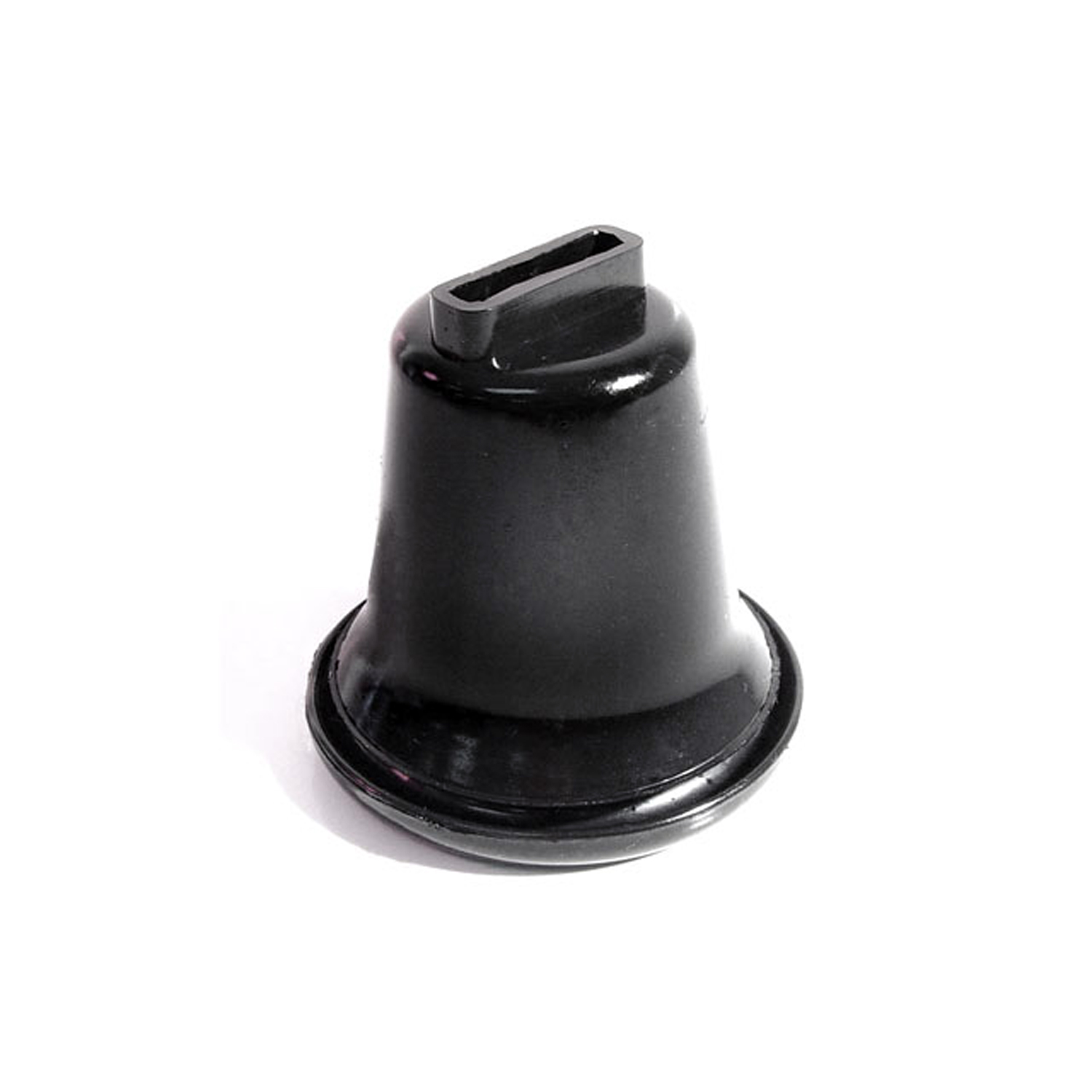 1965 Mercury Marauder Brake Booster Boot. Each-RP 32-AABrake Booster Boot. Each
 1965 Mercury Marauder Hood Bumper. Snap-in wire base like original. Each-SB 89-AHood Bumper. Snap-in wire base like original. Each
Why Choose Metro?
For over 100 years, Metro Moulded Parts has been the pinnacle of quality in classic car restoration parts. Our commitment to precision and authenticity in every component ensures a perfect fit and an OEM-level appearance.
- Expert Craftsmanship & Quality: Each part is a testament to our dedication to reliability and perfection, crafted from original designs and thoroughly tested.
- Advanced Technology: We use cutting-edge techniques to create flawless, long-lasting parts that surpass others in performance.
- SuperSoft Sponge – The Ultimate Door Seal: Not only are our door seals 30% softer than competitors', but they're also guaranteed to never leak. They effectively reduce wind and road noise, enhancing your classic car's comfort and driving experience.
- Proudly American: Our parts are a product of American craftsmanship, made in the USA with a spirit of excellence and heritage.
- Unrivaled Warranty: We back our products with a 30-year industry-leading warranty, a testament to our confidence in their quality.
Join us in preserving the legacy of classic cars with parts that are crafted for perfection, not just made.