
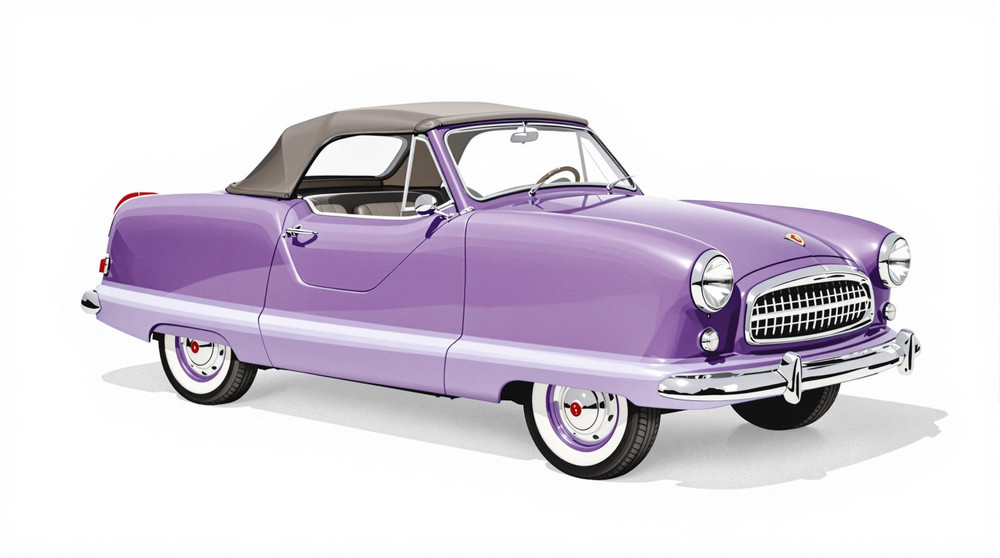
Image of 1956 Metropolitan Series B, Note: These illustrations use artistic license and may differ from actual historical models.
Performance Metrics
Fundamental Metrics
Emotional Appeal
MMP Rating
| Engine Specifications | |
|---|---|
| Engine: | 1.5L Austin A-Series I4 |
| Displacement: | 1.5L (1489 cc) |
| Horsepower: | 52 hp at 4,500 rpm |
| Torque: | 77 lb-ft at 2,400 rpm |
| Compression Ratio: | 7.2:1 |
| Ignition System: | Distributor and coil |
| Cooling System: | Water-cooled |
| Performance Specifications | |
| 0-60 Time: | 19.3 seconds |
| 1/4 Mile Time: | Not available |
| Top Speed: | 77 mph |
| Transmission and Drive | |
| Drive Type: | Rear-wheel drive |
| Transmission Type: | 3-speed manual |
| Fuel and Efficiency | |
| Fuel System Type: | Single SU carburetor |
| MPG: | 30-35 mpg |
| Dimensions and Brakes | |
| Brakes: | Hydraulic drum brakes on all four wheels |
| Wheelbase: | 85 in (2,159 mm) |
| Weight: | 1,785 lb (810 kg) |
Note: Specifications for classic cars are given to the best of our ability, considering the limited and variant data available.
1956 Nash Metropolitan Series B: America’s Pocket-Sized Classic
The 1956 Metropolitan Series B made a big impression by taking up very little road. This cheerful two-seat car was conceived for American streets and built in Britain, combining compact dimensions with styling that looked nothing like the family sedans dominating U.S. showrooms.
The Metropolitan began as a project at Nash-Kelvinator, with industrial designer William J. Flajole developing the original concept. Nash arranged for Austin Motor Company to build the car at its Longbridge factory in England, using British mechanical components and shipping the finished cars to North America. By 1956, the Metropolitan had become an established name in the growing market for small, economical cars.
Its timing was notable. American cars were generally getting larger, but crowded cities, tight parking spaces, and interest in fuel economy created an opening for a truly compact model. The Metropolitan answered that need with a footprint closer to a European city car than a conventional American automobile. One of its most intriguing quirks is that an American-designed car was manufactured in Britain and sold in the United States under American brand names.
Cheerful Styling, Compact Dimensions
The Metropolitan’s shape is instantly recognizable. Its upright grille, rounded hood, bulbous front fenders, small wheels, and nearly vertical windshield give it a friendly, almost cartoon-like personality. The short body is only about 150 inches long, yet the designers gave it the visual confidence of a much larger car with bright chrome trim and a carefully balanced two-tone paint scheme.
The Series B continued the Metropolitan’s basic two-seat layout and compact proportions. Details varied by model year and production run, but the car’s defining features remained: a proud front end, a compact cabin, and a small luggage compartment at the rear. The design was practical as well as playful, with the hood opening forward to provide access to the engine bay.
Inside, the Metropolitan was simple rather than luxurious. Two occupants sat on a bench-style seat, generally trimmed in vinyl, with painted metal surfaces and straightforward controls. The cabin was narrow, but the large windows helped it feel airy. Storage was limited, so owners learned to pack lightly or use the rear luggage area efficiently. Period accessories such as a heater and radio could make the little car more comfortable and entertaining, but this was not a car filled with power conveniences.
Two body styles were offered: a fixed-roof hardtop coupe and a convertible. Both were two-seaters, and the convertible is often the more sought-after choice today because it adds open-air charm to the Metropolitan’s already distinctive look. Factory colors included bright solid shades and contrasting two-tone combinations. Red and white, green and white, and blue and white pairings suit the car especially well, though exact combinations depended on the year and production run.
Small-Car Engineering with a Transatlantic Story
Under the hood, the 1956 Series B used a British Austin A-Series four-cylinder engine of about 1,200 cc, or 73 cubic inches. It drove the rear wheels through a three-speed manual transmission. The layout was conventional for the period, but the scale was unusual in the American market: a front-engine, rear-wheel-drive car packaged for two people and minimal parking space.
The Metropolitan’s compact construction and modest mechanical specification helped keep it accessible. Its small engine used less fuel than the large six- and eight-cylinder engines common in American cars, while its relatively simple running gear was familiar to mechanics who knew British Austin products. The model also helped make the idea of a purpose-built small car more visible to American buyers, years before compact imports and domestic economy cars became commonplace.
What set the Metropolitan apart was not a groundbreaking high-performance technology. Its innovation was the overall proposition: a small, economical, stylish car that was designed for American customers but produced overseas. It showed that a car did not need to be large to have a clear identity, and its cheerful styling remains an influence on how designers create personable, approachable small cars.
Performance and Road Manners
The Series B’s 1,200-cc engine produced roughly 42 horsepower, enough for city driving and steady cruising, but not for rapid acceleration. Period figures and modern estimates vary with condition, gearing, and measurement method. A healthy car might reach about 70 to 75 mph under favorable conditions, while a 0-to-60-mph run could take roughly 25 seconds or more. The Metropolitan was built to get around economically, not to win traffic-light contests.
On a smooth road, the car feels light and easy to place. Its short length makes parking simple, and the steering requires little effort at low speeds. The compact wheelbase and narrow tires also mean that broken pavement can produce a busy, bouncy ride. On winding roads, the car is enjoyable at modest speeds, but its narrow track and soft, period suspension call for measured driving rather than aggressive cornering.
From behind the wheel, the experience is direct and unhurried. The engine has a small, purposeful four-cylinder burble, and the three-speed gearbox asks the driver to work through the ratios as traffic and hills demand. The cabin is close around its occupants, the controls are uncomplicated, and the view over the short hood makes the car feel even smaller than it is. A Metropolitan rewards relaxed driving and a sense of humor about modern traffic.
Living with a Metropolitan
Today, most Metropolitans are weekend drivers, local show cars, or cherished additions to collections of small and unusual classics. Some remain usable for short everyday trips, but their age, modest power, limited safety equipment, and lack of modern climate control make them less suited to regular high-speed commuting.
Routine maintenance is manageable for an owner with basic mechanical skills. The engine and transmission are straightforward, and many mechanical parts are shared with or related to Austin components. The challenge is often not complexity but sourcing the correct parts, locating trim in good condition, and finding someone familiar with the car’s British-American mix. Rust deserves close inspection, particularly in the floors, sills, lower body panels, and structural areas. A clean, complete car is generally a better starting point than an inexpensive project missing hard-to-find pieces.
Reliability depends heavily on maintenance and the quality of any restoration. A well-kept Metropolitan can be an enjoyable local car, but its small engine works hard at modern highway speeds. Owners should keep expectations in line with 1950s economy-car engineering and make sure the brakes, tires, electrical system, and cooling system are in sound condition.
Metropolitan Trivia and Common Complaints
The Metropolitan’s unusual production story is one of its best conversation starters: the car was developed for an American company, built by Austin in England, and sold in the United States through Nash and, later, Hudson and American Motors channels. The name also outlived the original Nash and Hudson corporate identities, giving the little car a place in the transition to American Motors.
About 95,000 Metropolitans were produced across the model’s full run from 1953 to 1961. Production figures for a particular series or model year can be harder to pin down, so estimates for the Series B should be treated cautiously. The Metropolitan was not a racing or speed-record car; its claim to fame was bringing a distinctive, genuinely small car to American buyers in meaningful numbers.
Criticisms are predictable but fair. The cabin is tight, luggage capacity is limited, acceleration is leisurely, and the car can feel vulnerable beside modern traffic. Its modest performance and compact proportions were exactly what made it useful in its intended role, but they can be drawbacks for owners expecting a conventional American touring car.
Collector Values and Availability
Metropolitans remain more attainable than many headline classic cars, though condition and originality make a major difference. As a broad 2026 estimate, a project car may sell for around $3,000 to $8,000. A presentable driver or older restoration often falls in the $8,000 to $18,000 range, while a high-quality restoration or especially attractive convertible can bring roughly $20,000 to $30,000 or more. Exceptional examples may exceed that range, but they are the exception rather than the rule.
The Series B is not exceptionally rare in the sense of being nearly impossible to find, but good, complete cars are less common than rough projects. Convertibles and unusually original examples tend to draw particular interest. Prices have generally been supported by the Metropolitan’s strong character and approachable scale, but appreciation has been gradual and uneven. Buyers should think of it first as an enjoyable classic with a loyal following, not as a guaranteed investment.
A Little Car with Lasting Character
The 1956 Metropolitan Series B brought together British mechanical simplicity, American-market thinking, and styling that still makes people smile. It was economical, easy to park, and unmistakable, even if its acceleration and interior space were modest by any standard.
More than a small car, the Metropolitan is a reminder that automotive significance is not measured only in horsepower or size. Its transatlantic origins and cheerful design helped give the American compact-car story a memorable early chapter, and that is why this little classic still turns heads wherever it goes.
1956 Metropolitan Series B Catalog of Parts
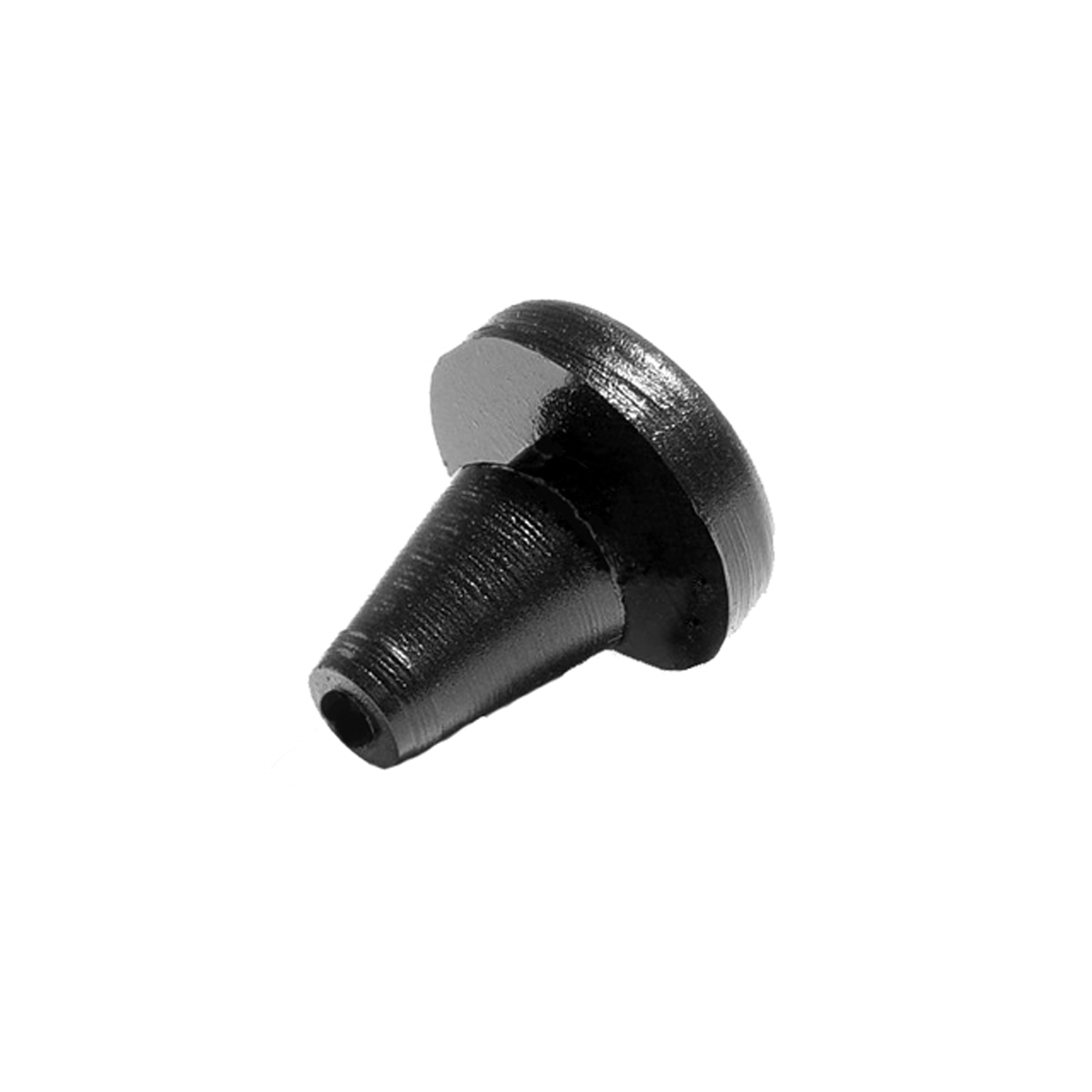 1956 Metropolitan Series B Hood Side Bumper. 5/8" O.D.,5/8" High. Each-SB 11Hood Side Bumper. 5/8" O.D.,5/8" High. Each
Why Choose Metro?
For over 100 years, Metro Moulded Parts has been the pinnacle of quality in classic car restoration parts. Our commitment to precision and authenticity in every component ensures a perfect fit and an OEM-level appearance.
- Expert Craftsmanship & Quality: Each part is a testament to our dedication to reliability and perfection, crafted from original designs and thoroughly tested.
- Advanced Technology: We use cutting-edge techniques to create flawless, long-lasting parts that surpass others in performance.
- SuperSoft Sponge – The Ultimate Door Seal: Not only are our door seals 30% softer than competitors', but they're also guaranteed to never leak. They effectively reduce wind and road noise, enhancing your classic car's comfort and driving experience.
- Proudly American: Our parts are a product of American craftsmanship, made in the USA with a spirit of excellence and heritage.
- Unrivaled Warranty: We back our products with a 30-year industry-leading warranty, a testament to our confidence in their quality.
Join us in preserving the legacy of classic cars with parts that are crafted for perfection, not just made.