
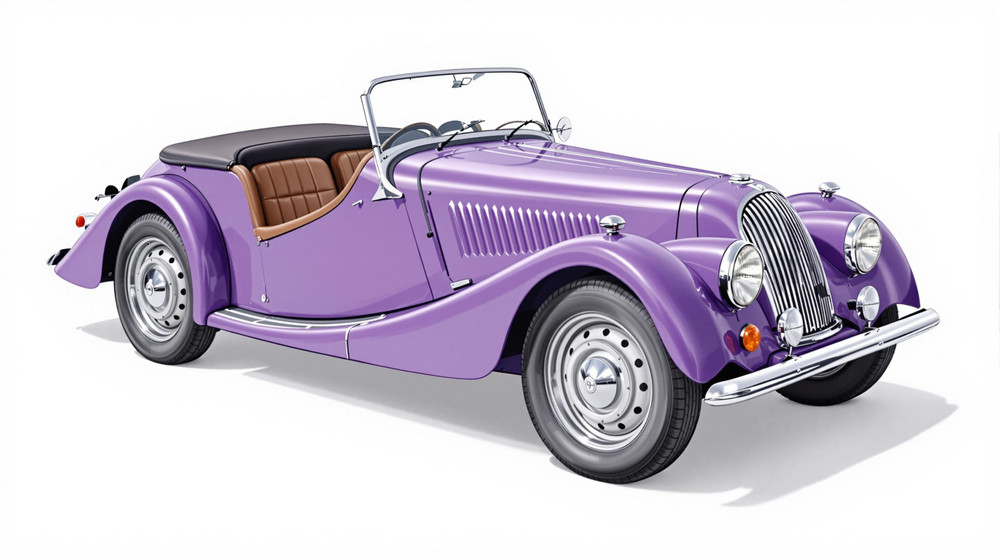
Image of 1947 Morgan 4/4 Series I, Note: These illustrations use artistic license and may differ from actual historical models.
Performance Metrics
Fundamental Metrics
Emotional Appeal
MMP Rating
| Engine Specifications | |
|---|---|
| Engine: | Standard 4-cylinder |
| Displacement: | 1267cc |
| Horsepower: | Estimated 38-40 hp |
| Torque: | Information not available |
| Compression Ratio: | Information not available |
| Ignition System: | Coil ignition |
| Cooling System: | Water-cooled |
| Performance Specifications | |
| 0-60 Time: | Information not available |
| 1/4 Mile Time: | Information not available |
| Top Speed: | 75-80 mph |
| Transmission and Drive | |
| Drive Type: | Rear-wheel drive |
| Transmission Type: | 4-speed manual |
| Fuel and Efficiency | |
| Fuel System Type: | Carburetor |
| MPG: | Information not available |
| Dimensions and Brakes | |
| Brakes: | Drum brakes |
| Wheelbase: | 96 inches |
| Weight: | 795 kg |
Note: Specifications for classic cars are given to the best of our ability, considering the limited and variant data available.
1947 Morgan 4/4 Series I: Britain’s Featherweight Sports Car
The 1947 Morgan 4/4 Series I made modest power feel like a proper sporting event. Built by the Morgan Motor Company in Malvern Link, England, it was a small, light roadster from a maker already famous for its three-wheeled cars. The “4/4” name announced the difference: four wheels and four cylinders.
Launched in 1936, the 4/4 was Morgan’s first production four-wheeler. Its career was interrupted by the Second World War, then resumed afterward, making a 1947 example part of the model’s important postwar return. One intriguing detail is that the 4/4 name endured across many later generations. The Series I was the beginning of a long-running Morgan tradition, not just a brief experiment in four-wheeled motoring.
Classic Morgan Styling and Craftsmanship
The Series I has the unmistakable proportions of a traditional British sports car: a long bonnet, separate cycle-style front wings, a narrow cabin, exposed wire wheels and a short, upright tail. Its low stance and slim body make it look purposeful without relying on elaborate decoration. Many examples also wear a simple upright grille and practical windscreen, details that give the car its hands-on, prewar character.
Morgan construction blended a steel chassis with a timber frame, traditionally made from ash, supporting the bodywork. Aluminum panels were commonly used, helping keep weight down. Inside, the cabin is compact and functional. Expect leather upholstery, a straightforward dashboard, clear analogue instruments and simple controls rather than the trim and equipment of a modern grand tourer. The craftsmanship is part of the appeal: it feels assembled by a small specialist manufacturer, not stamped out as a mass-market car.
Paint was not limited to one defining factory color. Period and surviving cars can be found in shades such as British racing green, red, blue, black and cream, alongside owner-selected finishes. Green is an especially familiar choice for a British sports car, but condition and originality matter more to collectors than any single color.
The best-known Series I shape is the two-seat roadster, with its open cockpit and compact proportions. Morgan also offered four-seat versions during the model’s early life, giving buyers a more practical alternative. Body availability could vary by year and specification, so a particular 1947 car’s exact configuration is best confirmed from its records and chassis details.
Engineering Behind the 4/4
The 4/4 helped Morgan move beyond its three-wheeler roots while preserving the company’s lightweight, low-volume approach. Its importance was not that it introduced a revolutionary new system. Rather, it showed how a small manufacturer could build an engaging four-wheeled sports car from familiar components and careful engineering.
A notable feature was Morgan’s sliding-pillar independent front suspension, a distinctive design the company had used for decades. At the rear, the car relied on a live axle. The combination, modest mass and relatively narrow tires created a very different character from heavier, more insulated cars of the era. The 4/4 became an early expression of a Morgan formula that valued directness and driver involvement over power and luxury.
For a 1947 Series I, the engine was generally Ford’s 1,172 cc side-valve four-cylinder, producing roughly 30 to 34 horsepower depending on specification and condition. Earlier Series I cars had used a Coventry Climax engine, so identifying the year and engine fitted to an individual car is worthwhile. The Ford unit was paired with a period manual gearbox, commonly a three-speed on these cars. Four-wheel drum brakes provided the stopping power.
Performance and Road Manners
Period performance figures vary with body style, gearing, engine condition and test method. A healthy 1,172 cc car can be expected to reach approximately 65 to 70 mph, with 0 to 60 mph taking roughly 30 seconds or more. Those are estimates rather than guaranteed factory figures. The car’s appeal is less about acceleration times than the way its low weight makes ordinary speeds feel lively.
On a winding road, the 4/4 rewards smooth inputs. The steering is direct and communicative, while the light chassis lets the driver feel changes in the road surface. The sliding-pillar front suspension has a distinct character over bumps, and the live rear axle can respond sharply to rough pavement. Narrow period tires and old-fashioned brakes call for a measured approach, especially in wet weather or modern traffic.
The engine is part of the experience. It has the steady, mechanical chatter typical of a small side-valve four, accompanied by wind noise and the sounds of the road in the open cockpit. The driving position is close to the machinery: the driver shifts, steers and brakes without much isolation between car and road. That can be tiring on a long journey, but it is exactly what makes a short drive memorable.
Living With a 1947 Morgan
Today, most Series I cars are used for weekend touring, club events, historic rallies and shows. Some are driven regularly by owners who enjoy maintaining and exercising an old sports car, but it is rarely a sensible modern daily driver. Weather protection is limited, safety equipment is basic and the car lacks the comfort and crash protection expected of a contemporary vehicle.
The mechanical layout is relatively straightforward, and the Ford side-valve engine is familiar to many vintage-car specialists. Routine servicing and repairs can be approachable for an experienced home mechanic, although age, previous repairs and the car’s hand-built construction can complicate the job. The wooden body frame deserves particular attention: rot or poorly executed repairs can be more costly than routine engine work. Chassis corrosion, suspension wear, brake condition and the quality of any restoration should also be checked carefully.
Parts support for the Morgan marque remains strong compared with that for many small-volume classics, but a Series I car still requires specialist knowledge for some components and restoration work. A pre-purchase inspection by someone familiar with early Morgans is a wise investment.
Series I Facts and Common Criticisms
The “4/4” badge is a compact description of the car’s four wheels and four-cylinder engine, a distinction that mattered for a company whose identity had been built around three-wheelers. The Series I ran from 1936 to 1950, with wartime disruption in the middle. A commonly cited production estimate for the entire Series I is about 663 cars, though exact totals and year-by-year breakdowns can vary between references. That figure is for the series, not for 1947 alone.
The 1947 4/4 is not especially known for a single famous speed record or a mass-market sales milestone. Its significance is more lasting and quieter: it established the basic four-wheeled Morgan sports-car concept, which the company continued to develop for decades. Its low production volume and hand-built character also make surviving cars uncommon.
Common criticisms are part of the ownership conversation. The cabin is cramped, performance is modest, the ride can be busy on rough roads, and weather protection is limited. Braking and lighting are also firmly of their era. For enthusiasts, those shortcomings are inseparable from the car’s charm, but they should be understood before buying one.
Collector Values and Availability
As a broad 2026 estimate, a 1947 Morgan 4/4 Series I might sell for roughly US$30,000 to US$60,000. A car needing substantial restoration could fall below that range, while an exceptionally well-restored, well-documented example may exceed it. In the United Kingdom, a rough guide might be around £20,000 to £40,000, with condition and specification having a major effect on the final price. These are market estimates, not formal appraisals.
Series I cars are scarce, and a buyer may wait for the right example rather than choose from a large supply. Values tend to favor cars with sound timber structure, a correct or well-documented drivetrain, quality restoration work and clear ownership history. In recent years, well-presented vintage sports cars have generally held collector interest, and the Series I has potential for gradual appreciation. However, restoration costs can exceed a car’s eventual sale value, so a rising market should not be treated as a guarantee of profit.
Why the 1947 Morgan 4/4 Still Matters
The 1947 Morgan 4/4 Series I combined a small Ford engine, light construction and distinctive Morgan suspension in a simple, hand-built roadster. It was not fast by modern standards, nor was it designed to isolate its driver from the elements. Its achievement was to make modest performance engaging and to give Morgan a four-wheeled sports car identity that would endure long after the postwar years.
For collectors, it offers rarity, craftsmanship and a direct connection to the earliest chapter of Morgan’s four-wheeler story. For drivers, it offers something harder to quantify: the pleasure of being fully involved in every mile. A Series I does not need to be the fastest car on the road to leave the strongest impression.
1947 Morgan 4/4 Series I Catalog of Parts
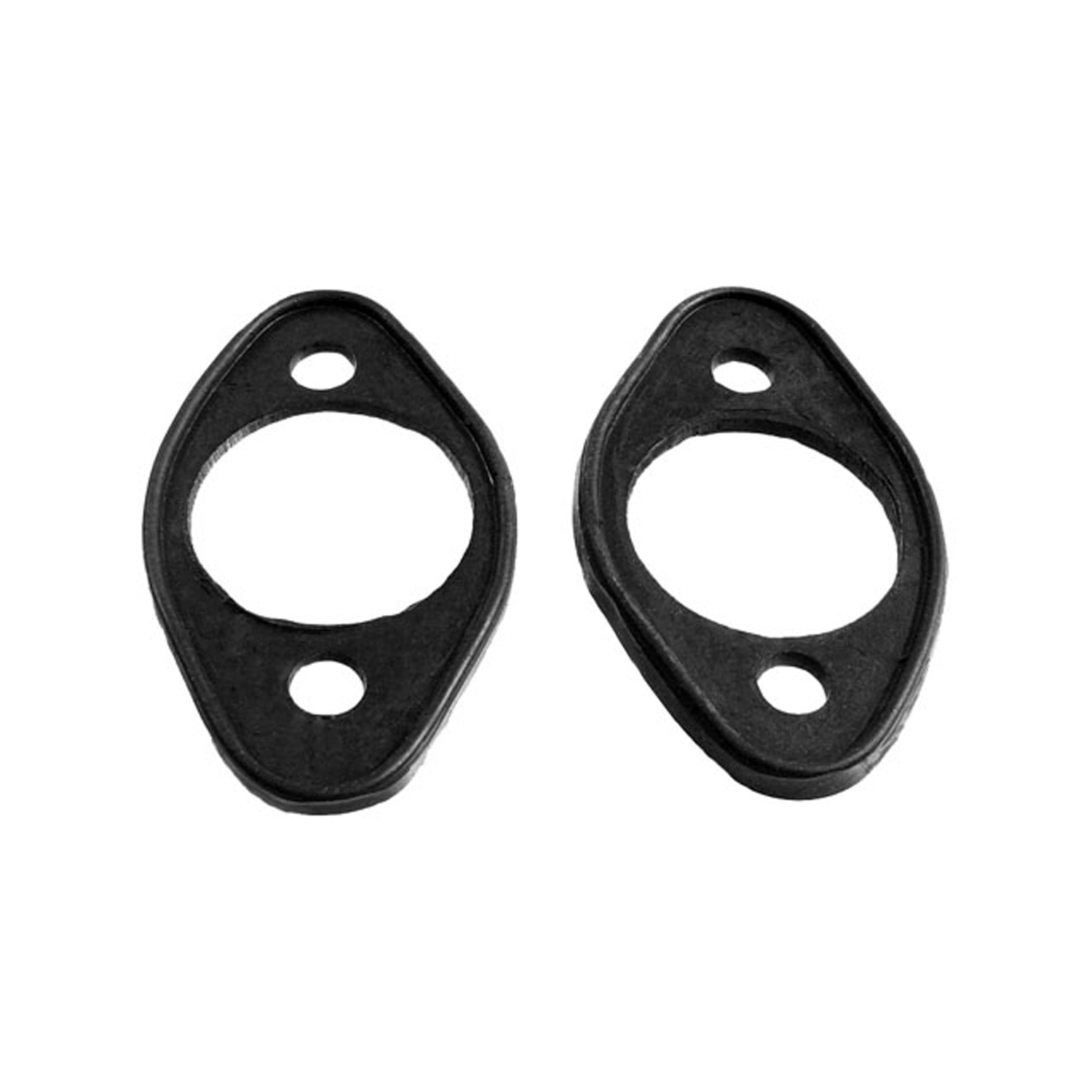 1947 Morgan 4/4 Series I Door Handle Pads. For all models with outside door handles-MP 1012-DDoor Handle Pads. For all models with outside door handles. 1-3/8" wide X 2-3/8" long. Pair
Why Choose Metro?
For over 100 years, Metro Moulded Parts has been the pinnacle of quality in classic car restoration parts. Our commitment to precision and authenticity in every component ensures a perfect fit and an OEM-level appearance.
- Expert Craftsmanship & Quality: Each part is a testament to our dedication to reliability and perfection, crafted from original designs and thoroughly tested.
- Advanced Technology: We use cutting-edge techniques to create flawless, long-lasting parts that surpass others in performance.
- SuperSoft Sponge – The Ultimate Door Seal: Not only are our door seals 30% softer than competitors', but they're also guaranteed to never leak. They effectively reduce wind and road noise, enhancing your classic car's comfort and driving experience.
- Proudly American: Our parts are a product of American craftsmanship, made in the USA with a spirit of excellence and heritage.
- Unrivaled Warranty: We back our products with a 30-year industry-leading warranty, a testament to our confidence in their quality.
Join us in preserving the legacy of classic cars with parts that are crafted for perfection, not just made.