
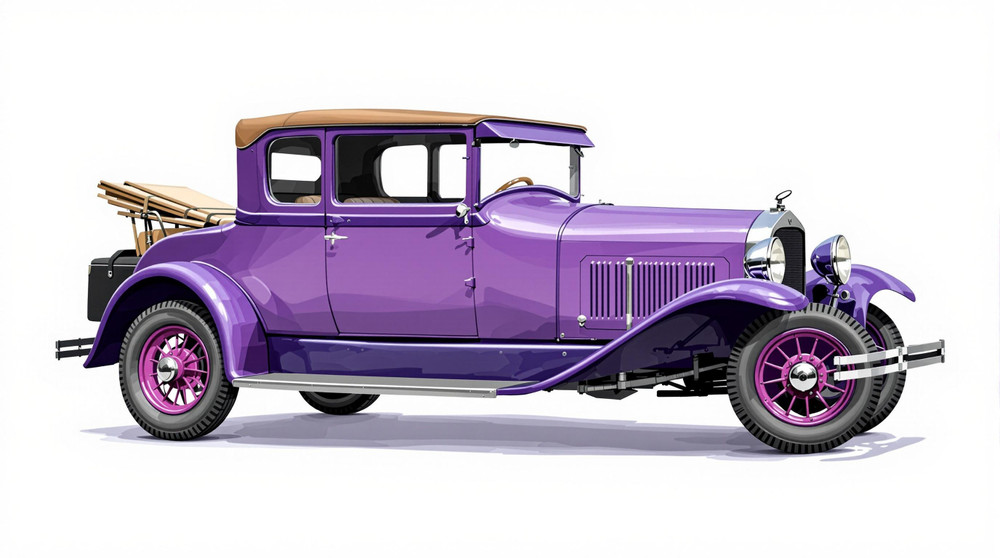
Image of 1926 Oldsmobile Model 30-D, Note: These illustrations use artistic license and may differ from actual historical models.
Performance Metrics
Fundamental Metrics
Emotional Appeal
MMP Rating
| Engine Specifications | |
|---|---|
| Engine: | Inline 6-cylinder |
| Displacement: | 169 cubic inches |
| Horsepower: | Estimated 35-40 HP |
| Torque: | Not available |
| Compression Ratio: | Not available |
| Ignition System: | Battery and coil |
| Cooling System: | Water-cooled |
| Performance Specifications | |
| 0-60 Time: | Not available |
| 1/4 Mile Time: | Not available |
| Top Speed: | 50 mph |
| Transmission and Drive | |
| Drive Type: | Rear-wheel drive |
| Transmission Type: | 3-speed manual |
| Fuel and Efficiency | |
| Fuel System Type: | Carburetor |
| MPG: | Not available |
| Dimensions and Brakes | |
| Brakes: | Mechanical drum brakes |
| Wheelbase: | 115 inches |
| Weight: | 2,400 lbs |
Note: Specifications for classic cars are given to the best of our ability, considering the limited and variant data available.
1926 Oldsmobile Model 30-D: A Six-Cylinder Step Forward
The 1926 Oldsmobile Model 30-D brought smooth six-cylinder power and modern conveniences to a growing American middle class. Built by the Olds Motor Works, then part of General Motors, it sat in the important market between inexpensive basic transportation and the more prestigious cars of the day. Its appeal was practical as well as mechanical: a refined engine, a choice of body styles, and the confident presence of a substantial early automobile.
The Model 30-D belongs to an era when manufacturers were moving beyond the simple, exposed machinery of early motoring. Cars were becoming enclosed, more comfortable, and easier to use on everyday roads. Oldsmobile had already helped shape the industry with its early mass-production methods, and by the 1920s it was using GM’s growing scale to offer buyers a more polished range of cars.
One intriguing detail is the Model 30-D’s place in Oldsmobile’s changing model nomenclature. The “30” identified its series, while the letter distinguished that year’s version from related models. It was not a standalone luxury marque, but a member of a fast-evolving product family aimed at drivers who wanted more refinement than a basic four-cylinder car could provide.
Exterior Design and Cabin Details
The Model 30-D wears the upright proportions typical of the mid-1920s. Its tall radiator, narrow hood, separate fenders, exposed running boards, and large spoked wheels give it a distinctly pre-streamlined appearance. Brass fittings had largely given way to nickel-plated or painted hardware by this period, and the overall look was more restrained than that of earlier brass-era automobiles. The result is formal and purposeful rather than sleek.
Bodywork varied by configuration, but most versions had a long, upright passenger compartment and a high seating position. Depending on the body, passengers sat beneath a fabric top or inside a fully enclosed cabin. A sedan’s side windows and doors offered welcome shelter from dust and weather, while open models retained the social, outdoorsy character that many motorists still associated with motoring.
Cabin materials were functional and durable. Enclosed bodies commonly used cloth or similar upholstery, with wood trim and a straightforward instrument panel. Open cars typically had more exposed, utilitarian interiors. Compared with a modern vehicle, the cabin was sparse: controls were mechanical, insulation was limited, and the driver had to attend closely to the road and machinery. Still, an enclosed Model 30-D represented a substantial step up in comfort from an open touring car.
Factory paint choices could vary by body style and production details, so a single universal color list is difficult to confirm. Period cars were often offered in dark, conservative shades such as black, blue, green, or maroon, sometimes with contrasting trim or pinstriping. Dark colors were popular because they suited the car’s formal lines and were practical to maintain. Restorers should consult a body-specific factory color chart where available rather than assume every shade was offered on every version.
Oldsmobile offered the Model 30-D in more than one body configuration, including enclosed and open styles such as sedans, coupes, and touring-type cars. Exact names and availability could differ across catalogs and market listings. The four-door sedan is often the most recognizable today, thanks to its practical layout and the surviving examples commonly seen at shows. The open touring body, by contrast, best captures the period’s traditional motoring image.
Engineering in the Mid-1920s
The Model 30-D’s central engineering feature was its inline six-cylinder engine. Contemporary specifications commonly identify it as a roughly 177-cubic-inch unit rated at about 40 horsepower, paired with a three-speed manual transmission. Specifications can differ between references and individual cars, so anyone evaluating a particular example should verify its engine and chassis details against reliable period documentation.
A six-cylinder engine was a meaningful selling point in 1926. Compared with many four-cylinder rivals, six cylinders could deliver smoother operation and more relaxed power delivery. The Model 30-D also had the familiar rear-wheel-drive layout, mechanical controls, and a separate chassis typical of its era. Its technology was not exotic, but it combined established engineering with the more comfortable body styles buyers increasingly expected.
That balance was characteristic of Oldsmobile. The company was not trying to build a racing special or a hand-crafted luxury car. It was applying manufacturing experience and GM resources to make a more refined, usable automobile for ordinary owners.
Why the Model 30-D Matters
The Model 30-D reflects a broader shift in American motoring. During the 1920s, buyers increasingly wanted cars that could serve as family transport, business conveyances, and long-distance touring machines. Enclosed bodies were becoming more desirable, while smoother engines helped make longer journeys less tiring. The Model 30-D brought those trends together in a practical package.
What distinguished it from many contemporaries was its combination of a six-cylinder engine, a range of body styles, and Oldsmobile’s position within General Motors. It offered a step toward greater refinement without entering the highest-priced luxury class. Its significance is less about one revolutionary invention than about how it represents the industry’s transition toward more comfortable, standardized, and broadly accessible cars.
Its lasting influence is therefore part of a larger story. The Model 30-D helped establish the kind of mid-priced American automobile that would become familiar in later decades: a car with enough power for touring, enough space for passengers, and enough refinement to feel like more than basic transportation.
Speed, Ride, and Road Manners
With around 40 horsepower, the Model 30-D was built for steady travel rather than rapid acceleration. A reasonable period-informed estimate for top speed is roughly 55 to 65 mph, depending on body style, gearing, condition, and road surface. A modern-style 0-to-60 mph figure is not generally documented for the model. Given its modest power and the weight of an enclosed body, reaching 60 mph would likely take a long time, and some examples may not reach it comfortably at all.
On ordinary roads, the car’s long, upright stance and substantial chassis would have made it feel composed at moderate speeds. Its suspension could absorb rough patches better than the appearance of its narrow tires might suggest, but broken roads would still send noticeable jolts through the cabin. The tall body and period tires also mean it would not feel as planted as a modern car on winding roads or in strong crosswinds. Drivers should allow generous braking distances and take corners at a measured pace.
Behind the wheel, the experience is hands-on. The engine produces a steady mechanical rhythm rather than the muted hum of a modern powertrain. Gear changes require deliberate coordination, steering is heavier at low speeds, and the driver must anticipate traffic instead of relying on modern braking and safety systems. On a quiet country road, the combination of engine note, tire noise, and open-air smells makes the car’s age part of its charm.
Living with a Model 30-D
Today, the Model 30-D is best suited to touring events, local shows, museum displays, and careful recreational drives. It can be driven on public roads where legally permitted, but it is not a sensible modern daily driver. Its speed, braking, lighting, crash protection, and parts availability are all a long way from contemporary standards.
Maintenance is manageable for an owner comfortable with vintage machinery, but it requires time and mechanical sympathy. Routine work can include lubrication, ignition adjustments, carburetor tuning, cooling-system checks, and attention to the brakes and tires. Many repairs are understandable to an experienced home mechanic because the systems are mechanically straightforward, but age, wear, and previous restoration work can complicate even a simple job.
Parts support varies. Common service items may be available through specialist suppliers and vintage-car networks, while model-specific trim, body components, and correct interior materials can be difficult to find. A pre-purchase inspection should pay particular attention to the wooden body structure where applicable, chassis condition, engine health, transmission operation, brakes, and the quality of any restoration.
Model 30-D Facts and Common Criticisms
The Model 30-D’s appeal is rooted in its everyday character, not in a famous speed record or a headline-grabbing competition victory. It represents the kind of car that helped make motor travel a normal part of American life. No widely recognized record-setting achievement is closely associated with the model, and claims of celebrity ownership should be treated cautiously unless supported by documentation.
Its most common criticisms are familiar to owners of many cars from the period: modest performance, limited braking by modern standards, a demanding driving routine, and a cabin that can be noisy or drafty. Open versions offer little protection from weather, while enclosed cars can feel warm and cramped by current standards. These are not surprises so much as reminders that the Model 30-D belongs to a very different motoring world.
Collector Values and Availability
Exact production totals for the 1926 Model 30-D are not consistently reported in commonly available references. Oldsmobile built cars in significant numbers during the period, but a dependable model-by-model figure is difficult to establish. As a cautious estimate rather than a documented factory total, production may have been in the tens of thousands across the series and its body styles. The number of surviving, complete examples is much smaller, and desirable body configurations can be hard to locate.
Values depend heavily on condition, originality, body style, and the quality of restoration. As a broad current-market estimate, a project or incomplete car might bring roughly $5,000 to $15,000, while a usable driver could fall around $15,000 to $30,000. A well-restored example may reach approximately $30,000 to $50,000 or more, particularly if it is an attractive, well-documented body style. These are general ranges, not appraisals; regional demand and the cost of correcting poor restoration work can change the picture considerably.
Like many prewar cars, the Model 30-D tends to attract a focused rather than enormous collector audience. Values are influenced by the broader market for brass- and nickel-era vehicles, but condition and authenticity matter more than simple age. Over time, well-preserved examples may appreciate, especially as surviving cars become scarcer. However, restoration costs can exceed resale value, so ownership is usually best approached as a passion project rather than a short-term investment.
A Practical Classic with Lasting Character
The 1926 Oldsmobile Model 30-D combines the upright charm of a 1920s automobile with the smoother running and greater comfort buyers were beginning to expect. Its six-cylinder engine, useful body choices, and place in Oldsmobile’s move toward more refined mass-market cars make it an appealing window into a pivotal era.
It will not deliver modern speed or convenience, and it asks its driver to participate in every part of the journey. That is exactly why it remains memorable. The Model 30-D is not just an old car with handsome lines; it is a reminder of how American motoring became more comfortable, more practical, and more accessible, one well-engineered mile at a time.
1926 Oldsmobile Model 30-D Catalog of Parts
 1926 Oldsmobile Model 30-D Door Handle Ferrule Grommet. I.D. 11/16", O.D. 1-3/16"-MP 546-IDoor Handle Ferrule Grommet. I.D. 11/16", O.D. 1-3/16". Each
 1926 Oldsmobile Model 30-D Flexible Rubber Window Channel-WC 32-14Flexible Rubber Window Channel. For Fisher Closed Bodies, except those using a stainless bead type. Used on side windows. 13/16" outer width X 6/16" outer depth, with a 5/16" inner channel width X 14" long. Each
Why Choose Metro?
For over 100 years, Metro Moulded Parts has been the pinnacle of quality in classic car restoration parts. Our commitment to precision and authenticity in every component ensures a perfect fit and an OEM-level appearance.
- Expert Craftsmanship & Quality: Each part is a testament to our dedication to reliability and perfection, crafted from original designs and thoroughly tested.
- Advanced Technology: We use cutting-edge techniques to create flawless, long-lasting parts that surpass others in performance.
- SuperSoft Sponge – The Ultimate Door Seal: Not only are our door seals 30% softer than competitors', but they're also guaranteed to never leak. They effectively reduce wind and road noise, enhancing your classic car's comfort and driving experience.
- Proudly American: Our parts are a product of American craftsmanship, made in the USA with a spirit of excellence and heritage.
- Unrivaled Warranty: We back our products with a 30-year industry-leading warranty, a testament to our confidence in their quality.
Join us in preserving the legacy of classic cars with parts that are crafted for perfection, not just made.