
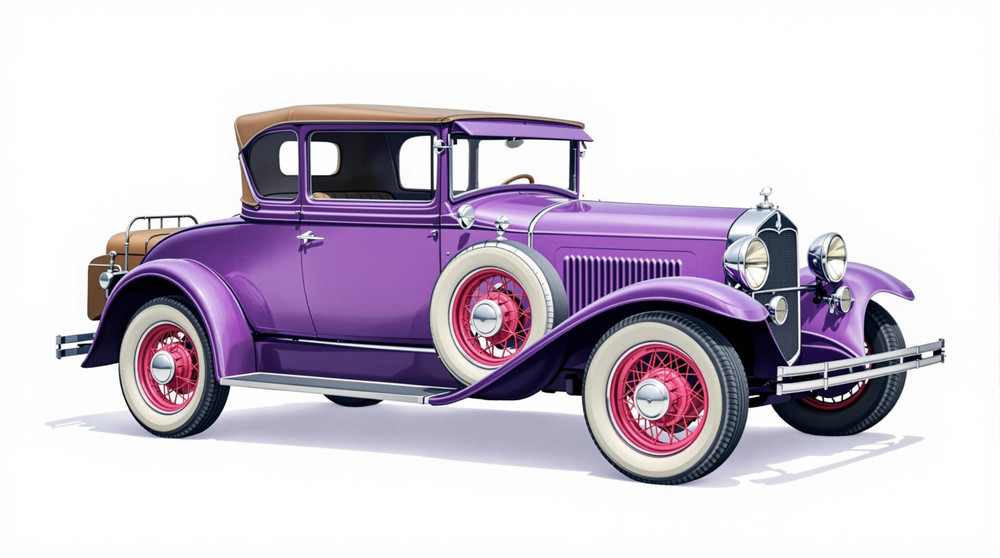
Image of 1929 Oldsmobile Model F-29, Note: These illustrations use artistic license and may differ from actual historical models.
Performance Metrics
Fundamental Metrics
Emotional Appeal
MMP Rating
| Engine Specifications | |
|---|---|
| Engine: | Inline 6-cylinder |
| Displacement: | 197 cubic inches |
| Horsepower: | Estimated 55-60 HP |
| Torque: | Not available |
| Compression Ratio: | Not available |
| Ignition System: | Battery and coil |
| Cooling System: | Water-cooled |
| Performance Specifications | |
| 0-60 Time: | Not available |
| 1/4 Mile Time: | Not available |
| Top Speed: | 60 mph |
| Transmission and Drive | |
| Drive Type: | Rear-wheel drive |
| Transmission Type: | 3-speed manual |
| Fuel and Efficiency | |
| Fuel System Type: | Carburetor |
| MPG: | Not available |
| Dimensions and Brakes | |
| Brakes: | Mechanical drum brakes |
| Wheelbase: | 113 inches |
| Weight: | 2,890 lbs |
Note: Specifications for classic cars are given to the best of our ability, considering the limited and variant data available.
1929 Oldsmobile F-29: A Six-Cylinder Star of the Roaring Twenties
The 1929 Oldsmobile F-29 brought six-cylinder power, smart General Motors engineering, and a wide choice of body styles to a market eager for modern motoring. Built by Oldsmobile, a GM division based in Lansing, Michigan, it sat in the company’s popular six-cylinder range at a time when buyers were increasingly looking beyond basic, four-cylinder transportation.
Oldsmobile had already earned a place in automotive history through its early Curved Dash runabout and its reputation for making useful innovations accessible to ordinary motorists. The F-29 carried that practical tradition into the late 1920s. Its arrival also coincided with the final burst of prosperity before the stock-market crash and the Great Depression. One appealing bit of period context: the F-29 was designed for a world of paved main streets and improving highways, but many owners still had to take it over rough, unpaved roads.
F-29 Styling, Cabin, and Body Choices
The F-29 wore the upright, carefully balanced proportions typical of a late-1920s automobile. Its tall radiator and vertical grille gave the nose a formal, almost architectural look, while separate headlamps sat outboard of the hood. Long hood panels, slim fenders, running boards, and wire-spoke wheels completed the profile. On closed models, a high roofline and narrow windows made the car look substantial; open versions showed off the sweeping fenders and exposed cabin.
Oldsmobile offered the F-29 in several body styles, with availability varying by market and production listing. Buyers could find closed cars such as a coupe, coach, or sedan, as well as open touring or phaeton-style models. The four-door sedan was a particularly practical and popular choice, offering room for family and passengers while providing protection from weather. Coupes appealed to buyers wanting a more personal, sporting-looking car.
Inside, the F-29 was straightforward rather than lavish. Closed cars commonly used durable cloth or mohair-style upholstery, while open models could have leather trim. A broad steering wheel, simple instrument panel, upright seating, and visible controls made the cabin easy to understand. Wood framing and trim contributed to the solid feel of the bodywork, though the exact materials and finish varied with body style and equipment. Factory color combinations also varied. Dark shades such as black, deep blue, green, and maroon suited the period’s formal styling, often accented with contrasting wheels or trim.
Six-Cylinder Engineering for 1929
At the heart of the F-29 was a side-valve, or L-head, inline-six of about 197 cubic inches. Period specifications generally list output at approximately 55 horsepower. A three-speed manual transmission sent power to the rear wheels. The combination favored smooth, flexible everyday driving over high-revving performance, and the six-cylinder layout delivered a more even, refined power flow than many four-cylinder rivals.
Four-wheel mechanical brakes were typical of the period. They required more driver effort and adjustment than modern hydraulic systems, but offered useful stopping power when properly maintained. The F-29 also reflected the era’s move toward more standardized, factory-built cars: buyers could select a body and finish, but the core mechanical package was designed for dependable, repeatable production.
Why the 1929 Oldsmobile F-29 Matters
The F-29 was not a radical one-off engineering experiment. Its significance lies in how it brought a smooth six-cylinder engine and a broad range of practical bodies to a mainstream American brand. In an era when automakers were competing to offer more power, comfort, and polish, the Oldsmobile occupied a useful middle ground between basic transportation and more expensive prestige cars.
It also belongs to an important moment in General Motors’ development. GM was building a broad family of brands, each aimed at a different buyer, and Oldsmobile helped bridge the gap between entry-level cars and more costly models. The F-29’s blend of conventional engineering, smart packaging, and choice of body styles captures that strategy well. Its upright proportions and separated fenders are unmistakably prewar, yet its six-cylinder layout points toward the smoother motoring customers increasingly expected.
Top Speed, Acceleration, and Road Manners
Exact performance depended on body style, gearing, load, road surface, and the condition of the individual car. A reasonable period-car estimate is a top speed in the neighborhood of 60 to 70 mph. Zero to 60 mph was slow by modern standards, likely taking roughly 30 seconds or longer under favorable conditions. These are estimates rather than guaranteed factory test figures, and a heavy sedan would generally be slower than a lighter body.
On a smooth road, the F-29’s long wheelbase and substantial chassis helped it settle into a comfortable, steady rhythm. Its suspension could absorb ordinary bumps, but rough roads still brought plenty of movement through the seat and steering wheel. On winding roads, the car’s narrow tires, high seating position, and relatively tall body called for measured cornering. It rewards a smooth driver, not abrupt inputs.
The driving experience is a hands-on one. The inline-six produces a measured mechanical rumble, accompanied by the sounds of the transmission, tires, and road. Steering takes more effort at low speed than in a modern car, and braking requires planning. The driver is part of the machinery: shifting, listening, and anticipating the road are all central to the experience.
Living With an F-29 Today
In its own time, an F-29 could serve as family transportation, a town car, or a touring machine. Today, most examples are collector cars used for local drives, antique-car tours, club events, and shows. A well-sorted car can cover short and moderate trips, but modern traffic speeds and braking distances make it best suited to relaxed routes.
Routine maintenance is approachable for an owner with mechanical experience. The engine is relatively simple, and many jobs can be handled with ordinary workshop tools. Regular attention to ignition, carburetion, lubrication, cooling, brakes, and the three-speed gearbox is essential. Parts support is available through vintage-car specialists and enthusiast networks, though some trim, body, and upholstery pieces can be difficult or expensive to source. As with any nearly century-old car, condition and previous repairs matter more than reputation alone.
F-29 Facts and Collector Notes
The F-29 does not appear to be known for a major speed record, racing achievement, or famous celebrity ownership. Its story is more representative than sensational: it was part of the large wave of American six-cylinder cars that made smoother motoring increasingly accessible. It also entered the market just before the 1929 financial crash transformed the automobile business and consumer spending.
A common criticism is that the F-29 is less familiar to the public than a Ford Model A, despite being a capable and well-equipped car for its day. Its age also brings practical limitations: modest acceleration, period braking, and a need for regular maintenance. Those traits are part of its character, but they make it less suitable for drivers seeking modern convenience or frequent high-speed use.
There is no single, widely cited production total for every F-29 body configuration. As a broad estimate, production was likely in the tens of thousands and may have reached roughly 100,000 to 150,000 cars across the range. Treat that as an informed estimate, not a confirmed factory count. Surviving examples are not commonly encountered in general traffic, but the F-29 is not necessarily as scarce as a low-volume luxury car.
Collector values vary sharply with body style, originality, restoration quality, and mechanical condition. As a broad 2026 market guide, a project or rough driver might fall around $8,000 to $18,000; a usable, presentable example could bring roughly $18,000 to $35,000; and a high-quality restoration may reach approximately $35,000 to $60,000 or more. Exceptional cars or especially desirable bodies can exceed that range, while incomplete projects can sell for less. These are estimates, not appraisals, and auction results can differ considerably.
Values for early American cars tend to move gradually rather than surge, with originality and quality restoration supporting the strongest prices. The F-29’s appeal is steady among enthusiasts who appreciate usable prewar cars, though its market is narrower than that of the best-known Ford and Chevrolet models.
A Worthy Oldsmobile From a Turning Point
The 1929 Oldsmobile F-29 combines the stately look of a prewar automobile with a smooth six-cylinder engine and the practical body choices that helped make motoring more comfortable. It was not built to chase records. It was built to carry people with confidence at a moment when American cars were changing quickly. Nearly a century later, its appeal lies in that balance of engineering, style, and everyday purpose: the F-29 is a vivid reminder of how modern motoring took shape.
1929 Oldsmobile Model F-29 Catalog of Parts
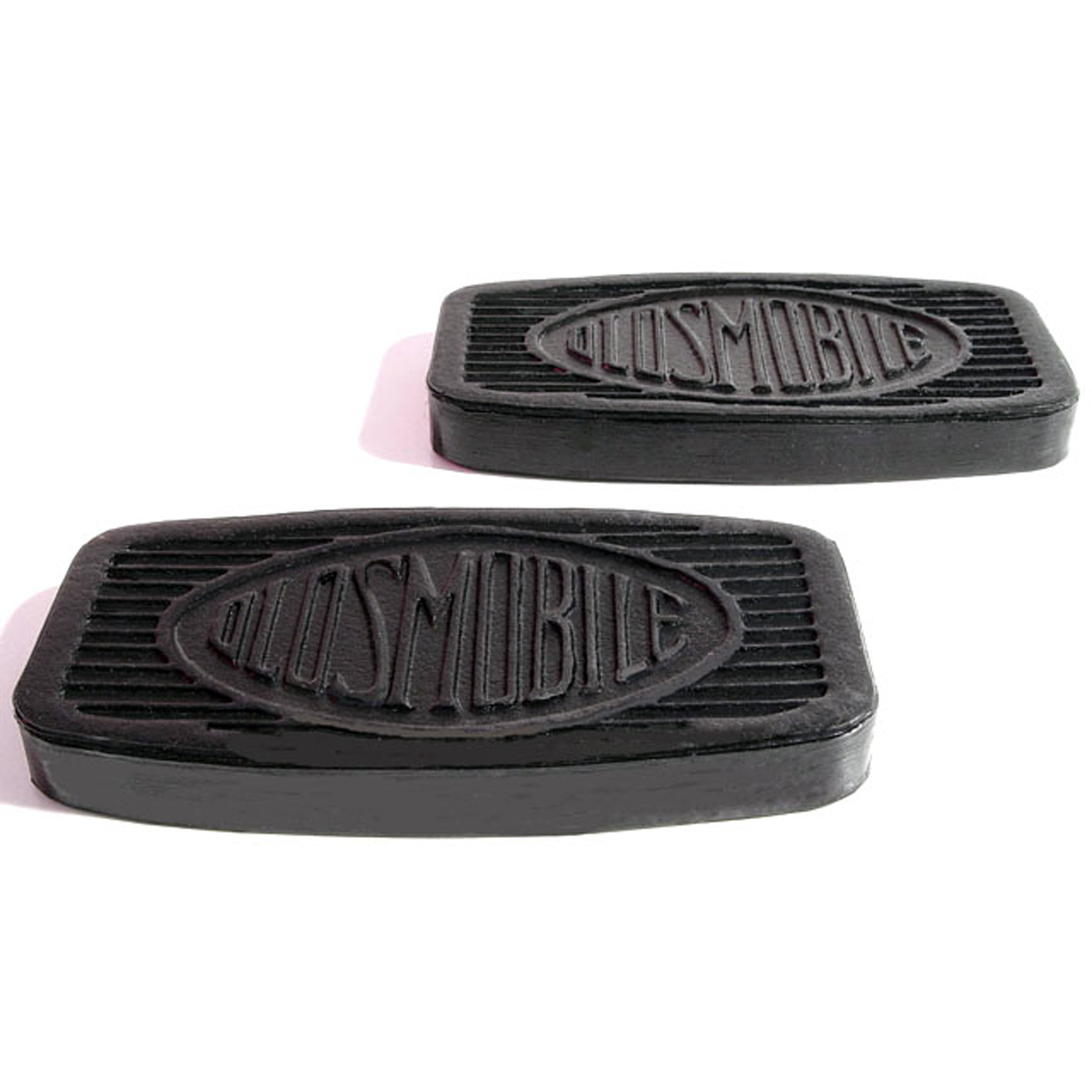 1929 Oldsmobile Model F-29 Clutch and Brake Pedal Pads. 3-1/2" wide X 1-3/16" long-CB 95Clutch and Brake Pedal Pads. 3-1/2" wide X 1-3/16" long. Pair
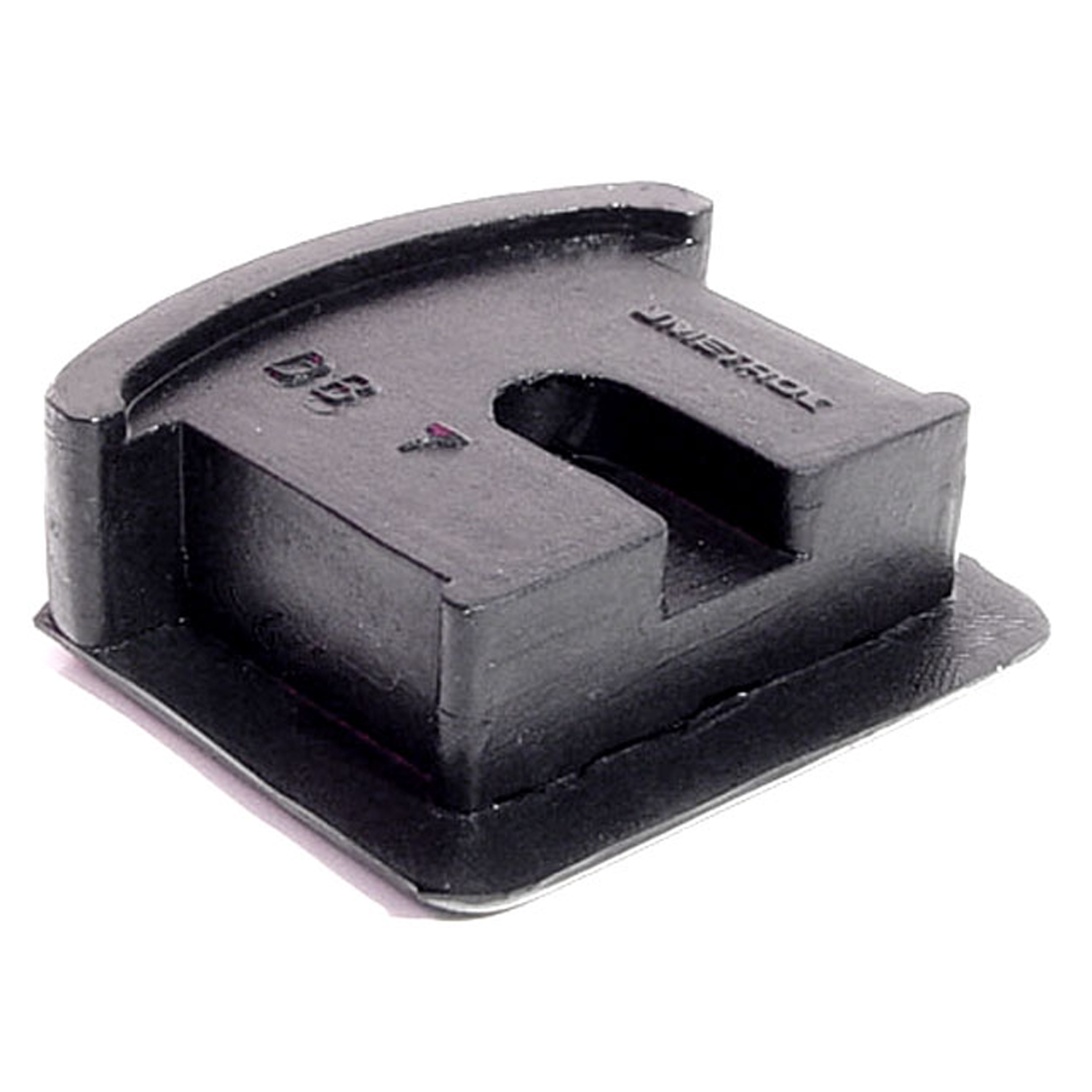 1929 Oldsmobile Model F-29 Door Bumper. 1-7/16" high X 1-9/16" wide X 9/16" thick-DB 7Door Bumper. 1-7/16" high X 1-9/16" wide X 9/16" thick. Each
 1929 Oldsmobile Model F-29 Door Handle Ferrule Grommet. I.D. 11/16", O.D. 1-3/16"-MP 546-IDoor Handle Ferrule Grommet. I.D. 11/16", O.D. 1-3/16". Each
 1929 Oldsmobile Model F-29 Flexible Rubber Window Channel-WC 32-14Flexible Rubber Window Channel. For Fisher Closed Bodies, except those using a stainless bead type. Used on side windows. 13/16" outer width X 6/16" outer depth, with a 5/16" inner channel width X 14" long. Each
Why Choose Metro?
For over 100 years, Metro Moulded Parts has been the pinnacle of quality in classic car restoration parts. Our commitment to precision and authenticity in every component ensures a perfect fit and an OEM-level appearance.
- Expert Craftsmanship & Quality: Each part is a testament to our dedication to reliability and perfection, crafted from original designs and thoroughly tested.
- Advanced Technology: We use cutting-edge techniques to create flawless, long-lasting parts that surpass others in performance.
- SuperSoft Sponge – The Ultimate Door Seal: Not only are our door seals 30% softer than competitors', but they're also guaranteed to never leak. They effectively reduce wind and road noise, enhancing your classic car's comfort and driving experience.
- Proudly American: Our parts are a product of American craftsmanship, made in the USA with a spirit of excellence and heritage.
- Unrivaled Warranty: We back our products with a 30-year industry-leading warranty, a testament to our confidence in their quality.
Join us in preserving the legacy of classic cars with parts that are crafted for perfection, not just made.