

Image of 1951 Oldsmobile Super 88, Note: These illustrations use artistic license and may differ from actual historical models.
Performance Metrics
Fundamental Metrics
Emotional Appeal
MMP Rating
| Engine Specifications | |
|---|---|
| Engine: | Rocket V8 |
| Displacement: | 303 cu in (5.0 L) |
| Horsepower: | 135 hp |
| Torque: | 263 lb-ft |
| Compression Ratio: | 7.25:1 |
| Ignition System: | Battery Ignition |
| Cooling System: | Liquid Cooled |
| Performance Specifications | |
| 0-60 Time: | Estimated 12 seconds |
| 1/4 Mile Time: | Not available |
| Top Speed: | 90 mph |
| Transmission and Drive | |
| Drive Type: | Rear-Wheel Drive |
| Transmission Type: | 4-speed Hydra-Matic automatic |
| Fuel and Efficiency | |
| Fuel System Type: | Carburetor |
| MPG: | Estimated 15 mpg |
| Dimensions and Brakes | |
| Brakes: | Drum Brakes |
| Wheelbase: | 119.5 in |
| Weight: | 3,600 lbs |
Note: Specifications for classic cars are given to the best of our ability, considering the limited and variant data available.
1951 Oldsmobile Super 88: The Rocket-Age Road Car
The 1951 Oldsmobile Super 88 brought V8 power, smooth automatic shifting, and sharp postwar styling together in a car that could feel both substantial and surprisingly quick. It was a new name in Oldsmobile’s lineup, positioned between the standard 88 and the larger, more luxurious 98. Under its long hood sat the celebrated Rocket V8, an engine that helped make Oldsmobile one of America’s performance leaders in the early 1950s.
Built by Oldsmobile, then a division of General Motors, the Super 88 arrived as the United States entered a new era of prosperity and expanding car ownership. Families wanted comfort and space, but buyers were also beginning to expect stronger acceleration and easier driving. The Super 88 answered both demands with a roomy cabin, a powerful overhead-valve V8, and the convenience of Hydra-Matic automatic transmission.
One piece of music history is often associated with the car, though the detail matters: “Rocket 88,” recorded in 1951 by Jackie Brenston and His Delta Cats, celebrated a 1949 Oldsmobile 88, not the Super 88. The song’s title nevertheless reflects the Rocket-powered Oldsmobile’s growing reputation for speed and style.
Super 88 Styling and Interior
The Super 88 wore the confident, rounded look of early-1950s GM design. Its broad front grille, substantial chrome details, rounded fenders, and smoothly integrated body gave it a purposeful presence without the exaggerated fins that would define later American cars. The long hood made room for the Rocket V8, while the carefully shaped roof and glass gave the car a lighter appearance than its size suggested.
Inside, the Super 88 was built around a wide front bench seat and a broad, neatly arranged dashboard. Buyers found durable cloth upholstery in sedans, with richer trim and additional color choices available on more expensive body styles. Chrome accents, bright instrument bezels, and coordinated door panels added a sense of occasion. It was comfortable rather than sporty by modern standards, with space for passengers and luggage taking priority over bucket seats or a driver-focused cockpit.
Oldsmobile offered the Super 88 in several body styles, including two-door and four-door sedans, the two-door Holiday hardtop, and a convertible. The Holiday hardtop was especially eye-catching because it dispensed with fixed center door pillars, creating an open, uninterrupted side profile when the windows were lowered. The convertible offered the most glamour, while four-door sedans were practical choices for family use.
Factory paint and trim combinations varied by body style and production availability. Buyers could choose from period colors that included dark and light shades of blue, green, red, gray, cream, and black. Two-tone treatments and coordinated upholstery gave some cars an especially distinctive look. Today, original paint codes and correct interior combinations are useful clues for restorers trying to establish a car’s factory specification.
Rocket V8 and 1951 Technology
The Super 88’s defining feature was its 303-cubic-inch Rocket V8. The overhead-valve design produced about 135 horsepower and roughly 263 lb-ft of torque, strong output for a family-sized American car of the period. The engine’s useful low-speed torque helped the Oldsmobile move its substantial body briskly from a stop and made relaxed highway cruising easy.
Hydra-Matic, Oldsmobile’s four-speed automatic transmission, was a major part of the car’s appeal. Rather than requiring the driver to work a conventional clutch and gear lever, it handled shifts automatically and was known for giving the car a smooth, composed character. The Super 88 also used hydraulic drum brakes and conventional suspension, with independent coil springs at the front and a live rear axle. These were established technologies, but together they made the car comfortable and straightforward to drive for its time.
Color and equipment choices could vary, but the essential formula remained consistent: a powerful V8, automatic transmission, generous seating, and a level of trim above the standard 88. That balance made the Super 88 attractive to buyers who wanted more presence and performance without stepping all the way up to the flagship 98.
Why the Super 88 Mattered
The Super 88 helped define the idea of the American performance sedan: a practical, full-size car with enough power to surprise drivers who judged it by appearance alone. Its Rocket V8 was part of a broader shift away from the slower, side-valve six- and eight-cylinder engines common in earlier cars. Overhead-valve V8s offered a strong combination of power and everyday drivability, and Oldsmobile made that technology appealing to ordinary buyers rather than limiting it to luxury or specialty models.
The Super 88 also benefited from Oldsmobile’s growing performance reputation. The standard 88 had already gained attention in stock-car racing, and Rocket-powered Oldsmobiles helped establish a connection between showroom cars and competition. The Super 88 continued that image in a more upscale package. Its influence was not that it invented the muscle car, but that it helped normalize the idea that a comfortable, usable American car could also deliver serious V8 performance.
Performance and Driving Feel
Period performance varied with body style, transmission, gearing, condition, and test method. A well-tuned 1951 Super 88 could reach approximately 95 to 100 mph, with a zero-to-60 mph time in the neighborhood of 12 to 14 seconds. Those figures made it a lively full-size car for its day, although they are modest beside modern family vehicles.
On the road, the Rocket V8’s sound is a deep, even rumble rather than a high-revving sports-car bark. The Hydra-Matic shifts through its ratios without the driver needing to intervene, and the car gathers speed with a steady surge of torque. Its long wheelbase and soft suspension smooth out ordinary bumps, giving the Super 88 the relaxed ride expected of a large American sedan.
That comfort has limits on winding roads. The car is heavy, its steering is less precise than a modern vehicle’s, and its body leans through corners. On a gusty highway or uneven pavement, the driver needs to make measured steering corrections rather than expecting the car to follow a tight line. Drum brakes also require more planning than modern disc systems, especially in repeated hard stops. The best driving experience comes from keeping a sensible pace and letting the Oldsmobile settle into a smooth, unhurried rhythm.
Owning and Maintaining a 1951 Super 88
Today, most Super 88s are used as weekend cruisers, show cars, or occasional touring cars rather than everyday transportation. A sound example can handle local drives and highway trips, but it lacks modern safety equipment, fuel economy, climate control, and braking performance. Seat belts may have been added later, but original cars did not offer the safety systems expected in a contemporary vehicle.
Mechanical maintenance is approachable for an experienced home mechanic. The Rocket V8 is a conventional pushrod engine, and many routine jobs, such as ignition service, fluid changes, and brake work, follow familiar principles. The Hydra-Matic is more complex than a simple manual gearbox, however, so transmission repairs are best entrusted to a specialist familiar with early GM automatics. Parts availability is generally reasonable through classic-car suppliers, though trim, body panels, and model-specific interior pieces can take more searching.
As with many cars of this age, condition matters more than the odometer reading. Check carefully for rust in the floors, rocker panels, lower body sections, trunk, and around the windshield. Cooling-system health, oil pressure, transmission behavior, and the condition of the brake hydraulics deserve close inspection. A car that has been stored poorly may need substantial work even if it looks attractive in photographs.
Super 88 Trivia and Common Criticisms
The Super 88 was a new series for 1951, giving buyers a middle step between the standard 88 and the larger 98. Its name combined Oldsmobile’s familiar “88” identity with a clearer distinction for the more upscale model. The car’s Rocket-powered family image also sits in the background of the famous “Rocket 88” song, even though that recording referred to an earlier 88.
The model is not generally associated with a single headline speed record or a major endurance record. Its stronger claim to fame is its role in the performance culture surrounding Rocket Oldsmobiles and the 88’s racing successes. A common criticism today is that the car’s size and soft suspension make it feel ponderous on tight roads. Owners also need to accept old-car realities: drum brakes, limited safety protection, and the possibility of age-related mechanical repairs.
1951 Super 88 Collector Values
Exact production totals can be difficult to pin down across body styles, but a reasonable estimate is that roughly 100,000 to 120,000 Super 88s were built for 1951. That makes the model far from a one-off rarity in its day, although surviving examples are much less common now. Four-door sedans are generally easier to find than convertibles, and the Holiday hardtop and convertible tend to attract the most attention from collectors.
As a broad 2026 market estimate, a project car might sell for about $8,000 to $15,000, depending on completeness and rust. A usable driver in decent condition may fall around $15,000 to $30,000. Well-restored examples can range from roughly $30,000 to $50,000, while a top-quality convertible or particularly impressive restoration can bring more. These are guide ranges, not guaranteed sale prices: originality, documentation, body style, restoration quality, and regional demand can shift values substantially.
Values have generally been steadier than explosive. The Super 88 has enduring appeal among enthusiasts who appreciate early Rocket V8s and postwar American styling, but it competes for attention with more famous muscle-era cars. Strong, correct cars are likely to hold interest, while rough projects can be costly to restore relative to their finished value. For buyers, a well-maintained driver is often a better proposition than the cheapest available project.
The Lasting Appeal of the 1951 Oldsmobile
The 1951 Oldsmobile Super 88 combined a useful family-car layout with the power and character of the Rocket V8. Its rounded styling, comfortable cabin, Hydra-Matic transmission, and place in Oldsmobile’s performance story make it more than just another postwar sedan. It is a snapshot of the moment when American cars began to deliver genuine V8 pace without giving up everyday comfort.
For collectors, the Super 88 offers a satisfying blend of history, mechanical character, and unmistakable 1950s presence. It may not corner like a modern car or stop with modern urgency, but on a relaxed drive, its deep V8 note and smooth, confident stride explain exactly why the Rocket name mattered.
1951 Oldsmobile Super 88 Catalog of Parts
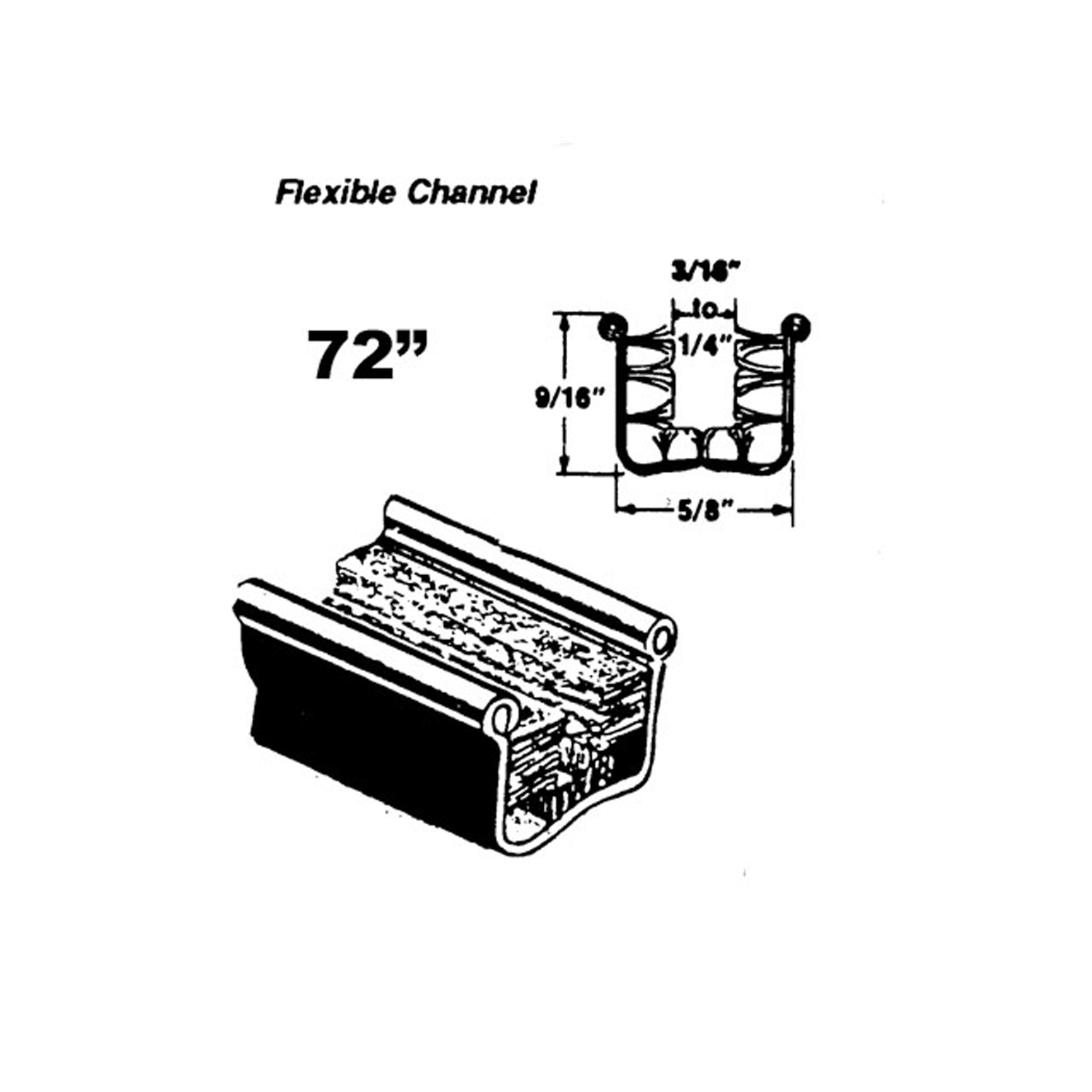 1951 Oldsmobile Super 88 Flexible glass-run channel-WC 11-72Flexible glass-run channel. Mohair lined, cloth covered with stainless steel bead. Used on side windows. 72 in. long. Each. NOTE: $20 special shipping charge applies for domestic orders. Call or email for overseas shipping costs. Part can be sectioned in two equal lengths to reduce overseas shipping costs.
Why Choose Metro?
For over 100 years, Metro Moulded Parts has been the pinnacle of quality in classic car restoration parts. Our commitment to precision and authenticity in every component ensures a perfect fit and an OEM-level appearance.
- Expert Craftsmanship & Quality: Each part is a testament to our dedication to reliability and perfection, crafted from original designs and thoroughly tested.
- Advanced Technology: We use cutting-edge techniques to create flawless, long-lasting parts that surpass others in performance.
- SuperSoft Sponge – The Ultimate Door Seal: Not only are our door seals 30% softer than competitors', but they're also guaranteed to never leak. They effectively reduce wind and road noise, enhancing your classic car's comfort and driving experience.
- Proudly American: Our parts are a product of American craftsmanship, made in the USA with a spirit of excellence and heritage.
- Unrivaled Warranty: We back our products with a 30-year industry-leading warranty, a testament to our confidence in their quality.
Join us in preserving the legacy of classic cars with parts that are crafted for perfection, not just made.