

Image of 1957 Oldsmobile 98, Note: These illustrations use artistic license and may differ from actual historical models.
Performance Metrics
Fundamental Metrics
Emotional Appeal
MMP Rating
| Engine Specifications | |
|---|---|
| Engine: | Rocket V8 |
| Displacement: | 371 cu in (6.1 L) |
| Horsepower: | 277-300 hp |
| Torque: | 415 lb-ft |
| Compression Ratio: | 9.5:1 |
| Ignition System: | Distributor and coil |
| Cooling System: | Liquid-cooled |
| Performance Specifications | |
| 0-60 Time: | Estimated 9.7 seconds |
| 1/4 Mile Time: | Estimated 17.3 seconds |
| Top Speed: | 120 mph |
| Transmission and Drive | |
| Drive Type: | Rear-wheel drive |
| Transmission Type: | 4-speed Hydra-Matic automatic |
| Fuel and Efficiency | |
| Fuel System Type: | Carburetor |
| MPG: | Estimated 10-12 mpg |
| Dimensions and Brakes | |
| Brakes: | Drum brakes |
| Wheelbase: | 126.3 in |
| Weight: | 4,400 lbs |
Note: Specifications for classic cars are given to the best of our ability, considering the limited and variant data available.
1957 Oldsmobile 98: Rocket-Age Luxury
The 1957 Oldsmobile 98 arrived with towering tailfins, abundant chrome, and a powerful Rocket V8, making it one of the most imposing American luxury cars of its era. Built by Oldsmobile, a division of General Motors, the Ninety-Eight sat at the top of the brand’s lineup, above the 88 and Super 88. It combined full-size comfort with the performance-minded image Oldsmobile had cultivated since introducing its famous Rocket V8 in 1949.
America was enjoying a postwar boom, and carmakers competed to make each new model year look more dramatic than the last. The 1957 Ninety-Eight captured that spirit particularly well: it was large, lavishly trimmed, and unmistakably modern for its day. A notable performance highlight was the available J-2 option, which gave the Rocket V8 three two-barrel carburetors and turned an already potent luxury car into a serious straight-line performer.
Tailfins, Chrome, and a Spacious Cabin
The 1957 Oldsmobile 98 wore the era’s styling with confidence. Its long hood flowed into a broad, sculpted body, while a wraparound windshield gave the front a sleek, panoramic look. Quad headlamps, now widely adopted after earlier legal restrictions eased, sharpened its face. Bright trim traced the body sides, and the rear fenders rose into pronounced fins capped by distinctive tail lamps. The result was flashy without being anonymous: even among a crowd of large 1950s cars, the 98 had a strong visual presence.
Inside, the Ninety-Eight offered generous room for passengers and a wide, comfortable front bench seat. Upholstery and trim varied by body style and specification, with combinations of cloth, vinyl, and other period materials, plus coordinated colors and bright metal accents. The dashboard was broad and richly decorated, with clear instruments and a large steering wheel. Buyers could add conveniences such as power windows, a power-adjustable seat, air conditioning, and power-operated accessories, depending on the car’s equipment.
Factory paint choices included a wide range of solid and two-tone combinations. Two-tone finishes were especially well suited to the car’s sweeping side trim and sculpted rear quarters. Popular choices included combinations of light and dark shades, such as white with a contrasting color, though original color availability depended on the exact model and production details. On today’s restored cars, correct factory color and trim can make a meaningful difference to collectors.
The 98 lineup included a four-door sedan, a four-door Holiday hardtop, a two-door Holiday hardtop, and a convertible. The Holiday models had no fixed center roof pillar, creating an open, uninterrupted side profile when the windows were lowered. The two-door Holiday coupe is often the most visually iconic today, while the convertible is the most dramatic and typically the most sought-after.
Rocket V8 Power and 1950s Technology
Under the hood sat Oldsmobile’s 371-cubic-inch Rocket V8. Output varied with equipment and carburetion, but a standard Ninety-Eight was generally rated at about 300 horsepower. The optional J-2 setup, with three two-barrel carburetors, raised advertised output to approximately 312 horsepower. The arrangement was more than a talking point: the center carburetor handled ordinary driving, while the outer carburetors supplied additional fuel and air when the driver demanded more power.
A four-speed Hydra-Matic automatic transmission was a major part of the car’s relaxed character. Power steering and power brakes were available, and a long list of optional comfort features reflected the growing expectation that a top-of-the-line car should make driving easier as well as more luxurious. The 98 was not a small car with a few prestige touches. It was a full-size flagship built to carry its passengers in comfort and style.
Why the 1957 Oldsmobile 98 Matters
The Ninety-Eight represents a high point in the American full-size luxury formula: a large V8, smooth automatic transmission, generous passenger space, and expressive styling. Its significance lies less in one single invention than in how effectively Oldsmobile brought performance and comfort together. The Rocket engine helped give the brand a sportier identity than some luxury rivals, while the 98 delivered the size and amenities buyers expected from a premium model.
What set it apart from many contemporaries was its blend of flamboyant design and genuine power. The fins and chrome announced its arrival, but the V8 and Hydra-Matic gave it the ability to cover long distances with little effort. Its design also reflects a brief but influential period when annual styling changes were bold and highly visible. The 1957 98 remains a vivid example of that competition, and its broad proportions and hardtop rooflines still shape how many people picture a classic American car.
How It Drives: Smooth, Strong, and Substantial
Performance figures vary with engine tune, transmission condition, axle ratio, tires, and the way a car has been maintained. As a general guide, a healthy standard 1957 Ninety-Eight can reach roughly 0 to 60 mph in about 10 to 11 seconds, with a top speed in the neighborhood of 110 to 115 mph. A J-2-equipped example can be quicker, but its condition matters greatly. These are estimates, not guarantees for every surviving car.
On the road, the 98 feels large and solid. The suspension is tuned for comfort, so it tends to smooth out ordinary bumps and highway seams rather than communicate every surface detail. That plush ride is one of its charms, though it can feel floaty by modern standards, particularly if the shocks, springs, bushings, or tires are worn. On a winding road, the car’s weight and size call for measured steering inputs. It is better suited to sweeping routes than tight, rapid direction changes.
The Rocket V8 provides a deep, confident rumble, and the Hydra-Matic shifts through its gears with a distinctly old-school character. Power steering makes low-speed maneuvering easier, but the car’s broad body still demands attention in crowded parking lots. From behind the wheel, the experience is less about sporty precision than about commanding presence: a long hood ahead, a soft ride beneath, and enough V8 torque to make passing feel straightforward.
Living with a 1957 Ninety-Eight
Most surviving 98s are now used as weekend cruisers, show cars, or carefully maintained touring cars rather than daily transportation. Their comfort and highway manners make them well suited to relaxed drives and classic-car events. The convertible and Holiday hardtops attract attention, while a sedan can offer the same period character at a lower purchase price.
Routine maintenance is manageable for an owner familiar with older American cars. The V8 and many mechanical systems are conventional by classic-car standards, and specialist knowledge is available through Oldsmobile clubs and restoration shops. However, these cars are more than six decades old, so a buyer should inspect the engine, transmission, brakes, steering, electrical system, and cooling system carefully. Rust in the body, floor pans, frame, and other structural areas can turn an appealing project into an expensive one. Trim, glass, and model-specific interior pieces may also take time and money to source.
Fuel economy is not a strong point. A large-displacement V8 in a heavy car can be expected to use considerably more fuel than a modern vehicle, especially in town. Owners should also plan for periodic adjustment and upkeep of vintage carburetion and ignition systems. A well-sorted example can be enjoyable and dependable for recreational use, but age, condition, and the quality of past repairs matter more than the badge alone.
J-2 Trivia and Common Criticisms
The J-2 triple-carburetor option is one of the most memorable features associated with 1957 Oldsmobile performance. Three carburetors look spectacular under the hood, but they also need proper setup. When correctly tuned, the system delivers strong performance; when neglected or adjusted poorly, it can be more demanding than a simpler single-carburetor arrangement.
The 1957 Ninety-Eight was not built as a lightweight racing special, and it is best understood as a powerful luxury car rather than a competition machine. Its most familiar modern appearances are in classic-car displays, enthusiast collections, and period-themed film and television. Individual cars may have fascinating ownership histories, but claims about celebrity owners or special historical appearances should be verified against documentation for that specific vehicle.
Its common criticisms are familiar: substantial fuel consumption, challenging parking dimensions, and handling that feels soft compared with later cars. Large chrome and complex trim can also be costly to restore properly. Those compromises are part of the package. The 98 prioritized presence, comfort, and effortless power, not compactness or thrift.
1957 Oldsmobile 98 Values and Rarity
A reasonable production estimate for the 1957 Ninety-Eight line is roughly 110,000 to 120,000 cars across its body styles. That figure is a useful broad estimate rather than a guarantee for any particular configuration. Surviving examples vary widely in condition, and a clean convertible or desirable Holiday hardtop is much less commonly encountered than a project sedan.
As a general U.S. market guide in 2026, a project car may sell for around $10,000 to $25,000, depending on completeness and rust. A presentable driver might bring approximately $25,000 to $45,000. Well-restored hardtops can fall in the $45,000 to $80,000 range, while exceptional examples may exceed that. Convertibles often command a premium, with strong cars commonly estimated around $70,000 to $130,000 or more. These are broad ranges: originality, restoration quality, documentation, body style, and local demand can shift the price substantially.
Values for good, correctly restored examples have generally been more resilient than those of ordinary project cars, though the market can rise or cool with changing collector interest. The 98 is not necessarily a fast-appreciating investment, and restoration costs can exceed the finished car’s market value. Buyers should focus on condition and authenticity rather than assuming that a rare color or option automatically guarantees a higher return.
The Lasting Appeal of the Rocket-Era 98
The 1957 Oldsmobile 98 brings together the essentials of the American luxury car at its most exuberant: sweeping hardtop lines, dramatic fins, a lavish cabin, and a powerful Rocket V8. It stands out not because it followed a single trend, but because it made the era’s ambitions tangible in one remarkably bold package.
For collectors, it offers several appealing paths, from an approachable sedan to a show-stopping convertible. For enthusiasts, it delivers the sound, scale, and easygoing road manners of a different automotive age. More than a chrome-covered relic, the 1957 Ninety-Eight is a rolling snapshot of when American cars promised that bigger, brighter, and more powerful could all be part of the same ride.
1957 Oldsmobile 98 Catalog of Parts
 1957 Oldsmobile 98 Upper Door Hinge Seals. Straight section 16-3/4" long-ALP 1-AUpper Door Hinge Seals. Straight section 16-3/4" long. Square hooked section 6-1/4" long. Includes four clips. Pair R & L.
 1957 Oldsmobile 98 Body mounting cushion pad-BC 51Body mounting cushion pad, '51-'64 Various GM car and truck models, each. Replace OEM #'s 3748937, 530855 & 560958.
 1957 Oldsmobile 98 Shock Absorber Grommet. 1" bottom O.D-BN 11Shock Absorber Grommet. 1" bottom O.D., 3/4" high, with 5/8" I.D. Each
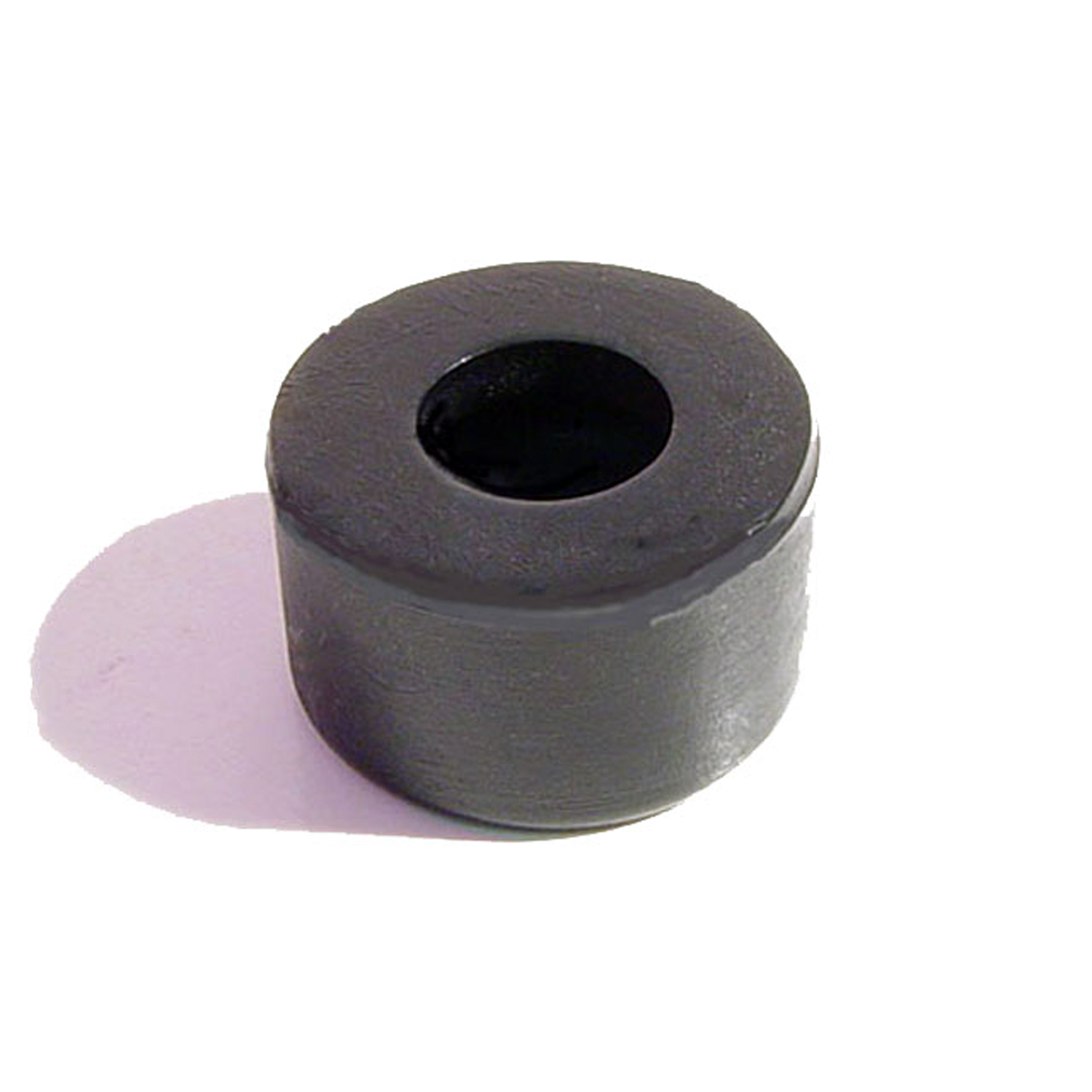 1957 Oldsmobile 98 Door, Hood and Trunk Bumper Cap for adjustment bolt-HA 5Door, Hood and Trunk Bumper Cap for adjustment bolt. 7/8" diameter X 7/16" thick. Each
 1957 Oldsmobile 98 Front door seals-LM 21-JFront door seals. Fits '65-'66 GM B- and C-body 4-door hardtop (also called 'Sports Sedan') models. Replaces OEM#'s 4455994/5. Pair. R&L.
 1957 Oldsmobile 98 Flexible glass-run channel-WC 11-72Flexible glass-run channel. Mohair lined, cloth covered with stainless steel bead. Used on side windows. 72 in. long. Each. NOTE: $20 special shipping charge applies for domestic orders. Call or email for overseas shipping costs. Part can be sectioned in two equal lengths to reduce overseas shipping costs.
Why Choose Metro?
For over 100 years, Metro Moulded Parts has been the pinnacle of quality in classic car restoration parts. Our commitment to precision and authenticity in every component ensures a perfect fit and an OEM-level appearance.
- Expert Craftsmanship & Quality: Each part is a testament to our dedication to reliability and perfection, crafted from original designs and thoroughly tested.
- Advanced Technology: We use cutting-edge techniques to create flawless, long-lasting parts that surpass others in performance.
- SuperSoft Sponge – The Ultimate Door Seal: Not only are our door seals 30% softer than competitors', but they're also guaranteed to never leak. They effectively reduce wind and road noise, enhancing your classic car's comfort and driving experience.
- Proudly American: Our parts are a product of American craftsmanship, made in the USA with a spirit of excellence and heritage.
- Unrivaled Warranty: We back our products with a 30-year industry-leading warranty, a testament to our confidence in their quality.
Join us in preserving the legacy of classic cars with parts that are crafted for perfection, not just made.