

Image of 1922 Packard Single Eight, Note: These illustrations use artistic license and may differ from actual historical models.
Performance Metrics
Fundamental Metrics
Emotional Appeal
MMP Rating
| Engine Specifications | |
|---|---|
| Engine Options: | Single Eight |
| Displacement Range: | 357.8 cubic inches |
| Horsepower Range: | Estimated 85-90 HP |
| Torque: | Not available |
| Compression Ratio: | Not available |
| Ignition System: | Battery and coil |
| Cooling System: | Water-cooled |
| Performance Specifications | |
| 0-60 Time: | Not available |
| 1/4 Mile Time: | Not available |
| Top Speed: | 60 mph |
| Transmission and Drive | |
| Drive Type: | Rear-wheel drive |
| Transmission Type: | 3-speed manual |
| Fuel and Efficiency | |
| Fuel System Type: | Carburetor |
| MPG: | Not available |
| Dimensions and Brakes | |
| Brakes: | Mechanical drum brakes |
| Wheelbase: | 130 inches |
| Weight: | 3,400 lbs |
Note: Specifications for classic cars are given to the best of our ability, considering the limited and variant data available.
1922 Packard Single Eight: A Model-Year Correction
The Packard Single Eight was built to make a quiet, confident statement: a smooth eight-cylinder engine, substantial coachwork, and the meticulous finish that made Packard a leading American luxury marque. There is one important date detail, though: Packard did not offer a factory-produced “1922 Single Eight.” The Single Eight arrived in 1923, while Packard’s 1922 luxury cars were powered by the Twin Six. This guide focuses on the early Single Eight, the car often intended by that description.
Packard Motor Car Company, founded in Warren, Ohio, and later based in Detroit, had earned a reputation for engineering and quality well before the Single Eight appeared. In the early 1920s, luxury-car makers were moving beyond large six-cylinder engines and experimenting with smoother, more powerful layouts. Packard’s answer was a straight-eight that delivered the refinement expected of the name without the complexity of the Twin Six.
The name “Single Eight” distinguished the car from Packard’s twelve-cylinder Twin Six. It did not mean a basic or entry-level Packard. The eight-cylinder model was a premium automobile in its own right, and its arrival marked a significant change in the company’s engineering direction.
Packard Styling and Coachwork
An early Single Eight has the imposing proportions of a classic luxury car. Its long hood leads to a tall, upright radiator, typically topped by Packard’s distinctive crest. Separate fenders sweep over narrow tires, while large headlamps, running boards, and exposed step plates give the car a purposeful, formal presence. Depending on the body, the rear could be an open touring compartment or an enclosed passenger cabin with a carefully finished roofline.
The cabin was trimmed to suit the body style and the original buyer. Open cars commonly featured leather upholstery, while closed sedans and limousines could use fine cloth or other high-grade upholstery. Polished wood or carefully finished metal appeared on dashboards and interior fittings. The overall impression was less about ornament for its own sake than about substantial materials and precise workmanship.
Packard offered a range of body configurations, including touring cars, roadsters, phaetons, coupes, sedans, and limousines. Exact offerings varied by series, chassis, and coachwork. Open touring and phaeton bodies show off the car’s long hood and formal lines especially well, while a sedan or limousine better expresses the model’s traditional luxury role. Some buyers also ordered distinctive bodies from specialist coachbuilders.
Paint choices depended on the year, body, and individual order. Dark, dignified shades such as black, deep blue, green, and maroon suit the car’s period character, though factory and custom combinations could vary. Original paint records are not equally available for every surviving car, so a restored example’s current color should not automatically be taken as its factory specification.
Engineering That Set the Pace
The Single Eight’s defining feature was its large, inline eight-cylinder engine. Early examples used a displacement of about 358 cubic inches and produced roughly 85 horsepower, with specifications varying by series. The engine’s long, orderly layout helped it deliver the smooth, even power that wealthy motorists wanted for touring and comfortable high-speed travel.
Packard’s move from the Twin Six to the Single Eight reflected a broader change in luxury-car engineering. A well-designed straight-eight could offer impressive smoothness with fewer cylinders and less mechanical complexity than a V-12. The Single Eight helped establish the straight-eight as a desirable configuration in high-end American cars for years to come.
It also arrived during a period of rapid development in chassis and braking design. Early Single Eights used substantial frames and mechanical systems suited to a heavy automobile. Equipment and specifications could differ by year and body, so features such as braking arrangements should be checked against the exact car rather than assumed from the model name alone.
Performance and Driving Feel
Period performance figures are not directly comparable to modern instrumented tests, and a century of wear, restoration, gearing, and tire changes can make one car behave differently from another. As a broad guide, an early Single Eight may reach approximately 70 to 75 mph in suitable condition. A modern-style 0-to-60 mph time was rarely recorded for cars of this era; a rough estimate would be in the range of 25 to 35 seconds, not a factory-certified figure.
The engine’s character is more important than its numbers. Rather than a sharp, high-revving note, the straight-eight produces a measured, steady sound. On a well-maintained example, acceleration feels smooth and deliberate, with the engine gathering speed without the busy vibration associated with some less refined powerplants of the period.
The Single Eight is a large, heavy automobile, and it feels that way from behind the wheel. Its long wheelbase helps it settle over ordinary road imperfections, but narrow tires, period suspension, and a rigid chassis mean modern potholes still demand respect. On winding roads, the car rewards a relaxed pace and early planning. Steering inputs are substantial compared with a modern car, and the driver must account for the vehicle’s size and momentum.
Driving one is an active experience. The driver manages a manual gearbox, period controls, and braking that lacks the effortless response of a contemporary car. Depending on the transmission and the driver’s technique, smooth shifts may require careful clutch work and deliberate timing. The reward is a distinctive combination of engine silkiness, mechanical presence, and open-air or enclosed touring comfort that modern vehicles rarely replicate.
Ownership, Maintenance, and Reliability
In its day, the Single Eight was designed for affluent owners who might use it for touring, formal transportation, or regular motoring with a chauffeur. Today, it is primarily a show, touring, and collection car. Some owners take their Packards on vintage rallies and club outings, but using one as a daily driver requires unusual dedication and a willingness to share the road with modern traffic at a different pace.
Reliability depends heavily on condition and upkeep. A sound engine and properly maintained chassis can provide satisfying touring service, but age brings familiar challenges: cooling-system condition, ignition components, fuel delivery, lubrication, worn bearings, and deteriorated wiring all deserve attention. Mechanical brakes need regular inspection and adjustment. Parts and expertise are available through marque clubs and specialist suppliers, but repairs are not as simple or inexpensive as work on a mass-produced modern car.
An average owner with mechanical experience can handle routine checks and some straightforward maintenance. Major engine, gearbox, or bodywork repairs are better left to a specialist familiar with early Packards. Before buying, a prospective owner should look beyond shiny paint and verify the car’s mechanical condition, completeness, history, and the quality of any restoration.
Packard Single Eight Facts
The most useful trivia is also the easiest to get wrong: a car described as a 1922 Single Eight is likely misdated, misidentified, or advertised using an informal description. Packard’s production Single Eight appeared in 1923. A genuine 1922 Packard would normally belong to the Twin Six era, so a buyer should confirm the serial and engine numbers and consult marque records.
The Single Eight’s transition from the Twin Six also tells a bigger story. Packard was not simply adding cylinders to chase power. It was adopting a configuration that could combine refinement, strong performance, and a more straightforward mechanical layout. The straight-eight became one of the defining engines of American luxury motoring in the following decades.
No widely recognized land-speed or endurance record belongs specifically to the early Single Eight, and celebrity ownership claims should be treated cautiously unless supported by documentation. The model’s historical importance rests less on a single headline-grabbing event than on its role in Packard’s engineering evolution and the popularity of the luxury straight-eight.
Common criticisms are practical rather than romantic. The cars are large, thirsty, slow to stop by modern standards, and demanding to maneuver in tight spaces. Their age also means that condition varies enormously. A carefully restored car can be an impressive touring machine; a neglected one can quickly become an expensive project.
Collector Value and Rarity
Values depend on body style, originality, restoration quality, provenance, and mechanical condition. As a broad current-market estimate, an early Single Eight in project or driver condition might sell for roughly $25,000 to $60,000. A well-restored, attractive example could bring about $60,000 to $125,000, while exceptional coachwork, documented history, or concours-level restoration can push a car higher. These are general estimates, not a formal appraisal, and individual sales can fall outside the ranges.
There is no simple production total that applies to every early Single Eight body and series. As a best-effort estimate, the first-generation cars produced in the early 1920s likely numbered in the low tens of thousands, perhaps around 10,000 to 15,000 across the relevant early production, though that should not be treated as a verified factory count. Surviving examples are much scarcer, especially in original or correctly documented condition.
Like many prewar classics, the Single Eight market is selective rather than uniformly rising. Exceptional examples remain desirable, while average cars can be harder to sell at ambitious prices. Restoration costs can also exceed a car’s eventual market value. Buyers should prioritize authenticity, condition, and specialist inspection over the assumption that every vintage Packard is automatically a sound investment.
Why the Early Packard Eight Matters
The early Packard Single Eight brought together the marque’s hallmark craftsmanship and a powertrain that pointed toward the future of American luxury cars. Its long hood, carefully finished cabin, and smooth straight-eight made it a compelling touring automobile, while its arrival marked Packard’s move beyond the Twin Six era.
Although “1922 Packard Single Eight” is not a correct factory model-year description, the car behind the name remains an important piece of automotive history. It is a reminder that great engineering is not only about speed or specifications. In the Single Eight, it is also about the quiet authority of a finely made machine built to travel in style.
1922 Packard Single Eight Catalog of Parts
 1922 Packard Single Eight Gas Filler Grommet. 2-1/2" I.D., 4-1/8" O.D. Each-GF 12Gas Filler Grommet. 2-1/2" I.D., 4-1/8" O.D. Each
 1922 Packard Single Eight Hood Corners. 1-3/4" to 2" corner radius-HC 14Hood Corners. 1-3/4" to 2" corner radius. Pad is 3-3/8" long. Pair
 1922 Packard Single Eight Swing-Out Lower Windshield Seal. Sold by the foot-LP 108Swing-Out Lower Windshield Seal. Sold by the foot
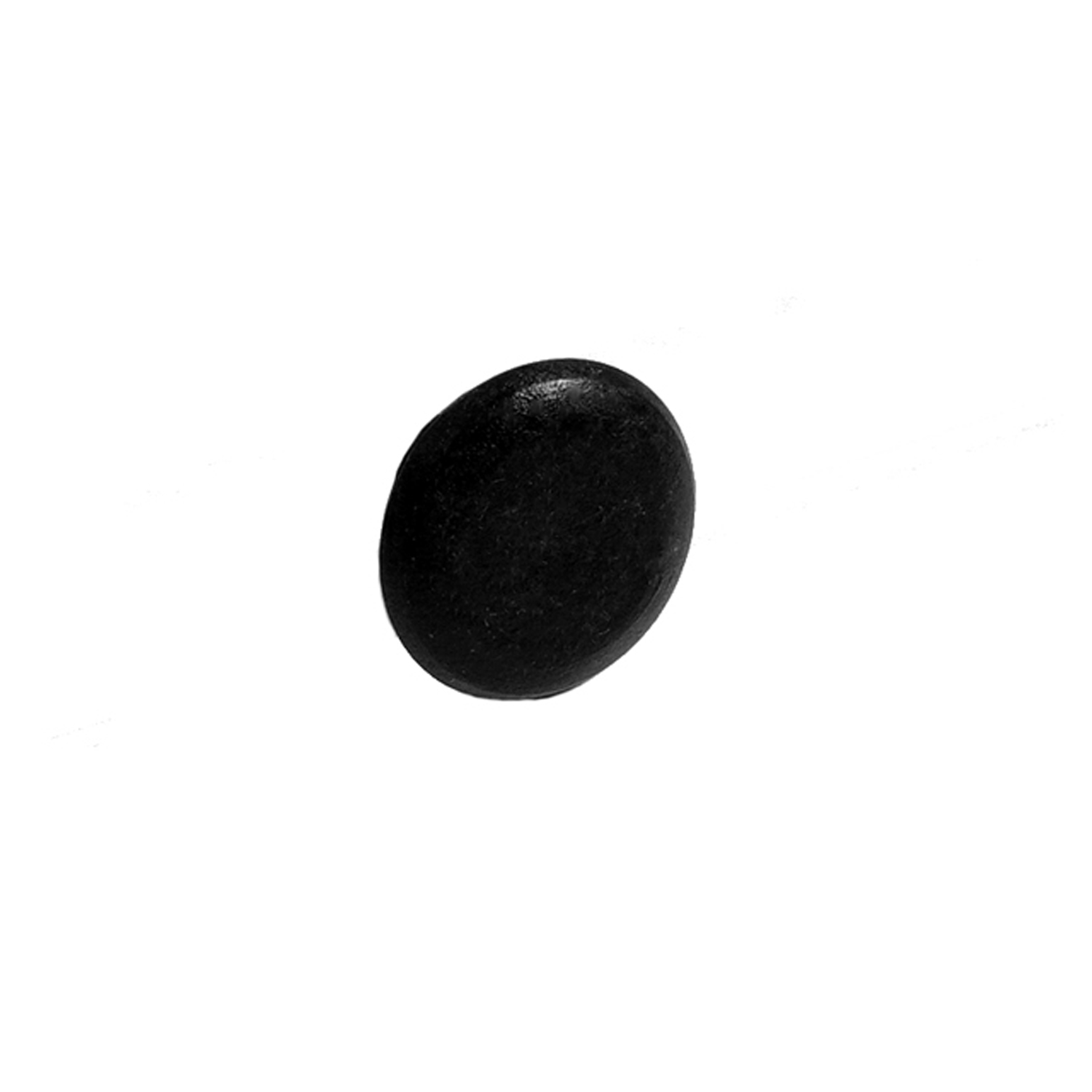 1922 Packard Single Eight Trunk Bumper. 3/4" O.D., 5/8" I.D. Each-SB 74Trunk Bumper. 3/4" O.D., 5/8" I.D. Each
Why Choose Metro?
For over 100 years, Metro Moulded Parts has been the pinnacle of quality in classic car restoration parts. Our commitment to precision and authenticity in every component ensures a perfect fit and an OEM-level appearance.
- Expert Craftsmanship & Quality: Each part is a testament to our dedication to reliability and perfection, crafted from original designs and thoroughly tested.
- Advanced Technology: We use cutting-edge techniques to create flawless, long-lasting parts that surpass others in performance.
- SuperSoft Sponge – The Ultimate Door Seal: Not only are our door seals 30% softer than competitors', but they're also guaranteed to never leak. They effectively reduce wind and road noise, enhancing your classic car's comfort and driving experience.
- Proudly American: Our parts are a product of American craftsmanship, made in the USA with a spirit of excellence and heritage.
- Unrivaled Warranty: We back our products with a 30-year industry-leading warranty, a testament to our confidence in their quality.
Join us in preserving the legacy of classic cars with parts that are crafted for perfection, not just made.