

Image of 1922 Packard Single Six, Note: These illustrations use artistic license and may differ from actual historical models.
Performance Metrics
Fundamental Metrics
Emotional Appeal
MMP Rating
| Engine Specifications | |
|---|---|
| Engine: | L-head inline 6 |
| Displacement: | 268.6 cu in (4.4 L) |
| Horsepower: | Estimated 54 hp |
| Torque: | Not available |
| Compression Ratio: | Not available |
| Ignition System: | Battery and coil |
| Cooling System: | Water |
| Performance Specifications | |
| 0-60 Time: | Not available |
| 1/4 Mile Time: | Not available |
| Top Speed: | Estimated 50-55 mph |
| Transmission and Drive | |
| Drive Type: | Rear wheel drive |
| Transmission Type: | 3-speed manual |
| Fuel and Efficiency | |
| Fuel System Type: | Carburetor |
| MPG: | Not available |
| Dimensions and Brakes | |
| Brakes: | Mechanical drum brakes |
| Wheelbase: | 125 in (3175 mm) |
| Weight: | Estimated 3400 lbs |
Note: Specifications for classic cars are given to the best of our ability, considering the limited and variant data available.
1922 Packard Single Six: A New Kind of Packard
The 1922 Packard Single Six brought the prestige of one of America’s best-known luxury marques to a smaller, more approachable chassis. Built by the Packard Motor Car Company of Detroit, it paired traditional Packard craftsmanship with a six-cylinder engine, offering buyers a less costly alternative to the company’s larger, more powerful cars.
The Single Six arrived as American motoring was changing. Cars were becoming more practical and widely used, while buyers still valued smooth operation, fine materials, and a strong reputation for quality. Packard had become famous for its Twin Six, a luxurious V12, so the Single Six was a notable change of direction: a more compact model intended to broaden the company’s market.
One detail that helps identify the car is its “116” designation. Packard’s model number referred to the chassis wheelbase in inches, not the engine’s size. That measurement gives a useful sense of the car’s proportions: shorter and more manageable than a full-size luxury limousine, but still substantial by modern standards.
Packard Single Six Design and Body Styles
The Single Six had the upright, carefully balanced look associated with early-1920s luxury cars. Its tall radiator, long hood, separate fenders, running boards, and narrow tires gave it a formal profile. Brass-era ornament had largely given way to nickel-plated or polished metal details, while the exposed lamps and sweeping fenders made the car’s mechanical character part of its visual appeal.
Packard offered the Single Six in a range of open and closed body styles. Depending on the year and chassis, buyers could choose from forms such as a touring car, roadster or runabout, coupe, sedan, and limousine. The touring body was a particularly fitting choice for the period: its open cabin could carry several passengers, and a folding top and side curtains offered some protection when the weather turned. Closed sedans and limousines delivered more comfort and privacy, but cost more and were less common.
Inside, the emphasis was on durable, well-finished materials rather than modern convenience. Upholstery could be leather or cloth, depending on the body and specification, with polished wood trim on appropriate enclosed models. The seating was broad and upright, and the cabin was designed for a relaxed, formal posture. Exact trim and equipment varied by body style and customer order.
Exterior colors also depended on the particular body and finish. Dark shades such as black, deep blue, and maroon suited the conservative luxury market, while some buyers chose more distinctive combinations. Rather than assuming one universal factory palette, it is best to judge a surviving car by its original build records or period documentation where available.
Six-Cylinder Technology for Its Time
At the heart of the 1922 Single Six was a 241.5-cubic-inch, or roughly 4.0-liter, L-head inline-six. Period specifications commonly list its output at about 52 horsepower. The engine used a side-valve layout, a well-established design that was relatively straightforward to service and suited to the steady, low-speed torque expected of a luxury touring car.
A three-speed manual transmission sent power to the rear wheels. Like other cars of its era, the Packard relied on a driver-operated clutch and gear lever, with no automatic transmission, power steering, or modern braking assistance. Electric starting and lighting made it more convenient than a true early brass-era car, though owners still needed to understand its controls and mechanical routines.
The Single Six was not a technology showcase built around one revolutionary device. Its innovation was more practical: it applied Packard’s engineering standards and luxury-car approach to a smaller six-cylinder platform. That combination made the marque accessible to a wider group of buyers without turning the car into a basic, stripped-down model.
Historical Significance of the 1922 Packard
The Single Six marked an important step in Packard’s effort to serve customers below the top tier of the luxury market. It followed the company’s celebrated Twin Six and showed that Packard’s identity did not depend solely on large, expensive multi-cylinder cars. The model gave buyers a way to own a Packard with a more manageable engine and chassis while retaining the brand’s reputation for careful construction.
It also reflects a broader shift in American motoring. In the early 1920s, six-cylinder engines were increasingly attractive because they offered smoother power delivery than many four-cylinder units without the expense and complexity of a V12. Packard’s Single Six therefore sat at the intersection of changing technology and changing expectations: it was still a prestige automobile, but one intended to be used more broadly.
The model did not become as enduringly famous as the Twin Six or the later Packard Eight. Its historical importance lies instead in the way it helped bridge Packard’s early luxury-car legacy and its later range of refined six- and eight-cylinder automobiles.
Performance and Driving Experience
With roughly 52 horsepower moving a heavy, body-on-frame automobile, the Single Six favored steady progress over quick acceleration. A sound, correctly tuned example may reach approximately 55 to 65 mph, depending on body style, gearing, condition, and road surface. There is no single dependable factory 0-to-60-mph figure for every 1922 body configuration. As a modern estimate, acceleration to 60 mph would likely take well over 30 seconds, and some examples may not reach that speed easily under ordinary conditions.
On the road, the six-cylinder engine is best appreciated for its measured, even delivery rather than its urgency. The driver works the three-speed gearbox deliberately, listens to the engine’s mechanical note, and plans ahead for hills and traffic. The open touring body adds the sounds of wind, tires, and road noise to the experience. It is engaging in a way that asks the driver to participate rather than simply point and go.
The long leaf-spring suspension and substantial chassis can smooth out ordinary road irregularities, but the car will not feel as isolated or controlled as a modern vehicle. On rough surfaces, the body can move noticeably, and narrow tires offer limited grip by contemporary standards. On winding roads, the steering requires effort and the car’s weight encourages a deliberate pace. Braking is also an important consideration: period mechanical systems require more anticipation and distance than modern hydraulic disc brakes.
Living with a 1922 Packard Single Six
Today, the Single Six is primarily a collector car, a touring-event participant, or a show vehicle. Some owners use their cars for club drives and local rallies, where moderate speeds and well-planned routes suit the Packard’s character. It is not generally a practical daily driver in modern traffic, where high speeds, frequent stops, and limited visibility can make an early automobile stressful to operate.
Maintenance is manageable for an owner with mechanical interest, but it is not quite a matter of buying parts at any neighborhood store. Routine work includes attention to ignition, carburetion, lubrication, cooling, clutch adjustment, and mechanical brakes. Many of the car’s systems are understandable to a competent vintage-car mechanic, and some repairs are more accessible than those on a modern vehicle. However, sourcing correct parts, preserving original finishes, and addressing decades of wear can require specialist knowledge.
Condition matters greatly. A car that has been carefully restored and regularly exercised can be a rewarding touring machine. One that has sat unused may need extensive work on its fuel system, wiring, brakes, tires, cooling system, and engine before it is safe to drive. A pre-purchase inspection by a mechanic familiar with early Packards is especially worthwhile.
Packard Single Six Facts and Common Misconceptions
The “Single Six” name makes the most sense when viewed alongside Packard’s Twin Six. The earlier Twin Six used a V12 engine, while the Single Six used one inline six-cylinder engine. The name was therefore a useful distinction within Packard’s lineup, not a reference to a single-cylinder design.
The 116-inch wheelbase is another useful clue when identifying the car, but it should not be mistaken for a complete model description. Packard offered different bodies and specifications, and details could vary with production year and customer order. For a specific car, chassis records and period literature are more reliable than a generic description.
No widely recognized speed or endurance record defines the 1922 Single Six, and claims of ownership by a particular celebrity should be checked against documentation. Its appeal is less about headline-grabbing records than about representing Packard’s transition into a more accessible form of luxury motoring.
A fair criticism is that the Single Six can seem underpowered by modern standards, especially in a large closed body. Its brakes, steering, and ride also demand more attention than those of a later classic car. Those limitations are part of the ownership experience, not defects to be judged by modern expectations. The reward is an unusually direct connection to the pace and technique of 1920s driving.
1922 Packard Single Six Value and Rarity
Exact production figures for a particular 1922 body style can be difficult to establish, and surviving cars are not always easy to classify by model year. A reasonable broad estimate is that Packard built around 10,000 Single Sixes across the model’s early-1920s production run, with the 1922 cars representing only part of that total. The number still in running, well-preserved condition is much smaller, especially for less common closed or formal bodies.
As a broad 2026 collector-market estimate, a project car may sell for roughly $10,000 to $25,000, while a presentable driver or older restoration could fall around $25,000 to $50,000. A high-quality restoration, an especially desirable body style, or strong provenance may bring $50,000 to $80,000 or more. These are general ranges, not a formal appraisal: originality, mechanical condition, restoration quality, documentation, and sale location can shift the price substantially.
Values for early cars like the Single Six tend to be selective rather than uniformly rising. Exceptional restorations and well-documented examples remain attractive, while cars needing major work can be difficult to sell because restoration costs are high. The best long-term prospects usually belong to cars with sound structure, correct details, and a clear history, rather than examples restored without regard to originality.
Why the Single Six Still Matters
The 1922 Packard Single Six combined a respected luxury-car name, a smooth six-cylinder engine, and the craftsmanship expected of a Detroit prestige marque. Its conservative styling, period mechanicals, and range of body choices place it firmly in the transition from early motoring to the more mature automobile era of the 1920s.
It may not be the fastest or most famous Packard, but it captures a turning point in the company’s history. For collectors and enthusiasts, the Single Six offers something increasingly rare: a substantial, elegant prewar automobile that makes every mile feel like an occasion.
1922 Packard Single Six Catalog of Parts
 1922 Packard Single Six Gas Filler Grommet. 2-1/2" I.D., 4-1/8" O.D. Each-GF 12Gas Filler Grommet. 2-1/2" I.D., 4-1/8" O.D. Each
 1922 Packard Single Six Hood Corners. 1-3/4" to 2" corner radius-HC 14Hood Corners. 1-3/4" to 2" corner radius. Pad is 3-3/8" long. Pair
 1922 Packard Single Six Swing-Out Lower Windshield Seal. Sold by the foot-LP 108Swing-Out Lower Windshield Seal. Sold by the foot
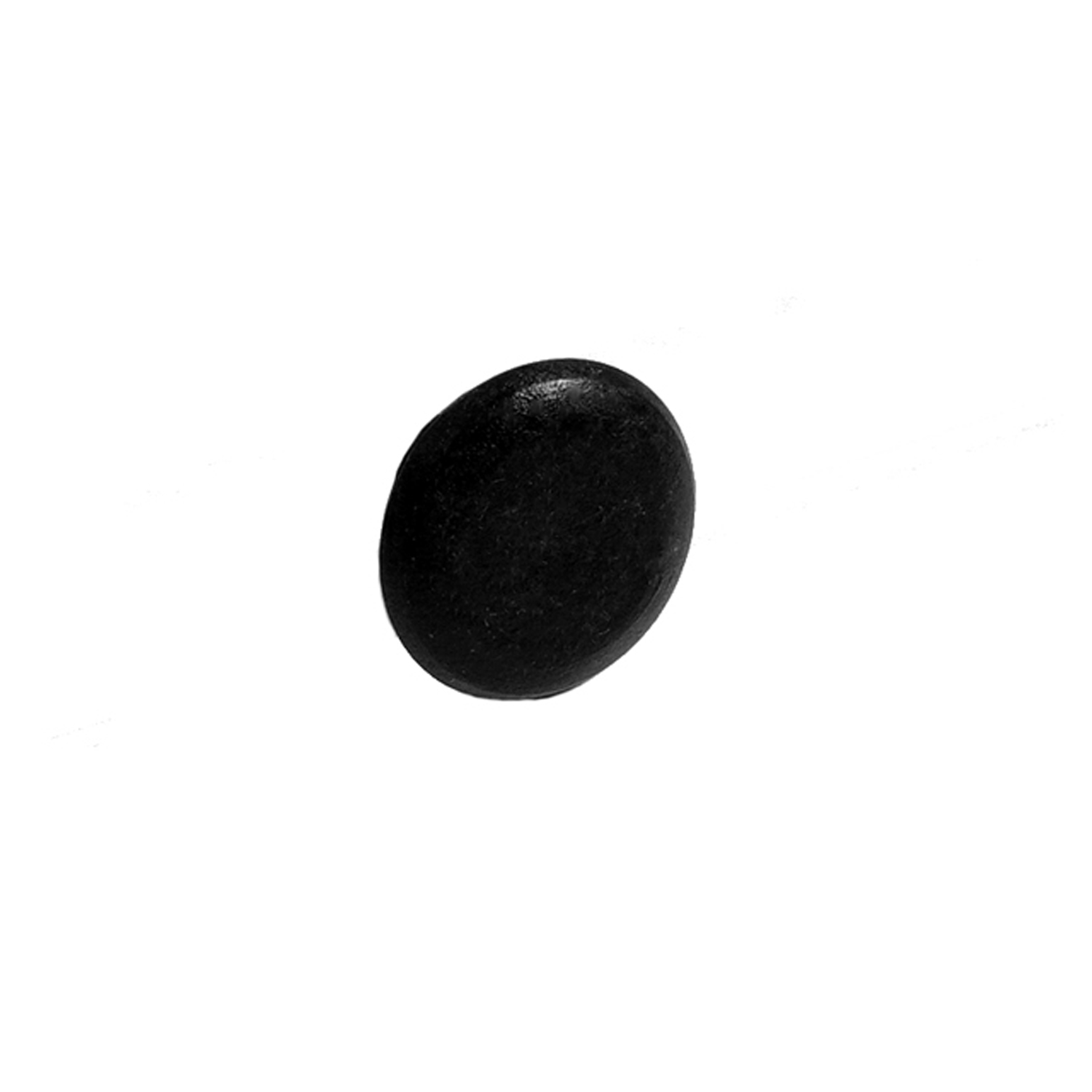 1922 Packard Single Six Trunk Bumper. 3/4" O.D., 5/8" I.D. Each-SB 74Trunk Bumper. 3/4" O.D., 5/8" I.D. Each
Why Choose Metro?
For over 100 years, Metro Moulded Parts has been the pinnacle of quality in classic car restoration parts. Our commitment to precision and authenticity in every component ensures a perfect fit and an OEM-level appearance.
- Expert Craftsmanship & Quality: Each part is a testament to our dedication to reliability and perfection, crafted from original designs and thoroughly tested.
- Advanced Technology: We use cutting-edge techniques to create flawless, long-lasting parts that surpass others in performance.
- SuperSoft Sponge – The Ultimate Door Seal: Not only are our door seals 30% softer than competitors', but they're also guaranteed to never leak. They effectively reduce wind and road noise, enhancing your classic car's comfort and driving experience.
- Proudly American: Our parts are a product of American craftsmanship, made in the USA with a spirit of excellence and heritage.
- Unrivaled Warranty: We back our products with a 30-year industry-leading warranty, a testament to our confidence in their quality.
Join us in preserving the legacy of classic cars with parts that are crafted for perfection, not just made.