

Image of 1923 Packard Single Eight, Note: These illustrations use artistic license and may differ from actual historical models.
Performance Metrics
Fundamental Metrics
Emotional Appeal
MMP Rating
| Engine Specifications | |
|---|---|
| Engine: | Single Eight |
| Displacement: | 357.8 cubic inches |
| Horsepower: | Estimated 85-90 HP |
| Torque: | Not available |
| Compression Ratio: | Not available |
| Ignition System: | Battery and coil |
| Cooling System: | Water-cooled |
| Performance Specifications | |
| 0-60 Time: | Not available |
| 1/4 Mile Time: | Not available |
| Top Speed: | 60-70 mph |
| Transmission and Drive | |
| Drive Type: | Rear-wheel drive |
| Transmission Type: | 3-speed manual |
| Fuel and Efficiency | |
| Fuel System Type: | Carburetor |
| MPG: | Not available |
| Dimensions and Brakes | |
| Brakes: | Mechanical drum brakes |
| Wheelbase: | 136 inches |
| Weight: | Estimated 3,400-3,600 lbs |
Note: Specifications for classic cars are given to the best of our ability, considering the limited and variant data available.
1923 Packard Single Eight: The Car That Put Eight-Cylinder Smoothness on the Map
The 1923 Packard Single Eight traded the thunder of a twelve-cylinder engine for the effortless sweep of eight, ushering Packard into a new era of luxury motoring. Built by the Packard Motor Car Company of Detroit, Michigan, it was among the first Packards powered by a straight-eight engine and helped establish the smooth, refined character that became a hallmark of the marque.
There is a small but important date wrinkle: the Single Eight was introduced in 1923, but many cars described as “1923” are associated with the 1924 model year. Period catalogs, registration documents, and later records do not always use dates consistently. The name itself was a useful distinction. Packard had been famous for its Twin Six, and “Single Eight” announced that the company’s new eight-cylinder car was a different kind of flagship.
A notable change was happening across the industry. Larger engines and more refined power delivery were becoming central to luxury-car design. Packard’s answer was not simply to add cylinders, but to deliver a quiet, flexible engine suited to long-distance travel. The result was a car designed to feel composed and substantial, whether carrying a family on a country road or arriving at a city hotel.
Long Lines, Fine Materials, and Coachbuilt Choices
The Single Eight had the unmistakable presence of a high-end car from the early 1920s: a long hood, upright radiator, sweeping fenders, tall lamps, and a commanding driving position. Its generous wheelbase gave the body a stately profile, while details such as bright metal trim, substantial running boards, and a rear-mounted spare tire reinforced its formal, carefully finished appearance. Packard’s radiator and script badge were especially recognizable, even from a distance.
Inside, the experience depended on the body style and the original specification, but quality was a priority. Owners could find rich upholstery, polished wood or metal fittings, carefully finished door panels, and well-made carpeting. Open cars exposed occupants to the elements, while sedans and limousines offered more protection and a quieter, more private cabin. The instruments were straightforward and legible, arranged for practical use rather than visual theatrics.
Packard offered a range of factory body types, including touring cars, roadsters, phaetons, coupes, sedans, and formal limousine-style bodies. Wheelbase and chassis specifications could vary by series, and customers seeking something more individual could turn to custom coachbuilders. Touring and phaeton bodies suited owners who wanted an open-air car with room for passengers; closed sedans and limousines appealed to buyers prioritizing weather protection and formality. There was no single universally “iconic” body style, though the open touring car is often the silhouette most associated with vintage Packard motoring.
Paint and trim choices varied by year, body, and order. Dark blues, greens, maroons, and black were among the period-appropriate colors, often set off by contrasting pinstriping or complementary upholstery. A surviving car’s present color may not be its original one, so factory records and careful inspection matter to restorers.
Straight-Eight Engineering and Packard’s Luxury Formula
The Single Eight’s key innovation was its inline eight-cylinder engine, generally described as a roughly 358-cubic-inch L-head unit. Output is commonly listed at about 85 horsepower, although published specifications can differ according to the exact series and rating method. The long, single row of cylinders helped provide smoother power delivery than many four-cylinder engines of the period, while the engine’s flexible character suited a heavy luxury chassis.
That smoothness was more than a comfort feature. It reflected a broader shift in automotive engineering: luxury makers were increasingly judged by how quietly and evenly their cars delivered power, not simply by cylinder count or peak speed. Packard moved from the Twin Six to the Single Eight while preserving its emphasis on refinement. The straight-eight layout would remain an important feature of Packard’s identity for decades.
Depending on series and equipment, the car used a conventional manual transmission and period braking and suspension systems. These were substantial machines, but they were not modern cars in disguise. The driver had to manage the gearbox, steering, and controls directly, and stopping distances were much longer than those of a contemporary vehicle. Exact equipment should be verified against the individual chassis, since details changed across production and could vary with body and specification.
Performance: Smooth Pace, Not Quick Acceleration
Period performance figures are not as standardized as modern test results. A well-maintained Single Eight may reach roughly 70 to 75 mph under favorable conditions, with body style, gearing, mechanical condition, and road surface all making a difference. A modern-style 0-to-60-mph time is rarely documented for a specific 1923 example. A reasonable estimate is around 25 to 35 seconds, but that should be treated as an informed approximation, not a factory-certified figure.
On the road, the engine’s strength was its steady pull rather than a dramatic burst of acceleration. The straight eight would build speed with a measured, even cadence, and its sound is more of a deep mechanical hum than a modern high-revving roar. The long wheelbase helped it settle over rolling roads and broad pavement joints, though large potholes and broken surfaces still demanded care. Its size and weight also meant that tight, winding roads called for deliberate steering and advance planning.
Driving a Single Eight is a hands-on experience. The steering is heavier than modern power-assisted systems, the controls require familiarity, and the driver must think ahead when braking or changing gears. In return, the car offers a distinctive sense of occasion: the view over the long hood, the steady engine note, and the feeling of traveling in a substantial machine built for distance rather than haste.
Owning and Maintaining a Vintage Packard
Today, most Single Eights are used for touring events, club gatherings, museum displays, and concours shows rather than daily transportation. They can cover distance when properly prepared, but their age makes regular use a maintenance commitment. Cooling systems, ignition components, fuel delivery, brakes, tires, and lubrication all deserve close attention before a long drive.
Many mechanical jobs are accessible to an experienced vintage-car owner or specialist, but “simple” does not mean interchangeable with modern practice. Parts may require specialist suppliers, careful sourcing, or repair by a machinist familiar with early Packard components. Coachwork, upholstery, wood framing, and period-correct hardware can be more challenging and expensive than routine engine service. Reliability depends heavily on the quality of restoration and the care the car receives now.
For a prospective owner, a detailed inspection is essential. Confirm the chassis and engine numbers where possible, check for structural rust or old accident repairs, and have a knowledgeable mechanic assess the engine, transmission, brakes, and cooling system. A car that has been maintained and driven regularly is often a better starting point than an impressive-looking example that has spent years idle.
Packard Single Eight Trivia and Common Criticisms
The Single Eight marked Packard’s move from its celebrated Twin Six to a straight-eight powerplant. That transition did not mean Packard abandoned luxury; it showed that a well-designed eight could provide the refinement expected of a top-tier car with a simpler cylinder arrangement than a V12.
There is no single production number that can be confidently assigned to “1923 Packard Single Eight” without defining the model series and whether the count follows calendar-year or model-year records. The car was introduced in 1923, while much of its production is associated with the 1924 model year. A cautious estimate for the early Single Eight series is in the tens of thousands across multiple years, perhaps around 15,000 to 20,000, but that is a broad estimate rather than a precise count of 1923-built cars. Surviving examples are far fewer, and body style and provenance strongly affect desirability.
Common criticisms are practical ones: the car is large, thirsty by modern standards, slow to accelerate, and demanding to operate in heavy traffic. Braking and handling also require more anticipation than in a modern car. These qualities are part of its period character, but they make a Single Eight a poor choice for someone seeking effortless everyday transportation.
Collector Values and Market Outlook
Values vary widely with condition, body style, restoration quality, originality, and documentation. As a broad current-market estimate, a project or incomplete example might fall around $25,000 to $60,000. A presentable driver or older restoration could bring roughly $60,000 to $150,000, while a high-quality restoration or particularly desirable coachbuilt body may reach $150,000 to $300,000 or more. Exceptional, documented cars can exceed that range, while cars needing extensive structural or mechanical work may sell for less.
The Single Eight is uncommon enough to attract serious Packard enthusiasts, but it is not necessarily rare in the same way as a one-off custom body or a low-production sporting car. The best examples do not appear on the market every day, and finding the right body style, condition, and history can take time. Over the long term, well-restored and historically significant Packards have generally retained collector appeal, though values fluctuate with the broader prewar-car market. Restoration costs can also exceed resale value, so condition and provenance matter more than a simple promise of appreciation.
Why the 1923 Packard Single Eight Still Matters
The 1923 Packard Single Eight combined imposing styling, carefully finished coachwork, and a smooth straight-eight engine at a pivotal moment in luxury-car history. Its significance lies not in modern-style speed, but in the way it helped define refinement for Packard and demonstrated the appeal of eight-cylinder power in a prestigious automobile.
For today’s collector, it is both a handsome prewar touring car and a tangible link between Packard’s Twin Six era and the straight-eight tradition that followed. Hear its engine settle into a steady rhythm, watch that long hood stretch ahead, and the Single Eight’s purpose becomes clear: it was built to make the journey feel as important as the destination.
1923 Packard Single Eight Catalog of Parts
 1923 Packard Single Eight Gas Filler Grommet. 2-1/2" I.D., 4-1/8" O.D. Each-GF 12Gas Filler Grommet. 2-1/2" I.D., 4-1/8" O.D. Each
 1923 Packard Single Eight Hood Corners. 1-3/4" to 2" corner radius-HC 14Hood Corners. 1-3/4" to 2" corner radius. Pad is 3-3/8" long. Pair
 1923 Packard Single Eight Swing-Out Lower Windshield Seal. Sold by the foot-LP 108Swing-Out Lower Windshield Seal. Sold by the foot
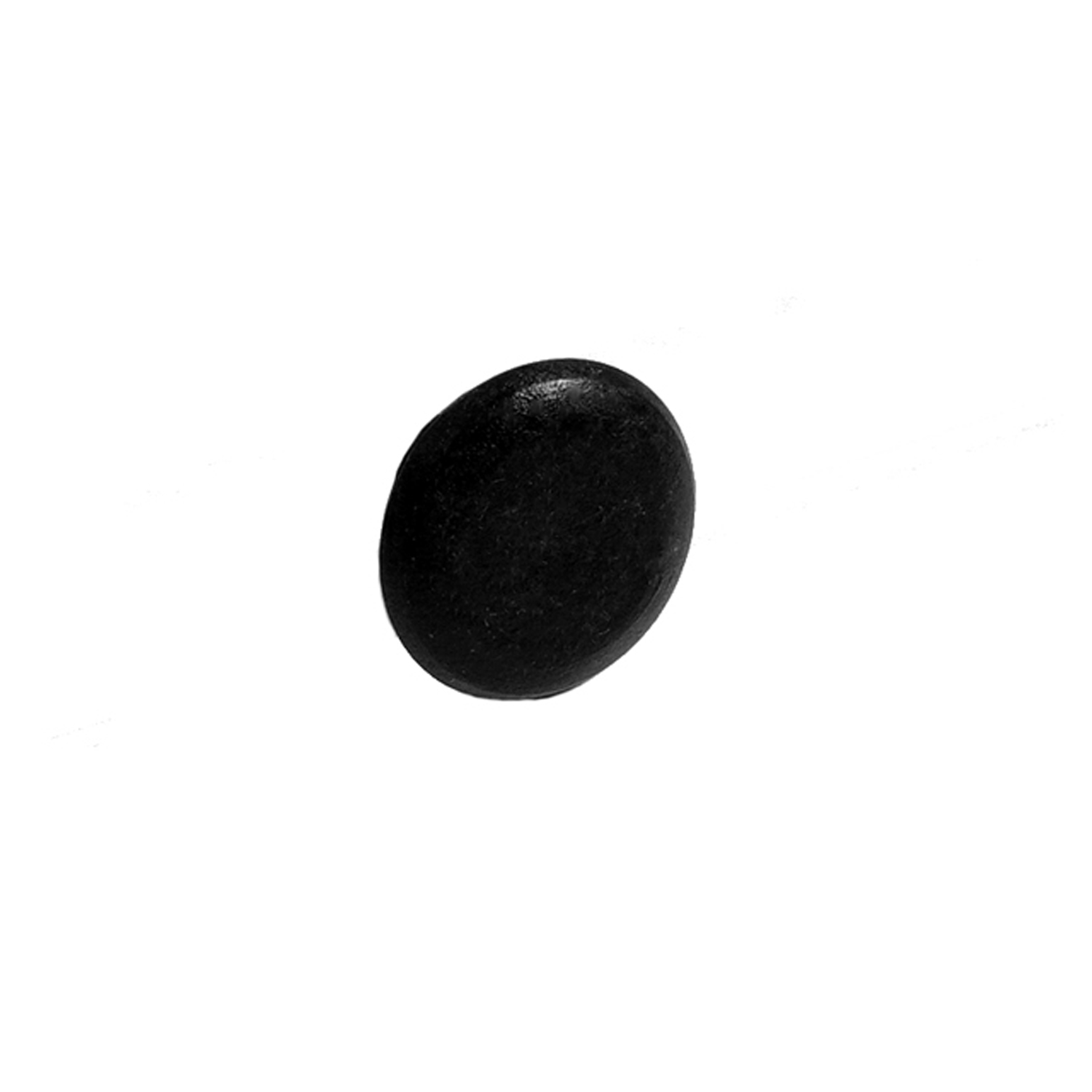 1923 Packard Single Eight Trunk Bumper. 3/4" O.D., 5/8" I.D. Each-SB 74Trunk Bumper. 3/4" O.D., 5/8" I.D. Each
Why Choose Metro?
For over 100 years, Metro Moulded Parts has been the pinnacle of quality in classic car restoration parts. Our commitment to precision and authenticity in every component ensures a perfect fit and an OEM-level appearance.
- Expert Craftsmanship & Quality: Each part is a testament to our dedication to reliability and perfection, crafted from original designs and thoroughly tested.
- Advanced Technology: We use cutting-edge techniques to create flawless, long-lasting parts that surpass others in performance.
- SuperSoft Sponge – The Ultimate Door Seal: Not only are our door seals 30% softer than competitors', but they're also guaranteed to never leak. They effectively reduce wind and road noise, enhancing your classic car's comfort and driving experience.
- Proudly American: Our parts are a product of American craftsmanship, made in the USA with a spirit of excellence and heritage.
- Unrivaled Warranty: We back our products with a 30-year industry-leading warranty, a testament to our confidence in their quality.
Join us in preserving the legacy of classic cars with parts that are crafted for perfection, not just made.