

Image of 1925 Packard Eight, Note: These illustrations use artistic license and may differ from actual historical models.
Performance Metrics
Fundamental Metrics
Emotional Appeal
MMP Rating
| Engine Specifications | |
|---|---|
| Engine: | Straight-8 |
| Displacement: | 357.8 cubic inches |
| Horsepower: | Estimated 85-90 HP |
| Torque: | Not available |
| Compression Ratio: | Not available |
| Ignition System: | Battery and coil |
| Cooling System: | Water-cooled |
| Performance Specifications | |
| 0-60 Time: | Not available |
| 1/4 Mile Time: | Not available |
| Top Speed: | 70 mph |
| Transmission and Drive | |
| Drive Type: | Rear-wheel drive |
| Transmission Type: | 3-speed manual |
| Fuel and Efficiency | |
| Fuel System Type: | Carburetor |
| MPG: | Not available |
| Dimensions and Brakes | |
| Brakes: | Mechanical drum brakes |
| Wheelbase: | 136 inches |
| Weight: | Estimated 3,400-3,600 lbs |
Note: Specifications for classic cars are given to the best of our ability, considering the limited and variant data available.
1925 Packard Eight: A New Kind of Prestige
The 1925 Packard Eight made effortless power and quiet refinement the new hallmarks of American luxury. Built by the Packard Motor Car Company in Detroit, Michigan, it belonged to the first generation of Packard’s straight-eight cars, a bold move away from the company’s earlier Twin Six V-12. It combined advanced-for-its-day engineering with the commanding proportions and hand-finished details expected of a premium automobile.
Packard’s story began in 1899, when brothers James Ward and William Doud Packard joined investor George Lewis Weiss to build cars. By the 1920s, the marque had earned a reputation for engineering and quality, summed up in its famous advertising line, “Ask the Man Who Owns One.” The Eight helped keep Packard at the front of the luxury field by offering smooth, substantial performance in a car intended for both chauffeur-driven owners and those who preferred to take the wheel themselves.
One intriguing turning point was the engine itself. The Packard Eight was the company’s first production straight-eight, introduced in 1924. Its long, even firing rhythm gave it a naturally smooth character, helping establish the eight-cylinder layout as a defining configuration for luxury cars in the years that followed.
Long Lines and Hand-Finished Luxury
The 1925 Packard Eight looked every bit the prestigious motorcar. Its long hood, upright radiator, separate fenders, and sweeping running boards gave it a stately profile. Tall wire or artillery-style wheels, depending on specification, and polished lamps and hardware added visual sparkle without disguising the car’s substantial scale. The result was elegant rather than flashy, with an unmistakable road presence.
Packard offered the Eight on more than one wheelbase, including chassis of roughly 136 and 143 inches. That gave buyers a choice between a more compact car and a longer platform suited to larger passenger compartments. Available body styles included open touring cars and phaetons, roadsters, coupes, sedans, and chauffeur-oriented limousines. Custom coachwork could make an individual car especially distinctive. Among the most evocative forms today are the open touring and phaeton bodies, while formal sedans and limousines best express the Eight’s role as a luxury conveyance.
Inside, passengers found a cabin built around real wood trim, quality upholstery, substantial door panels, and carefully finished metal fittings. Materials and equipment varied by body and order, but the emphasis was on craftsmanship, comfort, and a sense of occasion. Buyers could select from a range of body colors and finishes. Black was a practical, popular choice, while deep blues, greens, and maroons gave the car a richer, more individual appearance. Two-tone treatments were also available on some bodies and orders; exact combinations depended on the catalog offering and coachbuilder.
Engineering Ahead of Its Time
The Packard Eight’s defining technology was its 317.6-cubic-inch (about 5.2-liter) L-head straight-eight engine. Period specifications commonly list output at approximately 85 horsepower. That figure may sound modest now, but the engine’s smooth delivery and generous displacement suited the car’s purpose: covering distance quietly and confidently rather than sprinting away from a stoplight.
A four-speed manual transmission helped make the most of the engine’s broad power delivery. Four-wheel mechanical brakes provided stopping power, while the large chassis, leaf springs, and substantial axles were designed for the roads of the period. The car still relied on unassisted steering and braking, so modern convenience features were absent. Even so, the combination of a refined straight-eight and carefully engineered chassis made the Eight a sophisticated choice for 1925.
Why the Packard Eight Mattered
The Eight helped mark a wider change in luxury-car design. Before the straight-eight became popular, high-end buyers often looked to large four-cylinder engines or multi-cylinder layouts such as the V-12. Packard demonstrated that an inline eight could deliver impressive smoothness with a more straightforward layout. Its success helped make the straight-eight a natural fit for premium American cars through much of the following decade.
What set the Packard apart was not one isolated feature, but the way its engineering, finish, and reputation worked together. It was powerful enough for long-distance travel, refined enough for formal use, and backed by a company known for careful manufacturing. The Eight also carried Packard’s prestige into a new era after the Twin Six, helping the marque remain a benchmark among luxury automakers.
Performance on the Open Road
A sound 1925 Packard Eight could reach roughly 70 to 75 mph, depending on body style, gearing, mechanical condition, and road surface. Period factory acceleration figures are not consistently available, so any modern 0-to-60 estimate should be treated cautiously. A reasonable estimate for a well-maintained example is around 25 to 30 seconds, with heavier limousine bodies likely taking longer.
Behind the large steering wheel, the Packard feels deliberate and substantial. The straight-eight produces a deep, even exhaust note rather than a sharp, high-revving bark. The four-speed gearbox asks for a measured hand and some familiarity, while the unassisted steering takes effort at low speeds. Once moving, the long wheelbase helps the car settle into a stately stride. It can absorb many bumps with composure, though rough roads still make themselves known through the solid axles and period tires.
On winding roads, the Eight rewards smooth inputs and sensible speeds. Its size and weight are not suited to quick direction changes, and its mechanical brakes require more anticipation than modern brakes. The driving experience is less about carving corners and more about enjoying the engine’s rhythm, the view over the long hood, and the sensation of traveling in a beautifully engineered piece of history.
Living With a 1925 Packard
Today, most 1925 Packard Eights are used as show cars, touring cars, or occasional pleasure vehicles rather than daily transportation. A carefully maintained example can take part in vintage motoring events and local tours, but frequent modern traffic, long periods at highway speed, and steep hills can place extra demands on an old car.
Maintenance is manageable for an experienced vintage-car owner, but it is not quite a weekend project for every hobbyist. The engine is mechanically straightforward by classic-car standards, and many routine jobs can be handled by a capable mechanic familiar with prewar vehicles. Parts availability is generally better for common service items than for rare trim, body fittings, or coachwork-specific components. Restoration quality matters: neglected cooling systems, worn ignition components, aged wiring, and poorly adjusted brakes can quickly turn a stately drive into a roadside repair.
Common criticisms are part of the ownership picture. The car is large, fuel consumption is high by modern standards, and the steering and brakes demand physical effort. It also asks the driver to understand an older transmission and keep a closer eye on mechanical condition. Those trade-offs are easier to accept when the car is treated as a special-use classic rather than a modern substitute for everyday transport.
Packard Eight Facts and Lore
The 1925 Eight was a luxury car, not a purpose-built speed-record machine, and there is no widely recognized headline speed or endurance record associated specifically with this model year. Its achievement was more practical: Packard made smooth eight-cylinder performance a compelling alternative for wealthy motorists who wanted refinement as well as prestige.
Packard’s custom-body program is another reason these cars can vary so much from one example to another. A standard production body and a coachbuilt car may share the same basic mechanical identity yet look strikingly different. Buyers could also order cars for different roles, from open-air touring to formal chauffeur service. That variety makes researching a particular car’s chassis number, body maker, and original specification especially worthwhile.
There is no single celebrity ownership story that defines the 1925 Eight. Its appeal rests instead on the broader Packard reputation and the marque’s association with business leaders, public figures, and affluent families. Individual ownership histories can add real interest, but should be supported by documentation rather than assumed from the badge alone.
Collector Values and Rarity
Exact production totals for individual Packard body styles can be difficult to establish, so figures should be treated as estimates. A reasonable working estimate for 1925 Packard Eight production is around 10,000 to 12,000 cars across the series, with substantially fewer surviving today and some body styles far rarer than others. This is an estimate, not a confirmed count for every model and configuration.
In the current collector market, a project car may fall around $15,000 to $35,000, depending on completeness and rust or mechanical issues. A usable driver could bring approximately $30,000 to $80,000, while a high-quality restoration may reach $80,000 to $150,000 or more. Rare, documented coachbuilt examples can exceed those figures, sometimes substantially. These are broad U.S. market estimates; condition, provenance, originality, and body style can shift a price dramatically.
Values have generally been selective rather than uniformly rising. Well-restored cars with credible history and desirable coachwork remain attractive, while mediocre restorations and incomplete projects can be harder to sell. The long-term appeal is strong, but buyers tend to reward authenticity and workmanship more than a simple claim that a car is rare.
A Lasting Packard Classic
The 1925 Packard Eight brought together a smooth straight-eight engine, imposing proportions, careful craftsmanship, and the prestige of one of America’s great luxury marques. It helped popularize a powertrain that would define high-end motoring for years, while offering owners a choice of bodies suited to everything from open touring to formal transport.
More than a handsome survivor from another age, the Packard Eight represents a pivotal moment when American luxury cars became smoother, more capable, and more refined. Hear its straight-eight settle into a steady rhythm, and the reason for Packard’s reputation becomes wonderfully clear.
1925 Packard Eight Catalog of Parts
 1925 Packard EIGHT Gas Filler Grommet. 2-1/2" I.D., 4-1/8" O.D. Each-GF 12Gas Filler Grommet. 2-1/2" I.D., 4-1/8" O.D. Each
 1925 Packard EIGHT Hood Corners. 1-3/4" to 2" corner radius-HC 14Hood Corners. 1-3/4" to 2" corner radius. Pad is 3-3/8" long. Pair
 1925 Packard EIGHT Swing-Out Lower Windshield Seal. Sold by the foot-LP 108Swing-Out Lower Windshield Seal. Sold by the foot
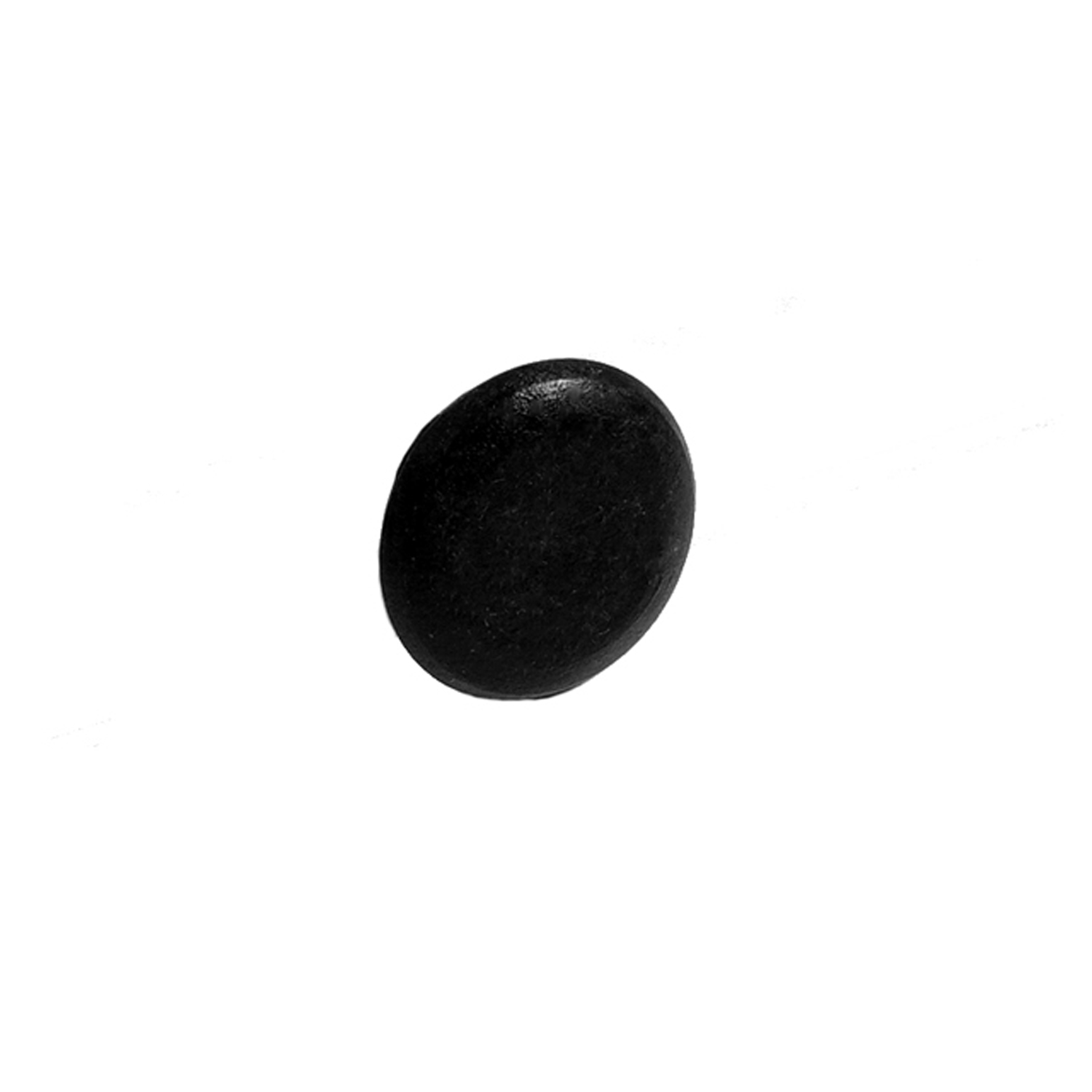 1925 Packard EIGHT Trunk Bumper. 3/4" O.D., 5/8" I.D. Each-SB 74Trunk Bumper. 3/4" O.D., 5/8" I.D. Each
Why Choose Metro?
For over 100 years, Metro Moulded Parts has been the pinnacle of quality in classic car restoration parts. Our commitment to precision and authenticity in every component ensures a perfect fit and an OEM-level appearance.
- Expert Craftsmanship & Quality: Each part is a testament to our dedication to reliability and perfection, crafted from original designs and thoroughly tested.
- Advanced Technology: We use cutting-edge techniques to create flawless, long-lasting parts that surpass others in performance.
- SuperSoft Sponge – The Ultimate Door Seal: Not only are our door seals 30% softer than competitors', but they're also guaranteed to never leak. They effectively reduce wind and road noise, enhancing your classic car's comfort and driving experience.
- Proudly American: Our parts are a product of American craftsmanship, made in the USA with a spirit of excellence and heritage.
- Unrivaled Warranty: We back our products with a 30-year industry-leading warranty, a testament to our confidence in their quality.
Join us in preserving the legacy of classic cars with parts that are crafted for perfection, not just made.