

Image of 1925 Packard Single Six, Note: These illustrations use artistic license and may differ from actual historical models.
Performance Metrics
Fundamental Metrics
Emotional Appeal
MMP Rating
| Engine Specifications | |
|---|---|
| Engine: | Single Six |
| Displacement: | 241 cubic inches |
| Horsepower: | Estimated 60-80 HP |
| Torque: | Not available |
| Compression Ratio: | Not available |
| Ignition System: | Battery and coil |
| Cooling System: | Water-cooled |
| Performance Specifications | |
| 0-60 Time: | Not available |
| 1/4 Mile Time: | Not available |
| Top Speed: | 50-60 mph |
| Transmission and Drive | |
| Drive Type: | Rear-wheel drive |
| Transmission Type: | 3-speed manual |
| Fuel and Efficiency | |
| Fuel System Type: | Carburetor |
| MPG: | Not available |
| Dimensions and Brakes | |
| Brakes: | Mechanical drum brakes |
| Wheelbase: | 126 inches |
| Weight: | 3,400 lbs |
Note: Specifications for classic cars are given to the best of our ability, considering the limited and variant data available.
1925 Packard Single Six: A Classic Luxury Car Guide
The 1925 Packard Single Six proved that a luxury car did not need twelve cylinders to make a lasting impression. With elegant coachwork, a substantial six-cylinder engine, and the carefully finished details Packard was famous for, it brought prestige motoring to buyers seeking something more accessible than the company’s largest models.
Packard’s Six-Cylinder Story
Packard began building automobiles in Warren, Ohio, in 1899, then moved its operations to Detroit as the company grew. By 1925, the Packard Motor Car Company had become one of America’s leading luxury manufacturers, known for engineering, quality control, and a reputation that made its name shorthand for refinement.
The Single Six was Packard’s six-cylinder line, positioned below its more expensive models. The 1925 car is generally identified as the Model 233, part of Packard’s Sixth Series. It offered the traditional Packard approach to comfort and craftsmanship in a less costly package. One intriguing detail is that “Single Six” was not a modest little runabout in the modern sense: its long wheelbase and formal proportions gave it the presence of a full-size luxury automobile.
Elegant Lines and Coachbuilt Character
The Single Six wore the upright, dignified look that defined luxury cars of the mid-1920s. A tall radiator shell, long hood, sweeping front fenders, and carefully shaped running boards gave the car a substantial profile. Packard’s famous red hexagon badge sat at the center of the radiator, while bright metal fittings and neatly finished lamps added visual polish without making the design look overly ornate.
Open models often had exposed, folding tops and a clear view of the car’s long body lines. Closed cars offered a more formal silhouette, with a high roofline, upright windshield, and separate fenders. Depending on body style and equipment, a car might have wooden artillery wheels or optional wire wheels. Details varied by body and order, so surviving examples can differ in trim and fittings.
Inside, owners could expect the quality associated with a high-grade Packard. Open cars commonly used leather upholstery, while closed models could be trimmed in cloth or other specified materials. The dashboard typically combined clear, functional instruments with polished metal fittings and wood accents. It was an environment designed to feel substantial and carefully assembled, not merely decorated.
Packard offered the Single Six in a range of body styles, including touring cars, roadsters, coupes, and sedans. Exact names and passenger arrangements varied across the catalog and by body configuration. The five-passenger sedan is among the most recognizable choices today, thanks to its balanced proportions and practical enclosed cabin. Open touring models and roadsters have their own strong appeal, especially for enthusiasts drawn to the experience of early motoring.
Colors depended on the body style, trim, and buyer’s order. Dark blue, maroon, green, and black were among the period-appropriate choices seen on cars of the era, often paired with contrasting wheels or upholstery. There was no single “correct” color for every 1925 Single Six, and restorers should consult factory information and the car’s history before choosing a finish.
Period Engineering and Road Manners
At the heart of the 1925 Single Six was a side-valve, or L-head, inline six-cylinder engine of approximately 289 cubic inches. Published output is commonly given at around 54 horsepower, though period ratings and specifications can vary by source. Power went through a three-speed manual transmission to the rear wheels. The car also had electric starting and lighting, features that had become increasingly familiar by the mid-1920s but still made motoring much more convenient than in the earliest automobile era.
Four-wheel mechanical brakes were part of the period’s move toward better stopping control, although they require a different driving style from modern hydraulic systems. Braking depends on careful adjustment and regular maintenance. The car’s controls are likewise distinctly vintage: the driver works a manual gearbox, manages a heavy steering wheel at low speeds, and pays close attention to traffic and road conditions.
How Fast Is a 1925 Packard Single Six?
A well-maintained example is generally estimated to reach roughly 60 to 65 mph, depending on body style, gearing, condition, and road surface. A modern, standardized 0-to-60 mph test did not exist in the way it does today, so any acceleration figure is an approximation. Given the car’s weight and modest power, a 0-to-60 time in the range of about 30 to 40 seconds is a reasonable estimate, not a factory-certified specification.
On the road, the Single Six is best enjoyed at a relaxed pace. Its long wheelbase helps it settle over ordinary bumps, while the period suspension and tires transmit more road texture than a modern car. On winding roads, the car feels deliberate rather than nimble: the steering is slower, the body is tall, and corners reward smooth inputs. Strong crosswinds can also be noticeable, particularly in open-bodied versions.
The engine’s sound is a mellow mechanical rhythm, more purposeful than sporty. The driver feels connected to the machinery through the gear lever, brake pedal, and steering wheel. That direct involvement is part of the appeal, but it also means the car asks for attention. It is a touring machine, not a vehicle for rushing through modern traffic.
Why the Single Six Matters
The Single Six’s importance lies partly in how it helped broaden Packard’s reach. It carried the company’s emphasis on engineering and finish into a lower price class than its most expensive offerings, while still presenting the scale and formality buyers expected from a luxury marque.
It also captures a turning point in American motoring. Roads and expectations were changing, and buyers increasingly wanted cars that could cover distance in comfort, with electric starting, enclosed bodies, and more capable braking. The Single Six offered those conveniences in a conservative, carefully developed package. It was not a radical design revolution, but it helped establish the formula of an attainable luxury car with serious road presence.
Its six-cylinder layout eventually became less central to Packard’s identity as the company emphasized its straight-eight models. The Single Six nevertheless remains a useful reminder that Packard’s reputation was built across more than its most expensive cars.
Ownership, Maintenance, and Reliability
Today, a 1925 Single Six is mainly a collector car, touring vehicle, or show car rather than a practical daily driver. Some owners take their cars on club tours and regional events, where moderate speeds and planned routes suit the car’s abilities. Regular use is possible, but modern highways, dense traffic, and limited parts availability make routine commuting impractical.
Maintenance is manageable for an experienced vintage-car owner, but it is not identical to working on a modern vehicle. The engine, ignition, carburetor, clutch, mechanical brakes, and lubrication system all need appropriate inspection and adjustment. A capable home mechanic can handle many routine tasks, provided they have the correct manuals, tools, and patience. Specialist help may be needed for engine rebuilding, bodywork, upholstery, or sourcing uncommon components.
Reliability depends heavily on the quality of restoration and ongoing care. A well-sorted car can be enjoyable on tours, but age-related issues such as fuel-system problems, tired wiring, worn brake linkages, and cooling-system faults are not unusual. Before buying, inspect the chassis, engine, transmission, brakes, and body structure, and try to verify the car’s history and restoration records.
Packard Single Six Facts and Trivia
Packard’s slogan, “Ask the Man Who Owns One,” reflected the company’s confidence in owner satisfaction and became closely associated with the marque. The Single Six carried that reputation into a six-cylinder model, even though it did not have the headline-grabbing power of Packard’s more expensive cars.
There is no widely recognized speed or endurance record that defines the 1925 Single Six, and it is better known for craftsmanship and touring comfort than competition success. Nor is there a single famous celebrity ownership story that stands above the model’s broader history. Its significance is more representative: cars like this helped make Packard a familiar name among well-to-do American motorists.
A common criticism is that the Single Six can feel slow and heavy by modern standards, especially when compared with later Packard straight-eights. Its mechanical brakes and vintage steering also demand more effort than a modern driver may expect. Those limitations are part of the period experience, but they are worth understanding before a purchase.
1925 Packard Single Six Collector Values
Exact production totals for a particular body style can be difficult to establish from readily available records. As a broad estimate, approximately 5,000 to 8,000 Model 233 cars may have been built for the 1925 model year, though that should be treated as an informed approximation rather than a confirmed factory total. The Single Six line as a whole ran for several years, so surviving examples span more than one model year.
The 1925 Single Six is uncommon compared with mass-produced cars, but it is not necessarily as scarce as a rare custom-bodied Packard. Availability depends on body style and condition. Sedans are generally easier to encounter than particularly desirable open cars, and complete, well-documented examples are more attractive to collectors than projects missing major components.
As a broad 2026 U.S. market estimate, a project car might sell for roughly $15,000 to $30,000. A usable driver could fall around $35,000 to $75,000, while a high-quality restoration may bring approximately $75,000 to $150,000 or more. Exceptional examples, unusual body styles, and cars with strong provenance can exceed those ranges. These are guide figures, not appraisals: condition, originality, restoration quality, and current auction demand can move prices substantially.
Values for well-presented prewar Packards have generally held up better than those for many ordinary vintage cars, but the market is selective. A sound, correctly restored car with complete history is more likely to attract interest than an expensive restoration with questionable details. Over time, the Single Six’s appeal is likely to remain strongest among Packard enthusiasts and collectors who value the marque’s earlier engineering and styling.
A Packard Built for the Long View
The 1925 Packard Single Six combines substantial proportions, careful workmanship, and period engineering in a car that was luxurious without being Packard’s most extravagant offering. It is not quick by modern standards, and it asks its driver to work with old-fashioned controls, but it rewards that involvement with a distinctive sound, a composed touring character, and the unmistakable presence of a classic Packard.
For collectors, it offers a compelling way to experience the company’s history beyond its famous top-tier models. The Single Six may have been the more approachable Packard, but it was never ordinary.
1925 Packard Single Six Catalog of Parts
 1925 Packard Single Six Gas Filler Grommet. 2-1/2" I.D., 4-1/8" O.D. Each-GF 12Gas Filler Grommet. 2-1/2" I.D., 4-1/8" O.D. Each
 1925 Packard Single Six Hood Corners. 1-3/4" to 2" corner radius-HC 14Hood Corners. 1-3/4" to 2" corner radius. Pad is 3-3/8" long. Pair
 1925 Packard Single Six Swing-Out Lower Windshield Seal. Sold by the foot-LP 108Swing-Out Lower Windshield Seal. Sold by the foot
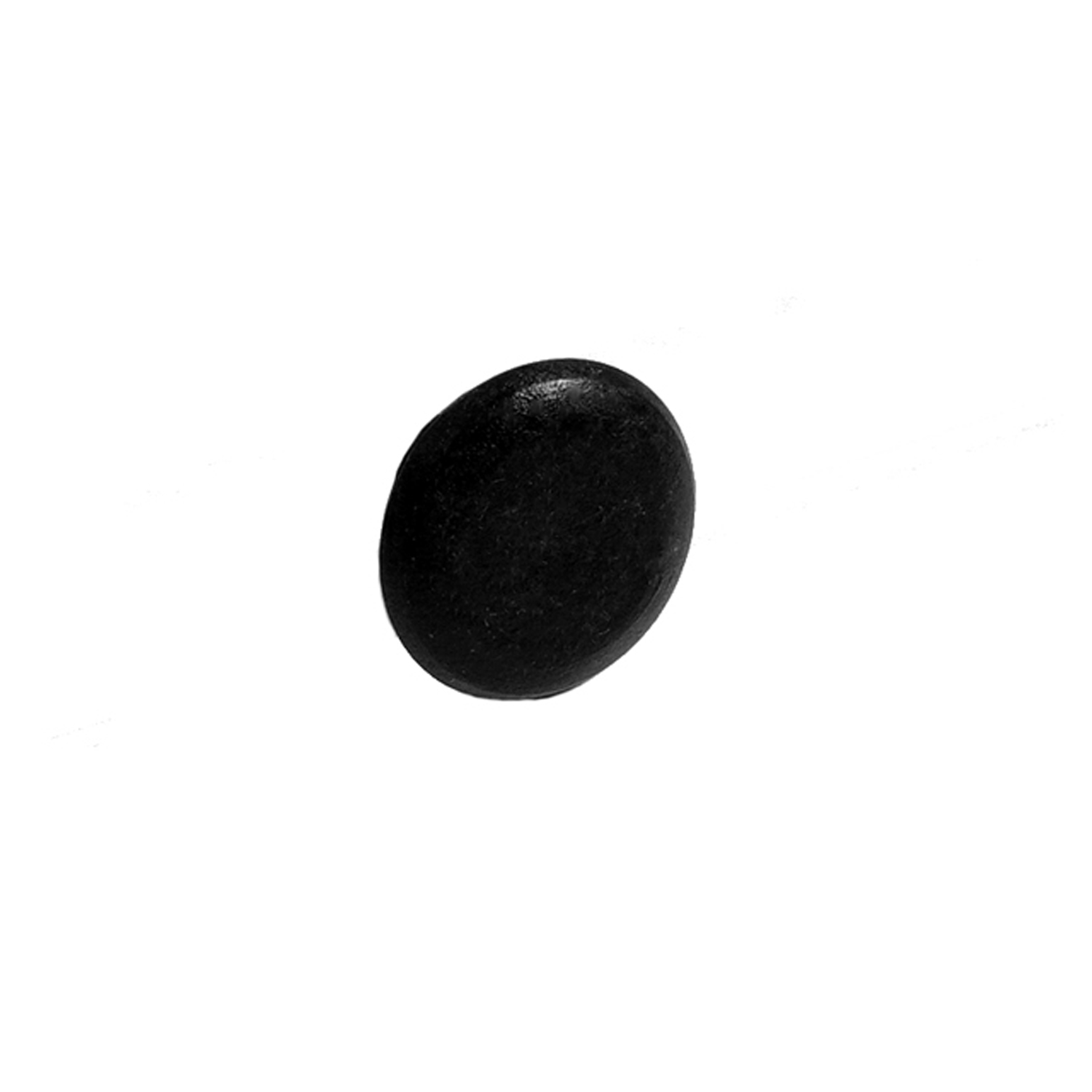 1925 Packard Single Six Trunk Bumper. 3/4" O.D., 5/8" I.D. Each-SB 74Trunk Bumper. 3/4" O.D., 5/8" I.D. Each
Why Choose Metro?
For over 100 years, Metro Moulded Parts has been the pinnacle of quality in classic car restoration parts. Our commitment to precision and authenticity in every component ensures a perfect fit and an OEM-level appearance.
- Expert Craftsmanship & Quality: Each part is a testament to our dedication to reliability and perfection, crafted from original designs and thoroughly tested.
- Advanced Technology: We use cutting-edge techniques to create flawless, long-lasting parts that surpass others in performance.
- SuperSoft Sponge – The Ultimate Door Seal: Not only are our door seals 30% softer than competitors', but they're also guaranteed to never leak. They effectively reduce wind and road noise, enhancing your classic car's comfort and driving experience.
- Proudly American: Our parts are a product of American craftsmanship, made in the USA with a spirit of excellence and heritage.
- Unrivaled Warranty: We back our products with a 30-year industry-leading warranty, a testament to our confidence in their quality.
Join us in preserving the legacy of classic cars with parts that are crafted for perfection, not just made.