

Image of 1926 Packard Single Eight, Note: These illustrations use artistic license and may differ from actual historical models.
Performance Metrics
Fundamental Metrics
Emotional Appeal
MMP Rating
| Engine Specifications | |
|---|---|
| Engine: | Single Eight |
| Displacement: | 357 cubic inches |
| Horsepower: | Estimated 85-90 HP |
| Torque: | Not available |
| Compression Ratio: | Not available |
| Ignition System: | Battery and coil |
| Cooling System: | Water-cooled |
| Performance Specifications | |
| 0-60 Time: | Not available |
| 1/4 Mile Time: | Not available |
| Top Speed: | 70 mph |
| Transmission and Drive | |
| Drive Type: | Rear-wheel drive |
| Transmission Type: | 3-speed manual |
| Fuel and Efficiency | |
| Fuel System Type: | Carburetor |
| MPG: | Not available |
| Dimensions and Brakes | |
| Brakes: | Mechanical drum brakes |
| Wheelbase: | 133 inches |
| Weight: | 4,500 lbs |
Note: Specifications for classic cars are given to the best of our ability, considering the limited and variant data available.
1926 Packard Single Eight: A First-Class Eight-Cylinder Tourer
The 1926 Packard Single Eight combined the hush of a long, straight-eight engine with the imposing presence of a hand-finished American luxury car. Built by the Packard Motor Car Company in Detroit, it arrived during a period when wealthy motorists wanted more power and refinement than a six-cylinder car could offer, but without the complexity of a multi-engine design.
Packard had introduced the Single Eight in 1924, giving the company a modern straight-eight line after years of building its celebrated Twin Six. “Single” described the one eight-cylinder engine, not a basic or entry-level Packard. The 1926 model was part of the Single Eight’s final year, making it a notable link between Packard’s earlier luxury cars and the larger, more powerful Eights that followed.
One point of interest is that Packard’s move to a straight eight was not simply a bid for a bigger horsepower figure. The engine’s long, even firing sequence helped deliver the smooth, steady power expected in a prestige automobile. In a well-maintained example, that quality is still part of the car’s appeal.
Long Lines, Fine Coachwork, and a Quiet Cabin
The Single Eight has the upright, formal proportions associated with high-end cars of the 1920s. Its tall radiator, crowned by the Packard crest, leads into a long hood that gives the car an unmistakable sense of scale. Separate fenders sweep around large spoked wheels, while running boards connect the front and rear fenders into one deliberate, elegant profile. Headlamps mounted beside the radiator and a rear-mounted spare tire complete the period look.
Packard offered a broad range of factory body styles, including open touring cars and phaetons, roadsters, coupes, sedans, and formal town-car or limousine configurations. The precise offerings depended on the model and catalog year, and some buyers commissioned special bodies from coachbuilders. Open touring and phaeton bodies show off the car’s long chassis especially well, while closed sedans and limousines emphasize its role as quiet, comfortable transportation for well-to-do owners.
Inside, the experience depended on the body style and equipment, but the materials were suitably rich. Closed cars could feature leather or broadcloth upholstery, polished wood trim, carpeting, and carefully finished metal fittings. Open models often used durable leather seating and weather gear such as a folding top, side curtains, and a tonneau cover. The cabin was spacious by the standards of the day, with a high seating position and a broad view over the hood.
Color choices varied with body and individual order. Dark, dignified shades such as black, deep blue, maroon, and green suited Packard’s formal image, while contrasting fenders or body sections could add a restrained two-tone effect. Original paint combinations are not uniform across surviving cars, so a particular color should be checked against the car’s build details rather than assumed to be factory-correct.
Engineering That Made the Eight Feel Effortless
At the heart of the 1926 Single Eight was a roughly 385-cubic-inch, or 6.3-liter, L-head inline-eight. Period specifications commonly place output at about 90 horsepower, though published figures can differ by year and source. A three-speed manual transmission sent power to the rear wheels. The engine’s size and long stroke favored relaxed pulling power, not high-revving performance.
For its time, the Single Eight also brought useful chassis and comfort features to luxury motoring. Four-wheel mechanical brakes were part of the period specification, and the car’s substantial frame and suspension were designed to carry its weight while keeping passengers composed. Equipment varied by body and order, but Packard’s emphasis was clear: make a large automobile feel refined, dependable, and easy to use at touring speeds.
The bodywork and mechanical package were part of the same luxury proposition. Packard sold a complete automobile, but buyers who wanted something more individual could choose different body layouts and trim or turn to outside coachbuilders. That blend of factory engineering and personal specification helped establish the marque’s reputation for tailored, high-quality cars.
Why the Single Eight Mattered
The Single Eight marked an important change in Packard’s approach to its top-tier cars. The company had built its reputation with sophisticated engines, including the Twin Six, but a straight eight offered a compelling combination of smoothness, power, and mechanical simplicity relative to a twelve-cylinder layout. It gave Packard a modern flagship formula that could be developed further in later Eight models.
The car also reflects a larger shift in American automotive design. By the mid-1920s, buyers increasingly expected more than basic transportation: they wanted enclosed bodies, better braking, easier long-distance travel, and engines that could maintain highway pace with less strain. Packard answered those expectations with a well-engineered chassis and an engine that delivered its power in a quiet, even manner.
Against contemporaries from Cadillac, Lincoln, and other luxury makers, the Single Eight stood out for its combination of imposing size, polished construction, and smooth straight-eight power. It was not the only refined luxury car of its era, but it helped make the Packard Eight a defining part of the company’s identity. The name “Packard” would remain closely associated with straight-eight luxury for decades.
Road Manners: Smooth, Heavy, and Deliberate
There is no single dependable factory 0-to-60-mph figure for a 1926 Single Eight. Period performance testing was not standardized in the modern way, and results depend heavily on the body, gearing, condition, and test method. A reasonable modern estimate for a healthy car is roughly 25 to 35 seconds to reach 60 mph. That is an estimate, not a verified factory claim.
Top speed also varies by configuration and mechanical condition. A well-tuned example may be capable of approximately 70 to 80 mph, but the car is best understood as a fast touring machine rather than a car to drive flat out. Its weight, vintage tires, mechanical brakes, and tall gearing all argue for a measured pace.
On a smooth road, the long wheelbase and substantial chassis give the Single Eight a settled, dignified ride. It can absorb ordinary bumps with impressive composure, though sharp road edges still make themselves known through its period suspension and tires. On winding roads, the car rewards anticipation: it is large and heavy, with slower steering response and more body movement than a modern vehicle. It feels most at home sweeping through gentle bends rather than being hustled through tight corners.
From behind the wheel, the straight eight provides a low, steady mechanical hum instead of a sharp, busy exhaust note. The steering, clutch, gear changes, and braking all demand more physical effort and attention than a modern car. For an experienced driver, that interaction is part of the charm. The Single Eight asks to be driven with care, and it returns a calm, substantial sense of progress.
Living With a Packard Single Eight
Today, the 1926 Single Eight is primarily a collector car used for touring, concours events, museum display, and vintage motoring gatherings. It can be driven on suitable roads, but it is not a sensible everyday commuter. Its size, limited braking performance by modern standards, slow traffic adaptability, and need for regular attention make it better suited to planned outings.
Maintenance is manageable for a capable owner, but “easy to repair” needs a 1920s qualification. The basic mechanical layout is understandable, and many jobs can be handled by a specialist familiar with early Packards. However, parts may require sourcing through marque clubs, specialist suppliers, or the used-parts market. Restoring the engine, transmission, brakes, electrical system, or coachwork can be expensive, and accurate trim or body components may take time to find.
Reliability depends heavily on restoration quality and ongoing care. A sound car with a properly rebuilt engine, adjusted brakes, and a healthy cooling system can be a rewarding touring companion. A neglected example can quickly become a major project. Before buying, inspect the frame, wood structure where applicable, body alignment, engine condition, cooling system, brake operation, and the completeness of model-specific parts.
Packard Facts and Common Misconceptions
The Single Eight belongs to the era of Packard’s famous “Ask the Man Who Owns One” slogan, a phrase that captured the company’s confidence in owner satisfaction. The slogan was used to promote Packard broadly, rather than being a special campaign for the 1926 model alone.
There are no widely recognized production or speed records that define the 1926 Single Eight. Its importance lies more in Packard’s engineering direction and reputation than in a headline-grabbing competition result. Nor should every surviving car be described as a custom coachbuilt rarity: many were factory-bodied, while a smaller number received special coachwork or unusual equipment.
A common criticism is that the car’s size and weight make it demanding in modern traffic. Its mechanical brakes and period tires also require greater stopping distance and a more careful driving style than contemporary cars. Those limitations are real, but they are part of the ownership calculation for almost any large car from the period.
Collector Value and Availability
Values vary widely with body style, originality, restoration quality, provenance, and whether the car is ready to tour. As a broad 2026 estimate, a complete but older or less thoroughly restored example might sell for about $40,000 to $80,000. A strong, well-restored car may bring roughly $80,000 to $175,000, while an especially desirable body style, exceptional restoration, or significant coachbuilt example could exceed $200,000. These are working ranges, not a substitute for a current appraisal or recent comparable sales.
Exact production totals for the Single Eight can be difficult to pin down across model years and body variations. A reasonable estimate is that Packard built several tens of thousands of Single Eights during the model’s 1924–1926 run, with perhaps around 20,000 to 30,000 as a broad approximation. The surviving, usable population is far smaller, and particular body styles or original coachbuilt cars can be genuinely scarce.
The market is selective. Exceptional, documented cars tend to hold attention, while cars needing extensive restoration can be costly relative to their finished value. In recent years, top-quality examples have generally remained desirable, but values are not guaranteed to rise steadily. Restoration costs, condition, and the quality of the specific car matter more than simply owning the nameplate.
A Lasting Expression of Packard Luxury
The 1926 Packard Single Eight brought together a smooth, large-displacement straight eight, formal styling, carefully finished interiors, and the kind of road presence that made Packard a leading American luxury marque. It helped carry the company into a new era of eight-cylinder power while retaining the craftsmanship and refinement expected by its customers.
For collectors, it is more than an imposing prewar automobile. It is a beautifully tangible moment in the evolution of American luxury motoring, when a long hood, a quiet engine, and a confident Packard crest signaled that the journey itself was part of the privilege.
1926 Packard Single Eight Catalog of Parts
 1926 Packard Single Eight Gas Filler Grommet. 2-1/2" I.D., 4-1/8" O.D. Each-GF 12Gas Filler Grommet. 2-1/2" I.D., 4-1/8" O.D. Each
 1926 Packard Single Eight Hood Corners. 1-3/4" to 2" corner radius-HC 14Hood Corners. 1-3/4" to 2" corner radius. Pad is 3-3/8" long. Pair
 1926 Packard Single Eight Swing-Out Lower Windshield Seal. Sold by the foot-LP 108Swing-Out Lower Windshield Seal. Sold by the foot
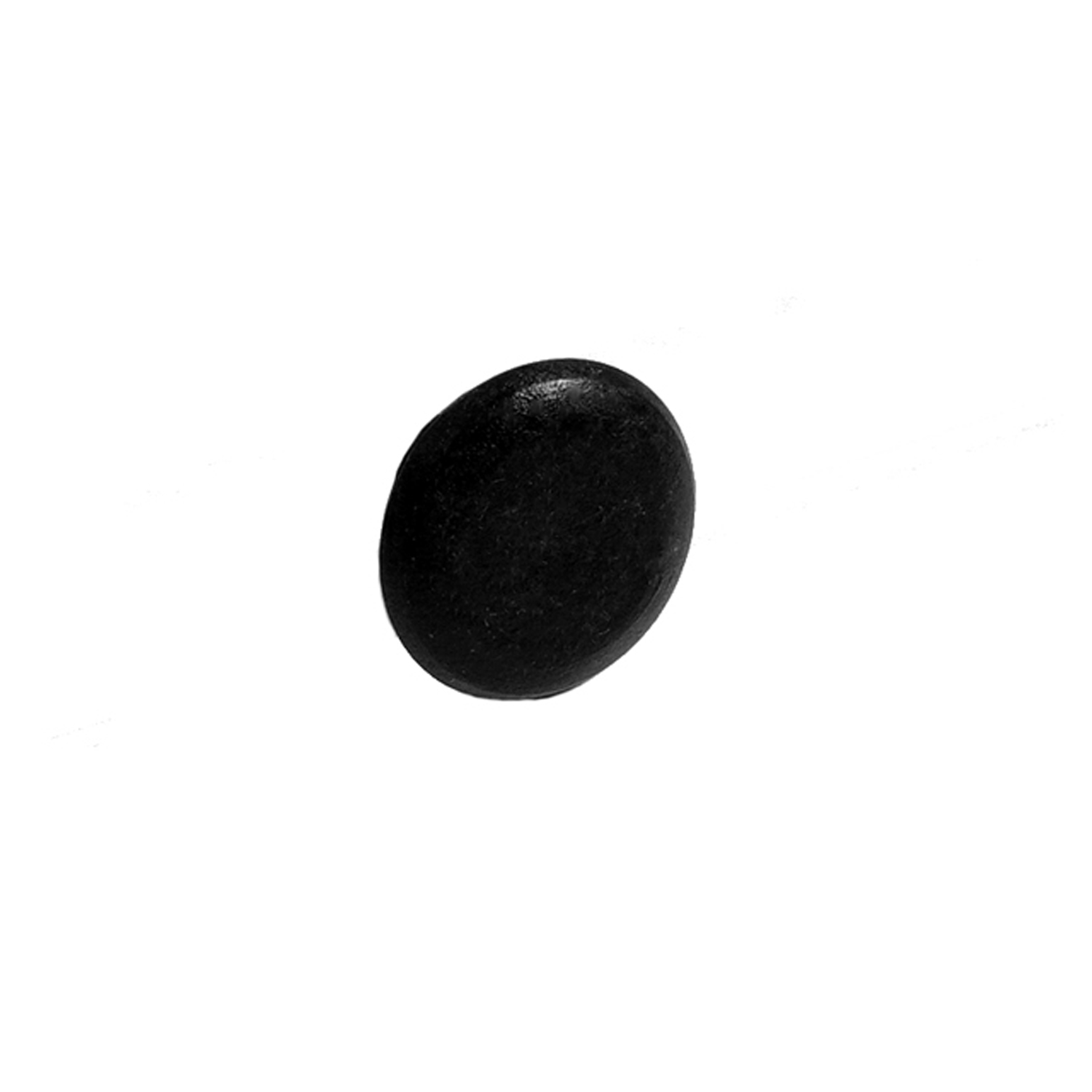 1926 Packard Single Eight Trunk Bumper. 3/4" O.D., 5/8" I.D. Each-SB 74Trunk Bumper. 3/4" O.D., 5/8" I.D. Each
Why Choose Metro?
For over 100 years, Metro Moulded Parts has been the pinnacle of quality in classic car restoration parts. Our commitment to precision and authenticity in every component ensures a perfect fit and an OEM-level appearance.
- Expert Craftsmanship & Quality: Each part is a testament to our dedication to reliability and perfection, crafted from original designs and thoroughly tested.
- Advanced Technology: We use cutting-edge techniques to create flawless, long-lasting parts that surpass others in performance.
- SuperSoft Sponge – The Ultimate Door Seal: Not only are our door seals 30% softer than competitors', but they're also guaranteed to never leak. They effectively reduce wind and road noise, enhancing your classic car's comfort and driving experience.
- Proudly American: Our parts are a product of American craftsmanship, made in the USA with a spirit of excellence and heritage.
- Unrivaled Warranty: We back our products with a 30-year industry-leading warranty, a testament to our confidence in their quality.
Join us in preserving the legacy of classic cars with parts that are crafted for perfection, not just made.