

Image of 1928 Packard Custom Eight, Note: These illustrations use artistic license and may differ from actual historical models.
Performance Metrics
Fundamental Metrics
Emotional Appeal
MMP Rating
| Engine Specifications | |
|---|---|
| Engine: | Straight-8 |
| Displacement: | 384.8 cubic inches |
| Horsepower: | Estimated 109-120 HP |
| Torque: | Not available |
| Compression Ratio: | Not available |
| Ignition System: | Battery and coil |
| Cooling System: | Water-cooled |
| Performance Specifications | |
| 0-60 Time: | Not available |
| 1/4 Mile Time: | Not available |
| Top Speed: | 70-80 mph |
| Transmission and Drive | |
| Drive Type: | Rear-wheel drive |
| Transmission Type: | 3-speed manual |
| Fuel and Efficiency | |
| Fuel System Type: | Carburetor |
| MPG: | Not available |
| Dimensions and Brakes | |
| Brakes: | 4-wheel mechanical drum brakes |
| Wheelbase: | 143 inches |
| Weight: | Estimated 4,700 lbs |
Note: Specifications for classic cars are given to the best of our ability, considering the limited and variant data available.
1928 Packard Custom Eight: The American Luxury Benchmark
The 1928 Packard Custom Eight was built for drivers who wanted more than transportation: it offered presence, craftsmanship, and the effortless authority of a large straight-eight engine. Made by the Packard Motor Car Company in Detroit, the Custom Eight belonged to the marque’s prestigious Eighth Series and sat near the top of Packard’s lineup.
Packard had earned its reputation by building expensive, carefully engineered cars for affluent buyers. The Custom Eight carried that approach into the late 1920s, when American roads and fortunes were changing quickly and luxury manufacturers competed through refinement, power, and coachbuilt style. A memorable detail is the scale of the car itself: its 143-inch wheelbase gave body designers room to create everything from formal limousines to long, open touring cars.
Packard Styling and Coachbuilt Options
The Custom Eight had the dignified proportions associated with a great American luxury car of its era. A tall, upright radiator shell and long hood established its formal profile, while sweeping fenders framed the large wheels. Depending on the body, a rear-mounted spare, running boards, and polished lamps added to its road presence. The result was imposing without relying on excess ornament. Packard’s restrained details and carefully finished brightwork did much of the talking.
Buyers could choose from a range of body styles, including sedans, limousines, phaetons, roadsters, coupes, and town cars. The exact selection depended on the catalog offering and coachbuilder. Formal sedans and limousines suited chauffeur-driven use, while open phaetons and roadsters made the car’s long hood and sweeping body lines especially visible. There was no single body style that defines every Custom Eight: the chassis could wear very different personalities.
Inside, owners found a cabin finished to luxury-car standards of the period. Depending on body style and specification, materials could include rich upholstery, polished wood trim, quality carpeting, and carefully fitted metal hardware. Packard buyers could also order individual details to suit their tastes. Paint choices and two-tone combinations varied by body and order; black was a classic formal choice, while dark blue, maroon, green, and other deep colors offered a more distinctive look.
Engineering for a Luxury Car
At the heart of the Custom Eight was a 384.8-cubic-inch L-head inline-eight, rated at approximately 106 horsepower. Its long, smooth power pulses suited a heavy, high-end car: the goal was not a sharp burst of acceleration but strong, composed progress with minimal fuss. Power went through a manual transmission, with a conventional three-speed gearbox typical of the period.
The car’s large proportions were matched by substantial chassis engineering. It rode on a 143-inch wheelbase and used mechanical brakes at all four wheels. Those brakes were appropriate for the era but require more anticipation and firmer driver input than modern hydraulic systems. There were no electronic aids, power steering, or modern safety systems. In period terms, the innovation was the way Packard brought a powerful eight-cylinder engine, a substantial chassis, and a broad range of luxury bodies together in one refined package.
Why the Custom Eight Mattered
The Custom Eight represented an important part of Packard’s identity: a luxury car that balanced engineering with individual style. Rather than treating the automobile as a mass-produced appliance, Packard offered a prestigious chassis that could be configured for different owners and uses. That approach connected the company to the coachbuilt tradition, when a buyer’s choice of body was central to a car’s character.
It also stood apart from many contemporaries through its combination of scale, smooth eight-cylinder power, and finish. The Custom Eight was not simply a large car with an expensive badge. It was designed to deliver quiet, confident travel and to look appropriate outside a grand hotel, country estate, or city residence. Packard’s reputation for quality helped make the name a lasting symbol of American luxury, and the Custom Eight remains a vivid example of that prewar ideal.
Road Performance and Driving Feel
Published performance figures for individual 1928 Custom Eights are not as consistent as modern test data, and body weight, gearing, condition, and tire choice all made a difference. A sound example may reach roughly 80 to 85 mph, with some period and enthusiast accounts suggesting higher speeds in favorable conditions. A reasonable modern estimate for 0 to 60 mph is around 20 to 25 seconds, though this should be treated as an approximation rather than a factory-certified figure.
On the road, the straight-eight’s smoothness is more important than its numbers. The engine produces a deep, even mechanical note, building speed without the sharp, busy feel of a smaller engine working hard. The long wheelbase helps the car settle over ordinary road undulations, though its weight and period suspension mean sharp bumps still make themselves known. On winding roads, the Custom Eight rewards a measured approach: it is a large luxury touring car, not a nimble sports model. Steering effort, body roll, and mechanical brakes all remind the driver that the car belongs to a different era.
The driving experience is hands-on. The driver manages a manual gearbox, plans braking early, and pays attention to the car’s size. In return, the Packard delivers a relaxed, stately rhythm that is hard to reproduce in a modern vehicle. At a steady touring pace, the engine’s smoothness and the long chassis make the car feel composed and substantial.
Owning and Maintaining a 1928 Packard
Today, a Custom Eight is most often used for touring events, concours shows, museum displays, and carefully planned pleasure drives. It can cover distance when properly maintained, but its size, fuel consumption, mechanical brakes, and lack of modern safety equipment make it an impractical everyday driver for most owners.
Routine service is approachable for an experienced vintage-car mechanic, but the car is not necessarily easy for an average owner to maintain without specialist support. Ignition, carburetion, lubrication, brake adjustment, and cooling-system upkeep all demand familiarity with prewar engineering. Parts availability varies: common service items may be sourced through vintage-car suppliers, while model-specific trim, body hardware, and coachwork pieces can be expensive or difficult to find. A thorough pre-purchase inspection should include the engine, transmission, chassis, brakes, electrical system, and any previous restoration work.
Packard Custom Eight Facts
The Custom Eight was part of Packard’s 1928 Eighth Series, and its 443 designation is commonly associated with the long-wheelbase model. Packard’s famous slogan, “Ask the Man Who Owns One,” reflected the company’s confidence in owner satisfaction and helped reinforce the marque’s reputation for quality.
There is no single, definitive production figure that is consistently cited for every body configuration of the 1928 Custom Eight. A reasonable working estimate is roughly 2,000 to 3,000 Model 443 chassis, with production divided among multiple body styles and specifications. Surviving examples are considerably scarcer, especially cars retaining their original body, equipment, and documentation.
One common criticism is that the Custom Eight’s size and weight make it less agile and more demanding to stop than a modern car. Its original mechanical brakes also need careful adjustment and a driver who plans ahead. Those limitations are part of its historical character, but they matter when assessing a car for regular road use.
Collector Value and Availability
Values depend heavily on body style, condition, provenance, mechanical health, and the quality of any restoration. As a broad 2026 estimate, a project or incomplete example might fall around $25,000 to $60,000. A sound, usable car could bring approximately $60,000 to $130,000, while a high-quality restoration or particularly desirable body style may reach $130,000 to $250,000 or more. Exceptional coachbuilt examples with strong provenance can exceed that range.
These figures are guides, not guaranteed sale prices. A sedan and a rare open or formal body can attract very different buyers, and the cost of correcting an old restoration can quickly outweigh an apparent bargain. The market for significant prewar Packards remains active, but prices vary with collector confidence and the quality of the individual car. The best examples tend to hold attention and value better than cars needing extensive work, although appreciation is never assured.
A Lasting Packard Statement
The 1928 Packard Custom Eight combined a powerful smooth-running inline-eight, a commanding long-wheelbase chassis, and the choice of several carefully finished body styles. It was engineered for dignified travel, yet its coachbuilt variety let owners make it distinctly their own. More than a handsome survivor from the Jazz Age, the Custom Eight captures Packard at the height of its influence: confident, meticulously made, and unmistakably luxurious.
1928 Packard Custom Eight Catalog of Parts
 1928 Packard Custom Eight Gas Filler Grommet. 2-1/2" I.D., 4-1/8" O.D. Each-GF 12Gas Filler Grommet. 2-1/2" I.D., 4-1/8" O.D. Each
 1928 Packard Custom Eight Hood Corners. 1-3/4" to 2" corner radius-HC 14Hood Corners. 1-3/4" to 2" corner radius. Pad is 3-3/8" long. Pair
 1928 Packard Custom Eight Swing-Out Lower Windshield Seal. Sold by the foot-LP 108Swing-Out Lower Windshield Seal. Sold by the foot
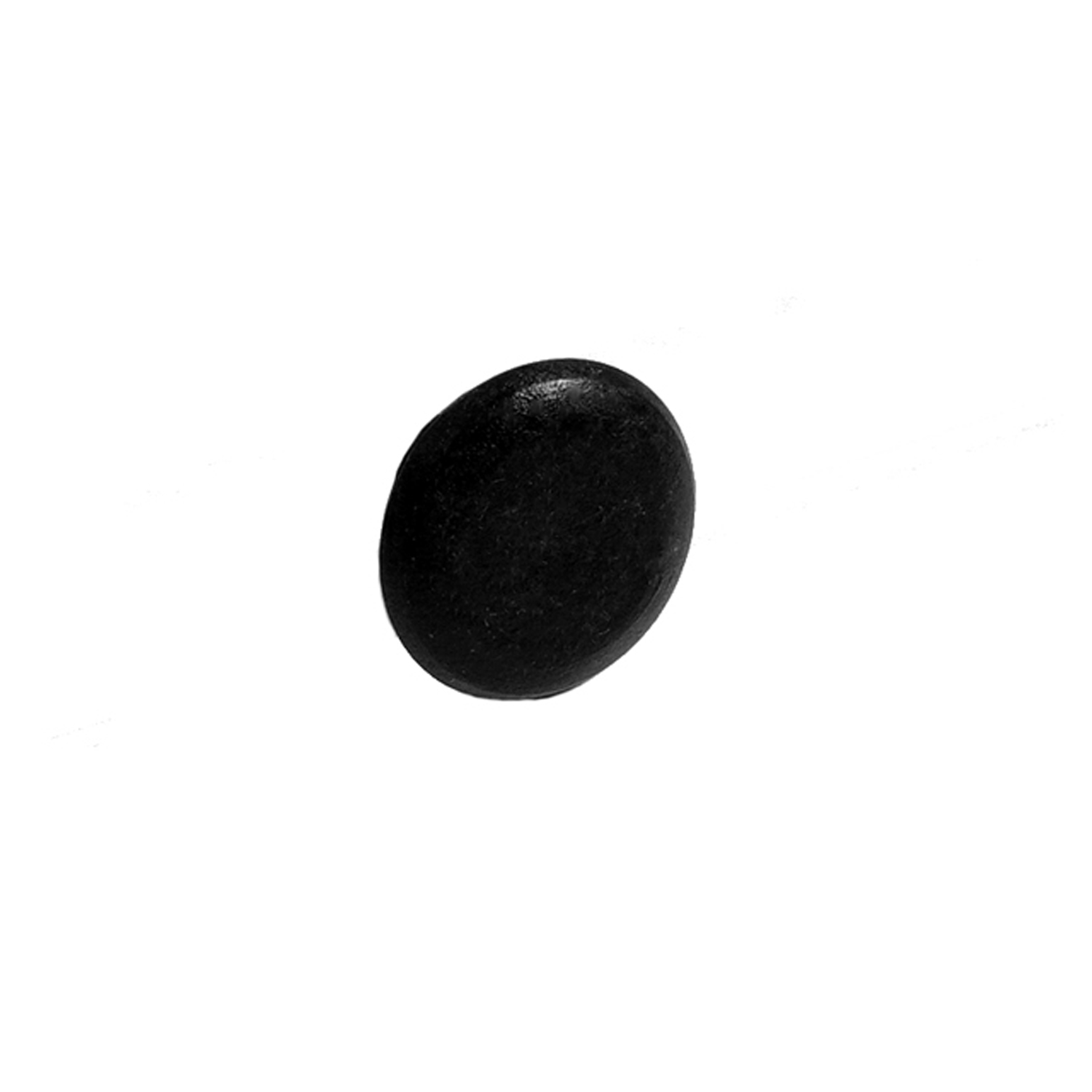 1928 Packard Custom Eight Trunk Bumper. 3/4" O.D., 5/8" I.D. Each-SB 74Trunk Bumper. 3/4" O.D., 5/8" I.D. Each
Why Choose Metro?
For over 100 years, Metro Moulded Parts has been the pinnacle of quality in classic car restoration parts. Our commitment to precision and authenticity in every component ensures a perfect fit and an OEM-level appearance.
- Expert Craftsmanship & Quality: Each part is a testament to our dedication to reliability and perfection, crafted from original designs and thoroughly tested.
- Advanced Technology: We use cutting-edge techniques to create flawless, long-lasting parts that surpass others in performance.
- SuperSoft Sponge – The Ultimate Door Seal: Not only are our door seals 30% softer than competitors', but they're also guaranteed to never leak. They effectively reduce wind and road noise, enhancing your classic car's comfort and driving experience.
- Proudly American: Our parts are a product of American craftsmanship, made in the USA with a spirit of excellence and heritage.
- Unrivaled Warranty: We back our products with a 30-year industry-leading warranty, a testament to our confidence in their quality.
Join us in preserving the legacy of classic cars with parts that are crafted for perfection, not just made.