
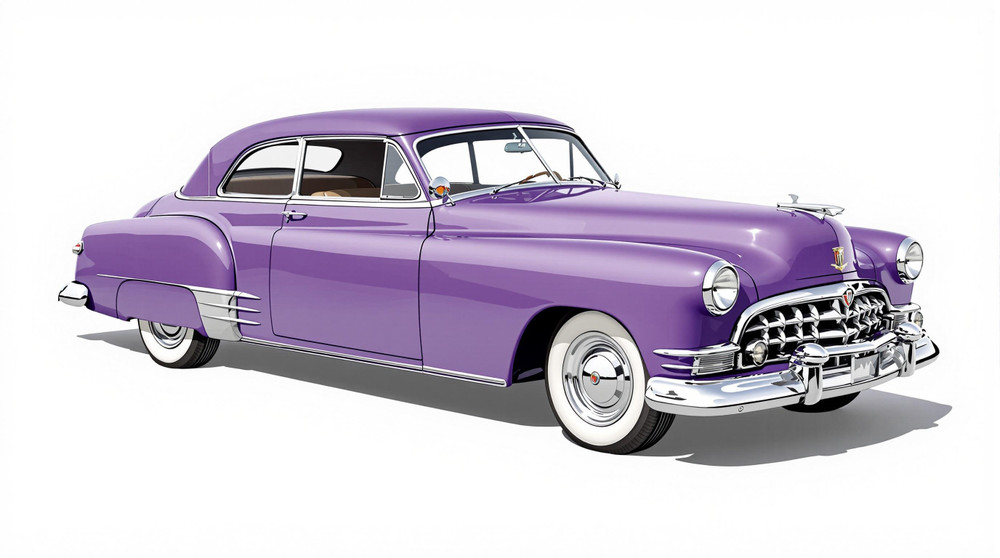
Image of 1950 Packard Custom Eight, Note: These illustrations use artistic license and may differ from actual historical models.
Performance Metrics
Fundamental Metrics
Emotional Appeal
MMP Rating
| Engine Specifications | |
|---|---|
| Engine: | Straight 8 |
| Displacement: | 327 cu in (5.4 L) |
| Horsepower: | Estimated 150 hp |
| Torque: | 270 lb-ft |
| Compression Ratio: | Estimated 7.0:1 |
| Ignition System: | Battery Ignition |
| Cooling System: | Liquid Cooled |
| Performance Specifications | |
| 0-60 Time: | Estimated 15 seconds |
| 1/4 Mile Time: | Not available |
| Top Speed: | 100 mph |
| Transmission and Drive | |
| Drive Type: | Rear Wheel Drive |
| Transmission Type: | 3-speed manual with optional overdrive |
| Fuel and Efficiency | |
| Fuel System Type: | Carburetor |
| MPG: | Estimated 15 mpg |
| Dimensions and Brakes | |
| Brakes: | Drum Brakes |
| Wheelbase: | 127 in (3226 mm) |
| Weight: | Estimated 4100 lbs |
Note: Specifications for classic cars are given to the best of our ability, considering the limited and variant data available.
1950 Packard Custom Eight: The Last Word in Packard Luxury
The 1950 Packard Custom Eight brought the calm authority of a hand-finished luxury car to an America increasingly drawn to bigger engines, automatic transmissions, and modern conveniences. Built by Packard Motor Car Company in Detroit, it sat near the top of Packard’s postwar range, combining imposing styling with the marque’s celebrated straight-eight power. It was not merely transportation for a well-heeled buyer. It was a rolling declaration that Packard still intended to compete with America’s finest cars.
The Custom Eight belonged to Packard’s 23rd Series, sold during the 1950 model year. The company had built its reputation on precision engineering and high-quality construction, and the Custom Eight carried that tradition into the postwar era. A notable feature was the availability of Packard’s Ultramatic Drive, introduced in 1949. It gave buyers a smooth automatic option developed in-house, a significant achievement for an independent automaker competing against much larger manufacturers.
Bathtub Styling with Packard Presence
Packard’s postwar body design was unmistakable. The 1950 Custom Eight had a broad, rounded body, a high hood, and flowing fenders that blended into the main bodywork. Its shape earned the era’s Packards the nickname “bathtub,” a label that captured their substantial, enveloping profile. Whether that styling looks stately or overly bulbous depends on the viewer, but it certainly stands apart from the sharper, more squared-off cars that followed.
At the front, a tall grille with closely spaced vertical bars gave the car a formal face. The Packard crest and hood ornament added a touch of ceremony, while chrome trim framed the windows and emphasized the long body sides. At the rear, gently integrated fenders and a broad trunk kept the design cohesive. The overall effect was less flashy than some rivals, but unmistakably prestigious.
Packard offered period paint choices in a range of solid colors, including dark and light shades such as black, maroon, green, blue, gray, and ivory. Exact names and availability varied by paint schedule and body style. Black and darker colors suited the Custom Eight’s dignified character, while lighter shades brought out the rounded body lines. A car’s original paint code is worth checking when assessing a restoration, since present-day color choices do not always reflect the factory palette.
Cabin Craft and Body Styles
The Custom Eight’s interior emphasized comfort and workmanship over sporty flair. Depending on body style and original specification, upholstery could include rich cloth or leather, with carefully finished door panels, carpets, and trim. The broad front seat, generous cabin space, and upright seating position made the car well suited to long trips. Details such as polished brightwork and a clearly arranged instrument panel reinforced its premium feel.
Body styles in the Custom Eight range included formal sedans and club sedans, with convertible and long-wheelbase passenger-car versions also offered in the broader series lineup. The four-door sedan was the practical, recognizable choice, while the convertible coupe is among the most striking and collectible versions today. Long-wheelbase cars, where specified, catered to buyers who wanted extra rear-seat room and a more chauffeur-friendly experience. Availability and model designations can vary across catalogues and production records, so confirm the exact series and body code when researching a particular car.
Engineering Behind the Elegance
Under the hood was Packard’s 356-cubic-inch L-head inline-eight, rated at approximately 160 horsepower. The large-displacement engine delivered its power in a relaxed, low-revving manner, favoring smoothness and effortless cruising over high-speed excitement. It was a refined powerplant for its day, and its long, even firing rhythm became part of the Packard driving experience.
Buyers could choose a conventional manual transmission or Packard’s Ultramatic automatic, depending on specification. Ultramatic used a torque converter and provided a notably smooth takeoff. At cruising speeds, its direct-drive feature helped reduce converter slip. Packard was among the few independent American carmakers to develop its own fully automatic transmission, and Ultramatic helped the marque keep pace with the convenience features buyers increasingly expected.
The Custom Eight also used hydraulic brakes and independent front suspension with coil springs, paired with a conventional rear suspension. It did not have later innovations such as power steering or Packard’s famous Torsion-Level suspension, which arrived years afterward. Still, its engineering focused on quietness, comfort, and stability rather than sporting sharpness.
Why the Custom Eight Mattered
The Custom Eight represented Packard’s effort to preserve its luxury-car identity in a fast-changing postwar market. Packard’s reputation rested on engineering quality and careful assembly, and the model offered a distinctive alternative to the mass-produced luxury cars of larger manufacturers. The Ultramatic was especially important: it showed that Packard could develop sophisticated convenience technology of its own rather than simply follow the industry’s biggest players.
Its design was more divisive. The rounded postwar styling looked substantial and modern to some buyers, but critics found it heavy-looking. That debate is part of the car’s legacy. The Custom Eight captures a particular moment when prewar ideas of prestige and craftsmanship met postwar expectations for comfort and ease of use. Packard would later adopt more conventional styling, but the 1950 car remains one of the clearest examples of the marque’s distinctive postwar look.
Road Manners, Speed, and Ride Quality
With 160 horsepower and a substantial body, the Custom Eight was built for steady progress rather than quick acceleration. A period-style estimate for 0 to 60 mph is roughly 16 to 19 seconds, depending on body weight, transmission, mechanical condition, and test method. Top speed is generally estimated in the neighborhood of 95 to 100 mph, though reaching that speed is not the point of the car. It feels most at home cruising at a relaxed pace.
On ordinary roads, the Custom Eight’s long wheelbase and soft suspension help it absorb bumps and broken pavement with an easy, composed motion. It is a large, heavy car, so tight corners bring noticeable body lean, and narrow, winding roads call for measured steering inputs. The steering is not light by modern standards, especially at low speed, and the driver needs to plan braking distances accordingly.
From behind the wheel, the straight-eight produces a muted, even hum rather than a sharp exhaust bark. With Ultramatic, acceleration is smooth and nearly uninterrupted, while the wide seat and generous cabin make long journeys feel unhurried. It is a car that rewards anticipation and gentle inputs. Drive it as a relaxed luxury sedan, not a modern performance car, and its character makes sense.
Living with a 1950 Packard
Today, most Custom Eights are used as show cars, touring cars, or occasional weekend drivers rather than daily transportation. A well-sorted example can handle local drives and organized classic-car tours, but its age means reliability depends heavily on maintenance and the quality of any restoration. Brakes, cooling, fuel delivery, wiring, and transmission condition deserve careful attention before regular use.
Routine mechanical work is approachable for an experienced home mechanic, but some jobs require specialist knowledge. The straight-eight is robust when maintained, yet parts are not as readily available as those for common Ford or Chevrolet models. Ultramatic components and body-specific trim can take more effort to source or repair. Packard clubs, marque specialists, and parts networks are valuable resources, especially for owners tackling a restoration.
Common criticisms include the car’s bulky styling, modest acceleration by modern standards, and the time and expense involved in keeping a rare luxury model in top condition. Those drawbacks come with the territory: the Custom Eight is a large, complex classic from a once-independent luxury manufacturer, not a low-cost commuter car.
Packard Trivia and Production
Ultramatic is one of the Custom Eight’s most interesting talking points. Packard introduced it just before the 1950 model year, giving the company an in-house automatic transmission at a time when automatic convenience was rapidly gaining popularity. The transmission’s smooth operation suited the car’s character particularly well.
The Custom Eight was not a record-setting race car, and no widely recognized land-speed or endurance record defines the model. Its achievement was more understated: it offered a high level of comfort, craftsmanship, and engineering sophistication from a manufacturer that had to compete with far larger rivals. Packard also built aircraft engines during World War II, including licensed Rolls-Royce Merlin engines, a striking part of the company’s broader engineering history, though unrelated to the Custom Eight’s road-car powerplant.
Exact production totals can be difficult to pin down because figures are recorded by series, body style, and model designation. A reasonable estimate for 1950 Custom Eight production is roughly 3,000 to 4,000 cars across the relevant body styles. The number of surviving examples is much smaller, particularly for unusual or convertible versions. No single celebrity connection defines the model; its appeal today rests more on its design, engineering, and Packard heritage.
Collector Values and Availability
Values vary considerably with body style, originality, restoration quality, and mechanical condition. As a broad current-market estimate, a project or driver-quality Custom Eight sedan might sell for about $15,000 to $30,000. A well-restored sedan could fall in the $30,000 to $55,000 range. Rare convertibles or exceptional examples may bring roughly $60,000 to $100,000 or more, with standout cars sometimes exceeding that range at the right auction.
These are guide figures, not guarantees. Rust, incomplete trim, poor-quality restoration work, and transmission problems can have a major effect on value. Prices for classic Packards have generally been selective rather than uniformly rising: top-quality, rare examples remain desirable, while ordinary sedans can be harder to sell at ambitious prices. For buyers, that means condition and documentation matter more than a seller’s restoration-cost total.
Custom Eights appear on the market from time to time, but the best examples are not common. Convertible and long-wheelbase cars are especially difficult to find. Before buying, confirm the model identity, inspect the chassis and body for corrosion, and have an experienced Packard mechanic evaluate the engine and Ultramatic if fitted.
A Distinctive Chapter in Packard History
The 1950 Packard Custom Eight combined a smooth 356-cubic-inch straight-eight, carefully finished cabin, and striking postwar styling in a package built for comfortable travel. Its rounded shape may divide opinion, and its age demands thoughtful ownership, but its engineering and presence remain compelling. For collectors, it is more than a handsome old sedan: it is a vivid reminder of the moment when Packard’s independent spirit was still expressed in every mile.
1950 Packard Custom Eight Catalog of Parts
 1950 Packard Custom Eight Accessory Floor Mat - 12"X17"-AC 32Accessory Floor Mat - made of high quality black rubber with molded original emblem. Also designed to be sewn into new carpets. 12"X17", Each
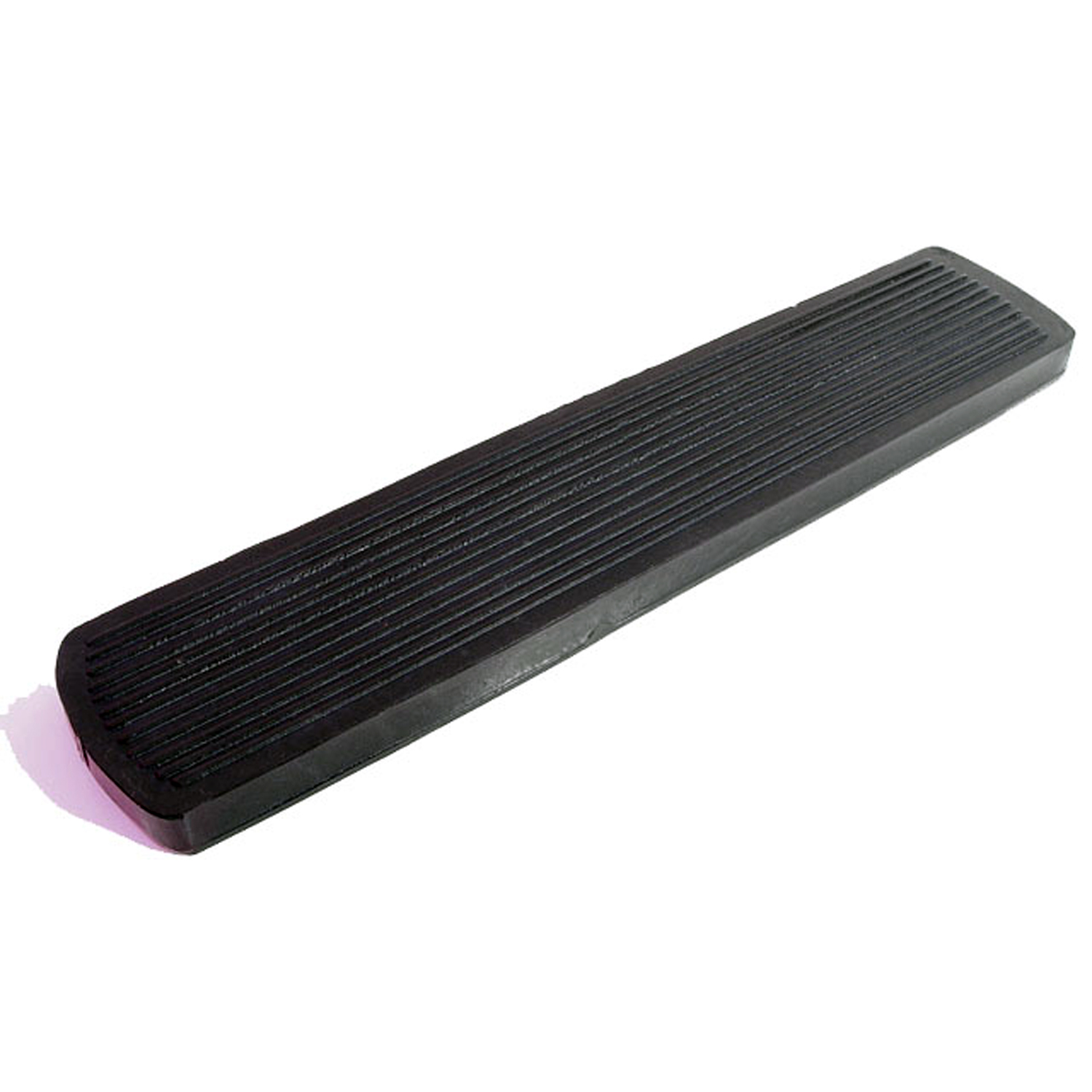 1950 Packard Custom Eight Accelerator Pedal Pad. 1-7/8" X 9-3/8", Each-AP 16Accelerator Pedal Pad. 1-7/8" X 9-3/8", Each
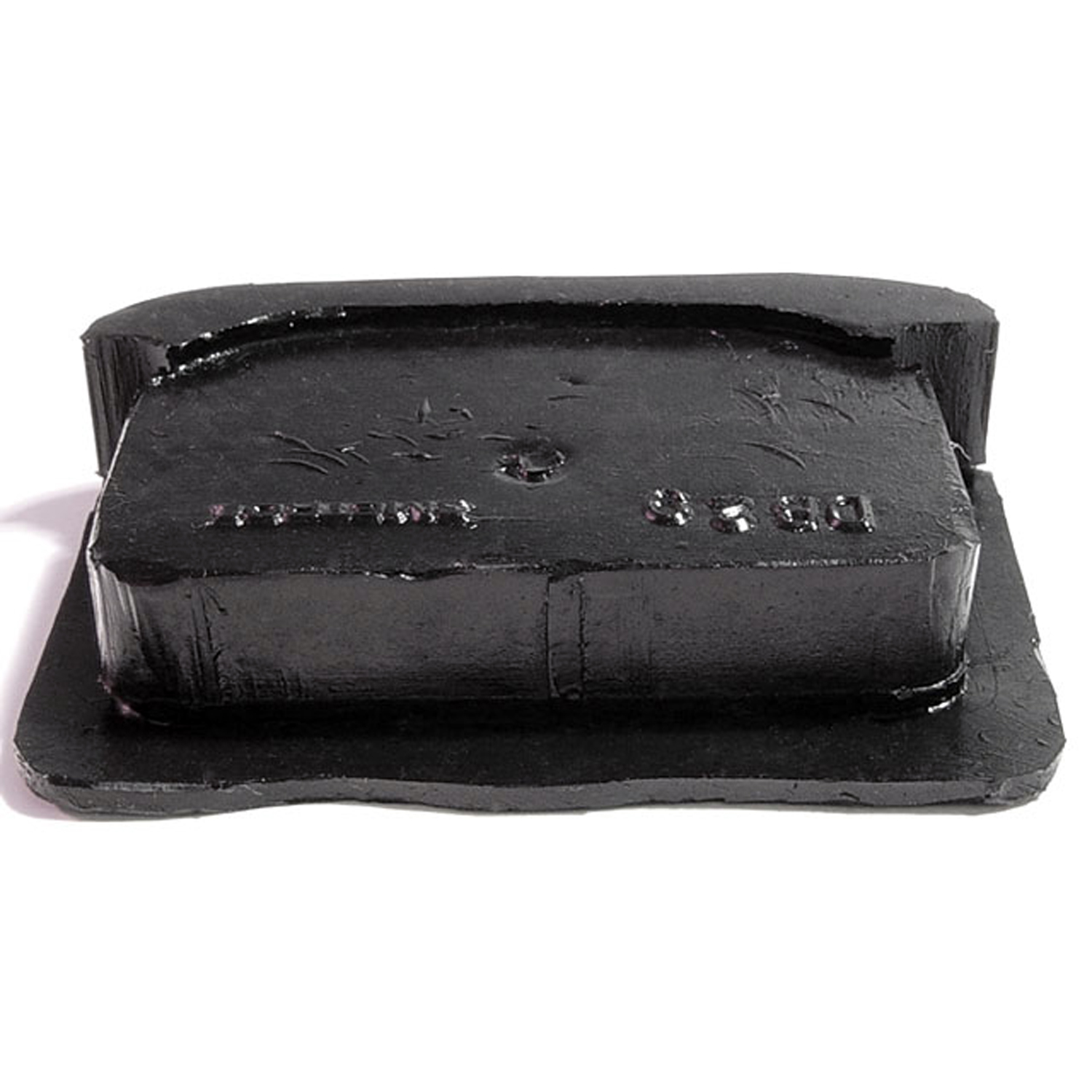 1950 Packard Custom Eight Door Bumper. 1-3/8" high X 2" wide X 1/2" thick. Each-DB 29Door Bumper. 1-3/8" high X 2" wide X 1/2" thick. Each
 1950 Packard Custom Eight Gas Filler Grommet. 2-1/2" I.D., 4-1/8" O.D. Each-GF 12Gas Filler Grommet. 2-1/2" I.D., 4-1/8" O.D. Each
 1950 Packard Custom Eight Hood Corners. 1-3/4" to 2" corner radius-HC 14Hood Corners. 1-3/4" to 2" corner radius. Pad is 3-3/8" long. Pair
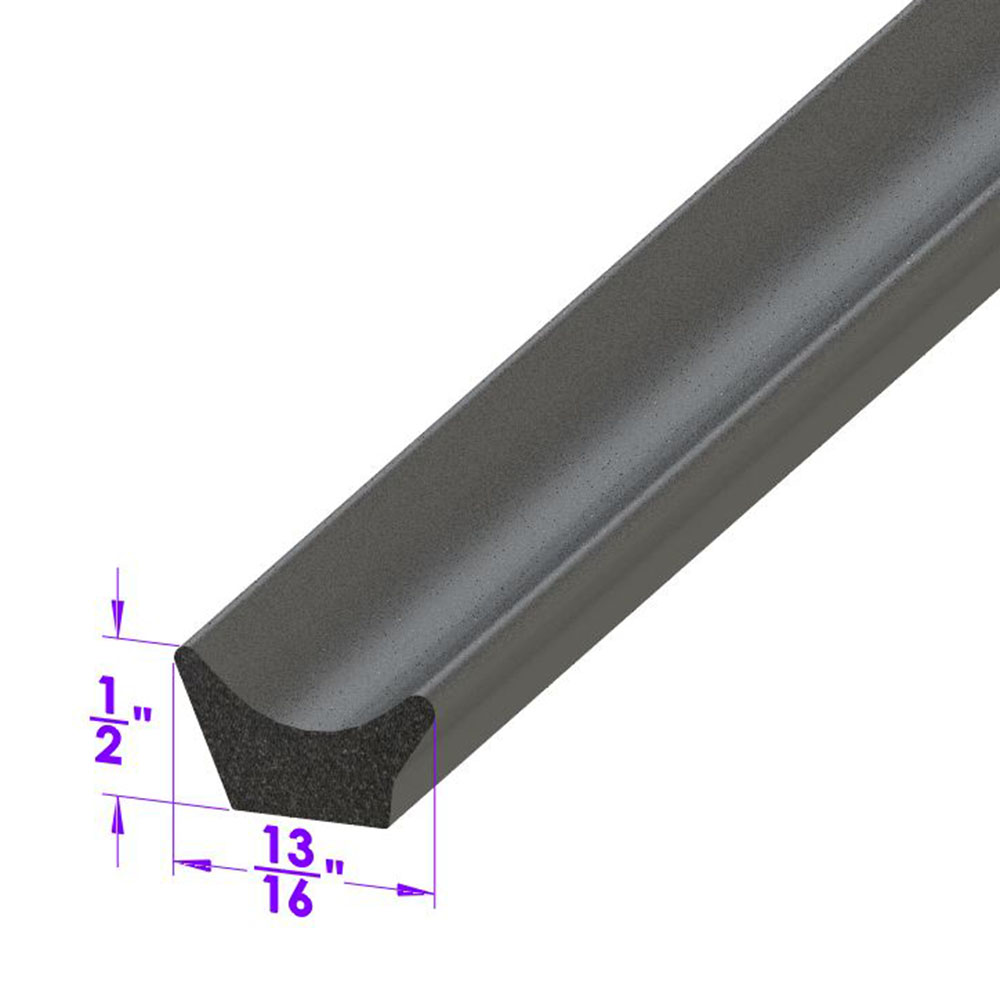 1950 Packard Custom Eight Door side seal. Same as LP 40, but for a lighter seal-LP 40-ADoor side seal. Same as LP 40, but for a lighter seal. Fits many domestic passenger cars and trucks. Universal seal for street rods and customs. Used in Cobra kit cars as door weatherstrip. Per foot.
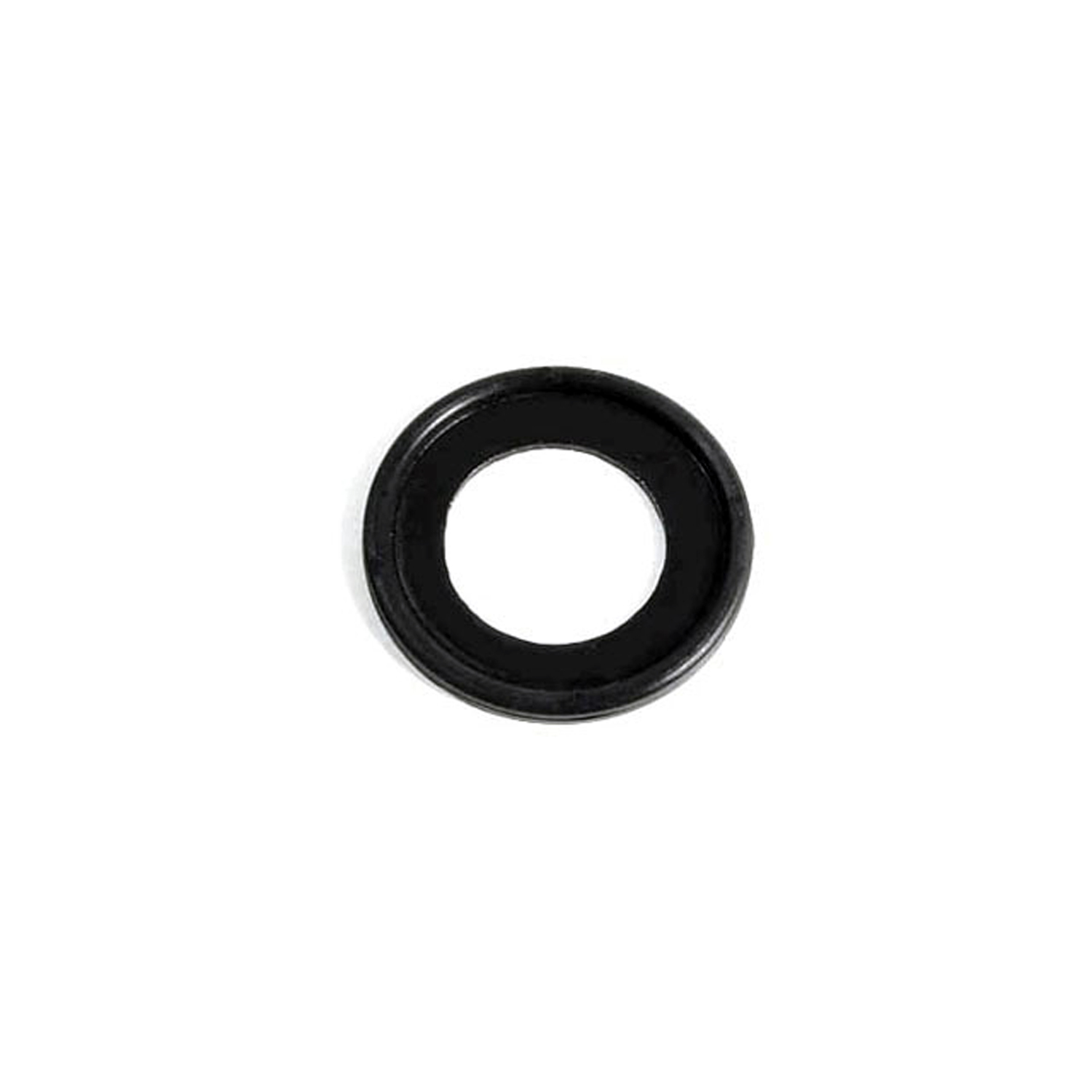 1950 Packard Custom Eight Antenna Pad. 1-7/8" O.D. Each-MP 854-AAntenna Pad. 1-7/8" O.D. Each
 1950 Packard Custom Eight Front lower rubber insulating cushion-RP 72-CFront lower rubber insulating cushion. For motor support at timing-gear cover. 2-7/16 in. wide x 3-3/8 in. long. 1-13/16 in. long center hole. Replaces OEM# 300227. Two used per car. Each.
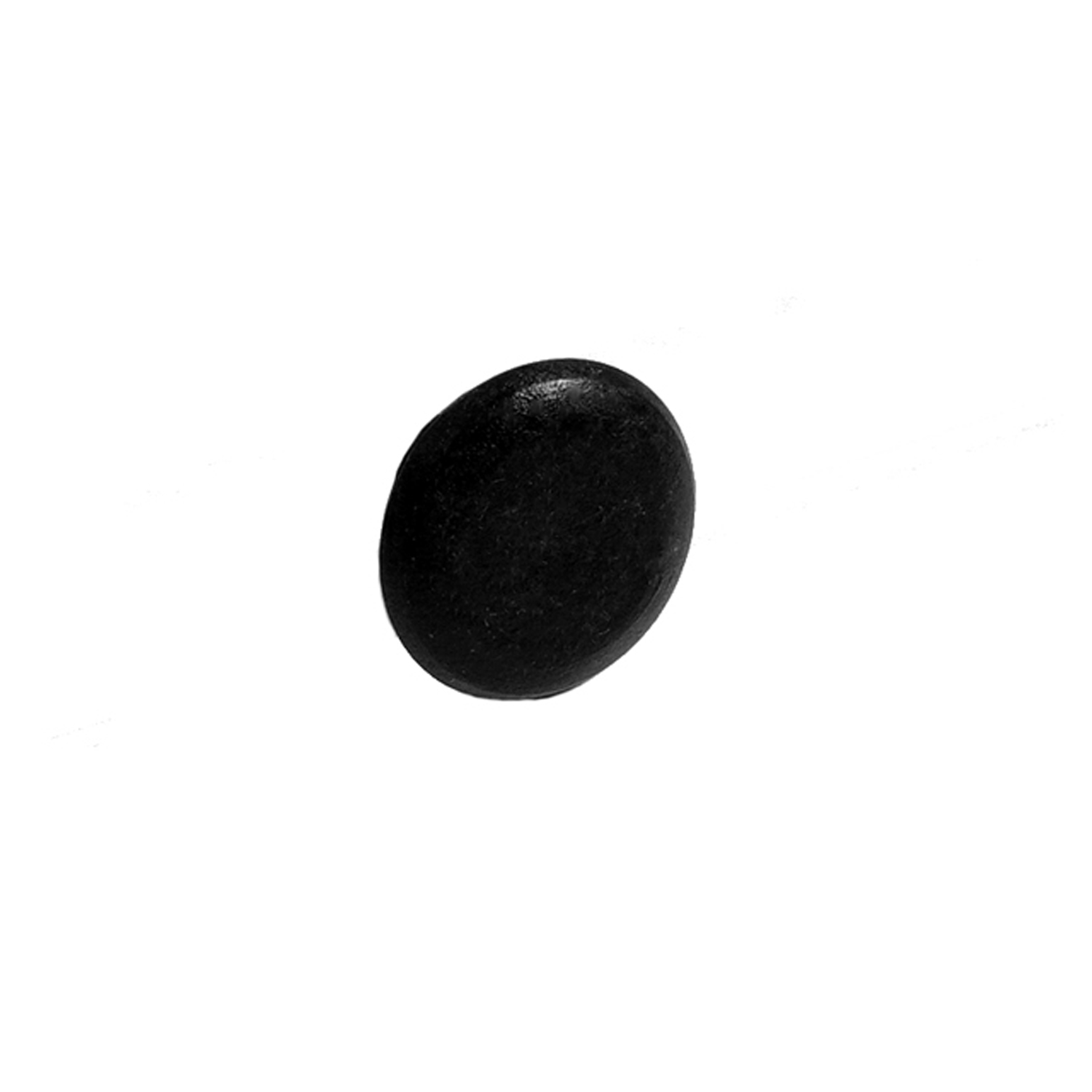 1950 Packard Custom Eight Trunk Bumper. 3/4" O.D., 5/8" I.D. Each-SB 74Trunk Bumper. 3/4" O.D., 5/8" I.D. Each
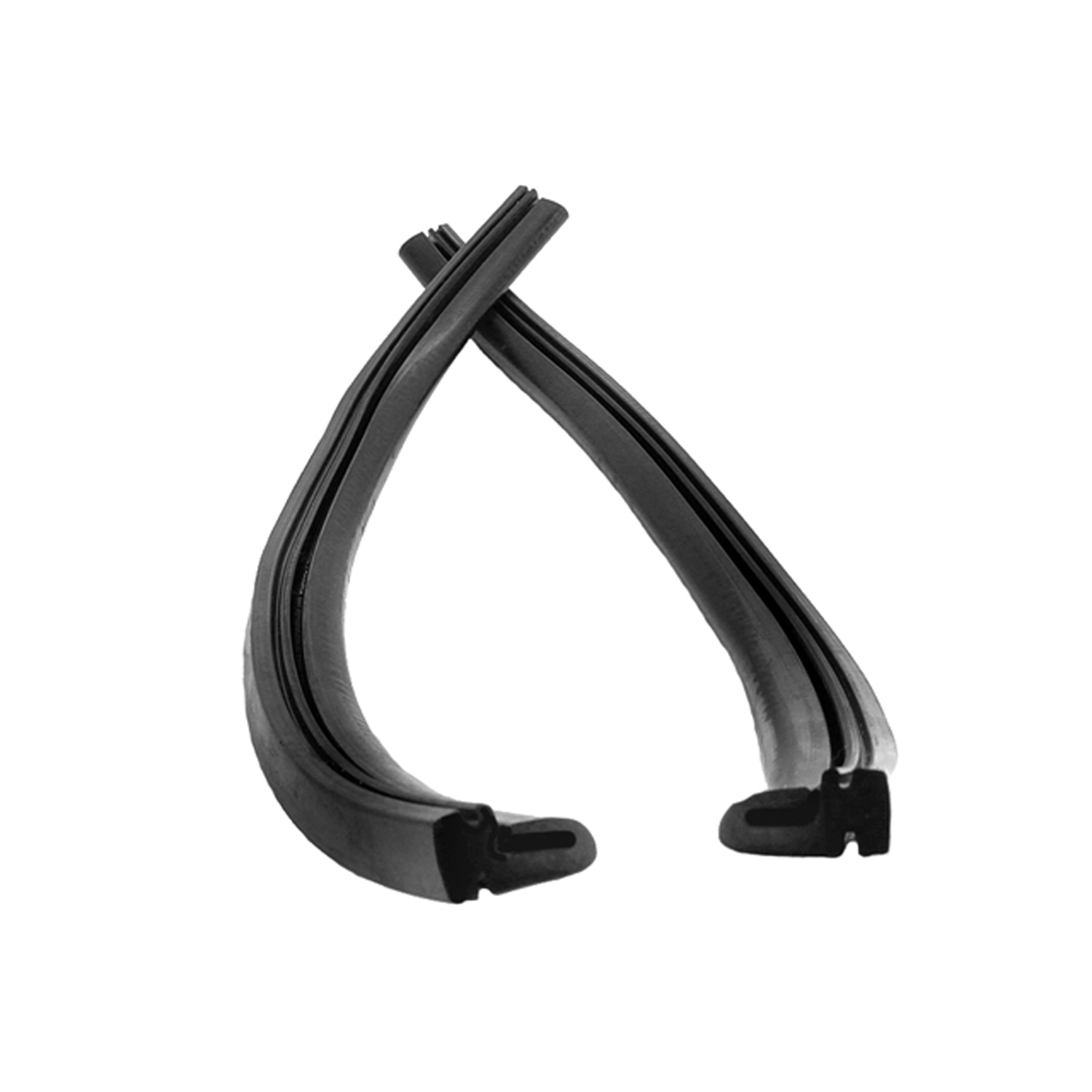 1950 Packard Custom Eight Rear Roll-up Window Seals, for Hardtops and Convertibles-VS 7Rear Roll-up Window Seals, for Hardtops and Convertibles. For leading edge of rear quarter windows. Two pieces, 17-3/4" long. Pair
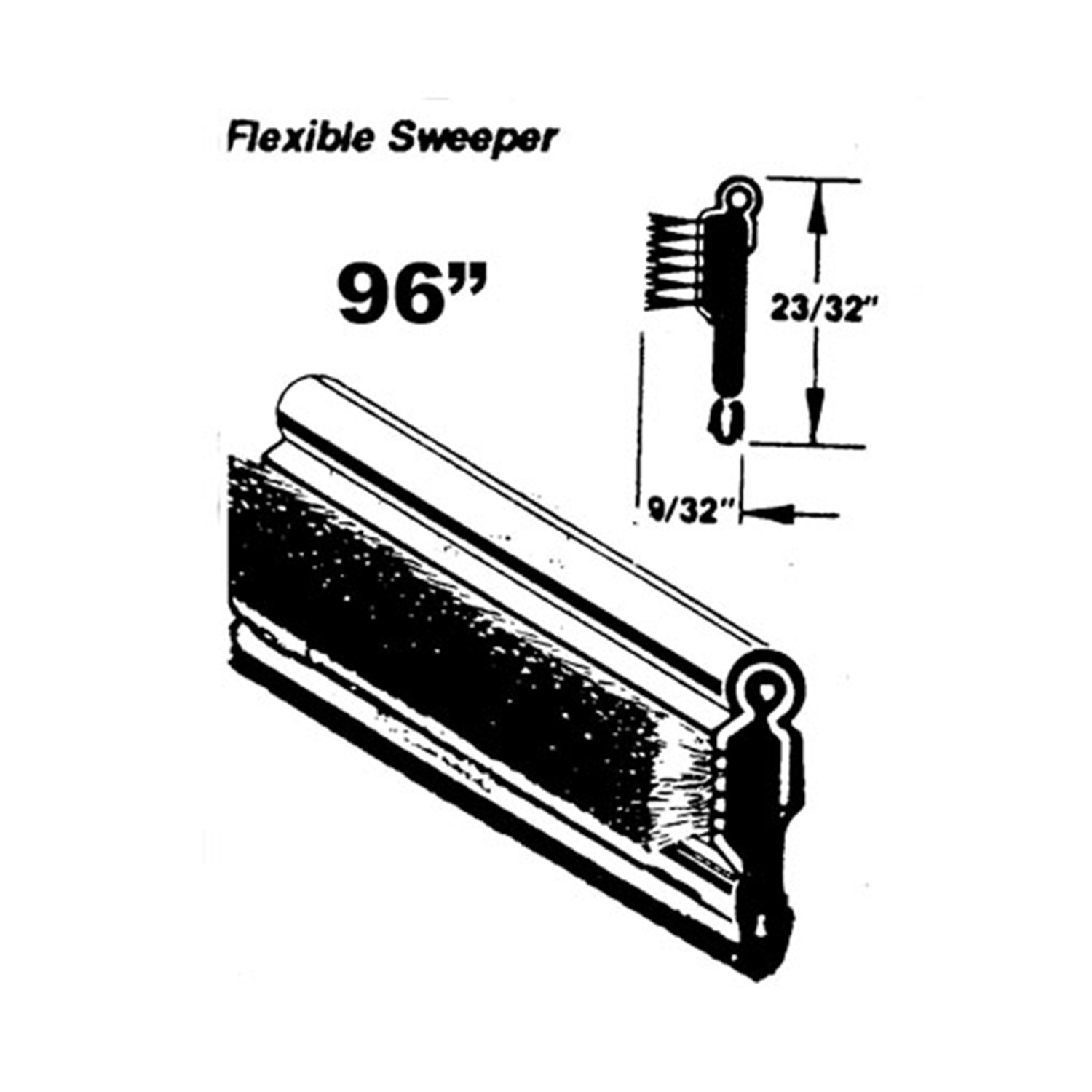 1950 Packard Custom Eight Flexible window sweeper. Made with stainless steel bead-WC 4-96Flexible window sweeper. Made with stainless steel bead. 96 in. long. Each. NOTE: $20 special shipping charge applies for domestic orders. Call or email for overseas shipping costs. Part can be sectioned in two or three equal lengths to reduce overseas shipping costs.
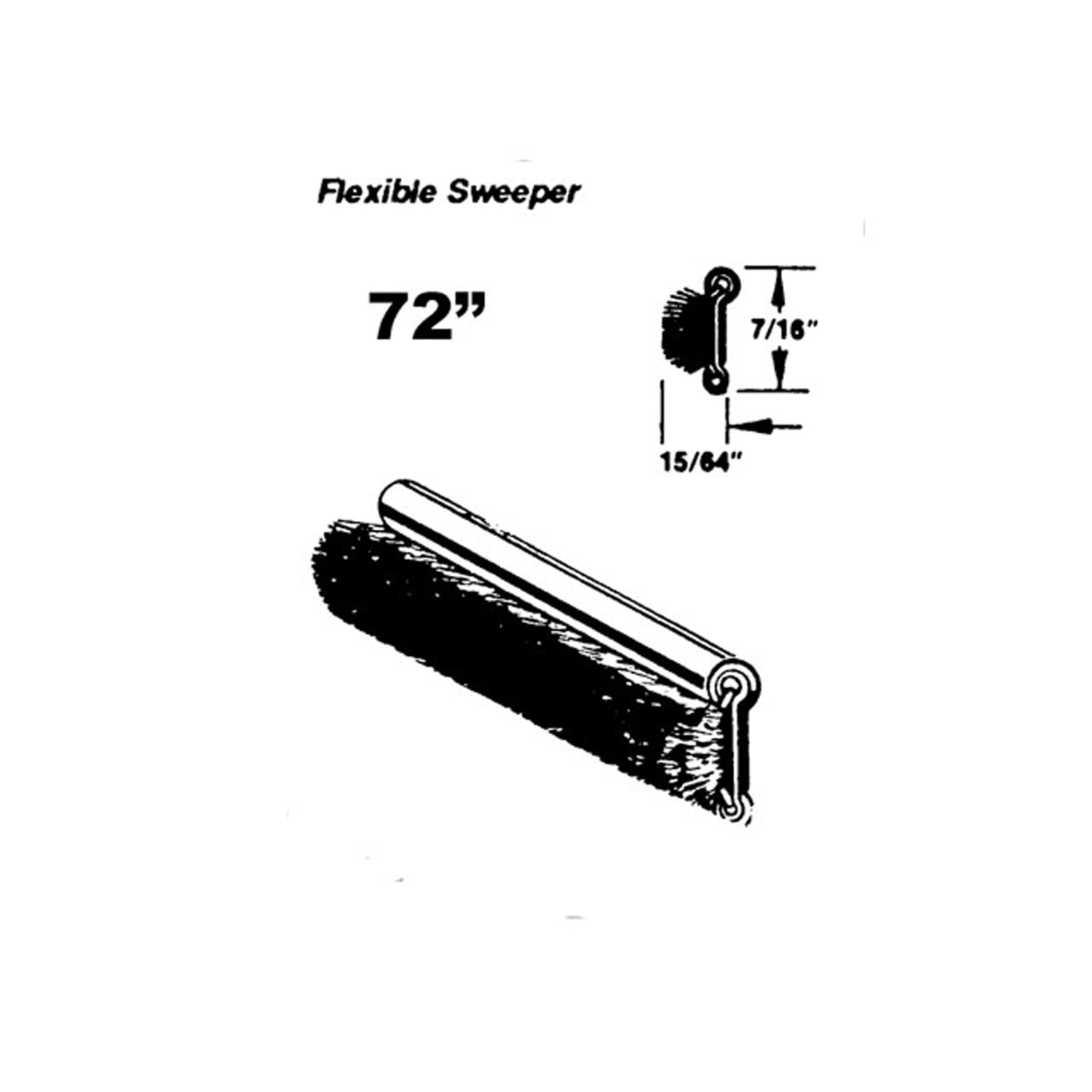 1950 Packard Custom Eight Flexible sweeper. Made with stainless steel bead-WC 8-72Flexible sweeper. Made with stainless steel bead. Used on inner and outer beltlines. Also forms easily for use with sliding quarter windows. 72 in. long. Each. NOTE: $20 special shipping charge applies for domestic orders. Call or email for overseas shipping costs. Part can be sectioned into two equal lengths to reduce overseas shipping costs.
Why Choose Metro?
For over 100 years, Metro Moulded Parts has been the pinnacle of quality in classic car restoration parts. Our commitment to precision and authenticity in every component ensures a perfect fit and an OEM-level appearance.
- Expert Craftsmanship & Quality: Each part is a testament to our dedication to reliability and perfection, crafted from original designs and thoroughly tested.
- Advanced Technology: We use cutting-edge techniques to create flawless, long-lasting parts that surpass others in performance.
- SuperSoft Sponge – The Ultimate Door Seal: Not only are our door seals 30% softer than competitors', but they're also guaranteed to never leak. They effectively reduce wind and road noise, enhancing your classic car's comfort and driving experience.
- Proudly American: Our parts are a product of American craftsmanship, made in the USA with a spirit of excellence and heritage.
- Unrivaled Warranty: We back our products with a 30-year industry-leading warranty, a testament to our confidence in their quality.
Join us in preserving the legacy of classic cars with parts that are crafted for perfection, not just made.