
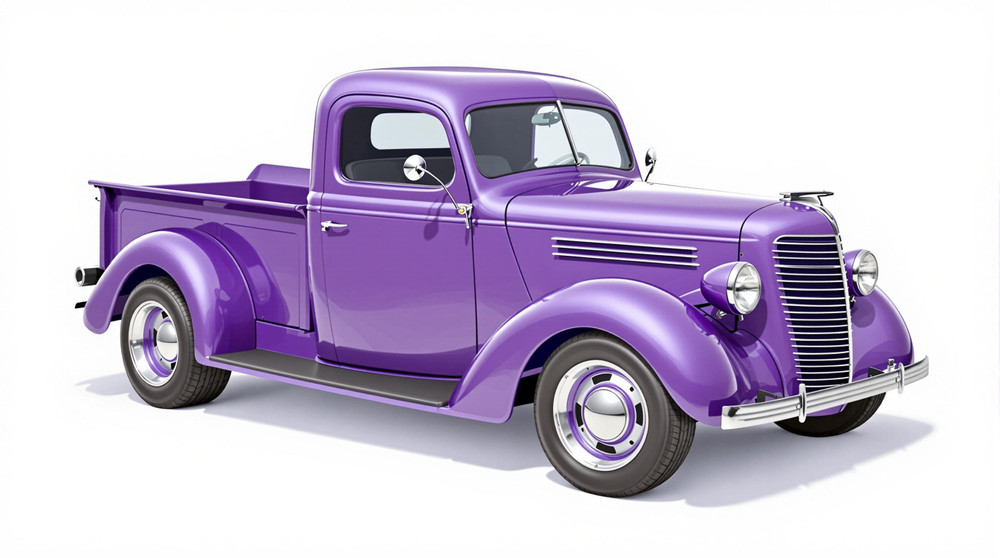
Image of 1937 Plymouth Pt-50, Note: These illustrations use artistic license and may differ from actual historical models.
Performance Metrics
Fundamental Metrics
Emotional Appeal
MMP Rating
| Engine Specifications | |
|---|---|
| Engine: | Inline 6 |
| Displacement: | 201 cubic inches |
| Horsepower: | Estimated 70-80 HP |
| Torque: | 130 lb-ft |
| Compression Ratio: | Estimated 6.7:1 |
| Ignition System: | Distributor and coil |
| Cooling System: | Liquid-cooled |
| Performance Specifications | |
| 0-60 Time: | Not available due to the age of the vehicle |
| 1/4 Mile Time: | Not available due to the age of the vehicle |
| Top Speed: | 70-75 mph |
| Transmission and Drive | |
| Drive Type: | Rear-wheel drive |
| Transmission Type: | 3-speed manual |
| Fuel and Efficiency | |
| Fuel System Type: | Carburetor |
| MPG: | Estimated 15-20 MPG |
| Dimensions and Brakes | |
| Brakes: | Drum brakes |
| Wheelbase: | 113 inches |
| Weight: | 2,700 lbs |
Note: Specifications for classic cars are given to the best of our ability, considering the limited and variant data available.
1937 Plymouth PT-50: A Car-Smooth Pickup With a Working-Class Heart
The 1937 Plymouth PT-50 brought a surprisingly polished face to the work-truck market. With its passenger-car-inspired styling, enclosed cab, and dependable flathead six, this half-ton pickup offered a more approachable alternative to the rough, purely utilitarian trucks of its day.
Built by the Chrysler Corporation under its Plymouth brand, the PT-50 arrived when American truck makers were refining their offerings for farmers, tradespeople, small businesses, and private owners. Plymouth already had a reputation for affordable passenger cars. The truck extended that value-minded appeal into the commercial market, while benefiting from Chrysler’s broader experience in engineering and manufacturing.
One detail that makes the PT-50 especially interesting is its connection to Plymouth’s passenger cars. Its front-end styling looked more like a car’s than the blunt, upright face many people associate with prewar pickups. That blend of familiar Plymouth design and practical truck utility is a big part of its charm today.
Streamlined Looks, Practical Cab
The PT-50’s exterior has the graceful proportions of a late-1930s vehicle, with a tall, upright grille, rounded hood, sweeping front fenders, and headlamps set into those fenders. The front end is smooth and cohesive rather than assembled from a collection of boxy panels. Running boards connect the front fenders to the cab, while the pickup bed gives the truck its unmistakably useful profile.
Its enclosed cab was a welcome feature for drivers who spent long hours on the road. Inside, the layout was straightforward: a broad bench seat, a painted metal dashboard, simple gauges, and a large steering wheel. Durable upholstery and a rubber floor covering suited the truck’s working purpose. It was functional rather than luxurious, but it gave drivers shelter and a more finished environment than many early open or minimally equipped trucks.
Modern conveniences were limited by today’s standards. The PT-50 relied on mechanical controls and a three-speed manual transmission, with no power steering, power brakes, or electronic driver aids. Its appeal came from simplicity: the driver could understand the controls, and a competent mechanic could service the basic systems with ordinary tools.
Factory paint choices and availability could vary, and surviving paperwork does not always make it easy to establish every color offered specifically for the truck. Period commercial vehicles were commonly finished in practical solid colors. Black, dark blue, green, and red are frequently seen on restored examples, though a restoration’s color is not proof that every shade was offered for a particular truck.
The PT-50 is best known as a pickup, but Plymouth’s commercial range also included delivery-style vehicles. Body availability depended on the specific model and market. The open-bed pickup remains the most recognizable and sought-after PT-50 configuration, especially when it retains its original cab, front sheet metal, and bed details.
Why the PT-50 Mattered
The PT-50 was important less as a groundbreaking mechanical invention than as a smart expansion of Plymouth’s brand. It gave the company a presence in the light-truck market and let buyers consider a Plymouth for both family transportation and business use. Chrysler could draw on its existing engineering resources, while Plymouth dealers gained a commercial vehicle to sell alongside passenger cars.
Its car-like styling set it apart from many competitors. The rounded fenders and integrated-looking front end made it feel less industrial than the square-bodied work trucks of the period. That did not make it a luxury vehicle, but it did show how truck design was beginning to balance utility with appearance.
The PT-50 also reflects a broader prewar shift: pickups were becoming more comfortable and more suitable for mixed work and personal use. It did not establish a styling template that every later pickup followed, but its passenger-car influence is part of the story of how light trucks moved beyond strictly commercial roles.
Flathead Six Performance and Road Manners
Power came from a Chrysler-built L-head inline six of about 201 cubic inches, producing roughly 70 horsepower in commonly cited specifications. A three-speed manual transmission sent power to the rear wheels. As with many vehicles of this age, precise figures can vary with the engine version, condition, gearing, and the way a particular source records the specifications.
There are few reliable, standardized modern performance tests for a stock 1937 PT-50. A reasonable estimate for a healthy, correctly equipped truck is a top speed in the neighborhood of 55 to 65 mph. Reaching 60 mph would take a long time, likely well over 20 seconds when empty, and the truck may struggle to reach that speed at all when loaded or poorly tuned. These are estimates, not factory test figures.
On the road, the PT-50 rewards a calm driving style. Its steering is unassisted, its brakes and suspension are decades behind modern systems, and its tall body is affected by crosswinds. The suspension is built for carrying cargo, so an empty truck can feel firm over sharp bumps. A load in the bed may settle the ride, but it also changes braking and handling, making extra following distance essential.
The engine experience is part of the pleasure. The flathead six produces a steady, low-pitched mechanical sound rather than a modern engine’s sharp, high-revving note. The driver works the clutch and gear lever, listens to the engine, and plans ahead. On a winding road, the PT-50 is best enjoyed at a measured pace, where its character and visibility matter more than outright speed.
Living With a 1937 Plymouth Pickup
Today, most PT-50s are collector vehicles, weekend drivers, or show trucks. A sound example can make a memorable local cruise vehicle, and a restored pickup often draws attention because it is less familiar than a comparable Ford or Chevrolet. It is not an ideal modern daily driver: traffic moves faster, safety equipment is limited, and frequent highway use can be tiring.
Routine maintenance is relatively understandable for an owner who is comfortable with vintage cars. The engine is mechanically straightforward, and many service procedures are familiar to specialists in prewar Chrysler products. Regular attention to ignition timing, carburetion, cooling, lubrication, brakes, and the charging system is important. Parts support is mixed: some mechanical components may be shared with related Chrysler products, but body panels, trim, glass, and model-specific pieces can be difficult to find.
Rust and incomplete restorations deserve close inspection. Check the cab corners, floor, cab mounts, fenders, running boards, bed, and frame. Also confirm that the truck’s major components are correct or at least compatible. A project may look like a bargain until missing trim, hard-to-source sheet metal, or a poorly repaired frame pushes the final cost well beyond expectations.
PT-50 Trivia and Common Myths
The PT-50’s name is part of its appeal, but surviving historical records do not always provide a simple, complete production breakdown by body style and configuration. The designation is generally associated with Plymouth’s truck series and its half-ton class, but it is wiser to rely on the truck’s documented specifications than to treat every part of the model code as a definitive description.
The pickup is sometimes mistaken for a Dodge because both brands belonged to Chrysler and drew on the corporation’s shared engineering resources. That relationship can help with some mechanical research, but it does not mean every Dodge and Plymouth part is interchangeable. Model-specific details matter.
No widely documented speed, endurance, or sales record is associated with the 1937 PT-50, and there is no especially famous celebrity ownership story that defines the model. Its notable achievement is more everyday: it represents Plymouth’s move into light trucks and captures a moment when work vehicles began to borrow more visual polish from passenger cars.
Common criticisms are straightforward. The truck is slow by modern standards, noisy compared with a contemporary vehicle, and short on safety features. Parts availability can also test an owner’s patience. For enthusiasts, though, those limitations come with a simple mechanical character and a distinctive prewar look that newer pickups cannot reproduce.
Collector Values and Availability
The PT-50 is uncommon in today’s collector market, particularly in complete, well-restored condition. There is no consistently cited factory production total for the 1937 model broken down by body style. A reasonable, clearly unofficial estimate is that production was in the several-thousand range, perhaps around 5,000 to 10,000 trucks. That estimate should not be confused with a confirmed factory figure, and the number of surviving examples is much smaller.
As a broad 2026 U.S. market guide, a rough project or incomplete truck might bring about $8,000 to $18,000. A usable driver or older restoration could fall around $18,000 to $35,000. A high-quality, well-documented restoration may reach roughly $35,000 to $60,000 or more, depending on originality, workmanship, configuration, and buyer interest. Exceptional examples can exceed those ranges, while missing parts or major rust can bring a truck below them.
Prices for unusual prewar pickups have generally benefited from steady interest in distinctive, usable classics, but PT-50 values do not move in a straight line. They are sensitive to condition and the relatively small pool of buyers who specifically want a Plymouth truck. Over the long term, strong original examples appear better positioned than incomplete projects, but local sales and auction results are the best guide for any particular truck.
A Plymouth With Work Boots On
The 1937 Plymouth PT-50 combines a durable flathead six, practical half-ton utility, and styling that feels unusually graceful for a working truck. It was not built to be fast or plush, and its modest production history makes verified numbers hard to pin down. Its lasting appeal comes from its place in Plymouth’s entry into the truck market and its distinctive mix of car-inspired design and honest work-truck character. For collectors, it is a rare reminder that even a practical pickup can have real style.
1937 Plymouth Pt-50 Catalog of Parts
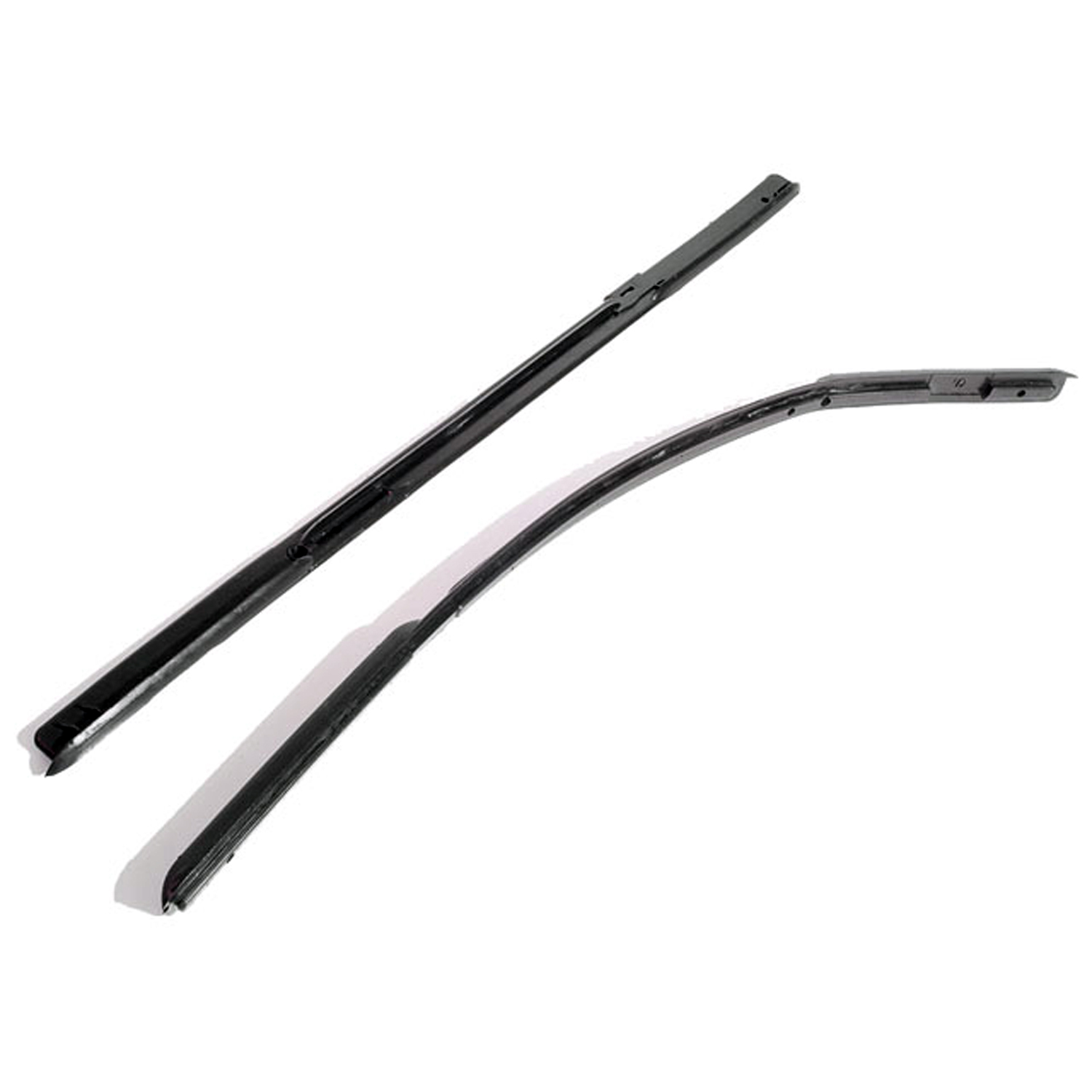 1937 Plymouth PT-50 Vent Window Seal. Pair-WR 2300Vent Window Seal. Pair
Why Choose Metro?
For over 100 years, Metro Moulded Parts has been the pinnacle of quality in classic car restoration parts. Our commitment to precision and authenticity in every component ensures a perfect fit and an OEM-level appearance.
- Expert Craftsmanship & Quality: Each part is a testament to our dedication to reliability and perfection, crafted from original designs and thoroughly tested.
- Advanced Technology: We use cutting-edge techniques to create flawless, long-lasting parts that surpass others in performance.
- SuperSoft Sponge – The Ultimate Door Seal: Not only are our door seals 30% softer than competitors', but they're also guaranteed to never leak. They effectively reduce wind and road noise, enhancing your classic car's comfort and driving experience.
- Proudly American: Our parts are a product of American craftsmanship, made in the USA with a spirit of excellence and heritage.
- Unrivaled Warranty: We back our products with a 30-year industry-leading warranty, a testament to our confidence in their quality.
Join us in preserving the legacy of classic cars with parts that are crafted for perfection, not just made.