

Image of 1927 Pontiac Model 6-27, Note: These illustrations use artistic license and may differ from actual historical models.
Performance Metrics
Fundamental Metrics
Emotional Appeal
MMP Rating
| Engine Specifications | |
|---|---|
| Engine: | Inline 6-cylinder engine |
| Displacement: | 186.5 cubic inches |
| Horsepower: | Estimated 36-40 HP |
| Torque: | Not available |
| Compression Ratio: | Not available |
| Ignition System: | Battery and coil |
| Cooling System: | Water-cooled |
| Performance Specifications | |
| 0-60 Time: | Not available |
| 1/4 Mile Time: | Not available |
| Top Speed: | 50-55 mph |
| Transmission and Drive | |
| Drive Type: | Rear-wheel drive |
| Transmission Type: | 3-speed manual |
| Fuel and Efficiency | |
| Fuel System Type: | Carburetor |
| MPG: | Not available |
| Dimensions and Brakes | |
| Brakes: | Mechanical drum brakes |
| Wheelbase: | 110 inches |
| Weight: | 2,265 lbs |
Note: Specifications for classic cars are given to the best of our ability, considering the limited and variant data available.
1927 Pontiac Model 6-27: The Six That Put Pontiac on the Map
The 1927 Pontiac Model 6-27 brought six-cylinder power to buyers who wanted more refinement than a basic four-cylinder car without paying for an expensive luxury marque. Built by the Oakland Motor Car Company, a General Motors division, Pontiac was introduced in 1926 as a more affordable companion to Oakland. Its name recalled the Michigan city of Pontiac, itself named for the 18th-century Odawa leader.
The Model 6-27 belongs to Pontiac’s earliest chapter, when the young brand was establishing its identity around practical performance and value. A notable detail is that Pontiac’s success eventually helped seal Oakland’s fate: Pontiac grew into a major GM marque, while Oakland was discontinued in 1931. The upstart six-cylinder car had outgrown the brand it was meant to complement.
Compact Style, Proper Six-Cylinder Presence
The Model 6-27 had the upright, carefully proportioned look typical of late-1920s cars. Its tall radiator, separate front fenders, exposed running boards, narrow windshield, and round headlamps gave it a formal stance. A long hood announced the six-cylinder engine beneath, while the cabin sat high and upright behind it. Rather than the smooth, integrated bodywork of a later car, its shape was composed of distinct, practical forms.
Depending on body style, buyers could choose an open car or a more weather-protected closed body. Model-year offerings included body types such as coupe, coach, sedan, and touring or roadster-style configurations, though availability could vary by market and production run. Closed coaches and sedans were especially appealing to drivers who wanted year-round comfort. The coach, a compact two-door closed body, was a particularly characteristic choice for a personal car.
Inside, the cabin was functional rather than lavish. Buyers could expect cloth upholstery, a straightforward instrument panel, a large steering wheel, and simple, durable trim. Materials and finish varied with body style and price, but the Model 6-27 was designed as an attainable automobile, not a hand-built luxury car. Period paint choices and combinations could vary; dark shades such as blue, green, maroon, and black were common on cars of the era, sometimes paired with contrasting trim. Exact colors depended on the body and the factory’s offerings.
Six-Cylinder Technology for the Everyday Driver
Power came from a 186.5-cubic-inch inline six with L-head, or side-valve, construction. Period specifications generally list output at about 40 horsepower, delivered through a three-speed manual transmission. The engine’s smoothness was a key selling point: compared with many four-cylinder rivals, a six-cylinder powerplant could run with less vibration and provide more flexible everyday performance.
Its technology was conventional for the time, but that was part of the appeal. The Model 6-27 did not depend on exotic engineering; it combined a familiar mechanical layout with the comfort and smoothness of six cylinders at a price intended to reach ordinary motorists. Braking, steering, lighting, and other systems remained firmly of the 1920s, with none of the power assistance or safety equipment drivers now take for granted.
Why the Model 6-27 Mattered
Pontiac’s most important achievement was not a single breakthrough component. It was the way the Model 6-27 positioned a six-cylinder car within reach of a broad market. In GM’s brand structure, Pontiac sat below Oakland, offering a more economical entry into six-cylinder motoring while benefiting from the resources and distribution of a major manufacturer.
The formula helped Pontiac build a clear identity around value, usable performance, and broad appeal. That strategy proved more durable than Oakland’s. Pontiac ultimately became the stronger name, and the company’s early success helped establish the pattern of GM brands serving different price points. The 6-27 is therefore significant as an early expression of a strategy that shaped both Pontiac’s future and GM’s lineup.
Road Manners and Period Performance
There is no single dependable, factory-verified 0-to-60-mph figure commonly cited for the 1927 Model 6-27. Based on its roughly 40-horsepower output, gearing, and weight, a reasonable modern estimate is that acceleration to 60 mph would take well over 30 seconds, if the car could reach that speed at all. A top speed in the neighborhood of 50 to 60 mph is a more realistic period-car estimate than a precise guaranteed figure. Actual performance varies with body style, mechanical condition, gearing, tires, and road conditions.
On a smooth road, the car’s long, flexible chassis and substantial tires would make for a relaxed pace. On broken pavement, its suspension would absorb the larger impacts, but the ride would still feel less controlled than a modern car. Narrow tires, comparatively slow steering, and a high center of gravity call for measured inputs on winding roads. Crosswinds and road crown would be more noticeable than they are in a contemporary vehicle.
Behind the wheel, the experience is physical and deliberate. The driver works a large steering wheel, operates a manual gearbox, and listens to the steady, low mechanical note of the side-valve six. There is no effortless surge or quiet isolation. Instead, the car rewards anticipation: select the right gear, leave room to stop, and let the engine build speed at its own pace.
Owning and Maintaining a Model 6-27
Today, a Model 6-27 is best suited to touring, local events, museum displays, and vintage-car shows rather than routine commuting. Its modest pace and limited safety equipment make modern high-speed traffic a poor environment. A well-maintained example can still be driven, but it should be treated as a nearly century-old machine, not as a dependable daily driver.
The basic mechanical layout is relatively straightforward for an experienced vintage-car owner or mechanic. Routine work includes maintaining ignition and carburetion, checking lubrication and cooling systems, inspecting brakes, and keeping the chassis properly serviced. The main ownership challenge is often finding correct parts and trim, especially for a particular body style. A car that has been carefully restored and maintained is much more enjoyable than one that has merely been made to run.
Little-Known Pontiac Facts
The 6-27’s model designation points to its six-cylinder identity and its place in Pontiac’s early model sequence. Pontiac’s first cars appeared in 1926, so the 1927 car represents one of the brand’s earliest production years. The marque’s name also has a direct Michigan connection: both the city and the car brand drew on the name of Chief Pontiac.
No widely recognized Model 6-27 speed record, endurance achievement, or celebrity ownership is commonly associated with the model. Its historical importance is more about commercial success and brand building than headline-grabbing competition. Common criticisms are typical of cars from the period: slow acceleration, limited braking by modern standards, basic weather protection in open versions, and a need for frequent hands-on maintenance.
Collector Values and Availability
The Model 6-27 is uncommon in the present-day collector market, particularly in complete, correctly restored condition. An exact surviving-car count is not readily established, and availability varies by body style. As a rough production estimate, Pontiac may have built around 125,000 cars during 1927, but that should be treated as an approximate model-year figure, not a confirmed total for every 6-27 body configuration.
Condition and provenance have a major effect on value. A project car or incomplete example might sell for roughly $5,000 to $15,000, while a sound driver could fall around $15,000 to $30,000. A high-quality restoration, especially in a desirable or uncommon body style, could bring approximately $30,000 to $60,000 or more. These are broad estimates; location, originality, restoration quality, and current auction demand can move a specific car well outside the range.
Values for early Pontiacs tend to be steady rather than driven by rapid appreciation. The best examples can attract dedicated collectors, but the market is narrower than it is for better-known prewar classics. A buyer should prioritize condition, documentation, and parts availability over the hope of a quick increase in value.
A Small Car with a Big Pontiac Legacy
The 1927 Pontiac Model 6-27 paired a smooth six-cylinder engine with practical styling and a price aimed at ordinary motorists. It was not a high-speed machine or a technological showpiece, but it helped a new GM marque establish itself and ultimately outshine the Oakland name it was meant to support. Nearly a century later, the Model 6-27 remains a compelling reminder that sometimes the most important classic cars are the ones that quietly get a brand’s future moving.
1927 Pontiac Model 6-27 Catalog of Parts
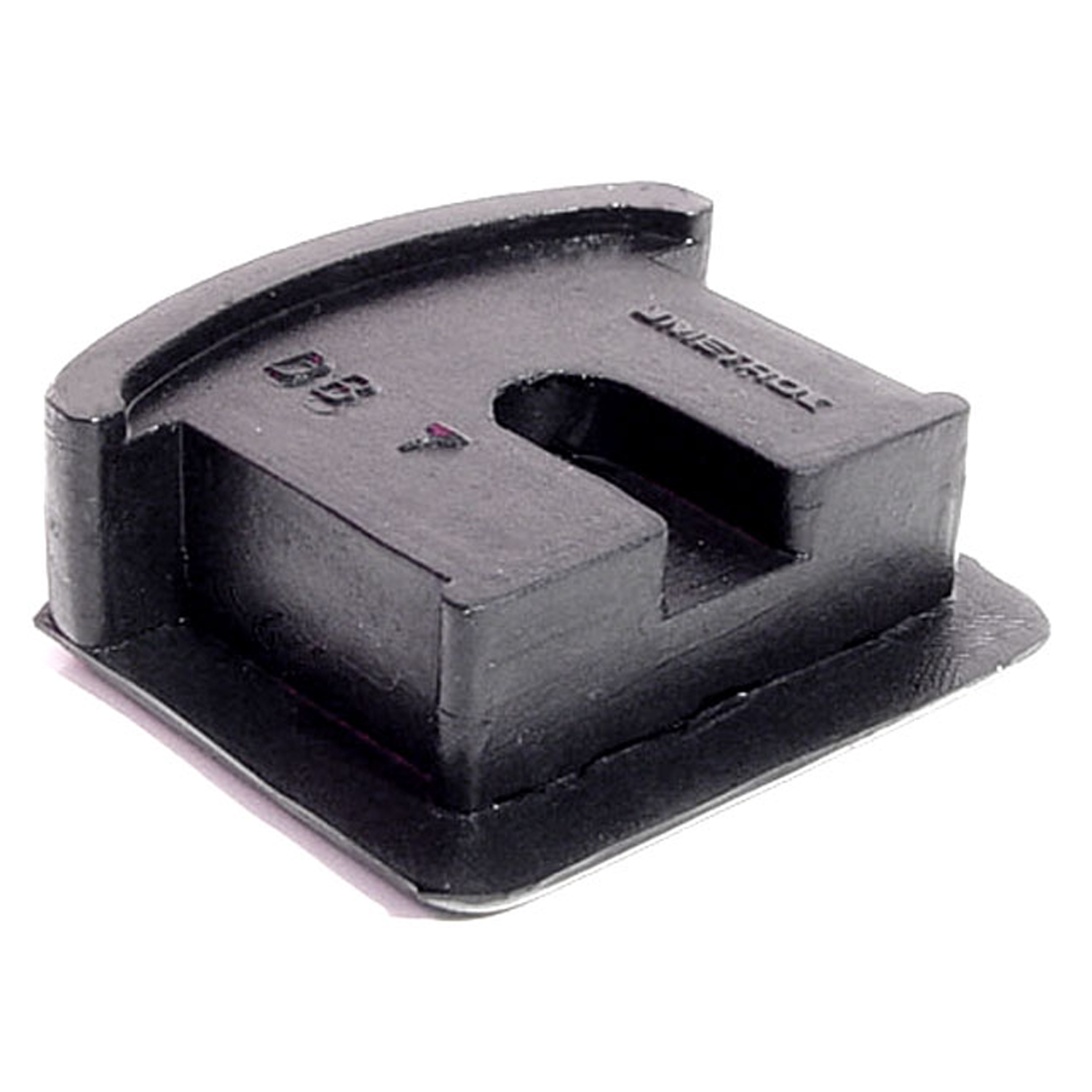 1927 Pontiac Model 6-27 Door Bumper. 1-7/16" high X 1-9/16" wide X 9/16" thick-DB 7Door Bumper. 1-7/16" high X 1-9/16" wide X 9/16" thick. Each
 1927 Pontiac Model 6-27 Door Handle Ferrule Grommet. I.D. 11/16", O.D. 1-3/16"-MP 546-IDoor Handle Ferrule Grommet. I.D. 11/16", O.D. 1-3/16". Each
 1927 Pontiac Model 6-27 Flexible Rubber Window Channel-WC 32-14Flexible Rubber Window Channel. For Fisher Closed Bodies, except those using a stainless bead type. Used on side windows. 13/16" outer width X 6/16" outer depth, with a 5/16" inner channel width X 14" long. Each
Why Choose Metro?
For over 100 years, Metro Moulded Parts has been the pinnacle of quality in classic car restoration parts. Our commitment to precision and authenticity in every component ensures a perfect fit and an OEM-level appearance.
- Expert Craftsmanship & Quality: Each part is a testament to our dedication to reliability and perfection, crafted from original designs and thoroughly tested.
- Advanced Technology: We use cutting-edge techniques to create flawless, long-lasting parts that surpass others in performance.
- SuperSoft Sponge – The Ultimate Door Seal: Not only are our door seals 30% softer than competitors', but they're also guaranteed to never leak. They effectively reduce wind and road noise, enhancing your classic car's comfort and driving experience.
- Proudly American: Our parts are a product of American craftsmanship, made in the USA with a spirit of excellence and heritage.
- Unrivaled Warranty: We back our products with a 30-year industry-leading warranty, a testament to our confidence in their quality.
Join us in preserving the legacy of classic cars with parts that are crafted for perfection, not just made.