

Image of 1935 Pontiac Deluxe Six, Note: These illustrations use artistic license and may differ from actual historical models.
Performance Metrics
Fundamental Metrics
Emotional Appeal
MMP Rating
| Engine Specifications | |
|---|---|
| Engine: | Inline 6 |
| Displacement: | 208 cubic inches |
| Horsepower: | Estimated 77-85 hp |
| Torque: | Information not available |
| Compression Ratio: | 6.2:1 |
| Ignition System: | Distributor and coil |
| Cooling System: | Liquid-cooled |
| Performance Specifications | |
| 0-60 Time: | Information not available |
| 1/4 Mile Time: | Information not available |
| Top Speed: | 75 mph |
| Transmission and Drive | |
| Drive Type: | Rear-wheel drive |
| Transmission Type: | 3-speed manual |
| Fuel and Efficiency | |
| Fuel System Type: | Carburetor |
| MPG: | Information not available |
| Dimensions and Brakes | |
| Brakes: | Drum brakes |
| Wheelbase: | 113 inches |
| Weight: | 2,700 lbs |
Note: Specifications for classic cars are given to the best of our ability, considering the limited and variant data available.
1935 Pontiac Deluxe Six: The Year Pontiac Found Its Streak
The 1935 Pontiac Deluxe Six brought a fresh flash of chrome to American roads and helped give Pontiac one of the most recognizable design signatures in its history. Built by Pontiac Motor Division of General Motors in Pontiac, Michigan, it paired a sturdy straight-six engine with comfortable, well-appointed bodywork, positioning the marque as a step up from Chevrolet without reaching the price territory of Oldsmobile and Buick.
Pontiac had begun as a companion make to Oakland, another GM brand, but Oakland was phased out in 1931 and Pontiac continued on its own. By 1935, the company needed a distinctive identity in a crowded market. Its answer was the Silver Streak, a set of bright vertical chrome accents that ran along the hood and became a Pontiac hallmark for years. The 1935 Deluxe Six was among the first cars to wear that memorable styling cue.
Silver Streak Styling and Deluxe Comfort
The Deluxe Six had the rounded proportions typical of a mid-1930s American car, but Pontiac gave them a crisp, modern finish. A prominent upright grille, sweeping front fenders, separate headlamps and a long hood created a confident profile. The Silver Streak trim drew the eye along the hood, while brightwork around the grille, windows and bumpers added polish without making the car look overly ornate.
Inside, the cabin was designed for comfort on the longer drives that were becoming more common. Upholstery and trim varied by body style and factory specification, but Deluxe models generally offered a more finished look than the entry-level cars. Expect broad bench seats, a painted or wood-grain-style dashboard treatment, a large steering wheel and clear, straightforward instruments. These are traditional materials and details rather than modern luxury appointments, but a well-preserved example can feel inviting and substantial.
Factory paint choices depended on body style and trim, and surviving cars show the period’s range of dark and restrained colors, including black, blue, green, gray and maroon tones. Two-tone combinations were available on some configurations. A deep blue or maroon car with bright Silver Streak trim makes a particularly striking presentation, though original paint documentation is worth checking before calling any color combination factory-correct.
Pontiac offered the Deluxe Six in several closed and open body styles, with sedans and coupes among the recognizable choices. Four-door sedans suited families and touring, while coupes delivered a sportier silhouette. Open cars, including convertible-style models, are especially eye-catching today and typically command a premium. Body-style names and availability could vary across the model range, so buyers should verify a particular car’s identification and original specification.
1935 Technology and Pontiac’s Place in GM
Under the hood sat Pontiac’s 208.2-cubic-inch L-head straight-six, rated at about 80 horsepower. Power went to the rear wheels through a three-speed manual transmission, generally with synchromesh on the higher gears. Hydraulic brakes were an important everyday safety feature for the period, giving the driver more consistent stopping power than the mechanical systems still found on some older cars.
The Deluxe Six’s significance was not a single revolutionary mechanism. Its achievement was the way it combined contemporary engineering, a roomy closed body and distinctive styling in a price-conscious package. Pontiac was positioned between Chevrolet and GM’s more expensive makes, giving buyers a practical six-cylinder car with a more upscale appearance than its entry-level sibling.
The Silver Streak proved especially influential. It gave Pontiac a visual identity that customers could recognize at a glance and established a styling theme the division would develop in later years. In an era when many cars shared similar upright proportions, that strong, repeatable design detail helped Pontiac stand out.
Engine, Speed and Road Manners
With roughly 80 horsepower moving a substantial steel-bodied car, the 1935 Deluxe Six was built for steady touring rather than quick acceleration. Period gearing, vehicle condition and passenger load all affect performance, but a reasonable modern estimate is a 0-to-60-mph time in the neighborhood of 20 to 25 seconds. Top speed is commonly estimated at roughly 75 to 80 mph in good condition. These are practical estimates, not a promise that every surviving car will achieve them safely.
The straight-six delivers its power smoothly and with a measured, low-pitched exhaust note. Drivers use the floor-mounted gear lever and a large steering wheel, and the controls require more deliberate effort than those in a modern car. The three-speed gearbox rewards unhurried shifts, while the engine is happiest when allowed to build speed gradually rather than being pushed hard.
On ordinary roads, the car’s long proportions and soft suspension give it a relaxed touring character. It can absorb modest bumps comfortably, though rough pavement may bring body movement and the solid-axle-era feel is unmistakable compared with a modern independent-suspension car. On winding roads, the driver needs to plan ahead: steering is slower, the body leans more, and the brakes demand longer stopping distances than contemporary systems. It feels composed at a sensible pace, not nimble or athletic.
Owning and Maintaining a Deluxe Six
Today, the Deluxe Six is most often used as a show car, weekend cruiser or participant in vintage motoring events. Some owners drive them regularly, but busy modern traffic, limited crash protection and modest performance make a 1935 Pontiac a less practical daily driver than a later classic.
The basic six-cylinder layout is straightforward and many routine jobs are within reach of an experienced hobby mechanic. Tune-ups, ignition work, fluid changes and basic adjustments are familiar tasks, but age changes the equation. A buyer should inspect the engine for internal wear, the cooling system for corrosion, the transmission for noise and hard shifting, and the hydraulic brakes for leaks or deterioration. Rust in the body, frame and floor structure can be more expensive to address than ordinary mechanical work.
Parts availability is mixed. Common service items and some reproduction components can be found through specialist suppliers and the vintage Pontiac community, while body trim, upholstery details and model-specific pieces may take patience to locate. A complete, correctly assembled car is often a better starting point than a cheap project missing its grille, Silver Streak trim or interior hardware.
Facts, Myths and Period Context
The Silver Streak is the model’s most enduring piece of trivia: a styling idea introduced in the mid-1930s that became closely associated with Pontiac for decades. The 1935 car also arrived during a period when American manufacturers were making enclosed bodies, improved braking and more streamlined styling increasingly accessible to ordinary buyers.
The Deluxe Six is not chiefly remembered as a speed-record car or a major racing platform, and there is no widely established record that defines its legacy. Nor is there a universally documented celebrity-owned example that gives the model its identity. Its story is more substantial than a famous-owner anecdote: it helped establish a design language for an entire marque.
Common criticisms are tied to its age. Acceleration is leisurely, the cabin lacks modern safety features, and original trim can be difficult to replace. The driving position, steering effort and braking distances may also surprise people accustomed to newer vehicles. Those limitations are part of the ownership experience, and they make careful preservation and responsible driving essential.
Collector Values and Availability
Values depend heavily on body style, originality, restoration quality and mechanical condition. As a broad 2026 estimate, a project or incomplete car might bring about $5,000 to $12,000. A usable driver or older restoration could fall around $12,000 to $25,000, while a high-quality restored sedan or coupe may reach roughly $25,000 to $40,000. Desirable open body styles in excellent condition can exceed that range, sometimes reaching $40,000 to $70,000 or more. These are general guide figures, not appraisals, and exceptional cars can sell outside them.
Exact production totals for the Deluxe Six by body style are not consistently documented in readily available references. A sensible estimate is that roughly 100,000 to 120,000 Pontiac passenger cars were built for the 1935 model year across the range, with the Deluxe Six accounting for a substantial share. That does not mean every body style is common today: attrition, restoration costs and decades of changing tastes have made complete, well-preserved examples much less readily available.
Prices tend to reward quality and correct presentation, especially for rare open cars and cars retaining their original details. The market is best described as condition-sensitive rather than uniformly fast-rising. A sound, well-documented example is likely to hold interest better than a poorly executed restoration, but future values depend on buyer demand, restoration costs and the availability of parts.
Why the 1935 Pontiac Deluxe Six Matters
The 1935 Pontiac Deluxe Six combined a smooth 208.2-cubic-inch six, useful period technology and comfortable bodywork with the Silver Streak styling that gave Pontiac a lasting visual signature. It was not built to dominate the racetrack or set a speed record. It mattered because it made a practical American car memorable.
For collectors, it offers a vivid snapshot of a changing automotive era: more enclosed comfort, more confident styling and a brand finding its own voice. The Deluxe Six’s lasting appeal is written in its chrome streaks, but its real distinction is how successfully it turned an everyday six-cylinder car into a recognizable Pontiac.
1935 Pontiac Deluxe Six Catalog of Parts
 1935 Pontiac DELUXE SIX Starter Pedal Pad. Brown. 1-7/16" Diameter, Each-AP 19-AStarter Pedal Pad. Brown. 1-7/16" Diameter, Each
 1935 Pontiac DELUXE SIX Front and Rear Bumper Arm Grommets -BG 58Front and Rear Bumper Arm Grommets. 2-3/8" wide X 5-1/4" long, with 1-11/16" long inner slot. Pair
 1935 Pontiac DELUXE SIX Clutch and Brake Pedal Pads. 2" wide X 3" long. Pair-CB 15Clutch and Brake Pedal Pads. 2" wide X 3" long. Pair
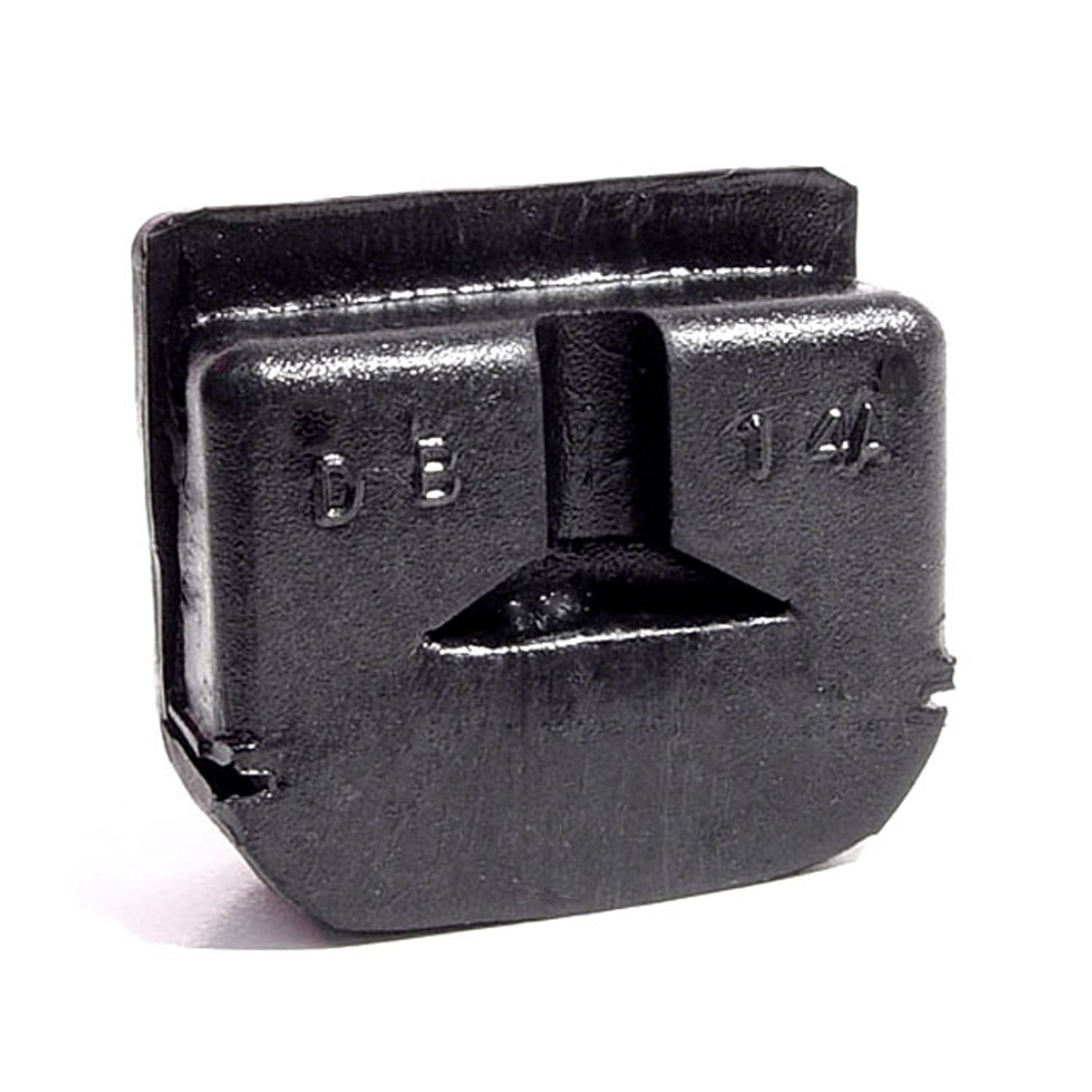 1935 Pontiac DELUXE SIX Door Bumper. Exact reproduction-DB 14-ADoor Bumper. Exact reproduction. 1-3/16" high X 1-9/16" wide X 9/16" thick. Each
 1935 Pontiac DELUXE SIX Upper Door Hinge Post Bumper. Held by screw-DB 60-AUpper Door Hinge Post Bumper. Held by screw. 7/8" diameter X 1/8" thick. Each
 1935 Pontiac DELUXE SIX Inner and Outer Center Division Bar Seals-DP 20Inner and Outer Center Division Bar Seals. Each piece 14-1/4" long. Set
 1935 Pontiac DELUXE SIX Gas filler grommet. Fits all models '36 Buick-GF 25Gas filler grommet. Fits all models '36 Buick. Fits '37 Buick Series 80/90. 2-1/8 in. ID; 4 in. OD. Dense black rubber. Each.
 1935 Pontiac DELUXE SIX Rear Hood Corners. 1-1/4" wide. Pair-HC 29Rear Hood Corners. 1-1/4" wide. Pair
 1935 Pontiac DELUXE SIX Door Handle Ferrule Grommet. I.D. 11/16", O.D. 1-3/16"-MP 546-IDoor Handle Ferrule Grommet. I.D. 11/16", O.D. 1-3/16". Each
 1935 Pontiac DELUXE SIX Windshield Wiper Transmission Pad-MP 546-YWindshield Wiper Transmission Pad. 2-1/2" wide X 1-1/4" long. Each
 1935 Pontiac DELUXE SIX Park Light Pads. 3-3/8" wide X 14" long. Pair-MP 990-JPark Light Pads. 3-3/8" wide X 14" long. Pair
 1935 Pontiac DELUXE SIX Headlight Pads. 3-3/8" wide X 8-7/8" long. Pair-MP 990-KHeadlight Pads. 3-3/8" wide X 8-7/8" long. Pair
 1935 Pontiac DELUXE SIX Headlight Pads. 3-1/2" wide X 9-7/8" long. Pair-MP 991-HHeadlight Pads. 3-1/2" wide X 9-7/8" long. Pair
 1935 Pontiac DELUXE SIX Rumble Seat Step-Plate Bracket Pad -MP 991-JRumble Seat Step-Plate Bracket Pad. 2-3/4" wide X 4-1/8" long. Each
 1935 Pontiac DELUXE SIX Cowl Vent Seal-RP 100-CCowl Vent Seal. 47" long piece of black, skin-covered sponge. End is 3/8" wide X 5/16" high. Each
 1935 Pontiac DELUXE SIX Door Lock Knob. Brown. 1/2" diameter X 1" long X 1/8" hole-RP 303Door Lock Knob. Brown. 1/2" diameter X 1" long X 1/8" hole. Each
 1935 Pontiac DELUXE SIX Door Bumper. 1" diameter X 1/4" thick Each-SB 60Door Bumper. 1" diameter X 1/4" thick Each
 1935 Pontiac DELUXE SIX Spare Tire Mount Bumper. 5/8" square. Each-SB 80Spare Tire Mount Bumper. 5/8" square. Each
 1935 Pontiac DELUXE SIX Vertical Seal for Vent Window. Each is 17" long. Pair-VS 2Vertical Seal for Vent Window. Each is 17" long. Pair
 1935 Pontiac DELUXE SIX Vulcanized Windshield Seal-VWS 7310Vulcanized Windshield Seal. For all closed models (does not fit convertible). Each
 1935 Pontiac DELUXE SIX Flexible glass-run channel-WC 11-72Flexible glass-run channel. Mohair lined, cloth covered with stainless steel bead. Used on side windows. 72 in. long. Each. NOTE: $20 special shipping charge applies for domestic orders. Call or email for overseas shipping costs. Part can be sectioned in two equal lengths to reduce overseas shipping costs.
 1935 Pontiac DELUXE SIX Rigid division-bar channel. Made with stainless steel bead-WC 2-72Rigid division-bar channel. Made with stainless steel bead. 72 in. long. Each. NOTE: $20 special shipping charge applies for domestic orders. Call or email for overseas shipping costs. Part can be sectioned into two equal lengths to reduce overseas shipping costs.
 1935 Pontiac DELUXE SIX Flexible Rubber Window Channel-WC 32-14Flexible Rubber Window Channel. For Fisher Closed Bodies, except those using a stainless bead type. Used on side windows. 13/16" outer width X 6/16" outer depth, with a 5/16" inner channel width X 14" long. Each
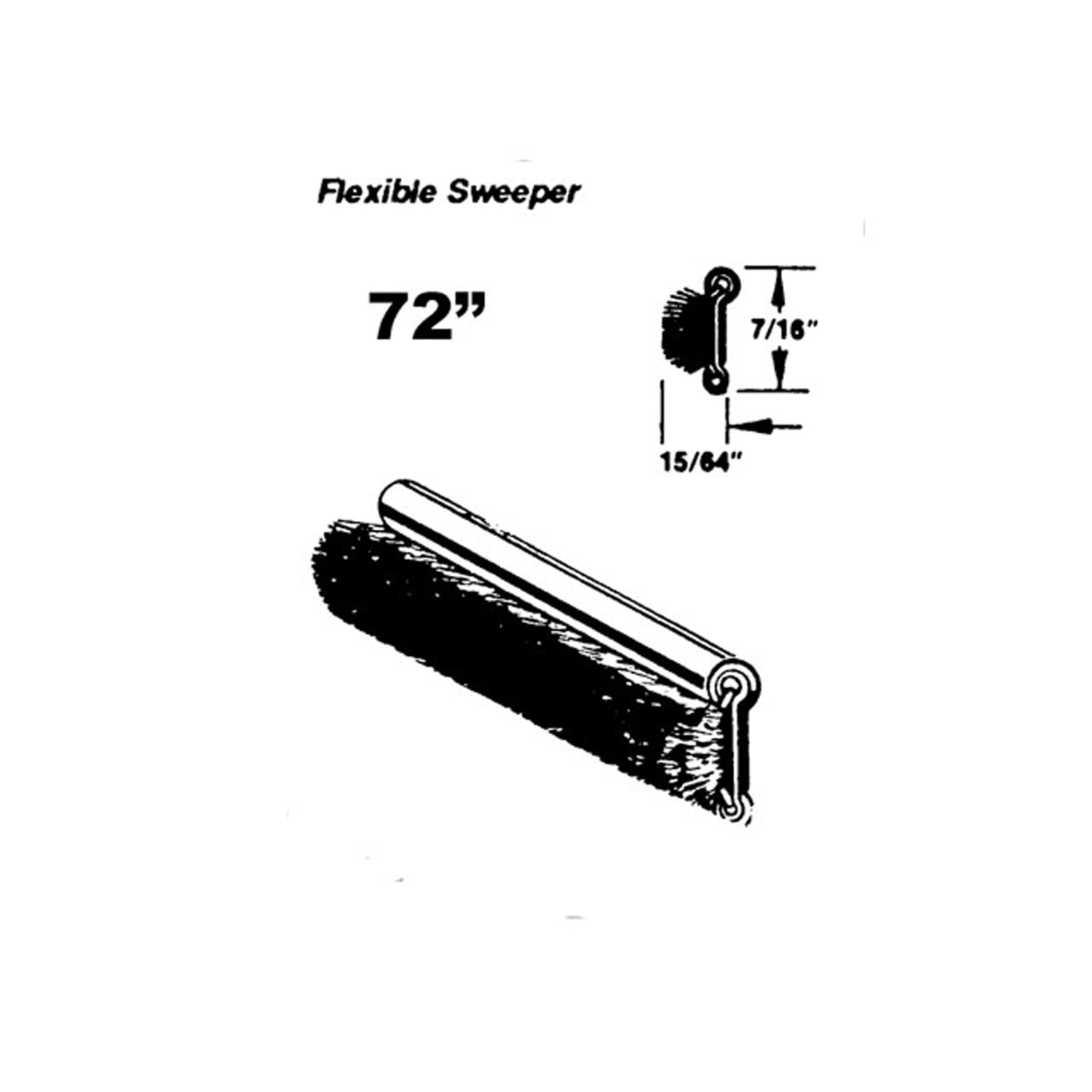 1935 Pontiac DELUXE SIX Flexible sweeper. Made with stainless steel bead-WC 8-72Flexible sweeper. Made with stainless steel bead. Used on inner and outer beltlines. Also forms easily for use with sliding quarter windows. 72 in. long. Each. NOTE: $20 special shipping charge applies for domestic orders. Call or email for overseas shipping costs. Part can be sectioned into two equal lengths to reduce overseas shipping costs.
 1935 Pontiac DELUXE SIX Fender Bolts. For use with Fender Bolt Washers; WF 3001-WF 3000Fender Bolts. For use with Fender Bolt Washers; WF 3001. Zinc Chromate plated, high strength. 1" X 5/16". Set of 25
 1935 Pontiac DELUXE SIX Fender Bolt Washers. For use with Fender Bolts; WF 3000-WF 3001Fender Bolt Washers. For use with Fender Bolts; WF 3000. High quality, cadmium plated. 1-1/4" O.D., 3/8" I.D. Set of 25
 1935 Pontiac DELUXE SIX Front Vent Window Seals, for 4-Doors. Pair R&L-WR 7304Front Vent Window Seals, for 4-Doors. Pair R&L
 1935 Pontiac DELUXE SIX Rear Vent Window Seals, for 4-Door Sedans-WR 7304-RRear Vent Window Seals, for 4-Door Sedans. Each side has piece 41" long and 21-1/4" long. 4-Piece Set.
 1935 Pontiac DELUXE SIX Front Vent Window Seals. Does not fit Convertible-WR 7309Front Vent Window Seals. Does not fit Convertible. Pair R&L
Why Choose Metro?
For over 100 years, Metro Moulded Parts has been the pinnacle of quality in classic car restoration parts. Our commitment to precision and authenticity in every component ensures a perfect fit and an OEM-level appearance.
- Expert Craftsmanship & Quality: Each part is a testament to our dedication to reliability and perfection, crafted from original designs and thoroughly tested.
- Advanced Technology: We use cutting-edge techniques to create flawless, long-lasting parts that surpass others in performance.
- SuperSoft Sponge – The Ultimate Door Seal: Not only are our door seals 30% softer than competitors', but they're also guaranteed to never leak. They effectively reduce wind and road noise, enhancing your classic car's comfort and driving experience.
- Proudly American: Our parts are a product of American craftsmanship, made in the USA with a spirit of excellence and heritage.
- Unrivaled Warranty: We back our products with a 30-year industry-leading warranty, a testament to our confidence in their quality.
Join us in preserving the legacy of classic cars with parts that are crafted for perfection, not just made.