

Image of 1935 Pontiac Standard Six, Note: These illustrations use artistic license and may differ from actual historical models.
Performance Metrics
Fundamental Metrics
Emotional Appeal
MMP Rating
| Engine Specifications | |
|---|---|
| Engine: | Inline 6 |
| Displacement: | 208 cubic inches |
| Horsepower: | Estimated 77-85 hp |
| Torque: | Information not available |
| Compression Ratio: | 6.2:1 |
| Ignition System: | Battery and coil |
| Cooling System: | Water-cooled |
| Performance Specifications | |
| 0-60 Time: | Information not available |
| 1/4 Mile Time: | Information not available |
| Top Speed: | 75 mph |
| Transmission and Drive | |
| Drive Type: | Rear-wheel drive |
| Transmission Type: | 3-speed manual |
| Fuel and Efficiency | |
| Fuel System Type: | Carburetor |
| MPG: | Information not available |
| Dimensions and Brakes | |
| Brakes: | Mechanical drum brakes |
| Wheelbase: | 112 inches |
| Weight: | 2,700 lbs |
Note: Specifications for classic cars are given to the best of our ability, considering the limited and variant data available.
1935 Pontiac Standard Six: The Year Pontiac Found Its Silver Streak
The 1935 Pontiac Standard Six brought a fresh face and practical six-cylinder power to the American road, helping turn Pontiac from a promising General Motors companion marque into a brand with a style of its own. Its most memorable feature was the bright chrome trim that ran along the hood, a detail that gave the car its enduring nickname: the Silver Streak.
Pontiac had begun in 1926 as a companion make to Oakland, offering buyers a car positioned between Chevrolet and the more expensive GM brands. Oakland was discontinued in 1931, leaving Pontiac to carry the name forward on its own. By 1935, the marque was gaining momentum with well-equipped, mid-priced cars that combined accessible engineering with a more distinctive appearance.
The Standard Six was the more economical member of Pontiac’s 1935 lineup. It paired a straight-six engine with a range of Fisher-built bodies and introduced styling that would become one of Pontiac’s best-known visual signatures. The Silver Streak treatment was not just a one-year flourish: it became a defining Pontiac motif for years to come.
Silver Streak Styling
The 1935 Pontiac’s front end is its calling card. A tall, upright grille gives the car a confident, formal face, while the long hood and rounded fenders soften its otherwise substantial shape. Chrome bars along the hood draw the eye back from the grille and make the car look longer and lower than many earlier sedans. The effect is elegant rather than flashy, especially when the brightwork is paired with the car’s rounded, flowing body lines.
Fisher Body supplied the bodies, with construction and trim varying by model and equipment. Inside, the Standard Six was built for everyday use, not luxury-car extravagance. Buyers could expect a broad bench seat, a straightforward instrument panel, and period-appropriate cloth upholstery. Depending on the body style and trim, materials could include durable woven fabrics, broadcloth, or mohair-like upholstery. The cabin’s generous glass and relatively simple controls made it practical for families and long-distance travel.
Period paint choices varied with body style and production availability. Dark blue, green, maroon, and black were among the kinds of colors associated with mid-1930s cars, while lighter shades and contrasting details could add variety. Exact combinations depended on the factory order and trim package, so today’s restorers often consult original paint and upholstery references before choosing a finish.
The Standard Six range included practical sedans as well as coupe-style bodies. Two-door and four-door sedans suited family use, while coupes offered a sportier profile and a smaller cabin. The sedan was the sensible, commonly encountered choice, while the coupe is often the more eye-catching option at a show. Body-style availability and names could differ across the Standard and better-equipped Pontiac series, so it is worth checking the car’s original identification details before assuming its exact specification.
Engineering for the Mid-1930s
Under the hood, the Standard Six used a 208-cubic-inch (3.4-liter) L-head inline-six, rated at about 80 horsepower. Its side-valve layout was conventional for the period, but it was well suited to the car’s mission: smooth, dependable power at relaxed road speeds rather than high-revving performance. A three-speed manual transmission sent power to the rear wheels.
Four-wheel hydraulic brakes were an important safety and control feature for a car of this era, giving the driver more consistent stopping power than older mechanical systems. The Pontiac also benefited from the broader advances of GM’s Fisher-body construction and steadily improving chassis engineering. These were not exotic technologies, but they helped make a mid-priced car feel more composed and modern in everyday use.
The Standard Six’s significance lies partly in how effectively it blended familiar engineering with a memorable design. Pontiac did not need a radical new powertrain to stand out. The Silver Streak styling gave buyers a recognizable identity, while the six-cylinder engine and conventional rear-wheel-drive layout kept the car understandable and serviceable for the average owner.
Road Manners and Performance
With roughly 80 horsepower moving a substantial 1930s body, the Standard Six was a steady cruiser rather than a quick car. Period test conditions and vehicle condition varied, but a healthy example might reach approximately 70 to 75 mph. A 0-to-60-mph time in the neighborhood of 25 to 30 seconds is a reasonable estimate, not a factory guarantee. Today, traffic, tire choice, gearing, and the condition of the engine can make a major difference.
On ordinary roads, the car’s long wheelbase and period suspension give it a deliberate, comfortable ride. It can absorb rough pavement at moderate speeds, though its older chassis will not isolate occupants as effectively as a modern car. On winding roads, the tall body and relatively narrow tires encourage a measured pace. The driver feels the car lean through corners, and steering requires more effort at low speeds than a modern power-assisted system.
The engine’s character is part of the appeal. A well-tuned flathead six produces a low, even rumble rather than a sharp performance-car bark. The three-speed gearbox asks for deliberate shifts, and the driver has to plan ahead when merging or climbing hills. It rewards smooth inputs and a relaxed rhythm, making a back-road drive feel more like a moving slice of history than a race against the clock.
Living With a 1935 Pontiac
In its own day, the Standard Six could serve as a family car, commuter, or touring vehicle. Today, most examples are weekend drivers, show cars, or part of a private collection. A carefully maintained car can still be driven, but it is best suited to slower roads and shorter trips unless it has received a thorough mechanical restoration.
The straightforward six-cylinder layout is a plus for hands-on owners. Routine service such as ignition work, lubrication, and basic engine adjustments is familiar to mechanics who work on prewar cars. The challenges are less about complicated electronics and more about finding correct parts, maintaining the cooling and fuel systems, and sourcing trim or body components. Specialist suppliers and enthusiast clubs can be valuable resources, particularly for original interior materials and hard-to-find exterior details.
Reliability depends heavily on restoration quality. A car that has sat for decades may need attention to its fuel system, brakes, tires, wiring, and cooling system before it is safe to drive. Original six-volt electrical equipment and aging rubber components also deserve careful inspection. A pre-purchase check by a mechanic experienced with vintage cars is a wise investment.
Silver Streak Facts and Myths
The Silver Streak is the standout bit of Pontiac trivia from 1935. The hood’s chrome bars became such a recognizable brand feature that Pontiac carried the treatment forward across later models. In that sense, the Standard Six helped establish a visual identity that was more durable than any single engine or body style.
There is no widely recognized speed or endurance record associated specifically with the 1935 Standard Six, and it is not chiefly remembered for a celebrity owner or a starring role in a major historical event. Its notable achievement was quieter: it helped Pontiac build a strong public identity during a period when automakers were competing hard for buyers recovering from the Great Depression.
Common criticisms are typical of prewar cars. The Standard Six is slow by modern standards, its brakes and steering require more attention, and replacement parts can take time to locate. Its styling and mechanical simplicity, however, are exactly what many enthusiasts value. The car is not a disguised sports model; it is an honest, comfortable mid-priced automobile from a time when motoring demanded more involvement from the driver.
Collector Value and Availability
Exact production totals for the 1935 Standard Six are not consistently reported by body style, and surviving cars are not always documented in a single registry. Pontiac’s total 1935 production was roughly in the range of 175,000 to 180,000 cars across its lineup. As a broad estimate, the Standard Six likely accounted for many tens of thousands of those cars, perhaps around 100,000, but that figure should be treated as an informed approximation rather than a verified model-by-model count.
Standard Six sedans are uncommon but do appear in the classic-car market. Coupes and cars with especially original or well-restored trim can be harder to find. A reasonable current U.S. value guide is about $8,000 to $18,000 for a project or usable driver, $18,000 to $35,000 for a solid, well-presented restoration, and roughly $35,000 to $55,000 or more for an exceptional example. Body style, originality, restoration documentation, and local demand can move a sale outside those ranges.
Values for prewar Pontiacs tend to be driven more by condition and buyer interest than by short-term market swings. The best cars have generally held or improved their appeal, while ordinary sedans can be harder to sell at top prices because the collector market favors striking body styles and high-quality restorations. The Standard Six is not typically a blue-chip investment, but its Silver Streak styling and approachable mechanicals give it lasting enthusiast appeal.
Why the 1935 Standard Six Still Matters
The 1935 Pontiac Standard Six combined a dependable 80-horsepower inline-six, practical Fisher-built bodies, and the debut of Pontiac’s memorable Silver Streak look. It was not the fastest or most advanced car on the road, but it offered useful space, straightforward engineering, and a distinctive identity at a time when those qualities mattered.
More than nine decades later, its charm comes from that balance. The Standard Six is a handsome, hands-on reminder of how American cars were evolving, and its chrome-striped hood still makes the same point it made in 1935: Pontiac had found its own way to stand out.
1935 Pontiac Standard Six Catalog of Parts
 1935 Pontiac STANDARD SIX Starter Pedal Pad. Brown. 1-7/16" Diameter, Each-AP 19-AStarter Pedal Pad. Brown. 1-7/16" Diameter, Each
 1935 Pontiac STANDARD SIX Front and Rear Bumper Arm Grommets -BG 58Front and Rear Bumper Arm Grommets. 2-3/8" wide X 5-1/4" long, with 1-11/16" long inner slot. Pair
 1935 Pontiac STANDARD SIX Clutch and Brake Pedal Pads. 2" wide X 3" long. Pair-CB 15Clutch and Brake Pedal Pads. 2" wide X 3" long. Pair
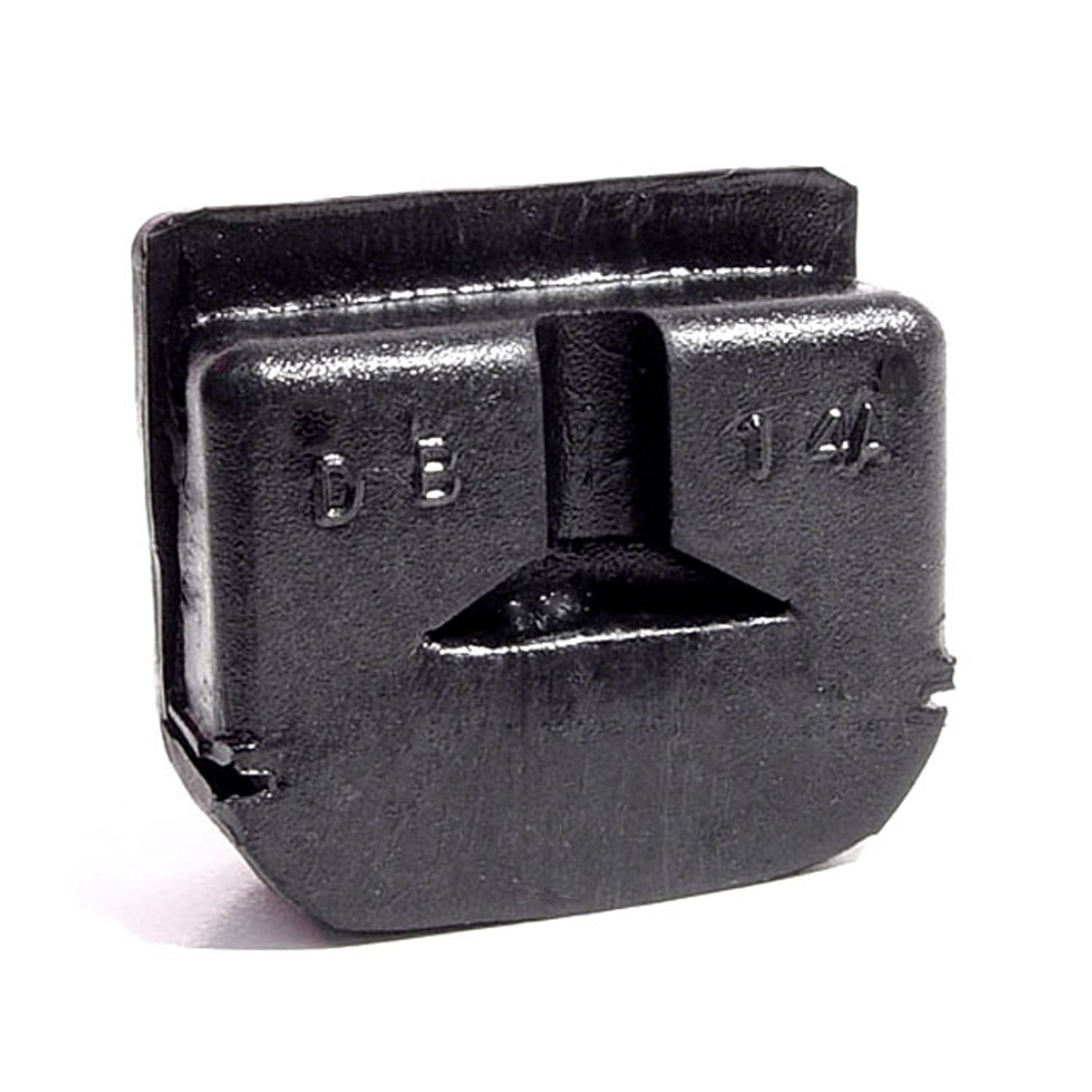 1935 Pontiac STANDARD SIX Door Bumper. Exact reproduction-DB 14-ADoor Bumper. Exact reproduction. 1-3/16" high X 1-9/16" wide X 9/16" thick. Each
 1935 Pontiac STANDARD SIX Upper Door Hinge Post Bumper. Held by screw-DB 60-AUpper Door Hinge Post Bumper. Held by screw. 7/8" diameter X 1/8" thick. Each
 1935 Pontiac STANDARD SIX Inner and Outer Center Division Bar Seals-DP 20Inner and Outer Center Division Bar Seals. Each piece 14-1/4" long. Set
 1935 Pontiac STANDARD SIX Gas filler grommet. Fits all models '36 Buick-GF 25Gas filler grommet. Fits all models '36 Buick. Fits '37 Buick Series 80/90. 2-1/8 in. ID; 4 in. OD. Dense black rubber. Each.
 1935 Pontiac STANDARD SIX Rear Hood Corners. 1-1/4" wide. Pair-HC 29Rear Hood Corners. 1-1/4" wide. Pair
 1935 Pontiac STANDARD SIX Door Handle Ferrule Grommet. I.D. 11/16", O.D. 1-3/16"-MP 546-IDoor Handle Ferrule Grommet. I.D. 11/16", O.D. 1-3/16". Each
 1935 Pontiac STANDARD SIX Windshield Wiper Transmission Pad-MP 546-YWindshield Wiper Transmission Pad. 2-1/2" wide X 1-1/4" long. Each
 1935 Pontiac STANDARD SIX Park Light Pads. 3-3/8" wide X 14" long. Pair-MP 990-JPark Light Pads. 3-3/8" wide X 14" long. Pair
 1935 Pontiac STANDARD SIX Headlight Pads. 3-3/8" wide X 8-7/8" long. Pair-MP 990-KHeadlight Pads. 3-3/8" wide X 8-7/8" long. Pair
 1935 Pontiac STANDARD SIX Headlight Pads. 3-1/2" wide X 9-7/8" long. Pair-MP 991-HHeadlight Pads. 3-1/2" wide X 9-7/8" long. Pair
 1935 Pontiac STANDARD SIX Rumble Seat Step-Plate Bracket Pad -MP 991-JRumble Seat Step-Plate Bracket Pad. 2-3/4" wide X 4-1/8" long. Each
 1935 Pontiac STANDARD SIX Door Lock Knob. Brown. 1/2" diameter X 1" long X 1/8" hole-RP 303Door Lock Knob. Brown. 1/2" diameter X 1" long X 1/8" hole. Each
 1935 Pontiac STANDARD SIX Door Bumper. 1" diameter X 1/4" thick Each-SB 60Door Bumper. 1" diameter X 1/4" thick Each
 1935 Pontiac STANDARD SIX Spare Tire Mount Bumper. 5/8" square. Each-SB 80Spare Tire Mount Bumper. 5/8" square. Each
 1935 Pontiac STANDARD SIX Vertical Seal for Vent Window. Each is 17" long. Pair-VS 2Vertical Seal for Vent Window. Each is 17" long. Pair
 1935 Pontiac STANDARD SIX Vulcanized Windshield Seal-VWS 7310Vulcanized Windshield Seal. For all closed models (does not fit convertible). Each
 1935 Pontiac STANDARD SIX Flexible glass-run channel-WC 11-72Flexible glass-run channel. Mohair lined, cloth covered with stainless steel bead. Used on side windows. 72 in. long. Each. NOTE: $20 special shipping charge applies for domestic orders. Call or email for overseas shipping costs. Part can be sectioned in two equal lengths to reduce overseas shipping costs.
 1935 Pontiac STANDARD SIX Rigid division-bar channel. Made with stainless steel bead-WC 2-72Rigid division-bar channel. Made with stainless steel bead. 72 in. long. Each. NOTE: $20 special shipping charge applies for domestic orders. Call or email for overseas shipping costs. Part can be sectioned into two equal lengths to reduce overseas shipping costs.
 1935 Pontiac STANDARD SIX Flexible Rubber Window Channel-WC 32-14Flexible Rubber Window Channel. For Fisher Closed Bodies, except those using a stainless bead type. Used on side windows. 13/16" outer width X 6/16" outer depth, with a 5/16" inner channel width X 14" long. Each
 1935 Pontiac STANDARD SIX Flexible sweeper. Made with stainless steel bead-WC 8-72Flexible sweeper. Made with stainless steel bead. Used on inner and outer beltlines. Also forms easily for use with sliding quarter windows. 72 in. long. Each. NOTE: $20 special shipping charge applies for domestic orders. Call or email for overseas shipping costs. Part can be sectioned into two equal lengths to reduce overseas shipping costs.
 1935 Pontiac STANDARD SIX Fender Bolts. For use with Fender Bolt Washers; WF 3001-WF 3000Fender Bolts. For use with Fender Bolt Washers; WF 3001. Zinc Chromate plated, high strength. 1" X 5/16". Set of 25
 1935 Pontiac STANDARD SIX Fender Bolt Washers. For use with Fender Bolts; WF 3000-WF 3001Fender Bolt Washers. For use with Fender Bolts; WF 3000. High quality, cadmium plated. 1-1/4" O.D., 3/8" I.D. Set of 25
 1935 Pontiac STANDARD SIX Front Vent Window Seals, for 4-Doors. Pair R&L-WR 7304Front Vent Window Seals, for 4-Doors. Pair R&L
 1935 Pontiac STANDARD SIX Rear Vent Window Seals, for 4-Door Sedans-WR 7304-RRear Vent Window Seals, for 4-Door Sedans. Each side has piece 41" long and 21-1/4" long. 4-Piece Set.
 1935 Pontiac STANDARD SIX Front Vent Window Seals. Does not fit Convertible-WR 7309Front Vent Window Seals. Does not fit Convertible. Pair R&L
Why Choose Metro?
For over 100 years, Metro Moulded Parts has been the pinnacle of quality in classic car restoration parts. Our commitment to precision and authenticity in every component ensures a perfect fit and an OEM-level appearance.
- Expert Craftsmanship & Quality: Each part is a testament to our dedication to reliability and perfection, crafted from original designs and thoroughly tested.
- Advanced Technology: We use cutting-edge techniques to create flawless, long-lasting parts that surpass others in performance.
- SuperSoft Sponge – The Ultimate Door Seal: Not only are our door seals 30% softer than competitors', but they're also guaranteed to never leak. They effectively reduce wind and road noise, enhancing your classic car's comfort and driving experience.
- Proudly American: Our parts are a product of American craftsmanship, made in the USA with a spirit of excellence and heritage.
- Unrivaled Warranty: We back our products with a 30-year industry-leading warranty, a testament to our confidence in their quality.
Join us in preserving the legacy of classic cars with parts that are crafted for perfection, not just made.