

Image of 1956 Porsche 356a, Note: These illustrations use artistic license and may differ from actual historical models.
Performance Metrics
Fundamental Metrics
Emotional Appeal
MMP Rating
| Engine Specifications | |
|---|---|
| Engine: | 1.3L, 1.5L, 1.6L Flat-4 |
| Displacement: | 1282cc - 1582cc |
| Horsepower: | 40hp - 75hp |
| Torque: | 52 - 81 lb-ft |
| Compression Ratio: | 7.0:1 - 8.5:1 |
| Ignition System: | Distributor with points |
| Cooling System: | Air-cooled |
| Performance Specifications | |
| 0-60 Time: | 13 - 16 seconds |
| 1/4 Mile Time: | 18 - 20 seconds |
| Top Speed: | 99 - 120 mph |
| Transmission and Drive | |
| Drive Type: | Rear-wheel drive |
| Transmission Type: | 4-speed manual |
| Fuel and Efficiency | |
| Fuel System Type: | Carburetor |
| MPG: | 26 - 30 mpg |
| Dimensions and Brakes | |
| Brakes: | Drum brakes |
| Wheelbase: | 82.7 inches |
| Weight: | 1750 - 2000 lbs |
Note: Specifications for classic cars are given to the best of our ability, considering the limited and variant data available.
1956 Porsche 356A: The Sports Car That Built a Legend
The 1956 Porsche 356A proves that a sports car does not need a large engine or dramatic styling to leave a lasting mark. Compact, quick-footed, and unmistakably Porsche, it brought the company’s early competition experience to public roads and helped establish the formula the marque would refine for decades.
Porsche’s first production car was created under the direction of Ferry Porsche, son of company founder Ferdinand Porsche. The earliest 356s were assembled in Gmünd, Austria, before production moved to Stuttgart, Germany, in 1950. By 1956, the improved 356A was in production at Porsche’s Zuffenhausen works, where its rear-engine layout, air-cooled flat-four, and driver-focused character were becoming the foundations of the brand.
One intriguing detail: “356” was the car’s project number, not its engine displacement. The model was already earning a reputation in competition, too. In 1951, a Porsche 356 SL finished first in its class at the 24 Hours of Le Mans, giving the young manufacturer a memorable international breakthrough.
356A Styling and Cabin Details
The 356A has a rounded, aerodynamic shape that looks both purposeful and friendly. Its gently arched roof flows into a tapered rear deck, while the smooth front end and integrated fenders give the body a clean, almost sculpted appearance. Subtle changes distinguished the 356A from earlier 356s, including a curved one-piece windshield and 15-inch wheels. The styling was elegant, but the compact proportions also served the practical purpose of reducing weight and drag.
Inside, the cabin is simple and carefully finished rather than lavish. The dashboard is painted metal, with clear VDO instruments placed where the driver can read them quickly. A large, thin-rim steering wheel, upright seating position, and compact controls create an intimate connection between driver and machine. Upholstery varied by model and specification: leatherette was common, while leather was available. The result feels special without hiding the car’s straightforward, sporting purpose.
Buyers could choose from a range of factory paint colors, with shades such as Ivory, Ruby Red, black, and metallic silver among the period favorites. Exact availability depended on the model year, market, and individual car. Today, original paint documentation and matching numbers can make a particular color combination especially appealing to collectors.
The main 1956 body styles were the Coupe, Cabriolet, and open-top Speedster. The Coupe is the best-known all-rounder, with weather protection and a small rear seating area. The Cabriolet offers a folding soft top and a more comfortable open-air experience. The Speedster is the most iconic: it has a low, removable windshield, a simplified interior, and a lightweight character that makes it look ready for a race start. Porsche’s later Convertible D arrived in 1958, so it was not a 1956 offering.
Engineering Ahead of Its Size
Under the rear deck sits an air-cooled, horizontally opposed four-cylinder engine. The 356A lineup included engines of roughly 1.3 and 1.6 liters, with standard and higher-output versions. Most used pushrod-operated overhead valves and carburetors; the rare Carrera models took a very different route with a sophisticated four-cam engine.
The rest of the mechanical package was equally purposeful for the era. The 356A paired its rear-mounted engine with a four-speed manual transaxle, independent suspension, torsion bars, and hydraulic drum brakes. Its compact, integrated body-and-chassis construction helped keep weight down. These choices were not unique in isolation, but Porsche brought them together in a small, coherent sports car built for responsive road driving and competition.
That combination set the 356 apart from many contemporaries. It was not simply a conventional car with a powerful engine added. The layout, low weight, and carefully tuned chassis made the whole vehicle feel like a unified piece of engineering. The 356 also helped establish the rear-engine Porsche identity that would continue with the 911, even as later models grew faster and more sophisticated.
Performance and Road Manners
Performance depends on engine, gearing, body style, and the condition of the individual car. A typical 1.6-liter 356A produced about 60 horsepower, while the 1600 Super raised output to roughly 75 horsepower. A standard 1600 Coupe could reach approximately 100 to 105 mph and accelerate from 0 to 60 mph in around 15 to 17 seconds. The 1600 Super was quicker, with a top speed in the neighborhood of 105 to 110 mph and a 0-to-60 time of roughly 12 to 14 seconds. These are period-style estimates, not guarantees for a decades-old car with unknown engine and restoration history.
On a winding road, the 356A feels nimble and eager. Its steering is direct, its narrow body is easy to place, and the car rewards smooth inputs rather than brute force. The rear-engine layout gives the back tires plenty of traction when accelerating, while the relatively light weight helps the car change direction quickly. On rough roads, however, its short wheelbase and vintage suspension communicate bumps clearly. It is a classic sports car, not a modern grand tourer.
The driving experience is part of the appeal. The flat-four’s air-cooled rasp rises from behind the cabin, accompanied by mechanical sounds that a modern car would filter out. The gear lever asks for deliberate, accurate shifts, and the drum brakes require more anticipation than contemporary disc brakes. On a narrow, twisting road, the 356A feels lively and involving. At the limit, especially in an abrupt lift-off or a poorly judged corner, its swing-axle rear suspension can encourage oversteer. Respectful driving and a well-maintained chassis make all the difference.
Living With a 1956 Porsche
Today, a 1956 356A is more commonly used for weekend drives, rallies, tours, and concours events than as a daily commuter. A well-sorted example can handle regular recreational use, but its age brings practical compromises: limited safety equipment, modest braking performance, cabin noise, and little protection from modern traffic.
Maintenance is manageable for an experienced classic-car owner, but the 356 is not a carefree economy car. Regular attention to ignition timing, carburetor adjustment, valve clearances, oil leaks, and the cooling system’s air seals helps keep the engine healthy. Rust deserves especially careful inspection. Check the floors, longitudinal chassis members, battery area, door bottoms, and suspension mounting points, since hidden corrosion can make restoration costly.
Many routine mechanical jobs are accessible to a capable home mechanic, and the car’s relatively simple systems are easier to understand than those of a modern vehicle. However, original parts, correct restoration work, and Carrera-specific components can be expensive. A pre-purchase inspection by a Porsche specialist is a sensible investment, particularly because attractive paint and upholstery can conceal structural or mechanical problems.
Racing Roots and 356A Trivia
The 356’s competition reputation was built through endurance events, rallies, and class victories rather than headline-grabbing outright speed records. Porsche’s early Le Mans success with the 356 SL helped demonstrate that the small German manufacturer could compete internationally. The production 356A carried that sporting credibility onto public roads, while more specialized models developed the company’s racing technology.
The Speedster has its own memorable backstory. Porsche importer Max Hoffman saw an opportunity for a stripped-down, lower-cost open sports car for the American market. The result was the lightweight Speedster, whose low windshield and pared-back specification later made it one of the most recognizable 356 variants. Its popularity today far exceeds its original role as a relatively simple sports car.
Another notable branch of the family is the Carrera, named in recognition of Porsche’s success in the Carrera Panamericana road race. Its four-cam engine was an advanced and expensive design, and Carrera-equipped 356s are now among the most prized examples. Celebrity ownership stories are often attached to Porsche history, but a car’s provenance should always be verified through credible records rather than assumed from a famous name.
The 356A is not without criticism. Its cabin is tight by modern standards, the brakes are drums, and performance is modest beside later sports cars. The rear-engine handling can also surprise drivers who are unfamiliar with the car’s weight distribution. Those traits are part of its character, but they also explain why sound maintenance and thoughtful driving matter.
Collector Value and Availability
Approximately 21,000 Porsche 356As were built across the model’s production run from 1955 to 1959. That figure covers the full 356A series, not just 1956, and surviving cars vary widely in originality and condition. A 1956 Coupe is generally easier to find than a desirable Speedster, while a genuine Carrera is far rarer and occupies a separate price category.
As a broad North American market guide for 2026, a project or heavily driver-grade 356A might fall around $60,000 to $110,000. A sound, well-presented Coupe commonly sits roughly in the $110,000 to $200,000 range, while Cabriolets can bring approximately $150,000 to $275,000 or more. Speedsters often command $300,000 to $600,000, with exceptional, highly original, or especially well-documented examples exceeding that range. Genuine Carrera cars can sell for well into seven figures. These are broad estimates: body style, originality, restoration quality, provenance, and matching-number status can move a value substantially.
Over the long term, the 356A has generally appreciated as Porsche’s early history and collectible air-cooled models have attracted growing interest. Prices do not rise evenly, however. Market demand can shift, and an incorrect restoration or rusty shell may be difficult to sell even when the model itself is desirable. For buyers, condition and authenticity usually matter more than chasing the lowest asking price.
Why the 1956 356A Still Matters
The 1956 Porsche 356A combines elegant design, thoughtful engineering, and a direct connection to the company’s early racing years. Its small air-cooled engine asks the driver to value balance and momentum over raw horsepower, while its Coupe, Cabriolet, and Speedster forms offer different takes on the same focused character.
More than a collectible shape, the 356A is an early expression of what Porsche would become: light, purposeful, carefully engineered, and deeply rewarding when driven well. Its influence is visible not only in later Porsches, but in the idea that a truly great sports car is defined by how its parts work together.
1956 Porsche 356a Catalog of Parts
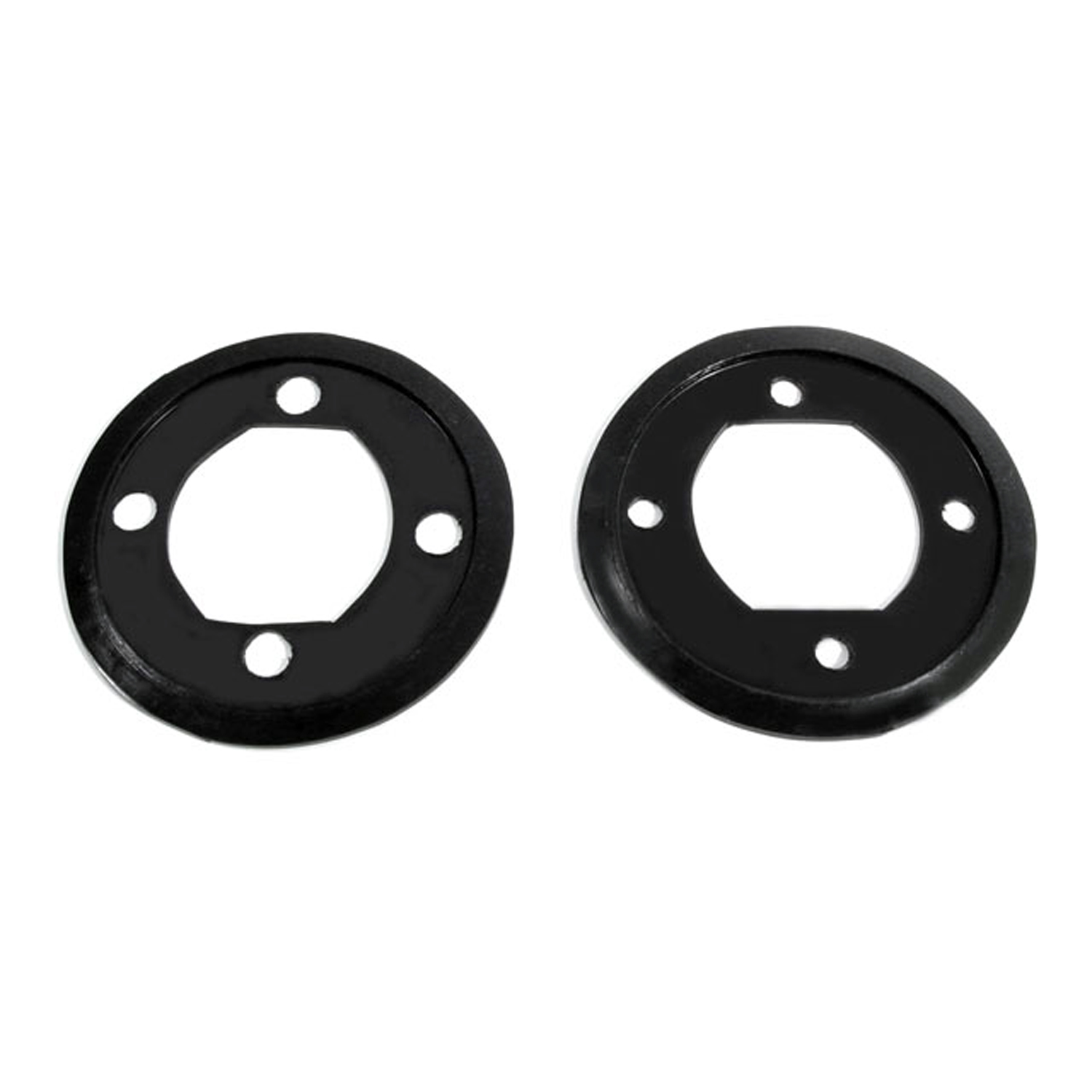 1956 Porsche 356A Tail-light Pads. 3-1/4" O.D. Pair-MP 992-KTail-light Pads. 3-1/4" O.D. Pair
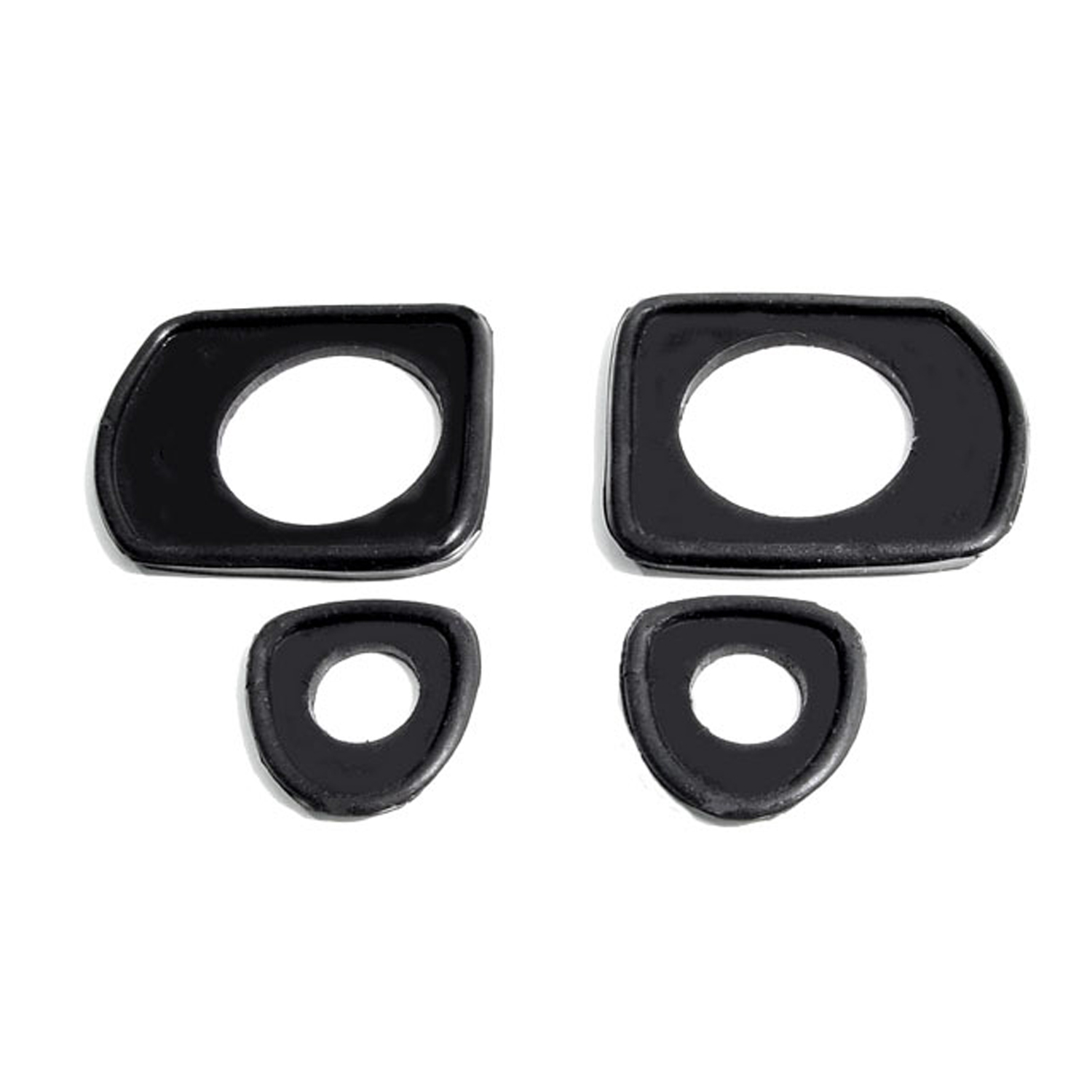 1956 Porsche 356A Door Handle Pads. 1-7/8" long & 1" long. Set-MP 992-LDoor Handle Pads. 1-7/8" long & 1" long. Set
Why Choose Metro?
For over 100 years, Metro Moulded Parts has been the pinnacle of quality in classic car restoration parts. Our commitment to precision and authenticity in every component ensures a perfect fit and an OEM-level appearance.
- Expert Craftsmanship & Quality: Each part is a testament to our dedication to reliability and perfection, crafted from original designs and thoroughly tested.
- Advanced Technology: We use cutting-edge techniques to create flawless, long-lasting parts that surpass others in performance.
- SuperSoft Sponge – The Ultimate Door Seal: Not only are our door seals 30% softer than competitors', but they're also guaranteed to never leak. They effectively reduce wind and road noise, enhancing your classic car's comfort and driving experience.
- Proudly American: Our parts are a product of American craftsmanship, made in the USA with a spirit of excellence and heritage.
- Unrivaled Warranty: We back our products with a 30-year industry-leading warranty, a testament to our confidence in their quality.
Join us in preserving the legacy of classic cars with parts that are crafted for perfection, not just made.