
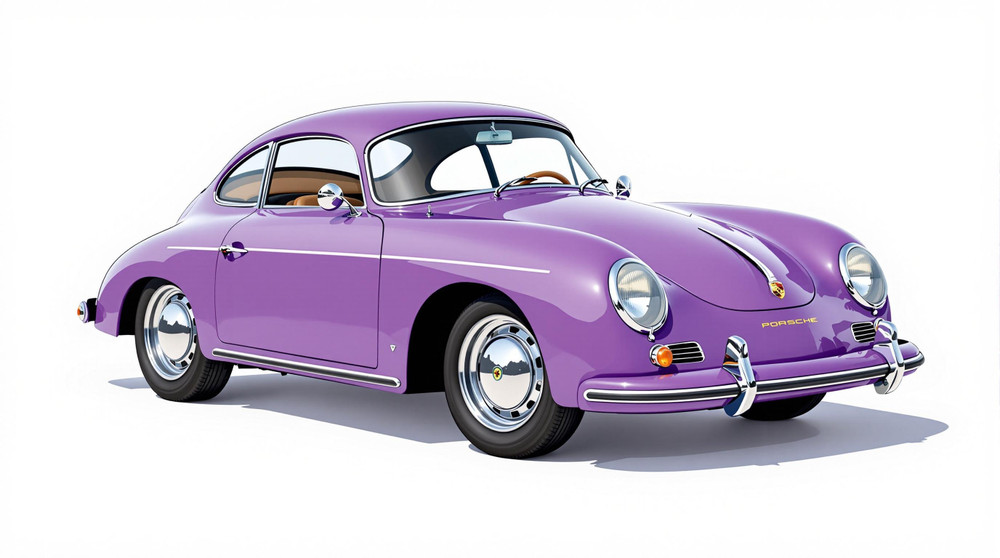
Image of 1956 Porsche Carrera, Note: These illustrations use artistic license and may differ from actual historical models.
Performance Metrics
Fundamental Metrics
Emotional Appeal
MMP Rating
| Engine Specifications | |
|---|---|
| Engine: | 1.5L DOHC Flat-4 |
| Displacement: | 1,498 cc |
| Horsepower: | 100-110 hp |
| Torque: | Estimated 89 lb-ft |
| Compression Ratio: | 9.1:1 |
| Ignition System: | Battery Ignition |
| Cooling System: | Air-cooled |
| Performance Specifications | |
| 0-60 Time: | 10 seconds |
| 1/4 Mile Time: | Estimated 17.3 seconds |
| Top Speed: | 120 mph |
| Transmission and Drive | |
| Drive Type: | Rear-wheel drive |
| Transmission Type: | 4-speed manual |
| Fuel and Efficiency | |
| Fuel System Type: | Dual Solex carburetors |
| MPG: | Estimated 20-25 mpg |
| Dimensions and Brakes | |
| Brakes: | Drum brakes |
| Wheelbase: | 82.7 inches |
| Weight: | 2,160 lbs |
Note: Specifications for classic cars are given to the best of our ability, considering the limited and variant data available.
1956 Porsche Carrera: The Four-Cam 356
The 1956 Porsche Carrera was a road car with a racing engine hiding beneath its smoothly rounded body. Based on the Porsche 356 A, the Carrera paired compact German sports-car proportions with an intricate four-camshaft engine developed for competition. It was built by Porsche in Stuttgart-Zuffenhausen, where the company was turning its early sporting reputation into a distinct identity.
The name had a motorsport pedigree. “Carrera” honored the Carrera Panamericana, the demanding Mexican road race where Porsche cars had earned class victories. In the 356 A Carrera, that name signaled more than a trim package: it identified one of the most technically ambitious and exclusive versions of the early 356.
A remarkable detail is that the Carrera’s engine was derived from Porsche’s racing work and used four overhead camshafts, an unusual arrangement for a production road car of the 1950s. It was a small, high-revving engine that demanded specialist knowledge, giving the Carrera a character quite different from a more familiar pushrod 356.
356 A Carrera Design and Interior
The Carrera retained the 356 A’s unmistakable shape: rounded fenders, a low nose, a gently curved roof, and a tail that tapered neatly around the engine compartment. Its body was compact and carefully proportioned rather than overtly aggressive. Subtle details, including Carrera badging and model-specific trim, hinted at the performance beneath the skin without spoiling the car’s clean lines.
Inside, the cabin was purposeful and straightforward. A large, thin-rimmed steering wheel, clear instruments, and a simple dashboard kept the driver focused on the road. Depending on specification, the seats and trim could be finished in leather or durable upholstery, with carpeting and brightwork adding a touch of finish. The interior was intimate by modern standards, and luggage space was limited, but the controls were close at hand and the view over the rounded bonnet was excellent.
For its era, the Carrera’s most striking technology was under the bonnet. Its Type 547 engine used four overhead camshafts, two per cylinder bank, along with twin ignition and a dry-sump lubrication system. The dry sump helped manage oil supply during hard cornering and sustained high-rpm driving. The car also used a four-speed manual gearbox, independent suspension, and four-wheel drum brakes, all typical of a lightweight sports car of the period.
Factory paint choices varied with market, year, and individual specification. Buyers could choose from colors such as silver, red, ivory, black, and several blues or greens. Silver and red are especially associated with the Carrera’s sporting image, while understated dark shades and ivory also suit the car’s elegant shape. As with many period Porsches, surviving cars may have been repainted, so original factory records matter to collectors.
Coupé, Cabriolet, and Speedster
The Carrera was offered in more than one open and closed body configuration during the 356 A era. The coupé is the most familiar and practical version, with a fixed roof that adds weather protection and body stiffness. Cabriolet versions offered a more relaxed open-air character, while the low-windshield Speedster delivered a stripped-back, competition-inspired look.
The Speedster is often the most instantly recognizable open Carrera, but it was not necessarily the most practical or common choice. Body-style availability and production numbers varied over the Carrera’s run, so a specific 1956 car should be checked against its chassis and factory documentation rather than identified by appearance alone.
Why the Carrera Mattered
The 1956 Carrera showed how a small manufacturer could transfer serious racing technology into a road-going sports car. Its four-cam engine was compact and powerful for its displacement, and it helped establish the Carrera name as a symbol of Porsche’s competition ambitions. The model also strengthened the connection between Porsche’s production cars and its racing program, a relationship that remains central to the company’s identity.
Compared with many contemporaries, the Carrera stood out for its combination of low weight, aerodynamic bodywork, and sophisticated engine design. It was not simply a standard 356 with more power. Its specialized engine required more careful servicing and cost considerably more to build and maintain, but it offered performance and engineering distinction that few small sports cars could match.
The lasting influence is visible in Porsche’s continued use of the Carrera name for performance-focused models. The 1956 car helped give that badge meaning: lightweight construction, responsive performance, and a direct link to competition.
Performance and Road Manners
The Carrera 1500 GS used a 1.5-liter, four-cylinder engine producing about 100 horsepower in road specification. Higher-output GT versions were rated at roughly 110 horsepower, with exact figures depending on engine tune and equipment. Period performance figures vary with body style, gearing, and test conditions, but a standard GS could reach approximately 120 to 125 mph. A 0-to-60 mph time in the neighborhood of 10 to 12 seconds is a reasonable estimate for many road-going examples.
Those numbers may seem modest today, but the Carrera was light, and its engine rewarded a driver willing to use the rev range. The four-cam motor came alive at higher rpm, producing a sharp, mechanical note unlike the softer sound of a conventional pushrod engine. Acceleration felt best when the driver kept the engine spinning and shifted with purpose.
On a winding road, the 356 A Carrera feels nimble and communicative. Its compact dimensions make it easy to place, and the steering gives the driver a clear sense of what the front tires are doing. The rear-engine layout provides strong traction under acceleration, but it also means the car responds differently from a front-engine sports car. Abruptly lifting off the throttle in a fast corner can unsettle the rear, so smooth inputs matter.
The suspension copes well with ordinary roads for a sports car of its time, though sharp bumps and broken pavement remind you that this is a light, old-fashioned machine. Drum brakes were effective when properly maintained, but repeated hard stops can produce heat and fade. The driving experience is physical and involving: engine noise travels into the cabin, the ride is firm, and the driver does the work, with no modern electronic aids to smooth over mistakes.
Owning a 1956 Carrera
Today, a Carrera is more commonly treated as a collector car, show car, or carefully driven weekend machine than as a daily driver. Some owners do take their cars on rallies and touring events, where the light controls and lively engine make them especially enjoyable. Regular use is possible, but traffic, modern highway speeds, and the risk of damage make routine commuting a less appealing role for a valuable example.
Maintenance is the main ownership challenge. The four-cam engine is mechanically complex, and correct adjustment and repair call for technicians familiar with Porsche’s Type 547 design. Parts and specialist labor can be expensive, and neglected engines may require substantial rebuilding. Routine checks and careful warm-up practices help, but the Carrera is not an ideal first project for an owner expecting to do every repair with basic tools.
The rest of the car is comparatively straightforward by modern standards. Its mechanical systems are accessible, and many general 356 service tasks are manageable for an experienced home mechanic. However, originality, correct engine components, and sound bodywork are crucial. A cheap example with undocumented history can quickly become far more expensive than a well-maintained car with verified numbers.
Rare Details and Common Criticisms
The Carrera’s four-cam engine is its defining feature and its most frequently discussed complication. It delivered remarkable performance for its size, but its complexity made it more demanding to service than the standard 356 engine. Owners also contend with a small cabin, limited luggage space, drum-brake limitations, and considerable engine and road noise. Those traits are part of the car’s period character, though they can be tiring on long trips.
The Carrera name itself is a piece of racing history, inspired by Porsche’s success in the Carrera Panamericana. The 356 A Carrera carried that connection into the showroom, while related Porsche racing cars continued to compete on circuits and road courses around the world. Rather than being defined by a single mass-production record, the model is remembered for bringing specialized racing-engine technology to a very small number of road cars.
Claims about famous owners and one-off special editions should be checked carefully, since desirable 356s have attracted plenty of stories over the decades. For a buyer, period paperwork, chassis details, engine numbers, and credible restoration records are more useful than an exciting anecdote without documentation.
Collector Value and Production
The 1956 Carrera is rare compared with ordinary 356 models. A reasonable broad estimate is that roughly 1,100 Porsche 356 A Carrera 1500 GS cars were built across the model’s production period, although published totals can differ depending on which versions and body styles are counted. The number produced in the 1956 model year was only a portion of that total, and exact year-by-year figures are not always presented consistently.
As a 2026 guide rather than a live appraisal, a sound, correctly identified Carrera coupé might sell in the approximate range of $500,000 to $1 million, with exceptional, highly original, or extensively documented cars exceeding that range. Cabriolets and especially desirable Speedsters can command more, while a top example with significant competition history or an unusually strong provenance may reach well beyond $1 million. Condition, matching numbers, originality, restoration quality, and market timing all make a major difference.
Values have generally been supported by the Carrera’s rarity, racing connection, and distinctive engine. Like other high-end collector cars, it can still move with broader market conditions, and expensive restoration needs can affect a sale price sharply. The long-term appeal is strong, but buyers should treat any value estimate as a starting point and arrange a specialist inspection before committing.
A Porsche With Racing in Its DNA
The 1956 Porsche Carrera combined the graceful shape of the 356 A with an extraordinary four-cam engine and a genuine competition pedigree. It was quick, compact, and technically ambitious, but also demanding to maintain and unmistakably a product of its time. For collectors, it offers more than rarity: it captures the moment Porsche began turning racing ideas into a defining part of its road-car identity.
Nearly seven decades later, the Carrera remains memorable because its engineering is felt every time the engine climbs toward the redline. It is not just a classic 356 with a famous badge. It is a small sports car with a big racing heart.
1956 Porsche Carrera Catalog of Parts
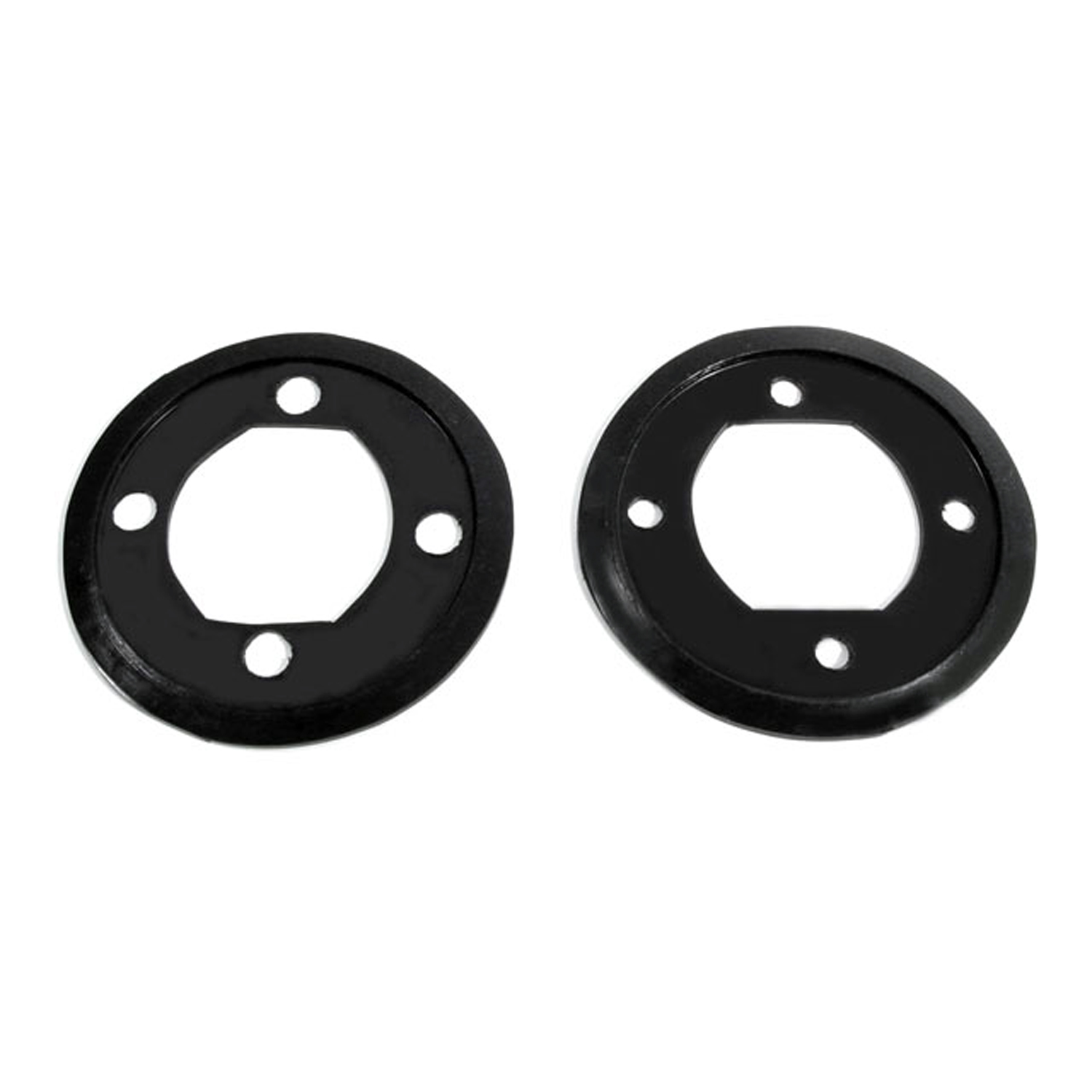 1956 Porsche Carrera Tail-light Pads. 3-1/4" O.D. Pair-MP 992-KTail-light Pads. 3-1/4" O.D. Pair
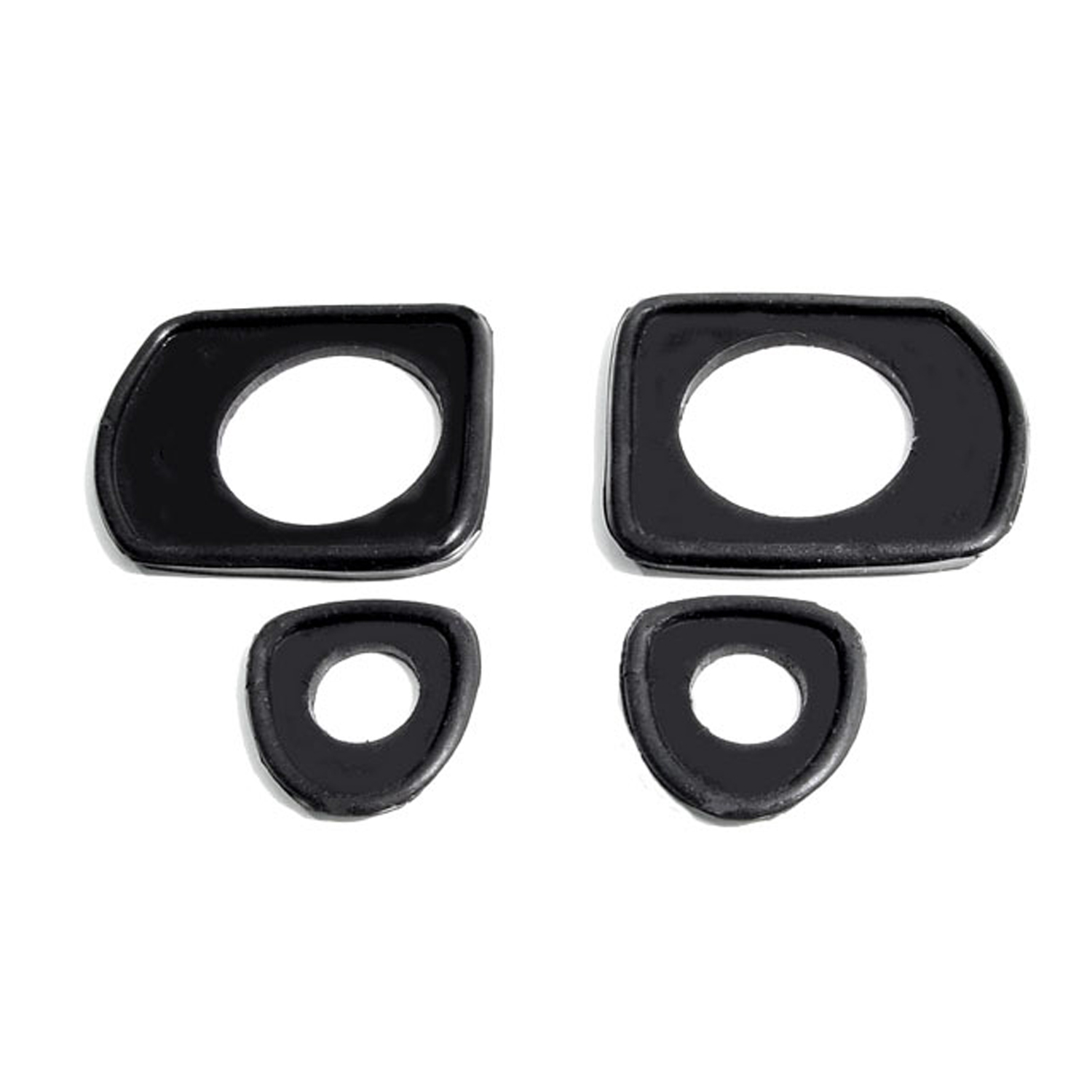 1956 Porsche Carrera Door Handle Pads. 1-7/8" long & 1" long. Set-MP 992-LDoor Handle Pads. 1-7/8" long & 1" long. Set
Why Choose Metro?
For over 100 years, Metro Moulded Parts has been the pinnacle of quality in classic car restoration parts. Our commitment to precision and authenticity in every component ensures a perfect fit and an OEM-level appearance.
- Expert Craftsmanship & Quality: Each part is a testament to our dedication to reliability and perfection, crafted from original designs and thoroughly tested.
- Advanced Technology: We use cutting-edge techniques to create flawless, long-lasting parts that surpass others in performance.
- SuperSoft Sponge – The Ultimate Door Seal: Not only are our door seals 30% softer than competitors', but they're also guaranteed to never leak. They effectively reduce wind and road noise, enhancing your classic car's comfort and driving experience.
- Proudly American: Our parts are a product of American craftsmanship, made in the USA with a spirit of excellence and heritage.
- Unrivaled Warranty: We back our products with a 30-year industry-leading warranty, a testament to our confidence in their quality.
Join us in preserving the legacy of classic cars with parts that are crafted for perfection, not just made.