
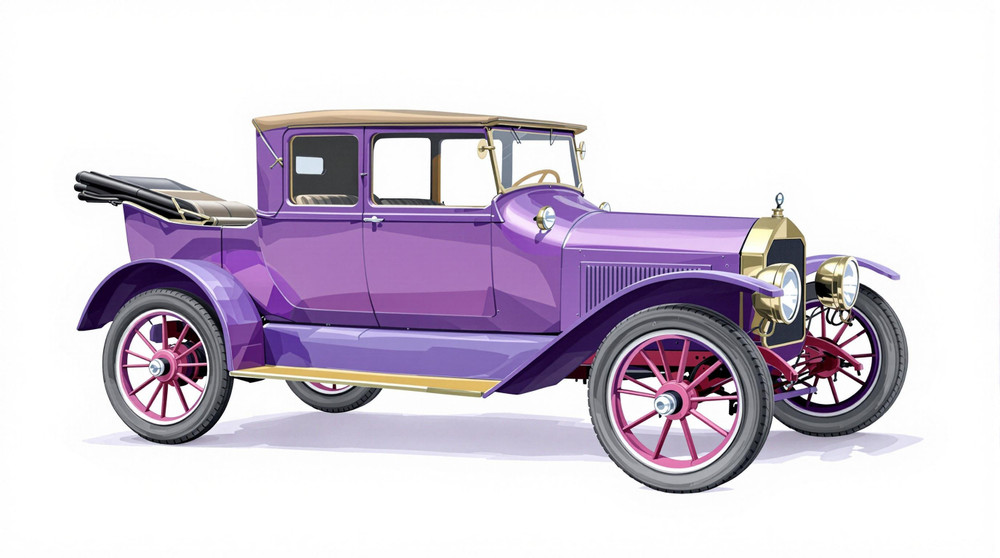
Image of 1917 Reo Model M, Note: These illustrations use artistic license and may differ from actual historical models.
Performance Metrics
Fundamental Metrics
Emotional Appeal
MMP Rating
| Engine Specifications | |
|---|---|
| Engine Options: | Single engine option |
| Displacement Range: | 3.7L |
| Horsepower Range: | Estimated 20-30 HP |
| Torque: | Not available |
| Compression Ratio: | Not available |
| Ignition System: | Magneto ignition system |
| Cooling System: | Water-cooled |
| Performance Specifications | |
| 0-60 Time: | Not available |
| 1/4 Mile Time: | Not available |
| Top Speed: | 40-45 mph |
| Transmission and Drive | |
| Drive Type: | Rear-wheel drive |
| Transmission Type: | 3-speed manual |
| Fuel and Efficiency | |
| Fuel System Type: | Carburetor |
| MPG: | Not available |
| Dimensions and Brakes | |
| Brakes: | Mechanical drum brakes |
| Wheelbase: | 112 inches |
| Weight: | Estimated 1,800 lbs |
Note: Specifications for classic cars are given to the best of our ability, considering the limited and variant data available.
1917 Reo Model M: A Quality-Built American Touring Car
The 1917 Reo Model M was made for motorists who wanted a sturdy, well-engineered car without buying into the most expensive end of the market. Built by the Reo Motor Car Company of Lansing, Michigan, it carried the initials of company founder Ransom E. Olds, the automotive pioneer who had already helped establish Oldsmobile before starting Reo.
Arriving as the United States entered the First World War, the Model M belonged to a rapidly changing automotive era. Cars were becoming more practical and dependable, but they still demanded mechanical sympathy from their drivers. A Model M was not a modern mass-market runabout in the Ford Model T mold. It was a more substantial machine, with an emphasis on comfort, sound construction, and respectable performance.
One detail makes the car especially interesting today: Reo was the founder’s second major automotive venture, and its name was built from his initials. The Model M therefore represents not just an early automobile, but a chapter in the career of one of the industry’s most influential entrepreneurs.
Model M Design and Styling
The Model M had the upright, purposeful proportions associated with prewar touring cars. Its tall radiator, separate front fenders, slim running boards, and large spoked wheels gave it a formal profile. Brass details and bright trim, depending on the car’s specification and restoration, added sparkle without disguising its practical construction. The hood and body sat high compared with a modern car, leaving the chassis and suspension more visible than they would be on later designs.
Open touring bodies were among the most recognizable forms. A five-passenger touring car offered a wide cabin, a folding fabric top, and a windshield that could be raised or adjusted to suit the weather. Roadsters provided a smaller, sportier alternative. Closed body styles, such as coupes or sedans, were available in the period market, though exact offerings could vary by model year and catalog. The open touring car is the version most closely associated with cars of this era.
Inside, the emphasis was on useful craftsmanship rather than luxury-car decoration. Owners could expect substantial upholstery, a simple dashboard, exposed metal fittings, and a large steering wheel. Leather or leather-like upholstery and quality trim were typical of cars in this class, but materials and finishes varied with the body style and the buyer’s choices. A surviving car may also have replacement upholstery or later restoration work, so its present interior is not always a perfect record of factory specification.
Period paint choices were generally restrained by modern standards. Dark blue, black, gray, and deep red or maroon were common colors across the era, with black often favored for its practical appearance and ease of upkeep. Exact Reo Model M color offerings are not consistently documented in surviving references, so restorers should avoid treating any one shade as the sole correct choice without evidence from a particular car.
1917 Reo Model M Technology
Under the hood, the Model M used a four-cylinder gasoline engine. Published specifications commonly place its output at about 35 horsepower, though period rating methods and surviving references do not always agree. Power went through a conventional manual transmission to the rear wheels, while mechanical brakes and a leaf-spring chassis reflected the engineering norms of the day.
Those features may sound basic now, but they were meaningful in 1917. A dependable multi-cylinder engine, conventional clutch and gearbox, and a chassis designed for real road use made the Reo a serious automobile rather than a fragile novelty. The Model M did not introduce a famous breakthrough comparable to later electric starting or hydraulic braking systems. Its appeal was the integration of established technology into a capable, thoughtfully built car.
What the Model M Meant to the Industry
The Model M’s historical importance lies less in a single revolutionary feature than in the kind of car it represented. Reo competed in a market where buyers were weighing price against durability, comfort, and reputation. The company built its identity around solid engineering and dependable transportation, helping demonstrate that a successful carmaker needed more than a low sticker price.
That positioning set Reo apart from manufacturers focused almost entirely on the cheapest possible car. A Model M offered a more substantial touring experience, while still serving ordinary private owners. It was not the car that transformed automotive production or established a new design language, but it contributed to the broad move toward automobiles that families could use for regular travel, business, and leisure.
Reo’s longer legacy also reflects the influence of Ransom E. Olds. His career connected early automotive experimentation with the growing American motor industry. The Model M is a useful example of how the business matured: cars were becoming more standardized and dependable, yet each maker still had a distinct engineering character and a loyal following.
Performance, Speed, and Road Manners
With roughly 35 horsepower commonly attributed to the Model M, a healthy example could manage ordinary roads and maintain a useful touring pace for its time. A reasonable period-car estimate for top speed is around 45 to 50 mph, though actual performance would depend on gearing, body style, mechanical condition, tire size, road surface, and load. That is an estimate, not a guaranteed factory test figure.
A verified 0-to-60 mph time is not available, and 60 mph was not a realistic everyday benchmark for this car. Many Model M examples would be happiest cruising well below that speed, and some may not reach 60 mph at all. Rather than assigning a misleading modern-style acceleration figure, it is more accurate to describe the car as capable of building speed gradually and reaching a comfortable touring pace with room to spare on suitable roads.
Driving one requires attention. The driver works a manual transmission, operates controls that feel quite different from modern pedals and switches, and relies on mechanical brakes that need anticipation. The steering is generally slower and heavier than a contemporary car’s, particularly at low speeds. On a smooth road, the Model M’s long, upright stance can feel composed. On rough ground, its leaf springs and tall tires soften some impacts, but potholes and ruts still make themselves known through the chassis.
On winding roads, the car rewards a measured approach. Its high seating position gives the driver a clear view, but the body can lean and the steering does not invite quick corrections. The engine’s sound is a steady, mechanical four-cylinder beat rather than a modern, insulated hum. The overall experience is tactile: the driver feels the clutch engage, hears the engine work, and plans ahead for each stop and turn.
Living With a Reo Model M
Today, a 1917 Model M is best suited to touring events, vintage-car gatherings, museum displays, and careful Sunday drives. It is not a sensible daily driver in modern traffic. Its modest speed, limited braking performance, open bodywork, and lack of contemporary safety equipment make it poorly matched to crowded highways.
Maintenance is manageable for an owner with mechanical experience, but the car is not maintenance-free. Ignition, carburetion, lubrication, cooling, tires, and mechanical brakes all require regular attention. Wear items and routine adjustments are familiar territory for a vintage-car mechanic, while model-specific components may take patience to locate or reproduce. Owners should also expect to learn the car’s individual habits, especially when starting, shifting, and adjusting the controls.
Reliability depends heavily on the quality of restoration and ongoing care. A properly rebuilt Model M can be dependable on planned tours, but a century-old car should never be treated like a modern appliance. Pre-trip checks and a basic tool kit are sensible, and keeping the car’s speed conservative helps protect both its occupants and its irreplaceable components.
Reo Model M Facts and Myths
The Reo name comes from Ransom E. Olds’s initials, usually styled as R.E.O. The company was founded after Olds left Oldsmobile, making the Model M part of a particularly personal chapter in American automotive history.
No widely recognized Model M speed, endurance, or sales record is associated with the 1917 car. It is better known as a representative Reo touring automobile than as a record-breaking machine. Nor is there a well-established celebrity-ownership story that defines this particular model. Its appeal is rooted in engineering heritage and period character, not famous-owner mythology.
One common criticism of cars from this period is that their controls and braking feel primitive by modern standards. That is fair, especially for drivers accustomed to power steering, hydraulic brakes, and synchronized transmissions. The Model M’s other limitation is speed: it belongs on suitable back roads and organized vintage tours, not in fast-moving freeway traffic.
1917 Reo Model M Collector Value
Values depend strongly on completeness, mechanical condition, body style, restoration quality, and provenance. As a broad current-market estimate, a project or incomplete car might fall around $10,000 to $20,000. A usable driver or older restoration could bring roughly $20,000 to $40,000, while a high-quality, well-documented example may reach approximately $40,000 to $65,000 or more. These are general estimates rather than a formal appraisal; actual sale prices can vary considerably.
Model-specific production totals are difficult to establish from commonly available records. A reasonable working estimate is that several thousand Model M cars were built, perhaps in the range of 3,000 to 8,000, but that should not be mistaken for a confirmed factory figure. Surviving examples are scarce in today’s market, and cars with original components, correct details, or known history are harder to find than the broad estimate might suggest.
Values for early touring cars tend to be condition-driven and selective. Exceptional restorations can remain desirable, but the broader market is not guaranteed to rise steadily. Over the long term, inflation and the appeal of early motoring may support prices for the best cars, while average examples can remain relatively flat after restoration costs are considered. Buyers should inspect the chassis, engine, body timber, paperwork, and quality of prior work before placing a value on any individual car.
Why the 1917 Reo Model M Still Matters
The 1917 Reo Model M combines the entrepreneurial story of Ransom E. Olds with the practical ambitions of early American motoring. Its upright touring-car styling, four-cylinder power, and solid road-going character show how manufacturers were making automobiles more useful and dependable without losing their mechanical personality.
It was not the fastest car of its time or a landmark technological breakthrough. Its significance is more grounded: the Model M was a capable, carefully built car from a company with a major place in automotive history. More than a century later, it still offers a vivid reminder of when every journey involved skill, sound, and a direct connection between driver and machine.
1917 Reo Model M Catalog of Parts
 1917 Reo Model M Accessory Floor Mat - 12"X17"-AC 36Accessory Floor Mat - made of high quality black rubber with molded original emblem. Also designed to be sewn into new carpets. 12"X17", Each
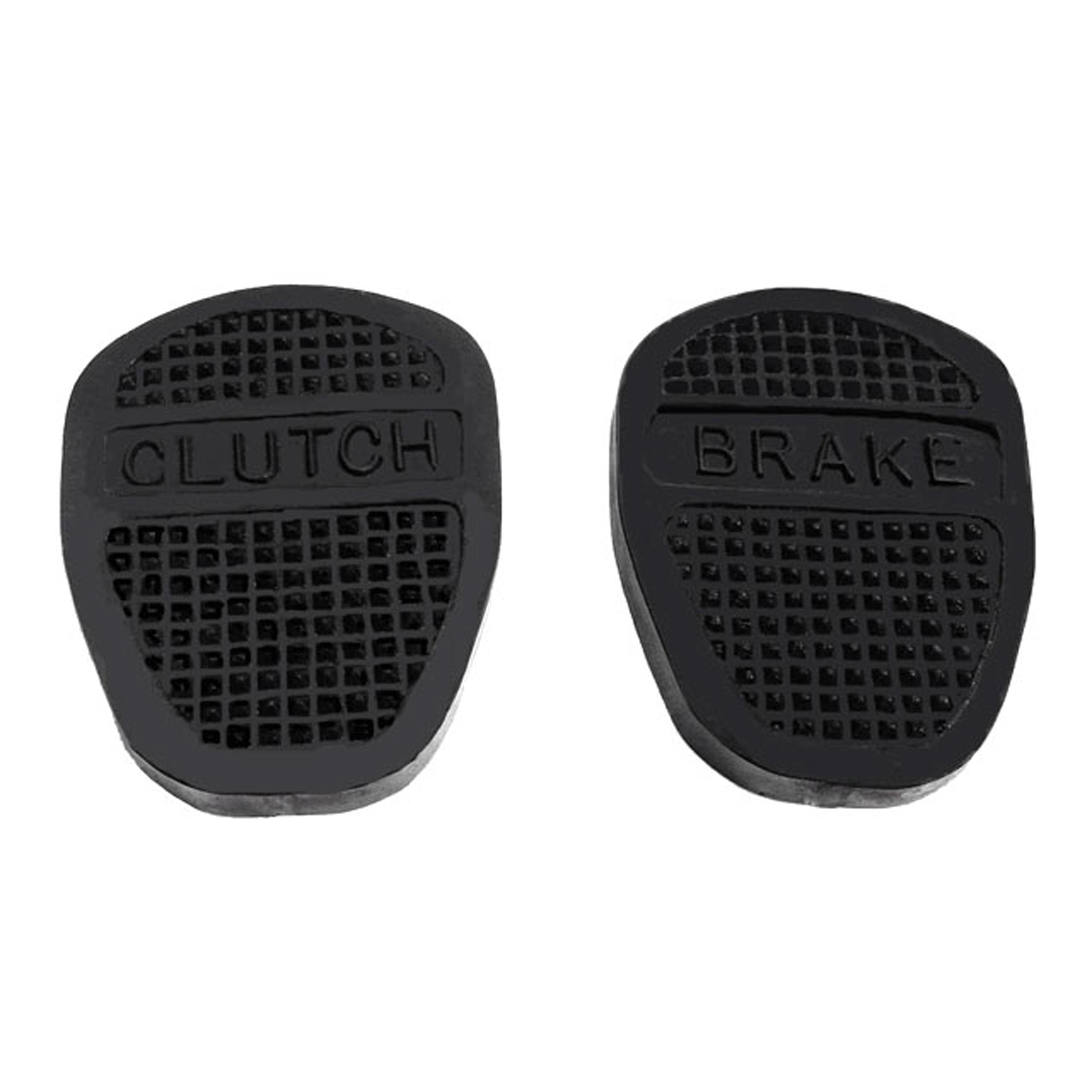 1917 Reo Model M Clutch and Brake Pedal Pads. Lettered "CLUTCH" and "BRAKE"-CB 38Clutch and Brake Pedal Pads. Lettered "CLUTCH" and "BRAKE". 3-1/4" wide X 4-3/8" long. Pair
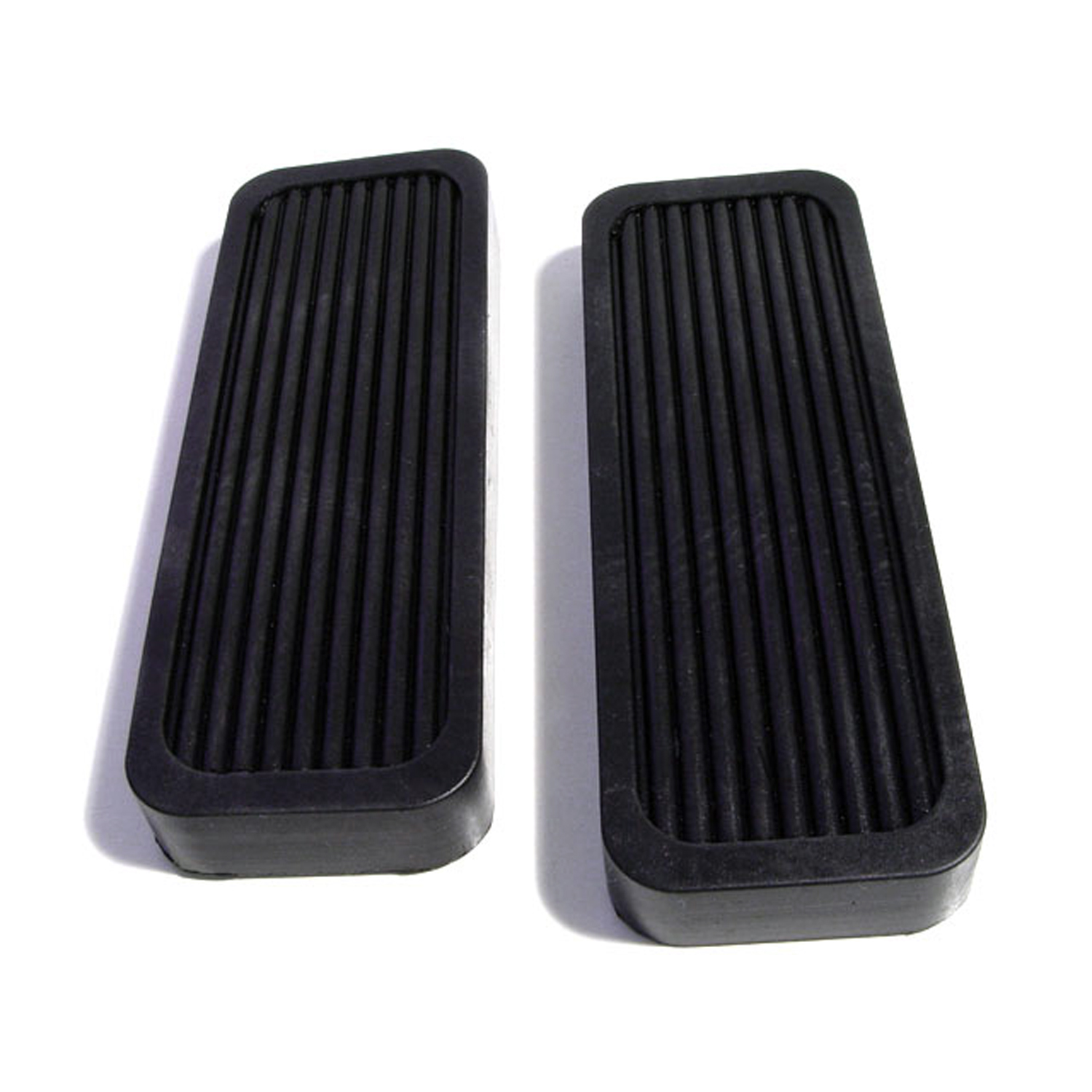 1917 Reo Model M Clutch and Brake Pedal Pads. 1-5/8" wide X 4-1/4" long-CB 39Clutch and Brake Pedal Pads. 1-5/8" wide X 4-1/4" long. Pair
Why Choose Metro?
For over 100 years, Metro Moulded Parts has been the pinnacle of quality in classic car restoration parts. Our commitment to precision and authenticity in every component ensures a perfect fit and an OEM-level appearance.
- Expert Craftsmanship & Quality: Each part is a testament to our dedication to reliability and perfection, crafted from original designs and thoroughly tested.
- Advanced Technology: We use cutting-edge techniques to create flawless, long-lasting parts that surpass others in performance.
- SuperSoft Sponge – The Ultimate Door Seal: Not only are our door seals 30% softer than competitors', but they're also guaranteed to never leak. They effectively reduce wind and road noise, enhancing your classic car's comfort and driving experience.
- Proudly American: Our parts are a product of American craftsmanship, made in the USA with a spirit of excellence and heritage.
- Unrivaled Warranty: We back our products with a 30-year industry-leading warranty, a testament to our confidence in their quality.
Join us in preserving the legacy of classic cars with parts that are crafted for perfection, not just made.