

Image of 1917 Reo The Fifth, Note: These illustrations use artistic license and may differ from actual historical models.
Performance Metrics
Fundamental Metrics
Emotional Appeal
MMP Rating
| Engine Specifications | |
|---|---|
| Engine Options: | Single engine option |
| Displacement Range: | 3.7L |
| Horsepower Range: | Estimated 35-40 HP |
| Torque: | Not available |
| Compression Ratio: | Not available |
| Ignition System: | Magneto ignition system |
| Cooling System: | Water-cooled |
| Performance Specifications | |
| 0-60 Time: | Not available |
| 1/4 Mile Time: | Not available |
| Top Speed: | 50-55 mph |
| Transmission and Drive | |
| Drive Type: | Rear-wheel drive |
| Transmission Type: | 3-speed manual |
| Fuel and Efficiency | |
| Fuel System Type: | Carburetor |
| MPG: | Not available |
| Dimensions and Brakes | |
| Brakes: | Mechanical drum brakes |
| Wheelbase: | 112 inches |
| Weight: | Estimated 2,800 lbs |
Note: Specifications for classic cars are given to the best of our ability, considering the limited and variant data available.
1917 REO The Fifth: A Practical Pioneer of the American Road
The 1917 REO The Fifth was built for motorists who wanted room for the family, dependable mechanicals, and the freedom to travel beyond the city limits. It came from the REO Motor Car Company of Lansing, Michigan, founded by automotive pioneer Ransom E. Olds after he left the company that bore his name. The car’s straightforward engineering and useful five-passenger layout made it a distinctly practical choice in an era when motoring still demanded patience, mechanical sympathy, and a good deal of optimism.
“The Fifth” was REO’s name for a five-passenger car, not a reference to a numbered generation. That simple name captured its purpose: a usable automobile for ordinary owners, rather than an elaborate luxury machine. A notable part of its story is its timing. The 1917 model appeared as the United States entered World War I, when industry and transportation were beginning to shift toward wartime needs. The Fifth therefore belongs to the final years of the early open-car era, just before enclosed bodies and mass motorization became increasingly familiar.
Touring-Car Style and Useful Details
The Fifth’s appearance was typical of a capable American touring car of the late 1910s. Its long hood and upright radiator gave it a purposeful profile, while exposed lamps, tall wheels, running boards, and slim fenders emphasized its mechanical character. The open body made the car look airy and sociable, but it also left occupants exposed to dust, rain, and cold. A folding top and side curtains offered some protection, though neither matched the comfort of a modern enclosed cabin.
Inside, the layout was direct and functional. The driver faced a simple instrument panel with the essential gauges and controls, while the broad seating accommodated a family or group of passengers. Materials varied with the body and trim ordered. Leather or leather-like upholstery was common on open cars of the period, with painted metal, wood trim, and durable fittings taking precedence over luxury finishes. Surviving cars may have been retrimmed or repainted, so present-day interiors do not always reflect the original specification.
Paint choices also depended on the particular body and year. Black and other dark, subdued shades were common in the period, while dark blues, greens, or maroons are plausible choices seen across contemporary cars. Exact factory color availability for an individual 1917 Fifth should be verified against original literature or reliable documentation. Touring-car bodies were the best-known form of the model, with roadster-style configurations also associated with REO’s contemporary range. Buyers should check the exact body style and factory identity of any car described as a Fifth, since model naming and surviving-car descriptions can vary.
By modern standards, the equipment was basic, but the engineering was well suited to its time. The car used a gasoline four-cylinder engine, a manual transmission, mechanical controls, and a conventional chassis. The driver had to manage the clutch and gear changes without modern conveniences such as synchronized gears, power assistance, or electronic systems. These were not shortcomings unique to REO; they were part of the everyday driving experience in 1917.
Where the Fifth Fit in Automotive History
The REO The Fifth was not a revolutionary design that transformed the industry. Its importance lies instead in how it represented the fast-maturing American automobile: a practical, multi-passenger machine offered by a company with serious manufacturing experience. REO competed in a crowded market that included the much cheaper Ford Model T and a wide range of other independent makes. The Fifth offered buyers an alternative built around passenger capacity and a more substantial road-car feel.
REO’s founder, Ransom E. Olds, had already helped shape early automobile manufacturing. His experience gave the company a strong engineering and production background, even as the market grew more competitive. The Fifth’s lasting significance is therefore tied to REO’s place in the broader story of American motoring: a respected independent automaker serving drivers who wanted something beyond the very simplest car, without moving into the cost of a high-end luxury model.
Engine, Speed, and Road Manners
Published specifications for 1917 REO cars commonly describe a four-cylinder engine rated at about 35 horsepower. Displacement is often reported at roughly 268 cubic inches, though specifications can differ by source and by the exact model or configuration. A three-speed manual transmission was typical. These figures should be treated as period specifications rather than modern dynamometer measurements, and an individual car’s performance depends heavily on its mechanical condition, gearing, body, and load.
A healthy Fifth was built for steady travel, not rapid acceleration. A realistic top-speed estimate is around 45 to 50 mph in suitable condition, with some variation between cars. A reliable factory 0-to-60-mph figure is not readily available, and 60 mph would not be a sensible expectation for an ordinary touring car of this age. In normal use, acceleration was leisurely, particularly with a full complement of passengers or on a hill.
On a rough road, the car’s tall tires and traditional leaf-spring suspension could absorb some irregularities, but the ride would still be busy by modern standards. The driver had to watch for ruts, loose surfaces, and changes in road camber. On winding roads, the high seating position and narrow tires called for measured steering inputs and modest cornering speeds. Crosswinds could buffet the open body, while rain and dust made the folding top and side curtains valuable equipment.
The driving experience is wonderfully mechanical. The four-cylinder engine produces a steady, deliberate beat, accompanied by the sounds of the transmission, tires, and chassis working over the road. The driver coordinates the clutch, throttle, and gear lever directly, without modern assistance to smooth out mistakes. A well-maintained example feels purposeful and engaging, but it rewards anticipation rather than speed.
Living With a 1917 REO
Today, The Fifth is most at home as a touring, parade, museum, or show car. Some owners take veteran and brass-era automobiles on organized road tours, where moderate speeds and carefully planned routes suit the car far better than modern highway traffic. It is not a sensible daily driver by contemporary standards: lighting, braking, weather protection, and crash protection are all limited compared with modern vehicles.
Maintenance is manageable for an owner comfortable with vintage machinery, but it is not maintenance-free. The car needs regular lubrication, careful attention to ignition and fuel systems, and periodic inspection of the brakes, steering, tires, and wheel bearings. Mechanical parts may be serviceable or reproducible, but model-specific body components, trim, and correct fittings can take time to locate. Repair is often straightforward in principle, though sourcing the right part and preserving originality can be the harder job.
Reliability depends less on the REO name than on the car’s current condition. A properly restored and regularly exercised example can be dependable on planned outings. An old car that has sat for years may require extensive work before it is safe to drive. Buyers should look beyond fresh paint and inspect the chassis, wood structure where applicable, engine, transmission, cooling system, and brakes.
REO Fifth Facts and Common Myths
The Fifth’s most appealing bit of trivia is its plainspoken name: it announced the car’s five-passenger purpose right in the model title. REO itself came from Ransom E. Olds’s initials, and the company’s Lansing roots remained central to its identity. The firm would later become especially well known for trucks, adding another chapter to a long automotive history.
No widely recognized speed or endurance record is specifically associated with the 1917 Fifth, and claims of celebrity ownership or a famous historical appearance should be supported by documentation. Its historical interest is more everyday than theatrical: it represents the kind of car that helped make family motoring a practical ambition for Americans in the years before widespread paved roads and enclosed automobiles.
Common criticisms are familiar to anyone considering a car from this period. The Fifth is slow by modern standards, requires hands-on operation, offers limited weather protection, and can be challenging to use in dense traffic. Parts availability and specialist repair costs can also frustrate owners. Those limitations are real, but they are part of the context: the car was designed for a very different road network and a very different idea of comfortable travel.
Collector Value and Availability
There is no dependable, widely published production total for the 1917 REO The Fifth alone. A reasonable working estimate is that production across the model’s run reached several thousand, possibly into the low tens of thousands, but that should be treated as an estimate rather than a confirmed factory figure. The number of surviving, correctly identified examples is much smaller, and the market can be quiet because these cars are not encountered as often as Model Ts or more famous luxury marques.
As a broad current-market estimate, a project car may fall around $5,000 to $15,000, while a usable but imperfect example might bring roughly $15,000 to $30,000. A well-restored, complete touring car could be in the $30,000 to $50,000 range or more, depending on originality, restoration quality, provenance, and the strength of the market at the time of sale. These are guide ranges, not a formal appraisal; unusual body styles or documented history can move a car outside them.
Values for early cars tend to be selective rather than uniformly rising. Exceptional restorations and rare, well-documented examples can hold interest, while ordinary cars may appreciate slowly or remain steady after accounting for restoration costs. For a buyer, the best value is usually a complete, mechanically sound car with credible history, rather than the cheapest project or the shiniest restoration.
Why the 1917 REO Still Matters
The 1917 REO The Fifth combined an open, five-passenger touring layout with straightforward engineering from a manufacturer founded by one of America’s earliest automotive pioneers. It was not the fastest or most technically radical car of its day, but it offered practical motoring at a moment when the automobile was becoming part of everyday life. More than a century later, its appeal is the directness of the experience: an honest machine that asks its driver to participate in every mile.
1917 Reo The Fifth Catalog of Parts
 1917 Reo The Fifth Accessory Floor Mat - 12"X17"-AC 36Accessory Floor Mat - made of high quality black rubber with molded original emblem. Also designed to be sewn into new carpets. 12"X17", Each
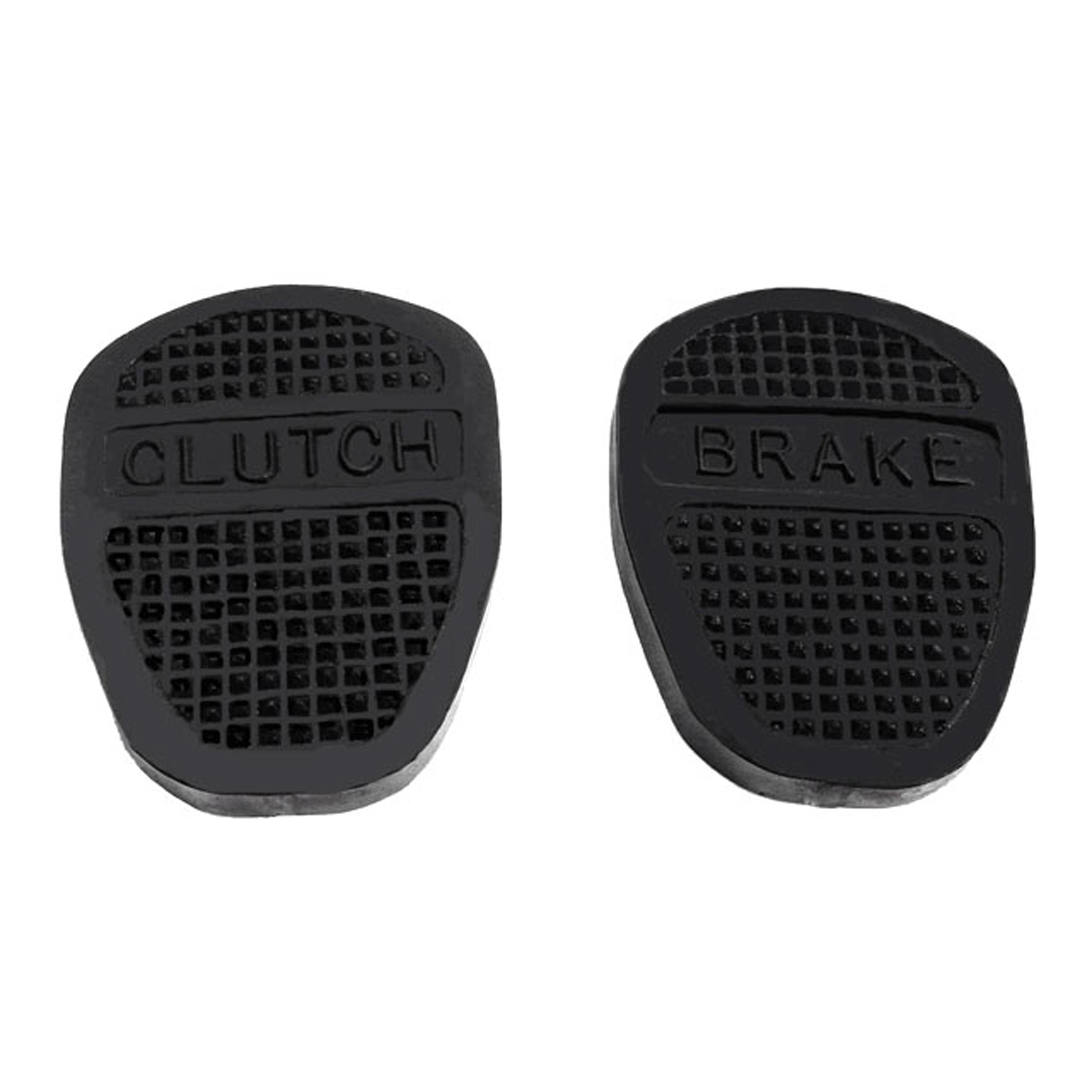 1917 Reo The Fifth Clutch and Brake Pedal Pads. Lettered "CLUTCH" and "BRAKE"-CB 38Clutch and Brake Pedal Pads. Lettered "CLUTCH" and "BRAKE". 3-1/4" wide X 4-3/8" long. Pair
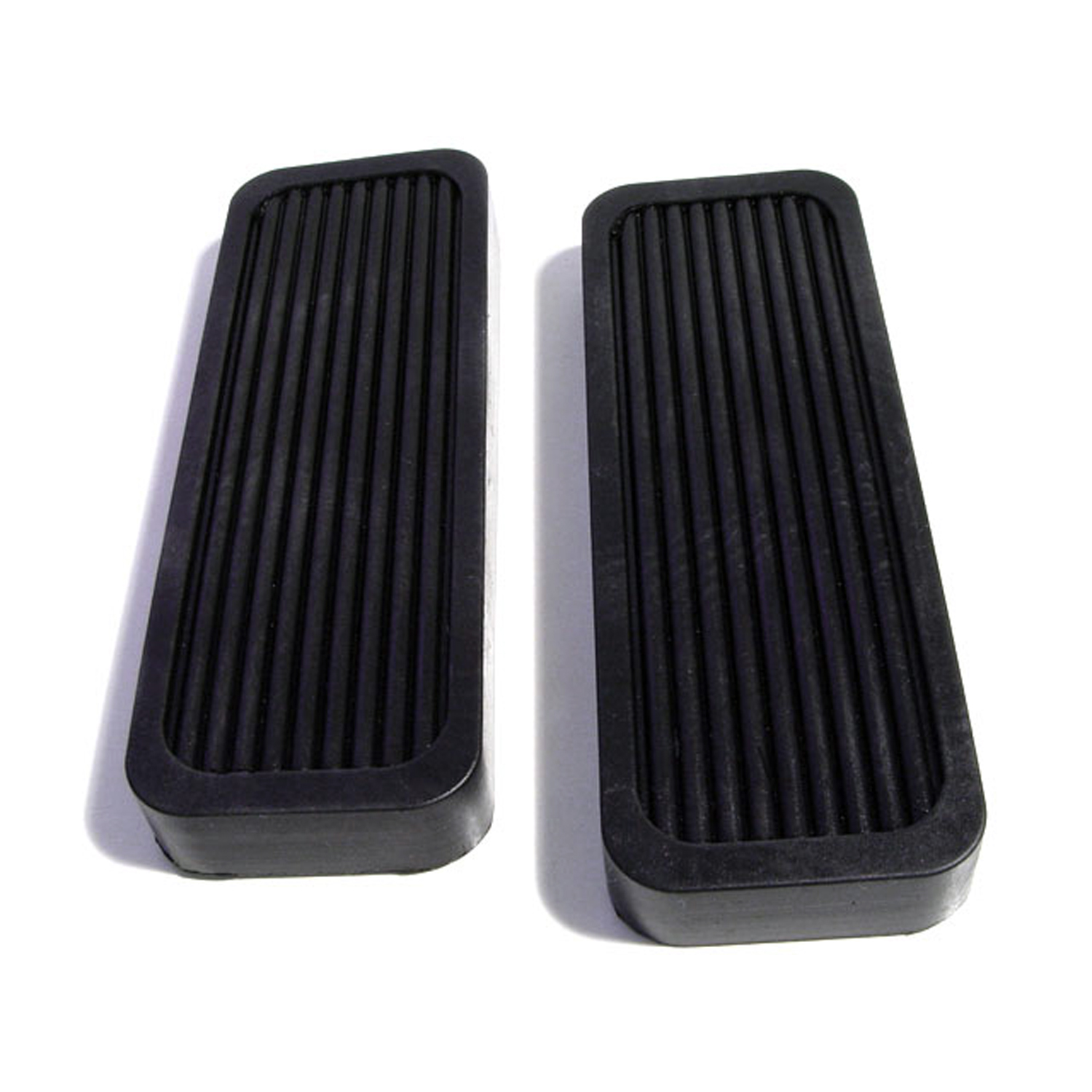 1917 Reo The Fifth Clutch and Brake Pedal Pads. 1-5/8" wide X 4-1/4" long-CB 39Clutch and Brake Pedal Pads. 1-5/8" wide X 4-1/4" long. Pair
Why Choose Metro?
For over 100 years, Metro Moulded Parts has been the pinnacle of quality in classic car restoration parts. Our commitment to precision and authenticity in every component ensures a perfect fit and an OEM-level appearance.
- Expert Craftsmanship & Quality: Each part is a testament to our dedication to reliability and perfection, crafted from original designs and thoroughly tested.
- Advanced Technology: We use cutting-edge techniques to create flawless, long-lasting parts that surpass others in performance.
- SuperSoft Sponge – The Ultimate Door Seal: Not only are our door seals 30% softer than competitors', but they're also guaranteed to never leak. They effectively reduce wind and road noise, enhancing your classic car's comfort and driving experience.
- Proudly American: Our parts are a product of American craftsmanship, made in the USA with a spirit of excellence and heritage.
- Unrivaled Warranty: We back our products with a 30-year industry-leading warranty, a testament to our confidence in their quality.
Join us in preserving the legacy of classic cars with parts that are crafted for perfection, not just made.