
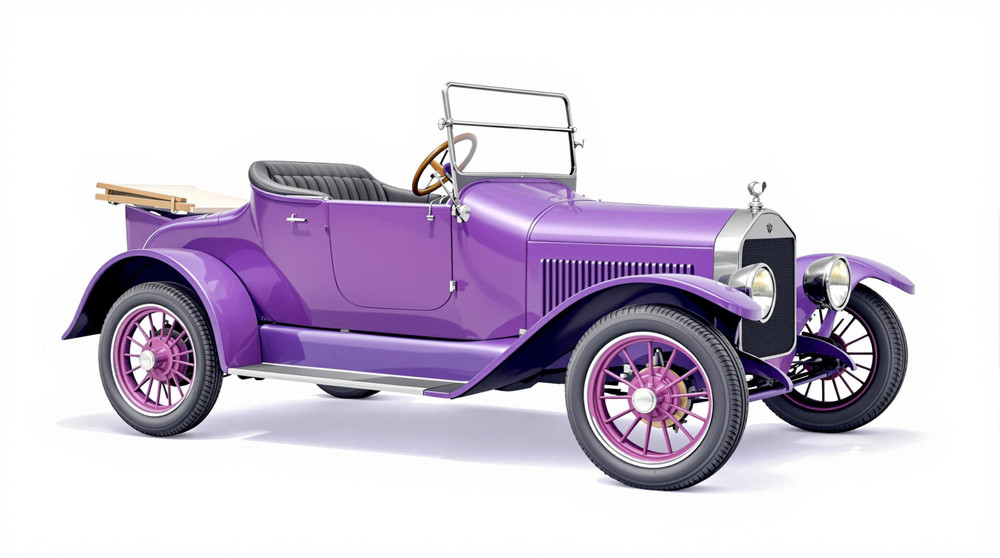
Image of 1922 Reo Model T-6, Note: These illustrations use artistic license and may differ from actual historical models.
Performance Metrics
Fundamental Metrics
Emotional Appeal
MMP Rating
| Engine Specifications | |
|---|---|
| Engine: | Single engine option |
| Displacement: | 3.7L |
| Horsepower: | Estimated 26-30 HP |
| Torque: | Not available |
| Compression Ratio: | Not available |
| Ignition System: | Magneto ignition system |
| Cooling System: | Water-cooled |
| Performance Specifications | |
| 0-60 Time: | Not available |
| 1/4 Mile Time: | Not available |
| Top Speed: | 45 mph |
| Transmission and Drive | |
| Drive Type: | Rear-wheel drive |
| Transmission Type: | 3-speed manual |
| Fuel and Efficiency | |
| Fuel System Type: | Carburetor |
| MPG: | Not available |
| Dimensions and Brakes | |
| Brakes: | Mechanical drum brakes |
| Wheelbase: | 112 inches |
| Weight: | Estimated 2,400 lbs |
Note: Specifications for classic cars are given to the best of our ability, considering the limited and variant data available.
1922 REO Model T-6: A Six-Cylinder Touring Car from Lansing
The 1922 REO Model T-6 brought a substantial six-cylinder engine and solid engineering to the open-road motoring of the early 1920s. Built by the REO Motor Car Company in Lansing, Michigan, it came from a company founded by Ransom E. Olds, the automotive pioneer behind Oldsmobile. The name REO was formed from Olds’s initials, pronounced “ree-oh.”
The T-6 belongs to the era when carmakers were moving beyond simple, low-cost runabouts and offering buyers more power, comfort, and refinement. Its six-cylinder layout made it a more substantial proposition than the basic four-cylinder cars that filled American roads, while its traditional bodywork and mechanical controls kept it recognizably a product of its time.
One appealing detail is the car’s connection to a major turning point in American motoring: it was designed for roads that could still be rough, unpaved, and demanding. A dependable touring car was not merely a pleasure vehicle. For many owners, it was a practical way to travel between towns and communities without relying on rail schedules.
Classic REO Styling and Coachwork
The T-6 wears the upright proportions typical of an early-1920s automobile. Its tall radiator, long hood, separate fenders, exposed lamps, and running boards give it a formal, purposeful profile. The hood stretches ahead of the passenger compartment to accommodate the six-cylinder engine, while large, narrow wheels and high ground clearance suit the uneven roads of the period. On open models, a folded fabric top sits behind the passenger area, ready to be raised when the weather turns.
Interior appointments depended on the body style and equipment, but the emphasis was on practical, durable materials rather than modern conveniences. Open cars generally used leather or leatherette upholstery, with exposed painted metal and wood or metal trim. Closed bodies offered more protection from weather and typically added upholstered door panels and a more enclosed cabin. Compared with today’s interiors, the controls are simple and conspicuous: a large steering wheel, prominent instruments, and levers or pedals that demand the driver’s attention.
REO’s offerings varied by model year and coachwork, but open touring and roadster bodies were among the characteristic choices, alongside more enclosed coupe and sedan forms. The touring car is especially evocative of the T-6: it made room for several passengers and luggage, and its open cabin suited long summer drives. Period colors could vary with body and customer order. Dark shades such as black, blue, maroon, and green were common choices across cars of the era, though the exact factory palette for an individual T-6 should be confirmed from period documentation or surviving paint evidence.
Engineering for the Open Road
The T-6’s defining feature was its six-cylinder engine. Published descriptions commonly associate the model with a roughly 358-cubic-inch, side-valve six rated at about 50 horsepower. Period horsepower ratings do not translate neatly to modern figures, but the larger engine gave the REO the kind of steady, low-speed pulling power that mattered on hilly routes and rough roads.
Power went to the rear wheels through a manual transmission and conventional driveshaft. The car also used a sturdy ladder-type chassis, solid axles, and leaf springs, a familiar arrangement that could be maintained by mechanics accustomed to early automobiles. Electric starting and lighting were important conveniences by this time, although the T-6 remained a hands-on machine, with far fewer driver aids than a later car.
Braking and steering were likewise period technology. Owners should not expect modern stopping distances, power assistance, or the reassurance of contemporary safety equipment. The driver had to anticipate traffic, manage speed carefully, and use the mechanical controls with deliberation.
Why the REO T-6 Mattered
The T-6 was part of REO’s effort to compete in a rapidly expanding market with cars that offered more than basic transportation. Its six-cylinder engine gave buyers a smoother, more substantial alternative to many entry-level four-cylinder models. That did not make it a luxury car in the modern sense, but it placed the T-6 in a class of well-equipped, capable automobiles intended for owners who valued power and road-going comfort.
Its significance also comes from the company behind it. Ransom Olds helped shape the early American auto industry through his work at Oldsmobile and REO. REO developed a reputation for engineering and commercial vehicles as well as passenger cars, and its later trucks and buses became a major part of its legacy. The T-6 reflects the company’s passenger-car ambitions during a period when the industry was becoming more competitive and increasingly standardized.
The model did not introduce a single invention that transformed the entire industry. Its importance is better understood as part of the steady evolution toward more powerful, dependable cars capable of longer journeys. It represents a middle ground between the pioneering cars of the 1900s and the more comfortable, mass-produced vehicles that would define later decades.
Speed, Ride, and Driving Character
A well-maintained T-6 may be capable of roughly 50 to 60 mph, depending on gearing, body style, mechanical condition, and road surface. That is a period-appropriate estimate rather than a guaranteed factory figure. A reliable, comparable factory 0-to-60-mph time is not generally available, and acceleration testing was not standardized as it is today. Given the car’s weight, gearing, and modest power by modern standards, reaching 60 mph would take a long, measured run rather than a quick burst.
On a smooth road, the REO’s long chassis and leaf-spring suspension should provide a steady, deliberate ride. On rutted or unpaved surfaces, the solid axles and narrow tires transmit more movement into the cabin, and the driver must choose a sensible pace. A tall, open touring body can also feel vulnerable in crosswinds, while tight turns call for planning and a firm hand on the large steering wheel.
The sound is part of the appeal: a steady mechanical beat from the six, accompanied by the whir of the transmission and the clatter of road noise through an open body. Driving involves active coordination, careful shifting, and anticipation. It is less about effortless speed than about settling into the car’s rhythm and taking in the landscape at a pace its brakes and suspension can manage.
Owning and Maintaining a 1922 REO
Today, a T-6 is best suited to touring events, vintage-car gatherings, local parades, and careful weekend drives. It can be restored to show condition, but its age and limited safety equipment make it a poor choice for routine modern commuting. Long-distance use is possible for a properly sorted example, provided the route and speed are planned around the car’s capabilities.
Many repairs are mechanically straightforward for an experienced vintage-car owner. The engine, transmission, ignition, and chassis use understandable mechanical systems, and a good service manual is invaluable. The bigger challenge is often sourcing correct parts, finding a specialist familiar with early REO components, and preserving or reproducing bodywork and trim. Before buying, pay particular attention to engine condition, cooling, gearbox operation, steering and suspension wear, brake adjustment, and the availability of model-specific parts.
Reliability depends heavily on maintenance and restoration quality. A sound T-6 can be dependable on suitable roads, but age-related issues such as worn bearings, deteriorated wiring, fuel-system trouble, and tired wood or body structure should not be underestimated. Regular lubrication and careful pre-drive inspections are part of ownership, not optional extras.
REO T-6 Facts and Common Questions
The T-6 is not especially associated with a famous speed record or a widely documented celebrity owner. Its stronger claim to interest is its place in the broader history of REO and early American touring. Specific historical appearances should be tied to a documented individual car rather than assumed for the model as a whole.
There is no dependable, widely cited production total for the 1922 T-6 alone. A reasonable estimate is that several thousand examples were built across the model’s production period, but that should be treated as an informed approximation, not a confirmed factory figure. Surviving cars are scarce compared with mass-market Fords, and availability depends on whether an example is running, complete, or already restored.
A common criticism of early touring cars is that their open cabins, limited weather protection, and demanding controls can make them tiring to use. The T-6 also lacks modern braking, safety, and comfort features. Those limitations are real, but they are part of what makes the car an engaging historical experience rather than a modern vehicle in vintage clothing.
Collector Values and Availability
Values vary sharply with body style, originality, mechanical condition, and the quality of any restoration. As a broad current-market estimate, a project or incomplete car might fall around $8,000 to $20,000, while a usable driver could bring roughly $20,000 to $40,000. A well-restored, attractive example may reach approximately $35,000 to $70,000 or more, especially if it has desirable coachwork, strong documentation, and a high-quality restoration. These are general guide ranges, not a formal appraisal, and a rare or exceptional car can fall outside them.
The market for early touring cars is specialized. Values tend to reward condition and provenance more than simple age, and restoration costs can exceed the eventual sale price. Over time, the best-preserved and most accurately restored examples may appreciate, but the broader market is not guaranteed to rise steadily. Buyers should compare recent sales of similar REOs and budget realistically for transport, storage, maintenance, and parts.
A Six-Cylinder Snapshot of REO History
The 1922 REO Model T-6 combines a substantial six-cylinder engine, classic touring-car proportions, and the legacy of one of America’s early automotive pioneers. It was built for a world of rough roads and long journeys, and it asks its driver to participate in the experience rather than simply operate it.
That is the T-6’s lasting charm: it is both a piece of REO history and a reminder that early motoring rewarded mechanical sympathy, patience, and a sense of adventure.
1922 Reo Model T-6 Catalog of Parts
 1922 Reo Model T-6 Accessory Floor Mat - 12"X17"-AC 36Accessory Floor Mat - made of high quality black rubber with molded original emblem. Also designed to be sewn into new carpets. 12"X17", Each
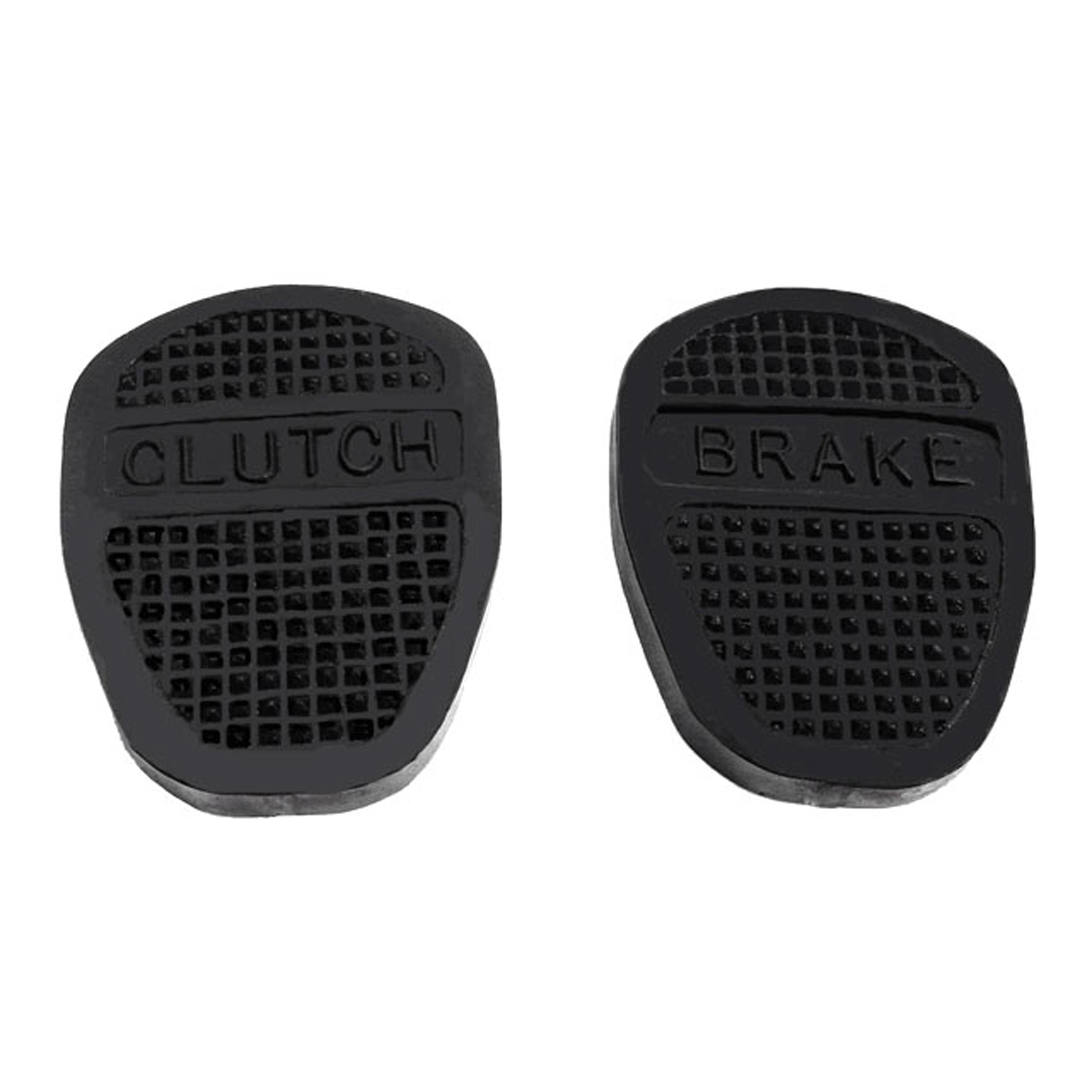 1922 Reo Model T-6 Clutch and Brake Pedal Pads. Lettered "CLUTCH" and "BRAKE"-CB 38Clutch and Brake Pedal Pads. Lettered "CLUTCH" and "BRAKE". 3-1/4" wide X 4-3/8" long. Pair
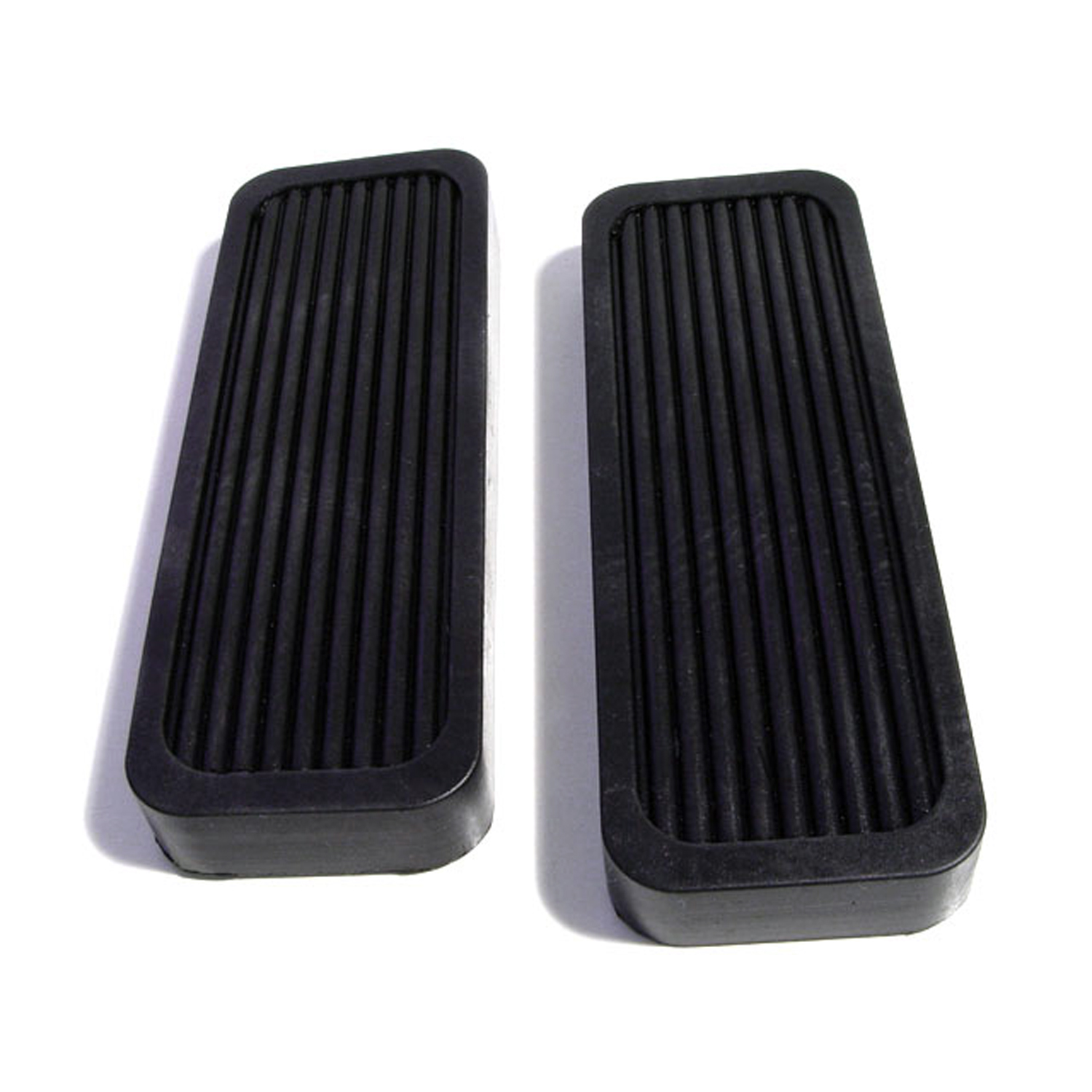 1922 Reo Model T-6 Clutch and Brake Pedal Pads. 1-5/8" wide X 4-1/4" long-CB 39Clutch and Brake Pedal Pads. 1-5/8" wide X 4-1/4" long. Pair
Why Choose Metro?
For over 100 years, Metro Moulded Parts has been the pinnacle of quality in classic car restoration parts. Our commitment to precision and authenticity in every component ensures a perfect fit and an OEM-level appearance.
- Expert Craftsmanship & Quality: Each part is a testament to our dedication to reliability and perfection, crafted from original designs and thoroughly tested.
- Advanced Technology: We use cutting-edge techniques to create flawless, long-lasting parts that surpass others in performance.
- SuperSoft Sponge – The Ultimate Door Seal: Not only are our door seals 30% softer than competitors', but they're also guaranteed to never leak. They effectively reduce wind and road noise, enhancing your classic car's comfort and driving experience.
- Proudly American: Our parts are a product of American craftsmanship, made in the USA with a spirit of excellence and heritage.
- Unrivaled Warranty: We back our products with a 30-year industry-leading warranty, a testament to our confidence in their quality.
Join us in preserving the legacy of classic cars with parts that are crafted for perfection, not just made.