

Image of 1927 Reo Flying Cloud, Note: These illustrations use artistic license and may differ from actual historical models.
Performance Metrics
Fundamental Metrics
Emotional Appeal
MMP Rating
| Engine Specifications | |
|---|---|
| Engine Options: | Inline 6-cylinder engine |
| Displacement Range: | 3.7L |
| Horsepower Range: | Estimated 35-40 HP |
| Torque: | Not available |
| Compression Ratio: | Not available |
| Ignition System: | Distributor and coil |
| Cooling System: | Water-cooled |
| Performance Specifications | |
| 0-60 Time: | Not available |
| 1/4 Mile Time: | Not available |
| Top Speed: | 60 mph |
| Transmission and Drive | |
| Drive Type: | Rear-wheel drive |
| Transmission Type: | 3-speed manual |
| Fuel and Efficiency | |
| Fuel System Type: | Carburetor |
| MPG: | Not available |
| Dimensions and Brakes | |
| Brakes: | Mechanical drum brakes |
| Wheelbase: | 112 inches |
| Weight: | Estimated 2,800 lbs |
Note: Specifications for classic cars are given to the best of our ability, considering the limited and variant data available.
1927 REO Flying Cloud: A Six-Cylinder Classic With a Name to Match
The 1927 REO Flying Cloud brought a touch of speed and optimism to the open roads of the Jazz Age, pairing a substantial six-cylinder engine with the careful, practical engineering for which REO was known. Built by the REO Motor Car Company of Lansing, Michigan, it came from the workshop of Ransom Eli Olds, the automotive pioneer who had earlier founded Oldsmobile. The initials REO were Olds’s own.
The Flying Cloud arrived as American buyers increasingly wanted cars that felt more comfortable and capable than the basic runabouts of the previous decade. Its name had a distinctly modern ring, but its appeal was grounded in real motoring virtues: a smooth engine, a roomy cabin, and enough road presence to feel like a substantial step up from an entry-level car. One useful point of context for collectors is that REO’s passenger-car production ended in 1936, while the company’s better-known Speed Wagon trucks continued to build the marque’s reputation in commercial transport.
Art Deco-Era Road Presence
The 1927 Flying Cloud has the upright, confident proportions typical of a late-1920s automobile. A tall radiator shell and straight, prominent hood lead the eye toward the cowl, while separate fenders frame the wheels rather than blending into the body as they would on later cars. Large headlamps, running boards, and a rear-mounted spare on some configurations add to its formal, almost ceremonial stance. It looks designed for the road ahead, not for hiding in a garage.
Body styles varied by model and market. Buyers could choose from closed bodies such as coupes and sedans, as well as more open touring or roadster-style cars. The four-door sedan is perhaps the most familiar practical expression of the Flying Cloud, while an open roadster or touring model makes the most vivid display at a show. Exact combinations depended on the model offering, and surviving cars may have been altered over the decades.
Paint choices were period-specific and could vary by body style and factory offering. Dark blues, greens, maroons, and black suit the car’s formal lines particularly well; some cars also wore contrasting or two-tone treatments. There is no single color that defines every 1927 Flying Cloud, so original paint records and traces of early finish are more useful than assumptions based on a modern restoration.
Cabin Craft and Period Equipment
Inside, the Flying Cloud offered a more substantial environment than a bare-bones touring car. Depending on body style and specification, upholstery could be cloth or leather, with carpeting, finished wood details, and metal fittings adding a tailored touch. The dashboard was functional rather than decorative by modern standards, with the instruments and controls arranged for the driver. On an open car, the cabin’s character changed with the weather: a folded top and side curtains offered some protection, but they could not match the comfort of a closed sedan.
Electric starting and lighting were important conveniences in this period, helping make a large car easier to use than the hand-cranked machines many motorists remembered. The Flying Cloud also used a conventional manual gearbox, giving the driver direct control over gear selection. These were not exotic technologies, but they made the car more approachable for everyday motoring in the late 1920s.
Engineering and Historical Significance
Commonly cited specifications for the 1927 Flying Cloud describe a 268-cubic-inch inline six-cylinder engine producing about 60 horsepower. It was a side-valve, or L-head, design, a straightforward layout valued for durability and ease of service. Power went to the rear wheels through a manual transmission, generally a three-speed unit. Individual cars can differ by model and equipment, so restoration work should be guided by the vehicle’s serial number, original literature, and surviving components.
The Flying Cloud was not a revolutionary design that introduced a landmark new system. Its significance lies more in how it brought the qualities buyers wanted together: six-cylinder smoothness, substantial construction, and a range of bodies suited to different budgets and uses. REO’s reputation was built on engineering and manufacturing experience, and the Flying Cloud carried that identity into a changing market increasingly dominated by high-volume competitors.
That context makes the car an interesting alternative to better-known contemporaries. A Ford Model T was cheaper and far more numerous, while larger luxury marques could offer more prestige at a much higher price. The Flying Cloud occupied a middle ground, giving motorists a sizeable, refined car without the status or expense of a top-tier luxury automobile. Its influence was not a single design feature copied across the industry; it was part of the broader shift toward comfortable, capable six-cylinder cars for ordinary travel.
Road Manners and Performance
With roughly 60 horsepower, a 1927 Flying Cloud was capable of useful open-road speeds for its day. A well-maintained example might reach approximately 60 to 65 mph, although condition, body style, gearing, tires, and road surface all matter. Period cars were not routinely tested using today’s standardized 0-to-60 method. As a practical estimate, acceleration to 60 mph could take roughly 25 to 35 seconds, and some cars may struggle to reach that speed comfortably. It is best understood as a cruising car, not a quick modern traffic machine.
The driving experience is hands-on. The driver works a manual gearshift, monitors the instruments, and allows the engine to build speed rather than expecting instant response. The six-cylinder motor should sound more measured than a four-cylinder of the era, with a steady mechanical note that becomes more pronounced under load. Steering and braking demand more anticipation than in a modern car, and a driver needs to leave generous stopping distance.
On bumps, the chassis and period suspension deliver a soft, rolling ride rather than the controlled composure of a contemporary vehicle. On winding roads, the tall body, narrow tires, and older steering geometry reward smooth inputs and moderate speeds. Four-wheel brakes were part of the period’s move toward safer stopping, but the system is mechanical rather than modern power-assisted braking. A well-adjusted car can be enjoyable on back roads and in parades, but it needs room and a thoughtful driver.
Living With a Flying Cloud
Today, most 1927 Flying Clouds are used as show cars, touring vehicles, or occasional weekend drivers. They are not ideal daily transportation in modern traffic, where speed differentials, limited visibility, and the absence of modern safety equipment can make routine commuting stressful. A carefully maintained car can still take part in club tours and local events, especially on routes that avoid high-speed highways.
The basic mechanical layout is understandable to an experienced vintage-car owner. The engine and chassis were designed before complex electronics, so diagnosis is mostly mechanical. That does not mean every repair is simple: parts may require specialist suppliers, careful rebuilding, or fabrication, and worn brakes, steering components, cooling systems, and wiring deserve close attention. For an average owner, routine servicing is manageable with research and patience, but a major restoration is best approached with help from a marque specialist.
Reliability depends heavily on the quality of the restoration and ongoing maintenance. Age-related issues such as dry seals, deteriorated hoses, tired electrical insulation, and old tires can turn a promising car into an unreliable one. Before a long tour, owners should check the cooling system, brakes, wheel bearings, lubrication, and fuel delivery rather than assuming that a polished appearance means the car is road-ready.
Flying Cloud Facts and Myths
REO’s name is a piece of automotive history in itself: it came from Ransom Eli Olds, whose work helped shape the early American car industry. The Flying Cloud name gave the 1927 model a more dramatic identity than a simple number or engine-size label. The company’s wider legacy also includes the REO Speed Wagon, a durable commercial vehicle that later helped inspire the name of the rock band R.E.O. Speedwagon.
There is no widely established, model-specific land-speed record or celebrity story that defines the 1927 Flying Cloud. Its appeal is less about a single famous owner or headline-grabbing race and more about its place in everyday motoring. It represents a period when a well-built six-cylinder car could serve as family transport, business travel, and a source of pride all at once.
Common criticisms are fair but should be judged in context. The car is slow by modern standards, requires more physical attention to drive, and can be challenging to source parts for. Its body-on-frame construction and period cabin also lack the crash protection, weather sealing, and creature comforts that drivers now expect. Those drawbacks are part of the ownership calculation, not surprises to discover after purchase.
Collector Values and Availability
Exact production figures for the 1927 Flying Cloud are not consistently reported as a separate, easily verified total. A reasonable estimate is that production reached the low tens of thousands, perhaps around 10,000 to 20,000 cars, but that should be treated as an informed estimate rather than a confirmed factory figure. The number of surviving examples is far smaller, and condition and body style matter more to a buyer than a speculative production total.
As a broad current-market guide, a project car may fall around $5,000 to $15,000, while a usable driver could bring roughly $15,000 to $35,000. A high-quality restoration or especially desirable open-body example might reach approximately $35,000 to $55,000 or more. These are estimates, not appraisals: originality, completeness, provenance, restoration quality, and local demand can shift the price substantially.
The Flying Cloud occupies a niche collector market, so examples appear less often than mass-produced Fords but are not necessarily impossible to find. Values tend to be condition-sensitive and can move slowly. Well-restored cars with sound documentation remain attractive, while incomplete projects can be difficult to sell because restoration costs may exceed the car’s eventual market value. Rather than describing the model as a guaranteed investment, it is more accurate to call it a distinctive classic whose strongest appeal is the experience of owning and driving it.
Why the 1927 REO Flying Cloud Matters
The 1927 REO Flying Cloud combined six-cylinder power, period comfort, and solid engineering in a car aimed at motorists who wanted more than basic transportation. Its upright styling and hands-on driving character make it unmistakably of its time, while its connection to Ransom Eli Olds gives it a meaningful place in American automotive history. It may not be the fastest or rarest classic on the road, but the Flying Cloud has a quieter distinction: it carries the confidence of a capable 1920s touring car, ready to turn an ordinary drive into a piece of living motoring history.
1927 Reo Flying Cloud Catalog of Parts
 1927 Reo Flying Cloud Accessory Floor Mat - 12"X17"-AC 36Accessory Floor Mat - made of high quality black rubber with molded original emblem. Also designed to be sewn into new carpets. 12"X17", Each
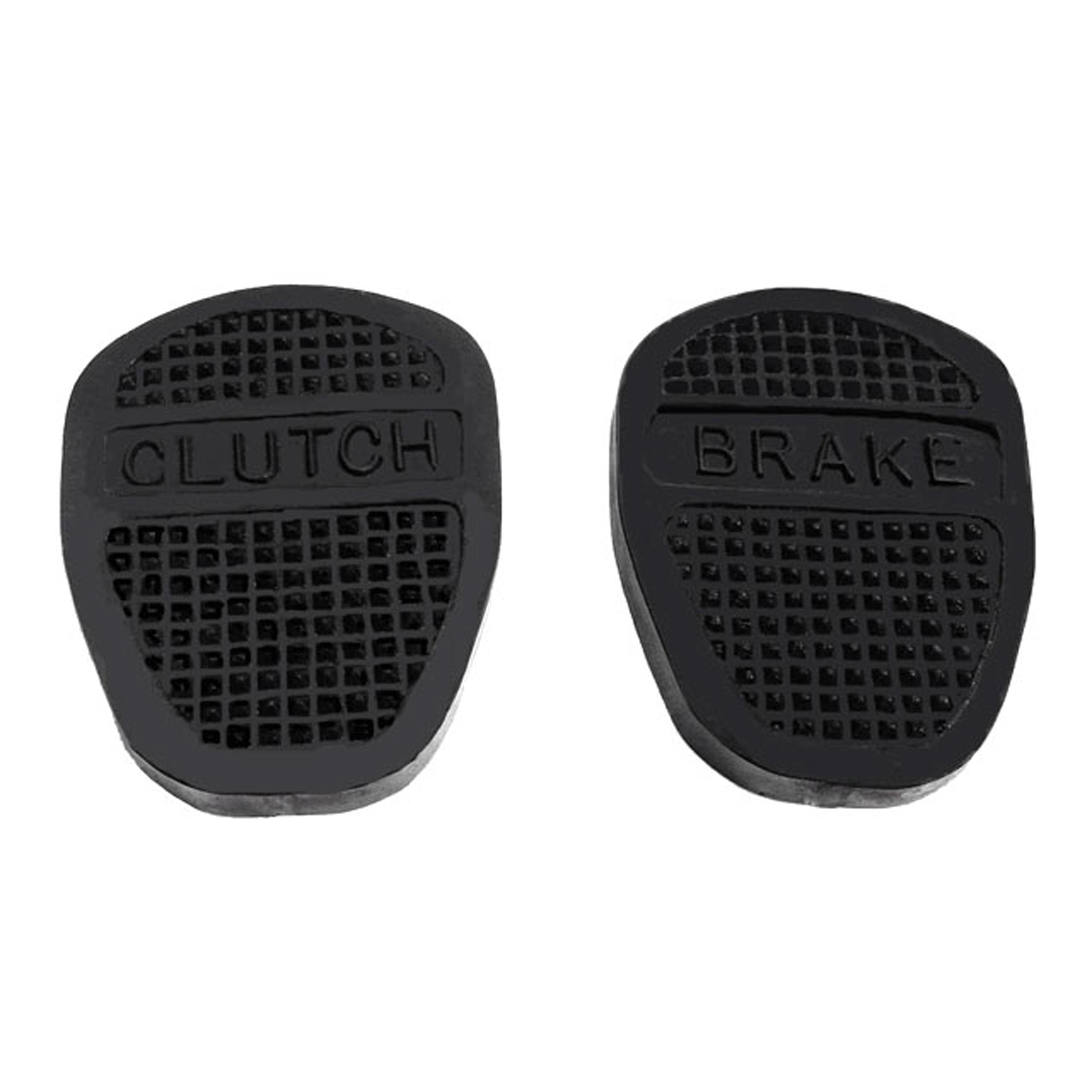 1927 Reo Flying Cloud Clutch and Brake Pedal Pads. Lettered "CLUTCH" and "BRAKE"-CB 38Clutch and Brake Pedal Pads. Lettered "CLUTCH" and "BRAKE". 3-1/4" wide X 4-3/8" long. Pair
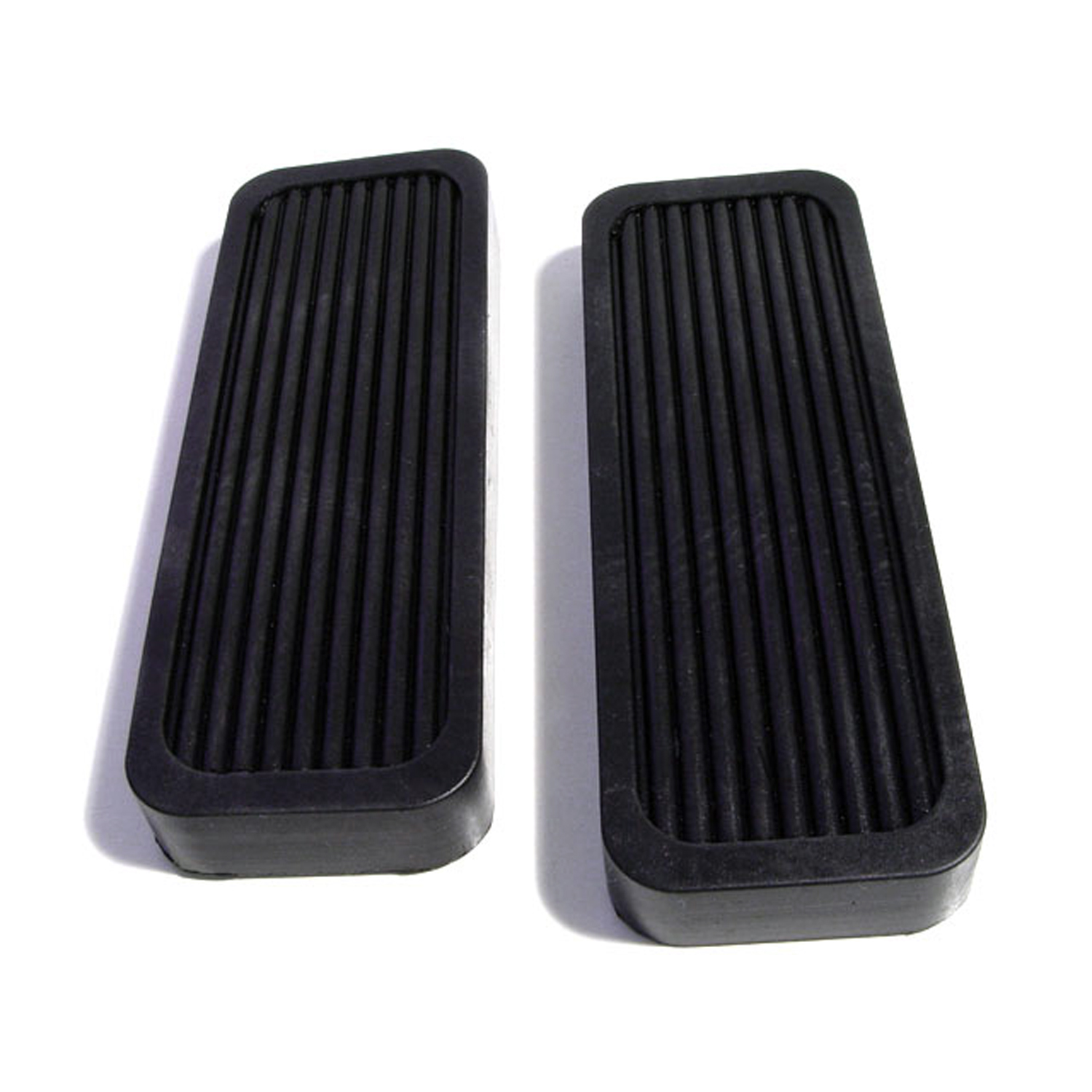 1927 Reo Flying Cloud Clutch and Brake Pedal Pads. 1-5/8" wide X 4-1/4" long-CB 39Clutch and Brake Pedal Pads. 1-5/8" wide X 4-1/4" long. Pair
Why Choose Metro?
For over 100 years, Metro Moulded Parts has been the pinnacle of quality in classic car restoration parts. Our commitment to precision and authenticity in every component ensures a perfect fit and an OEM-level appearance.
- Expert Craftsmanship & Quality: Each part is a testament to our dedication to reliability and perfection, crafted from original designs and thoroughly tested.
- Advanced Technology: We use cutting-edge techniques to create flawless, long-lasting parts that surpass others in performance.
- SuperSoft Sponge – The Ultimate Door Seal: Not only are our door seals 30% softer than competitors', but they're also guaranteed to never leak. They effectively reduce wind and road noise, enhancing your classic car's comfort and driving experience.
- Proudly American: Our parts are a product of American craftsmanship, made in the USA with a spirit of excellence and heritage.
- Unrivaled Warranty: We back our products with a 30-year industry-leading warranty, a testament to our confidence in their quality.
Join us in preserving the legacy of classic cars with parts that are crafted for perfection, not just made.