

Image of 1928 Reo Flying Cloud, Note: These illustrations use artistic license and may differ from actual historical models.
Performance Metrics
Fundamental Metrics
Emotional Appeal
MMP Rating
| Engine Specifications | |
|---|---|
| Engine: | Inline 6-cylinder |
| Displacement: | 268 cubic inches |
| Horsepower: | Estimated 70-75 HP |
| Torque: | Not available |
| Compression Ratio: | Not available |
| Ignition System: | Battery and coil |
| Cooling System: | Water-cooled |
| Performance Specifications | |
| 0-60 Time: | Not available |
| 1/4 Mile Time: | Not available |
| Top Speed: | 60-65 mph |
| Transmission and Drive | |
| Drive Type: | Rear-wheel drive |
| Transmission Type: | 3-speed manual |
| Fuel and Efficiency | |
| Fuel System Type: | Carburetor |
| MPG: | Not available |
| Dimensions and Brakes | |
| Brakes: | Mechanical drum brakes |
| Wheelbase: | 115 inches |
| Weight: | 2,800 lbs |
Note: Specifications for classic cars are given to the best of our ability, considering the limited and variant data available.
1928 REO Flying Cloud: An American Independent with a Need for Speed
The 1928 REO Flying Cloud looked ready to live up to its name, with a long hood, sweeping fenders, and a six-cylinder engine built for brisk road travel. It came from REO Motor Car Company, founded by Ransom E. Olds after he left Oldsmobile. By the late 1920s, REO was an established independent automaker competing for buyers who wanted refinement and performance without stepping up to a luxury marque.
The Flying Cloud arrived in 1927 and became one of REO’s best-known passenger cars. Its name suggested speed and modernity at a time when American roads were improving and more motorists were taking long trips. A bit of family history adds to its appeal: Olds had already helped pioneer the mass-produced automobile with Oldsmobile, and REO carried his engineering and manufacturing ambitions into a new company.
Streamlined Looks, Hand-Finished Comfort
The Flying Cloud had the confident proportions typical of a quality car of its era. A tall radiator and prominent headlamps led into a long bonnet, while separate fenders arched over the wheels. Running boards connected the front and rear fenders, and the upright cabin gave passengers good headroom. It was not streamlined in the modern sense, but its balanced profile and carefully shaped bodywork made it look purposeful rather than merely utilitarian.
Body choices varied with the model and catalog offering. Buyers could find closed cars such as sedans and coupes, along with open styles such as roadsters and phaetons. Exact combinations and trim could differ, but the sedan was a practical, popular choice for families, while open cars showed off the Flying Cloud’s sporting character. The range let REO serve both everyday motorists and buyers seeking a more stylish touring car.
Inside, the experience was more substantial than that of a basic runabout. Closed models typically used durable, well-finished upholstery, with richer materials and trim available according to body style and specification. Open cars commonly featured leather upholstery. The cabin had a broad steering wheel, straightforward instruments, and generous seating by the standards of the period. Buyers could choose from factory paint and trim combinations that changed by year and body; dark blue, green, maroon, and black were among the period-appropriate colors, sometimes paired with contrasting details.
Six-Cylinder Power for the Open Road
The 1928 Flying Cloud was powered by a roughly 268-cubic-inch inline-six with L-head, or side-valve, construction. Period specifications commonly list output at about 60 horsepower. A three-speed manual transmission sent power to the rear wheels. Four-wheel mechanical brakes and a conventional leaf-spring suspension were typical of the era, while the car’s long wheelbase helped make it a comfortable highway tourer.
REO’s six-cylinder engine was a major part of the car’s appeal. Compared with many four-cylinder cars, it delivered smoother, more relaxed power, particularly when carrying passengers or climbing at touring speeds. The Flying Cloud was not a modern sports car, but its combination of six-cylinder performance and substantial chassis made it a capable choice for longer journeys.
What It Was Like to Drive
There is no single dependable factory 0-to-60-mph figure for a 1928 Flying Cloud, and surviving cars vary widely in mechanical condition, gearing, body style, and tire size. As a broad estimate, a healthy example might reach around 60 to 65 mph, with acceleration to 60 mph taking well over 20 seconds and potentially closer to 30 seconds or more. Treat those figures as period-car estimates, not standardized test results.
Behind the wheel, the car asks for more involvement than a modern vehicle. The driver works a non-synchronized manual gearbox, manages mechanical brakes, and steers with a large wheel. The six produces a steady, purposeful exhaust note rather than a sharp sporting bark. Its suspension is designed for the roads of its day, so it can absorb ordinary bumps reasonably well, though its body may lean on winding roads and it lacks the grip and braking confidence of a modern car. On a quiet country road, the reward is a relaxed, hands-on touring experience.
Why the Flying Cloud Matters
The Flying Cloud helped REO compete in the increasingly crowded middle and upper-middle price brackets of the 1920s. Its selling point was a thoughtful combination: six-cylinder smoothness, solid construction, attractive coachwork, and a price below that of many prestige cars. That formula was important in an era when buyers were moving beyond basic transportation and expecting greater comfort and performance.
The model did not introduce a single technology that transformed the entire industry, nor did it outsell the biggest manufacturers. Its significance is more representative: it shows how an independent automaker could offer a refined, well-engineered touring car and build its own identity in a market dominated by larger companies. REO continued producing passenger cars until 1936, while its truck business went on to become the better-known part of the company’s legacy.
Ownership, Maintenance, and Parts
Today, a Flying Cloud is best suited to touring, local club events, museum displays, and shows. It can be driven on suitable roads when properly maintained, but it is not a practical daily driver in modern traffic. Its period braking performance, slower acceleration, and lack of modern safety equipment call for measured driving and extra space.
The mechanical layout is comparatively straightforward, and many jobs are accessible to an experienced home mechanic familiar with prewar cars. That does not mean every repair is easy: original parts can be scarce, and some components may need specialist rebuilding or careful sourcing. Before buying, inspect the engine, cooling system, transmission, brakes, frame, wood structure where applicable, and any bodywork repairs. A sound, complete car is usually a better starting point than an inexpensive project missing hard-to-find pieces.
Flying Cloud Facts and Collecting Notes
REO takes its name from its founder’s initials, R. E. Olds, and is generally pronounced “REE-oh.” The Flying Cloud name itself captured the era’s enthusiasm for speed and modern travel. The car is not especially associated with a single celebrity or famous race, so its appeal rests more on its engineering, styling, and connection to one of early American motoring’s influential figures.
A precise production total for the 1928 Flying Cloud is difficult to establish from commonly available model-level records. As a cautious estimate, production may have reached several thousand and possibly the low tens of thousands across versions, but that should not be treated as a verified figure. Surviving examples are uncommon, especially in complete, roadworthy condition, and the market can be thin compared with that for better-known marques.
As a broad 2026 guide, a project car might fall around $5,000 to $15,000, while a presentable driver could bring roughly $15,000 to $35,000. A well-restored example may reach $35,000 to $60,000 or more, depending heavily on body style, originality, restoration quality, and provenance. These are estimates rather than a formal valuation; an unusual open body or exceptional restoration can change the price substantially.
Values for prewar independents tend to be selective. In nominal dollars, desirable cars can hold or gain value, but the market is smaller than for famous mass-market classics, and inflation-adjusted prices have not risen consistently. Buyers often prioritize condition and completeness over speculative investment potential.
A Distinctive Classic for the Open Road
The 1928 REO Flying Cloud brought together a smooth six-cylinder engine, handsome period styling, and the practical comfort of a serious touring car. It may not have rewritten the rulebook, but it reflects the ambition of an independent automaker led by one of the automobile industry’s important early pioneers. For today’s enthusiast, its lasting charm is the experience of driving a capable piece of American motoring history under its own power.
1928 Reo Flying Cloud Catalog of Parts
 1928 Reo Flying Cloud Accessory Floor Mat - 12"X17"-AC 36Accessory Floor Mat - made of high quality black rubber with molded original emblem. Also designed to be sewn into new carpets. 12"X17", Each
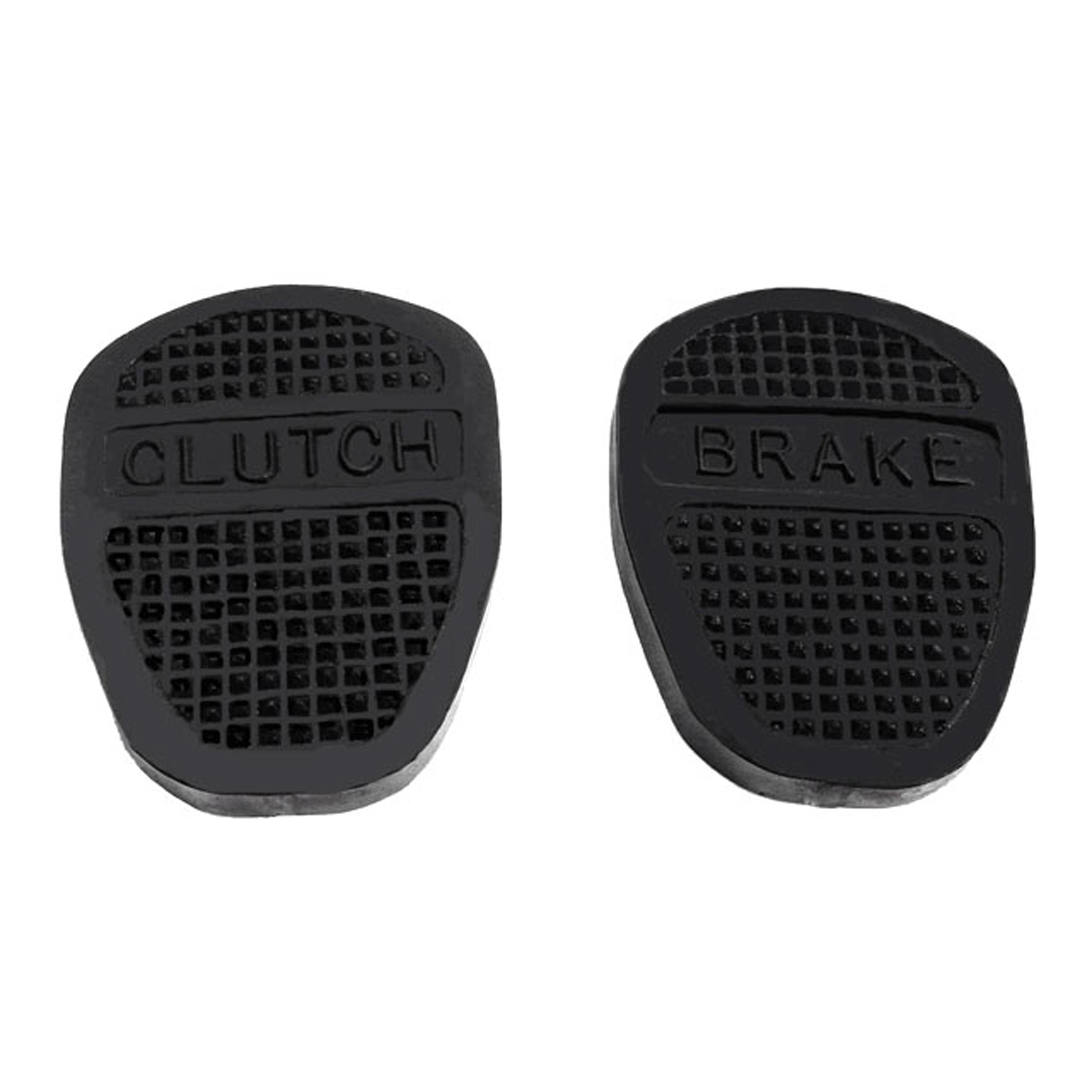 1928 Reo Flying Cloud Clutch and Brake Pedal Pads. Lettered "CLUTCH" and "BRAKE"-CB 38Clutch and Brake Pedal Pads. Lettered "CLUTCH" and "BRAKE". 3-1/4" wide X 4-3/8" long. Pair
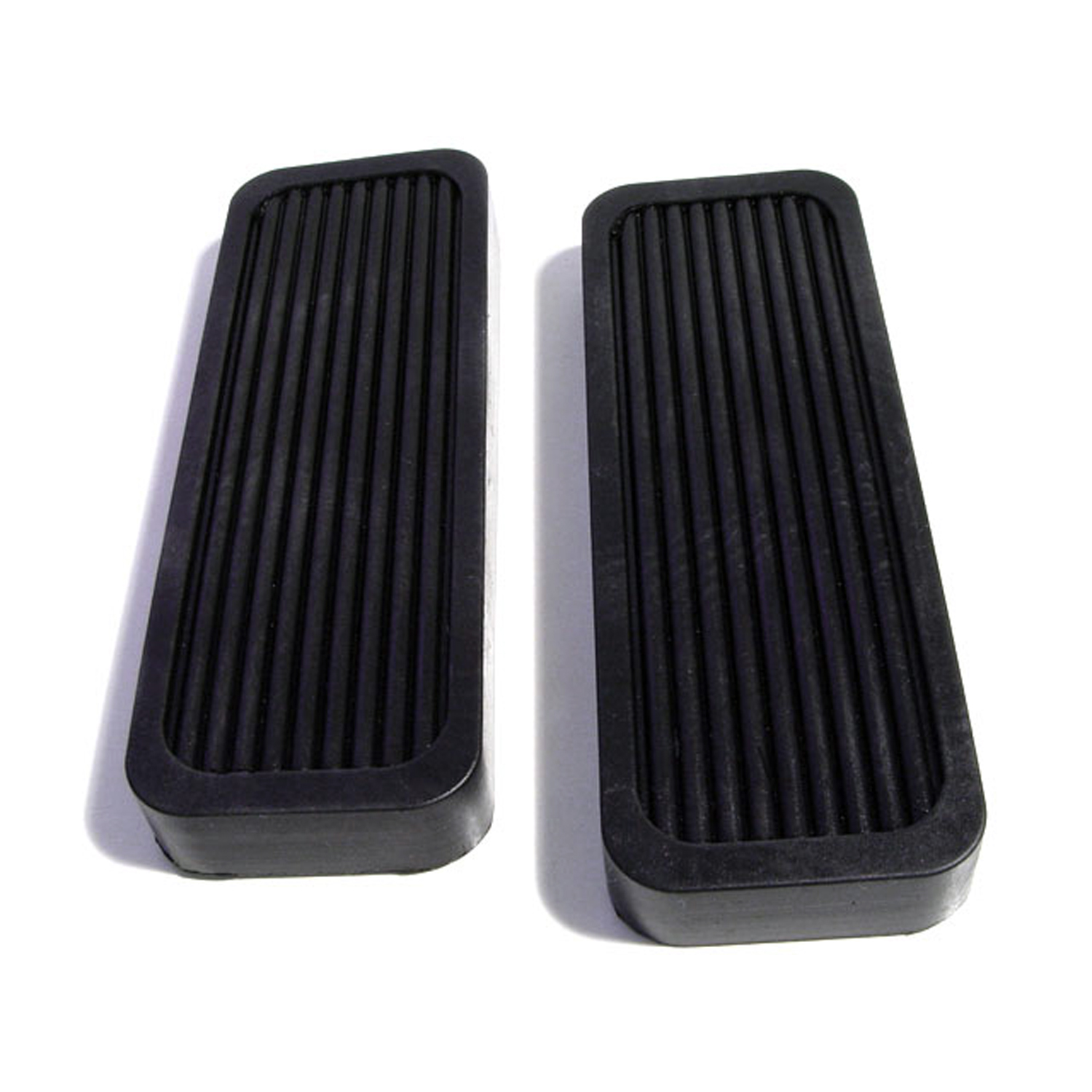 1928 Reo Flying Cloud Clutch and Brake Pedal Pads. 1-5/8" wide X 4-1/4" long-CB 39Clutch and Brake Pedal Pads. 1-5/8" wide X 4-1/4" long. Pair
Why Choose Metro?
For over 100 years, Metro Moulded Parts has been the pinnacle of quality in classic car restoration parts. Our commitment to precision and authenticity in every component ensures a perfect fit and an OEM-level appearance.
- Expert Craftsmanship & Quality: Each part is a testament to our dedication to reliability and perfection, crafted from original designs and thoroughly tested.
- Advanced Technology: We use cutting-edge techniques to create flawless, long-lasting parts that surpass others in performance.
- SuperSoft Sponge – The Ultimate Door Seal: Not only are our door seals 30% softer than competitors', but they're also guaranteed to never leak. They effectively reduce wind and road noise, enhancing your classic car's comfort and driving experience.
- Proudly American: Our parts are a product of American craftsmanship, made in the USA with a spirit of excellence and heritage.
- Unrivaled Warranty: We back our products with a 30-year industry-leading warranty, a testament to our confidence in their quality.
Join us in preserving the legacy of classic cars with parts that are crafted for perfection, not just made.