

Image of 1931 Reo Royale, Note: These illustrations use artistic license and may differ from actual historical models.
Performance Metrics
Fundamental Metrics
Emotional Appeal
MMP Rating
| Engine Specifications | |
|---|---|
| Engine: | Straight 8 |
| Displacement: | 5.9L |
| Horsepower: | 125 HP |
| Torque: | Estimated at 220 lb-ft |
| Compression Ratio: | 6.0:1 |
| Ignition System: | Battery Ignition |
| Cooling System: | Liquid Cooled |
| Performance Specifications | |
| 0-60 Time: | Information not available |
| 1/4 Mile Time: | Information not available |
| Top Speed: | 90 mph |
| Transmission and Drive | |
| Drive Type: | Rear Wheel Drive |
| Transmission Type: | 3-speed manual |
| Fuel and Efficiency | |
| Fuel System Type: | Carburetor |
| MPG: | Information not available |
| Dimensions and Brakes | |
| Brakes: | Mechanical Drum Brakes |
| Wheelbase: | 135 inches |
| Weight: | 4,700 lbs |
Note: Specifications for classic cars are given to the best of our ability, considering the limited and variant data available.
1931 REO Royale: A Luxury Car Built Against the Odds
The 1931 REO Royale was a grand, powerful luxury car launched just as the Great Depression was tightening its grip on American buyers. Built by the REO Motor Car Company in Lansing, Michigan, it represented the ambitious high-water mark of a manufacturer better known for practical cars and commercial vehicles. With its long hood, imposing proportions, and smooth straight-eight engine, the Royale aimed to stand alongside the finest American automobiles of its day.
REO took its name from founder Ransom Eli Olds, the automotive pioneer who had earlier established Oldsmobile. By the time the Royale arrived, Olds had long since left the company, but his instinct for bold automotive ventures remained part of its identity. A notable twist in the Royale’s story is that it entered the market at almost the worst possible moment: the car was designed for prosperous buyers just as the economy was collapsing. Its short production life makes it a compelling reminder that even excellent engineering could not overcome the realities of the Depression.
Long-Hood Style and Hand-Finished Comfort
The Royale wore the formal, confident look expected of an American prestige car in the early 1930s. Its tall, distinctive radiator stood at the front of a long engine bay, while sweeping front fenders and running boards gave the body a continuous, substantial profile. Large headlamps, bright exterior trim, and carefully shaped hood louvers added detail without distracting from the car’s imposing presence. From the side, the long wheelbase and upright passenger compartment made the Royale look every bit the luxury machine.
Inside, the emphasis was on room, finish, and quiet comfort rather than sporty minimalism. Depending on body style and specification, owners could expect broadcloth or leather upholstery, wood-finished trim, a well-appointed instrument panel, and generous seating. Rear passengers in sedan and limousine-style bodies benefited from the Royale’s size and formal layout. Materials and fittings could vary, especially on cars with special coachwork, so surviving examples do not all share the same interior specification.
Contemporary color choices followed the refined tastes of the period. Dark shades such as black, deep blue, burgundy, and green suited the Royale’s formal character, while two-tone treatments could emphasize the flowing fenders and body lines. Exact combinations depended on the body and order, and today’s restored cars may wear colors selected by later owners rather than verified factory finishes.
Royale body styles varied across the model’s brief run and could include sedans, coupes, and open or semi-open touring-style bodies. The four-door sedan was the natural choice for buyers seeking a chauffeur-friendly luxury car, while the coupe and convertible-style models offered a more personal, sporting look. Long-wheelbase and special-body examples are especially striking, though the precise range depended on model year and chassis.
Engineering in a Difficult Era
At the heart of the 1931 Royale was a large-displacement inline-eight. The commonly cited 8-35 specification used a 358-cubic-inch side-valve engine producing about 125 horsepower, paired with a conventional manual transmission. That output was substantial for the period and gave the Royale the effortless, low-revving character expected of an expensive American automobile. Buyers were paying not just for a nameplate, but for a large engine, a substantial chassis, and the presence that came with both.
The Royale’s importance lies less in a single revolutionary invention than in the way REO combined scale, refinement, and engineering ambition in a production car. Its straight-eight layout delivered smoother power than the six-cylinder engines common in less expensive cars, while its generous dimensions allowed for spacious bodies and formal coachwork. It showed that REO could compete in the prestige market, even though the company lacked the financial reach of the largest luxury manufacturers.
That ambition also explains the Royale’s lasting appeal. It is a distinctive example of the American luxury-car formula just before streamlining and smaller, more integrated body designs became increasingly prominent. The car’s graceful proportions and substantial mechanical package still make it recognizable among early-1930s classics.
Performance and the Feel of the Road
Period performance figures are not as standardized as modern test results, and condition, gearing, body style, and tire choice all affect what a surviving Royale can do. A sound 358-cubic-inch car is generally estimated to reach roughly 80 to 90 mph, with a leisurely 0-to-60-mph time in the neighborhood of 20 seconds. These figures should be treated as period-car estimates, not guaranteed factory test results.
On the road, the Royale’s straight-eight is best appreciated for its smoothness and steady pull rather than quick acceleration. The engine produces a deep mechanical hum that becomes a quiet, even rush at cruising speed. A long chassis and substantial suspension give the car a settled ride over ordinary road imperfections, although rough surfaces still remind the driver that this is a heavy car on equipment designed for the roads of its era.
Winding roads call for a measured approach. The Royale is large, its steering lacks modern power assistance, and its handling favors smooth progress over rapid changes of direction. Braking and stopping distances also reflect early-1930s technology, so a driver needs to anticipate traffic and leave generous space. The experience is less about attacking corners than guiding a stately machine down the road with care.
Owning and Maintaining a Royale
Today, the REO Royale is primarily a show car, touring car, or centerpiece in a collection. Its size and historic character make it well suited to club events and carefully planned drives, but it is not a practical daily driver by modern standards. Owners must account for its fuel consumption, slow traffic performance, limited safety equipment, and the effort involved in maneuvering and parking a large prewar car.
Routine mechanical work is approachable for an experienced vintage-car mechanic, but the Royale is not necessarily easy for an average owner to maintain. The engine and chassis use understandable prewar technology, yet parts availability can be challenging, and some components may require specialist knowledge or careful fabrication. Body trim, interior hardware, and model-specific pieces can be harder to locate than common service items. A thorough inspection of the engine, cooling system, brakes, electrical system, and chassis is essential before purchase.
Royale Facts Worth Knowing
The Royale’s launch coincided with the economic downturn that began in 1929, making its market position difficult from the outset. REO continued to build cars through the early 1930s, but the Royale’s run was brief, generally associated with the 1931-to-1933 model years. It was not a mass-market car, and it was not chiefly known as a racing machine. Its story is instead one of luxury-car ambition under extraordinary economic pressure.
REO is also remembered for its commercial vehicles, including the famous REO Speed Wagon. That connection gives the company a second identity in automotive history: the maker of both imposing luxury cars and practical trucks. The name later inspired the American rock band REO Speedwagon, a piece of popular-culture trivia that has kept the marque familiar to people who may never have seen a Royale.
Common criticisms of the Royale are largely the same ones applied to many cars of its age: it is heavy, thirsty, slow to maneuver, and dependent on careful maintenance. Its large size can make it cumbersome on narrow roads, and restoration can be complicated by scarce parts. Those drawbacks are part of the ownership reality, but they also help explain why the car feels so different from a modern vehicle.
Collector Value and Rarity
There is no single definitive production figure that covers every Royale configuration and model year. A reasonable working estimate is that total production across the short run was in the low thousands, perhaps around 2,500 to 3,500 cars. That is a best estimate rather than a verified factory total, and surviving examples are far fewer. Availability is limited, with cars appearing irregularly through specialist dealers, auctions, and marque-club networks.
As a broad current-market estimate, a Royale needing substantial restoration might sell for roughly $20,000 to $40,000. A sound, well-presented driver or older restoration could fall around $40,000 to $80,000, while an exceptional, highly original, or particularly desirable body-style example may bring $100,000 or more. These ranges are approximate: provenance, originality, restoration quality, mechanical condition, and the appeal of the specific body can move a price considerably.
Royale values tend to be selective rather than uniformly rising. Strong examples can attract dedicated prewar-car collectors, but the market is smaller than it is for more famous luxury marques. As a result, a well-documented car in excellent condition is generally a safer prospect than an ambitious restoration project. Long-term value also depends on specialist support and the cost of preserving a complex, low-volume automobile.
A Lasting Statement from REO
The 1931 REO Royale combined a smooth straight-eight, formal styling, generous interior space, and the engineering confidence of a company founded by one of America’s automotive pioneers. Its brief career was shaped by the Depression, not by a lack of ambition or character. Today, it stands as a rare and memorable example of a manufacturer reaching for the top tier of the American car market. The Royale may have arrived at the wrong moment, but its presence on the road still makes a powerful case for REO’s forgotten luxury-car legacy.
1931 Reo Royale Catalog of Parts
 1931 Reo Royale Accessory Floor Mat - 12"X17"-AC 36Accessory Floor Mat - made of high quality black rubber with molded original emblem. Also designed to be sewn into new carpets. 12"X17", Each
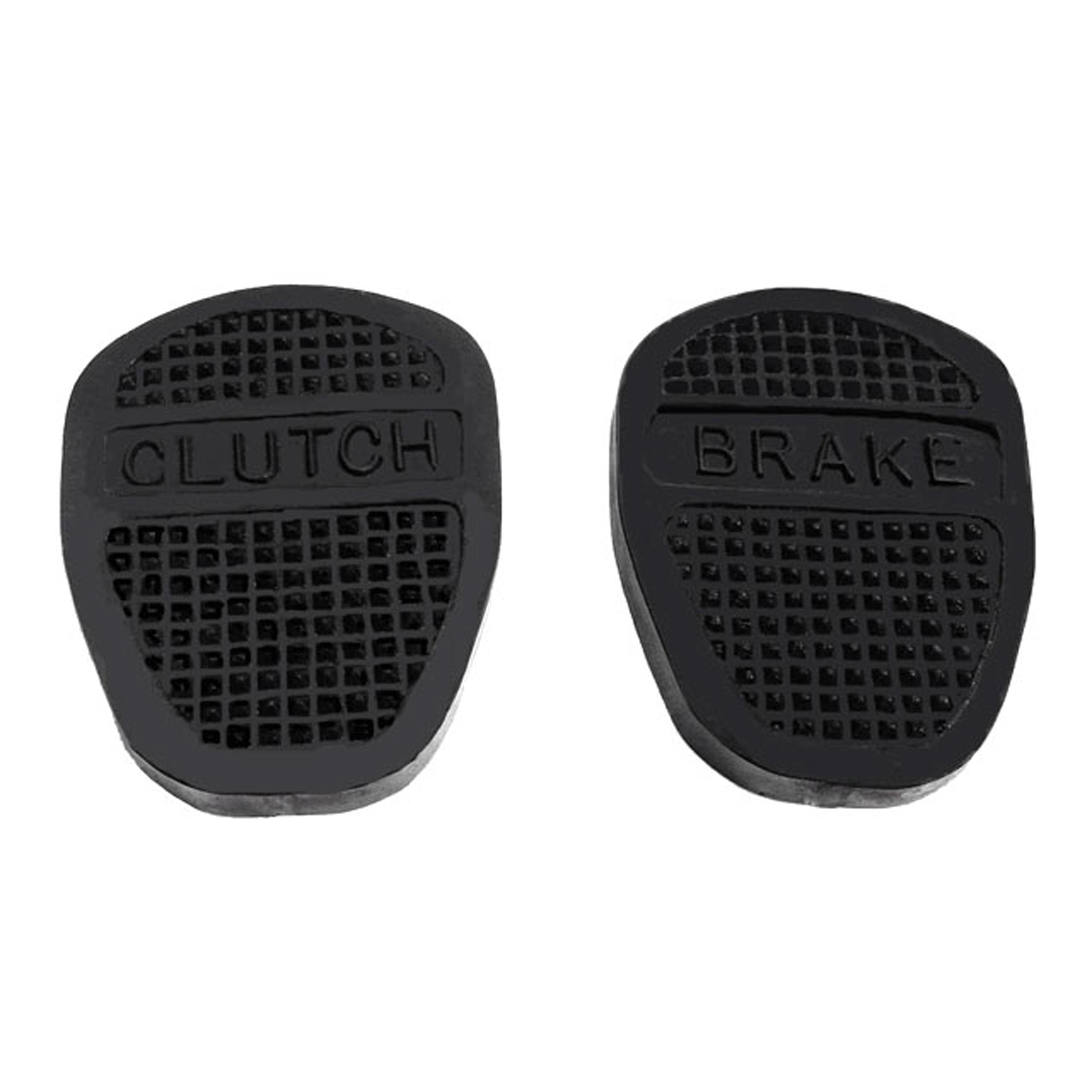 1931 Reo Royale Clutch and Brake Pedal Pads. Lettered "CLUTCH" and "BRAKE"-CB 38Clutch and Brake Pedal Pads. Lettered "CLUTCH" and "BRAKE". 3-1/4" wide X 4-3/8" long. Pair
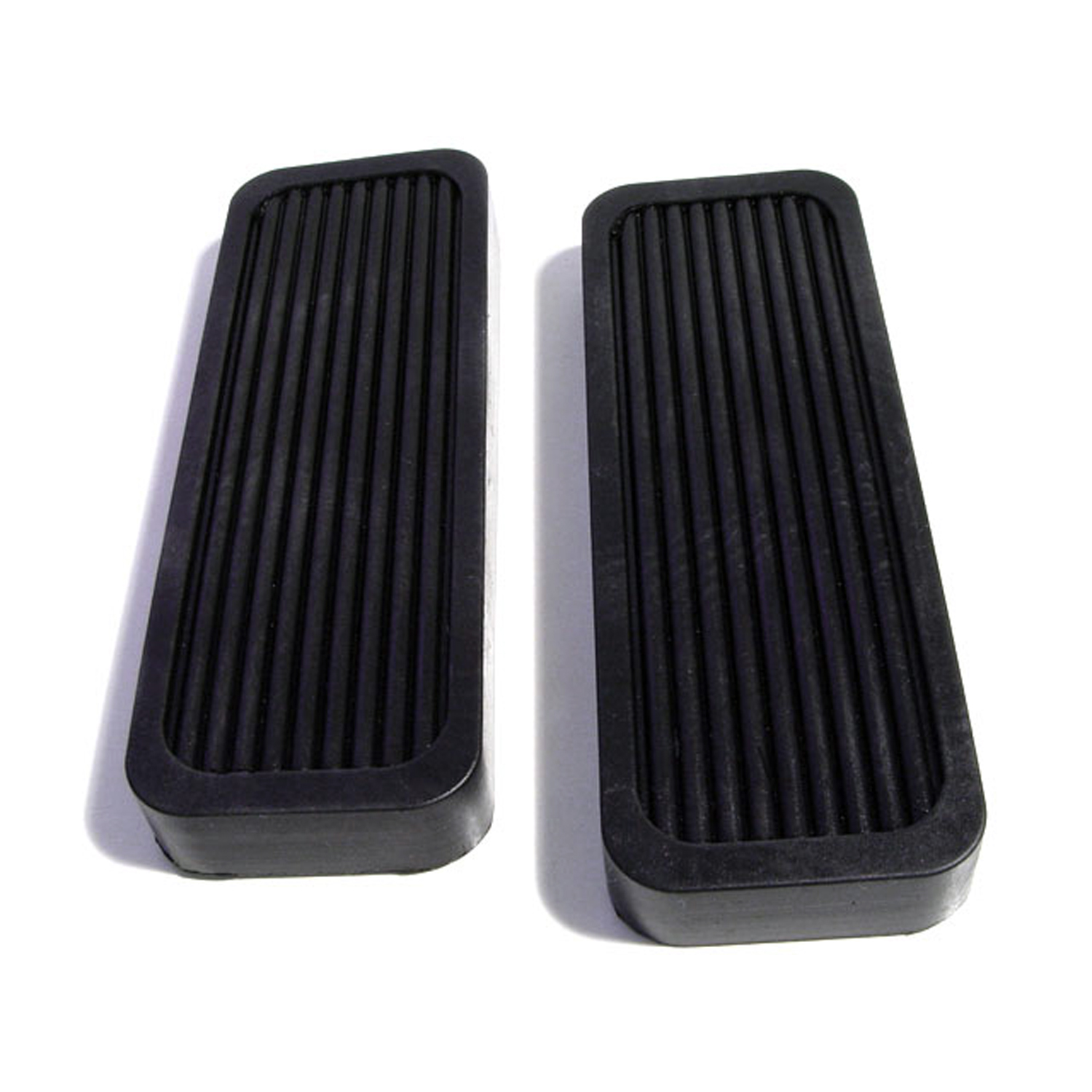 1931 Reo Royale Clutch and Brake Pedal Pads. 1-5/8" wide X 4-1/4" long-CB 39Clutch and Brake Pedal Pads. 1-5/8" wide X 4-1/4" long. Pair
 1931 Reo Royale Swing-Out Windshield Seal-LP 97-CSwing-Out Windshield Seal. For both one- and two-piece windshields. Sold by the foot
 1931 Reo Royale Tail-light Pads. 2-3/4" wide X 4-3/4" long. Pair-MP 993-ATail-light Pads. 2-3/4" wide X 4-3/4" long. Pair
 1931 Reo Royale Park Light Pads. 2" wide X 2-7/8" long. Pair-MP 993-BPark Light Pads. 2" wide X 2-7/8" long. Pair
Why Choose Metro?
For over 100 years, Metro Moulded Parts has been the pinnacle of quality in classic car restoration parts. Our commitment to precision and authenticity in every component ensures a perfect fit and an OEM-level appearance.
- Expert Craftsmanship & Quality: Each part is a testament to our dedication to reliability and perfection, crafted from original designs and thoroughly tested.
- Advanced Technology: We use cutting-edge techniques to create flawless, long-lasting parts that surpass others in performance.
- SuperSoft Sponge – The Ultimate Door Seal: Not only are our door seals 30% softer than competitors', but they're also guaranteed to never leak. They effectively reduce wind and road noise, enhancing your classic car's comfort and driving experience.
- Proudly American: Our parts are a product of American craftsmanship, made in the USA with a spirit of excellence and heritage.
- Unrivaled Warranty: We back our products with a 30-year industry-leading warranty, a testament to our confidence in their quality.
Join us in preserving the legacy of classic cars with parts that are crafted for perfection, not just made.