

Image of 1932 Reo Flying Cloud, Note: These illustrations use artistic license and may differ from actual historical models.
Performance Metrics
Fundamental Metrics
Emotional Appeal
MMP Rating
| Engine Specifications | |
|---|---|
| Engine: | Inline 6 |
| Displacement: | 3.7L |
| Horsepower: | Estimated 85-95 HP |
| Torque: | Information not available |
| Compression Ratio: | Information not available |
| Ignition System: | Distributor and coil |
| Cooling System: | Water-cooled |
| Performance Specifications | |
| 0-60 Time: | Information not available |
| 1/4 Mile Time: | Information not available |
| Top Speed: | 70 mph |
| Transmission and Drive | |
| Drive Type: | Rear-wheel drive |
| Transmission Type: | 3-speed manual |
| Fuel and Efficiency | |
| Fuel System Type: | Carburetor |
| MPG: | Information not available |
| Dimensions and Brakes | |
| Brakes: | Mechanical drum brakes |
| Wheelbase: | 115 inches |
| Weight: | Estimated 2,800 lbs |
Note: Specifications for classic cars are given to the best of our ability, considering the limited and variant data available.
1932 REO Flying Cloud: A Refined Six from a Pioneering American Maker
The 1932 REO Flying Cloud was built for drivers who wanted more than basic transportation: it paired a substantial six-cylinder engine with graceful styling and the solid, carefully engineered feel for which REO had earned a reputation. Made by the REO Motor Car Company of Lansing, Michigan, it came from a manufacturer founded by Ransom E. Olds, the automotive pioneer who had earlier established Oldsmobile. In a year when the Great Depression was squeezing carmakers and buyers alike, the Flying Cloud represented REO’s effort to offer comfort and quality in a challenging market.
The model name had already been in use since 1927, giving the car a familiar identity by 1932. One intriguing detail is that the Flying Cloud belonged to the same company family as the better-known REO Speed Wagon, the commercial vehicle whose name later inspired the band R.E.O. Speedwagon. The passenger car and the truck were different machines, but both reflected REO’s emphasis on practical engineering.
Streamlined Fenders and a Tailored Cabin
The 1932 Flying Cloud had the dignified proportions typical of a fine American car of its time. Its tall radiator shell gave the front end a formal, upright presence, while sweeping front fenders flowed back along the body and helped soften the car’s boxier cabin shape. Large headlamps, running boards, broad doors and a long hood completed a look that was elegant without being ostentatious. Depending on the body, rear fenders and luggage arrangements gave the car a different profile, from close-coupled and sporty to stately and family-oriented.
Inside, the Flying Cloud offered a roomy cabin with generous seating and a straightforward instrument panel. Materials varied with body style and trim level. Closed cars commonly used cloth upholstery, with higher-grade fabrics such as broadcloth or mohair, while open models could feature leather seating. Painted or wood-finished trim, carpet or floor covering, door pockets and a full set of period gauges made the cabin feel considerably more considered than that of a bare-bones runabout.
Factory paint and trim combinations depended on the specific body and ordering options. Dark shades such as black, maroon, deep green and blue suited the car’s formal character, while lighter colors and two-tone treatments could make its sweeping fenders stand out. Exact color availability should be checked against period sales literature and the car’s build history, since paint schemes could vary by production run and market.
REO offered the Flying Cloud in several passenger-car body styles, with closed sedans among the most practical and commonly encountered. Coupe and convertible-style bodies gave buyers a sportier alternative, while other catalog offerings varied by series and year. The four-door sedan is perhaps the clearest expression of the Flying Cloud’s mission: comfortable, roomy motoring for a family or owner-driver.
For a 1932 car, its technology was conventional rather than experimental. The Flying Cloud used a front-mounted engine, rear-wheel drive and a manual transmission. Buyers operated the clutch and gear lever themselves, and the car’s controls demanded more physical involvement than a modern vehicle. It did not have the electronic aids or automatic conveniences now taken for granted, but its layout was familiar and serviceable to a 1930s driver.
REO’s Place in Depression-Era Motoring
The Flying Cloud helped REO compete in the middle-price field, where established manufacturers were trying to persuade cautious buyers that a car could be both dependable and comfortable. Its appeal rested on sturdy construction, a relatively powerful engine and a more substantial feel than many economy models. At the same time, it was less costly and imposing than the company’s premium Royale models.
Its significance is less about introducing a single revolutionary feature than about representing REO’s engineering approach during a difficult period. The company had a long history in automobile and truck manufacturing, but the Depression made it increasingly difficult for independent makers to match the production scale and marketing reach of the largest firms. REO eventually ended passenger-car production in the mid-1930s and concentrated on trucks. The Flying Cloud is therefore part of the closing chapter of REO’s passenger-car story.
The name also endured beyond this particular model year. REO continued using Flying Cloud for later cars, and the line helped maintain the brand’s identity among buyers who associated it with robust, carefully built transportation. It did not reshape the industry in the way that mass-production methods or major transmission innovations did, but it stands as a good example of the high-quality independent cars that competed in the early 1930s.
Six-Cylinder Power and Period Road Manners
The 1932 Flying Cloud is generally associated with a 268-cubic-inch L-head, or flathead, six-cylinder engine. Published specifications can differ by model and source, but output is commonly given in the neighborhood of 80 horsepower. That was respectable power for a sizeable family car of the period, though the car’s weight and gearing mattered as much as the engine’s rating when it came to real-world performance.
There is no widely accepted factory 0-to-60-mph figure for the 1932 Flying Cloud, and period acceleration testing was not standardized as it is today. A reasonable modern estimate for a sound, correctly tuned example is roughly 25 to 30 seconds to reach 60 mph. Top speed is generally estimated at about 70 to 75 mph, with actual results depending on body style, mechanical condition, tires and road conditions. These are practical estimates, not guaranteed factory test numbers.
On a smooth road, the Flying Cloud would feel composed and substantial. Its period suspension and tall tires could take the edge off ordinary road imperfections, although sharp potholes and rough surfaces would still be felt through the chassis. On winding roads, its size, solid-axle-era suspension and relatively slow steering called for deliberate inputs rather than quick direction changes. Crosswinds could also be noticeable, especially with a tall-bodied sedan.
The driving experience is as much about sound and sensation as speed. The six-cylinder engine produces a steady, low mechanical rumble, while the manual gearbox asks the driver to coordinate clutch, throttle and gear selection. Steering effort is heavier at low speeds than in a modern car, and braking requires anticipation and a firm, measured approach. In return, the Flying Cloud offers a direct connection to the road and a relaxed pace that suits touring far better than hurry-up commuting.
Living with a Flying Cloud Today
Today, a 1932 Flying Cloud is best suited to touring, local drives, classic-car gatherings and museum or show displays. It can be driven on public roads when properly restored and maintained, but it is not an ideal everyday vehicle in modern traffic. Its modest acceleration, period braking performance, limited safety equipment and lack of modern climate control all reward a patient driver.
Maintenance is manageable for an owner comfortable with prewar cars, but it requires more hands-on attention than a contemporary vehicle. Regular checks of the ignition, fuel system, cooling system, lubrication and brakes are essential. Parts support is not as broad as it is for high-volume Ford or Chevrolet models, so some components may need to be sourced through specialist suppliers, REO-owner networks or careful rebuilding. Mechanical systems are generally understandable to an experienced vintage-car mechanic, though finding trim, body parts and correct accessories can take more time.
Reliability depends heavily on the quality of the restoration and the car’s maintenance history. A well-sorted Flying Cloud can be enjoyable on appropriate roads, but an old car that has sat unused may need substantial work before it is trustworthy. Buyers should pay particular attention to engine condition, cooling, brakes, chassis corrosion, wood structure where applicable, and the availability of body-specific parts.
Flying Cloud Facts and Common Complaints
The Flying Cloud name was not a one-year experiment. REO used it across multiple model years, making it one of the company’s recognizable passenger-car lines. The car also belongs to an unusual chapter in American automotive history: it was built by an independent maker with real engineering credentials at a time when the Depression was pushing smaller manufacturers toward consolidation, specialization or closure.
There is no widely documented 1932 Flying Cloud speed or endurance record, and claims of celebrity ownership should be treated cautiously unless supported by reliable records. Its strongest historical connection is to REO itself and to Lansing’s manufacturing heritage, rather than to a single famous race or public event.
Common criticisms are familiar for prewar cars. The Flying Cloud is slow by modern standards, can be physically demanding to steer and brake, and may be difficult to keep supplied with model-specific trim and parts. Its comfort and road manners also depend greatly on condition. For collectors, those limitations are part of the experience, but they should be understood before purchase.
Collector Value and Availability
Surviving 1932 Flying Clouds are uncommon compared with mass-produced Fords and Chevrolets, though exact production and survival totals are difficult to establish. As a practical estimate rather than a verified factory figure, production may have amounted to a few thousand cars across the available Flying Cloud versions. The number of surviving examples is much smaller, and body style, originality and restoration quality strongly affect desirability.
As a broad current-market estimate, a project or driver-quality sedan might fall around $10,000 to $25,000. A well-presented, professionally restored example could bring approximately $25,000 to $45,000, while a particularly rare open body or exceptional restoration may exceed that range. These figures are general guideposts, not appraisals: local demand, documentation, mechanical condition and the quality of the restoration can move a price substantially.
Values for niche prewar cars such as the Flying Cloud tend to be steady but selective. Exceptional examples can attract dedicated REO enthusiasts, while ordinary sedans may take longer to sell than more familiar marques. Rather than assuming rapid appreciation, collectors should view the car as a distinctive piece of American motoring history whose value is closely tied to condition and provenance.
Why the 1932 REO Flying Cloud Still Matters
The 1932 REO Flying Cloud combines a capable flathead six, handsome period styling and the story of an independent American automaker confronting the hardest years of the Depression. It was not built to set a speed record or introduce futuristic technology. Its appeal lies in its sturdy character, thoughtful proportions and the hands-on driving experience it preserves.
For the collector who values lesser-known American makes, the Flying Cloud offers something more personal than a familiar mass-market classic. It is a reminder that the road to modern motoring was shaped not only by the giants, but also by ambitious independent companies like REO.
1932 Reo Flying Cloud Catalog of Parts
 1932 Reo Flying Cloud Accessory Floor Mat - 12"X17"-AC 36Accessory Floor Mat - made of high quality black rubber with molded original emblem. Also designed to be sewn into new carpets. 12"X17", Each
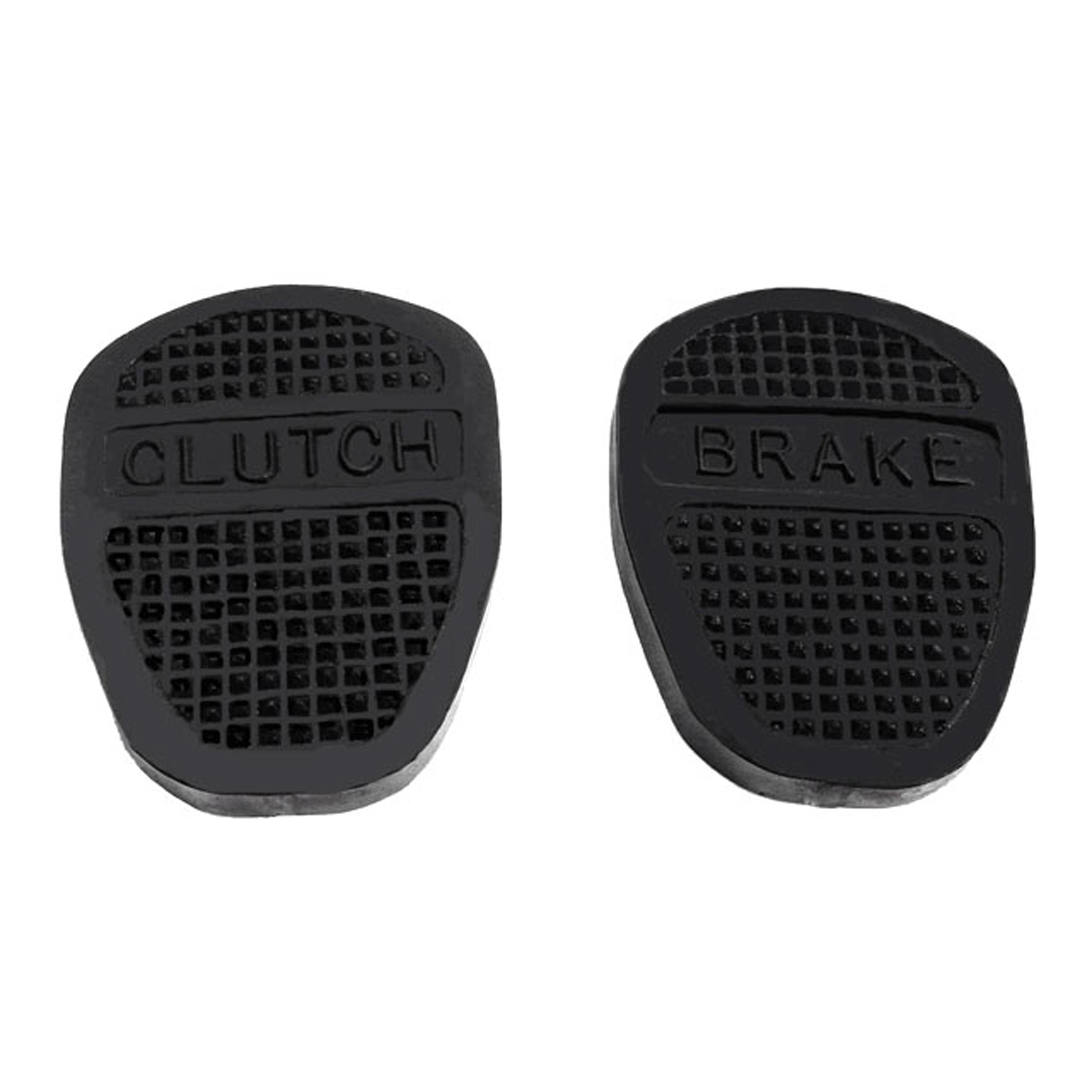 1932 Reo Flying Cloud Clutch and Brake Pedal Pads. Lettered "CLUTCH" and "BRAKE"-CB 38Clutch and Brake Pedal Pads. Lettered "CLUTCH" and "BRAKE". 3-1/4" wide X 4-3/8" long. Pair
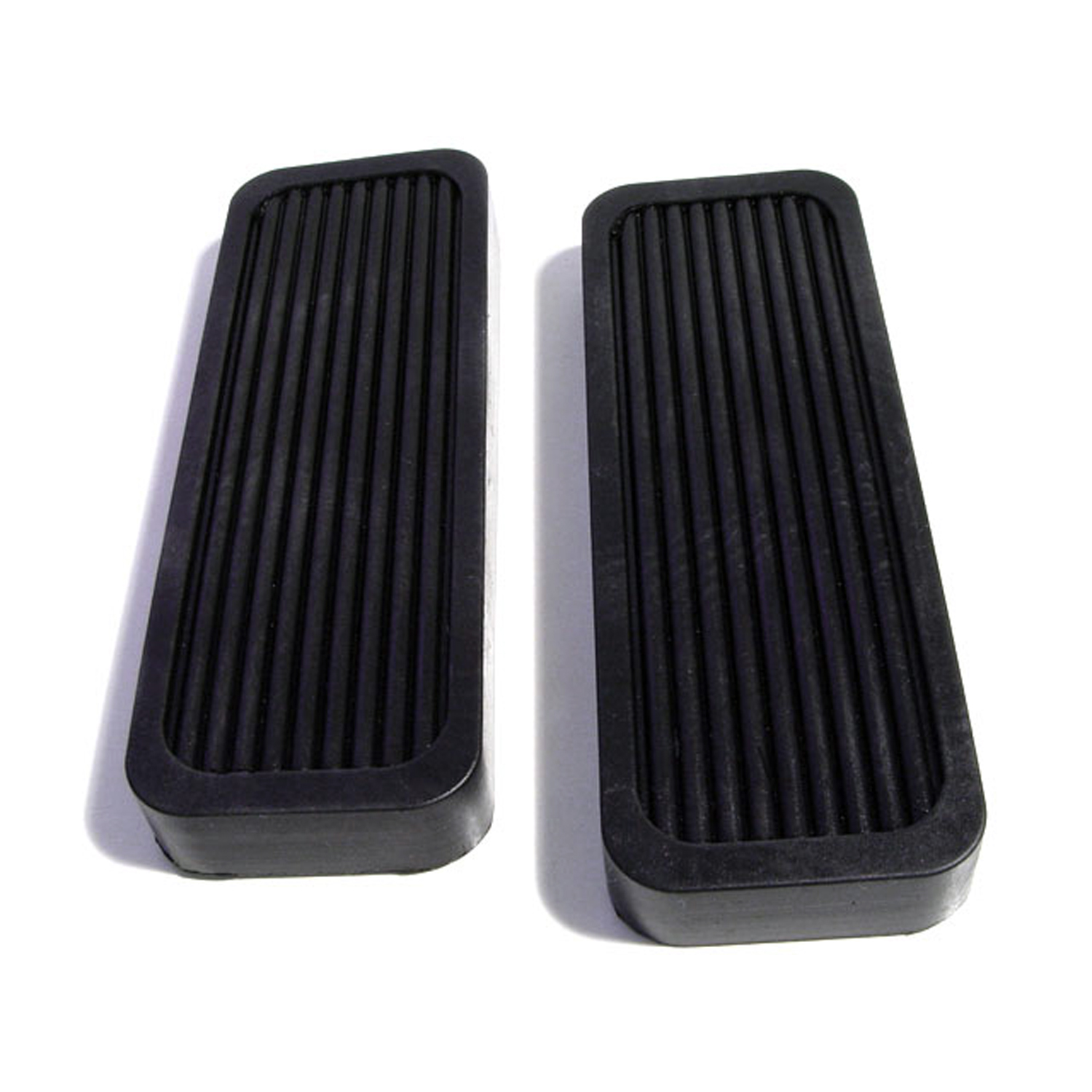 1932 Reo Flying Cloud Clutch and Brake Pedal Pads. 1-5/8" wide X 4-1/4" long-CB 39Clutch and Brake Pedal Pads. 1-5/8" wide X 4-1/4" long. Pair
 1932 Reo Flying Cloud Tail-light Pads. 2-3/4" wide X 4-3/4" long. Pair-MP 993-ATail-light Pads. 2-3/4" wide X 4-3/4" long. Pair
 1932 Reo Flying Cloud Side Tire Bracket Mounting Pads. 1-1/2" wide X 3-4/8" long-MP 993-CSide Tire Bracket Mounting Pads. 1-1/2" wide X 3-4/8" long. Pair
Why Choose Metro?
For over 100 years, Metro Moulded Parts has been the pinnacle of quality in classic car restoration parts. Our commitment to precision and authenticity in every component ensures a perfect fit and an OEM-level appearance.
- Expert Craftsmanship & Quality: Each part is a testament to our dedication to reliability and perfection, crafted from original designs and thoroughly tested.
- Advanced Technology: We use cutting-edge techniques to create flawless, long-lasting parts that surpass others in performance.
- SuperSoft Sponge – The Ultimate Door Seal: Not only are our door seals 30% softer than competitors', but they're also guaranteed to never leak. They effectively reduce wind and road noise, enhancing your classic car's comfort and driving experience.
- Proudly American: Our parts are a product of American craftsmanship, made in the USA with a spirit of excellence and heritage.
- Unrivaled Warranty: We back our products with a 30-year industry-leading warranty, a testament to our confidence in their quality.
Join us in preserving the legacy of classic cars with parts that are crafted for perfection, not just made.