

Image of 1933 Reo Flying Cloud, Note: These illustrations use artistic license and may differ from actual historical models.
Performance Metrics
Fundamental Metrics
Emotional Appeal
MMP Rating
| Engine Specifications | |
|---|---|
| Engine: | Inline 6 |
| Displacement: | 3.7L |
| Horsepower: | Estimated 85-95 HP |
| Torque: | Not available |
| Compression Ratio: | Not available |
| Ignition System: | Distributor and coil |
| Cooling System: | Water-cooled |
| Performance Specifications | |
| 0-60 Time: | Not available |
| 1/4 Mile Time: | Not available |
| Top Speed: | 70-75 mph |
| Transmission and Drive | |
| Drive Type: | Rear-wheel drive |
| Transmission Type: | 3-speed manual |
| Fuel and Efficiency | |
| Fuel System Type: | Carburetor |
| MPG: | Not available |
| Dimensions and Brakes | |
| Brakes: | Mechanical drum brakes |
| Wheelbase: | 115 inches |
| Weight: | Estimated 2,800-3,000 lbs |
Note: Specifications for classic cars are given to the best of our ability, considering the limited and variant data available.
1933 REO Flying Cloud: A Depression-Era Classic with a Modern Idea
The 1933 REO Flying Cloud paired the graceful proportions of a prewar automobile with a surprisingly forward-looking transmission idea. Built by the REO Motor Car Company of Lansing, Michigan, it belonged to a line that had earned a reputation for sound engineering and individual character rather than sheer production volume.
REO was founded in 1904 by Ransom E. Olds, the automotive pioneer who had previously established Oldsmobile. The company name came from Olds’s initials, and its products included both passenger cars and commercial vehicles. The Flying Cloud name first appeared in the late 1920s, and by 1933 it sat below REO’s more expensive Royale in the company’s passenger-car range.
The timing was challenging. The Great Depression had sharply reduced demand for new cars, leaving smaller manufacturers such as REO to compete against much larger rivals. One memorable response was the REO Self-Shifter, an early clutchless transmission system offered during the 1930s. It gave the Flying Cloud a technological talking point in an era when most drivers still shifted a conventional manual gearbox.
Streamlined Lines and a Welcoming Cabin
The Flying Cloud had the tall, upright stance typical of early-1930s cars, but its details softened the look. A long hood led to a prominent vertical grille, flanked by large headlamps and flowing front fenders. The fenders swept back toward the running boards, while a gently arched roof and rounded rear gave the body a more integrated appearance than the boxier cars of earlier years. Its brightwork was present but restrained, adding polish without overwhelming the shape.
Inside, the cabin was designed for comfort and formality. Depending on body style and trim, buyers could find broad upholstered seats, patterned cloth or higher-grade upholstery, a wood-grain-finished dashboard, and clear, period-style gauges. The cabin was roomier and quieter than an open touring car, though it still had the upright seating position and large steering wheel that made prewar cars feel distinct from modern vehicles.
Factory paint and trim combinations varied by body and order. Dark blue, green, maroon, black, and other subdued shades suited the period, while contrasting fenders or two-tone treatments could add visual distinction. Exact colors and combinations depended on the specific catalogue offering and customer order, so a surviving car’s original paint code or documentation is especially useful to restorers.
Flying Cloud body offerings could include closed sedans and coupe-style models, with availability varying by series and market. Four-door sedans are among the most recognizable surviving examples, while coupes and open or convertible-style bodies are less commonly encountered today. Buyers could also choose different trim levels and equipment, making it worth checking a car’s serial number and period literature before assuming every 1933 Flying Cloud was configured alike.
Engineering Ahead of the Curve
The Flying Cloud’s strongest claim to innovation is its connection to REO’s Self-Shifter. Introduced in the early 1930s, the system aimed to reduce the effort of conventional gear changes. It was not the same as a modern fully automatic transmission: the driver still had a role in selecting gears or ranges, and the mechanism relied on a combination of mechanical and powered controls. Still, it was an ambitious attempt to make driving easier before the postwar spread of automatic transmissions.
Most Flying Clouds used a straight-six engine and a conventional manual transmission. Published specifications can differ by model and source, but a 1933 six-cylinder car is commonly associated with an engine of roughly 268 cubic inches and output in the neighborhood of 80 horsepower. Equipment such as the Self-Shifter should be verified on the individual car rather than assumed from the model name alone.
Four-wheel braking and a substantial chassis helped make the car feel composed for its time. Its combination of a six-cylinder engine, useful cabin space, and experimental transmission technology gave it a different identity from some rivals that focused chiefly on styling or low prices. REO did not set the entire industry’s design direction, but it showed how a smaller maker could keep experimenting even under severe financial pressure.
How the Flying Cloud Drives
Expect measured, unhurried performance rather than modern traffic-light acceleration. A sound, correctly tuned example may reach a top speed in the region of 65 to 75 mph, depending on gearing, body style, engine condition, and tires. A 0-to-60-mph time is not consistently documented in period specifications; a reasonable modern estimate is roughly 25 to 30 seconds for a standard car. Treat both figures as estimates, not guaranteed factory test results.
On the road, the Flying Cloud’s long chassis and substantial weight help it settle over ordinary bumps, while its narrow tires and vintage suspension mean sharp potholes and broken pavement still demand care. The steering is not power-assisted, so low-speed turns require more effort than in a modern car. On a winding road, the driver needs to plan ahead, make smooth inputs, and allow for body lean and longer stopping distances. It is best enjoyed at a relaxed pace.
The six-cylinder engine delivers its appeal through sound and feel rather than a dramatic rush of power. Expect a steady mechanical hum that becomes more prominent under acceleration, along with the familiar sensations of a large steering wheel, a firm pedal, and a gearbox that rewards deliberate shifts. A Self-Shifter-equipped car offers a distinctive alternative, but its operation and condition should be carefully understood before driving.
Living with a 1933 REO
Today, the Flying Cloud is primarily a show car, touring vehicle, or centerpiece in a collection of less-common American marques. It can take part in club events and carefully planned vintage drives, but it is not an ideal daily driver. Modern traffic moves faster, and the car lacks contemporary safety features such as airbags, modern crash protection, and current-generation lighting and braking performance.
Routine work is familiar to anyone experienced with prewar cars: regular lubrication, ignition and carburetor tuning, cooling-system care, brake inspection, and attention to tires and hoses. Many mechanical jobs are straightforward in principle, but REO-specific components can be harder to source than parts for a Ford or Chevrolet. The Self-Shifter deserves particular care, since specialist knowledge and scarce parts can make repairs more involved than work on the standard manual gearbox.
Reliability depends heavily on maintenance and restoration quality. A well-sorted Flying Cloud can be a rewarding touring car, while a neglected example may need extensive work before it is safe to drive. Before buying, inspect the chassis for corrosion or poor repairs, check the engine’s oil pressure and cooling behavior, and confirm that the brakes, steering, and transmission operate correctly. Club networks and marque specialists can be invaluable for locating parts and historical information.
Flying Cloud Facts and Myths
The Self-Shifter is the standout piece of REO trivia. It belongs to the long history of attempts to reduce the workload of driving, preceding the widespread adoption of modern automatic transmissions by more than a decade. It is best described as an early clutchless or semi-automatic system, not as a direct equivalent to today’s fully automatic gearboxes.
There is no widely established, definitive production total for every 1933 Flying Cloud body and configuration. Given the Depression-era contraction in sales and REO’s relatively small scale, a reasonable working estimate is that production was in the low thousands, perhaps around 1,500 to 3,000 cars. That is an informed estimate, not a confirmed factory count. The number of surviving examples is smaller still, and particular body styles or transmission configurations can be much harder to find than a standard sedan.
The car is not generally known for a major speed or endurance record, nor is it most famous for celebrity ownership. Its historical interest is quieter but substantial: it represents the efforts of an independent American automaker to remain competitive through engineering while the Depression squeezed the industry. A common criticism is that REO cars lack the instant name recognition and parts availability of better-known marques. Their relative rarity is also part of their appeal to collectors who want something beyond the usual Ford and Chevrolet choices.
Collector Values and Availability
Values vary considerably with condition, originality, body style, documentation, and mechanical completeness. As a broad present-day guide, a project car might sell for roughly $5,000 to $15,000, while a usable driver or older restoration could fall around $15,000 to $35,000. A high-quality restoration or especially desirable, well-documented example could reach approximately $40,000 to $65,000 or more. These are estimates rather than a formal appraisal, and unusual body styles can depart from the range.
Flying Clouds appear less often on the market than mainstream American cars of the same era. When one does surface, buyers should compare it with other REO sales rather than relying only on prices for more familiar marques. The market for prewar cars is selective: exceptional restorations can attract strong interest, but ordinary examples may sell slowly. In recent years, condition and provenance have mattered more than simple age, so values are best described as steady but highly dependent on the individual car rather than uniformly appreciating.
Why the 1933 Flying Cloud Still Matters
The 1933 REO Flying Cloud is a handsome, uncommon American classic with a story that reaches beyond its graceful fenders and straight-six engine. It reflects the pressures of the Depression, the heritage of Ransom E. Olds, and REO’s willingness to experiment with easier shifting at a time when most motorists expected to work a clutch and gear lever.
For collectors, its appeal lies in that blend of style, engineering, and rarity. The Flying Cloud may not have changed the industry single-handedly, but it captures an independent automaker trying to fly through difficult years with a few inventive ideas of its own.
1933 Reo Flying Cloud Catalog of Parts
 1933 Reo Flying Cloud Accessory Floor Mat - 12"X17"-AC 36Accessory Floor Mat - made of high quality black rubber with molded original emblem. Also designed to be sewn into new carpets. 12"X17", Each
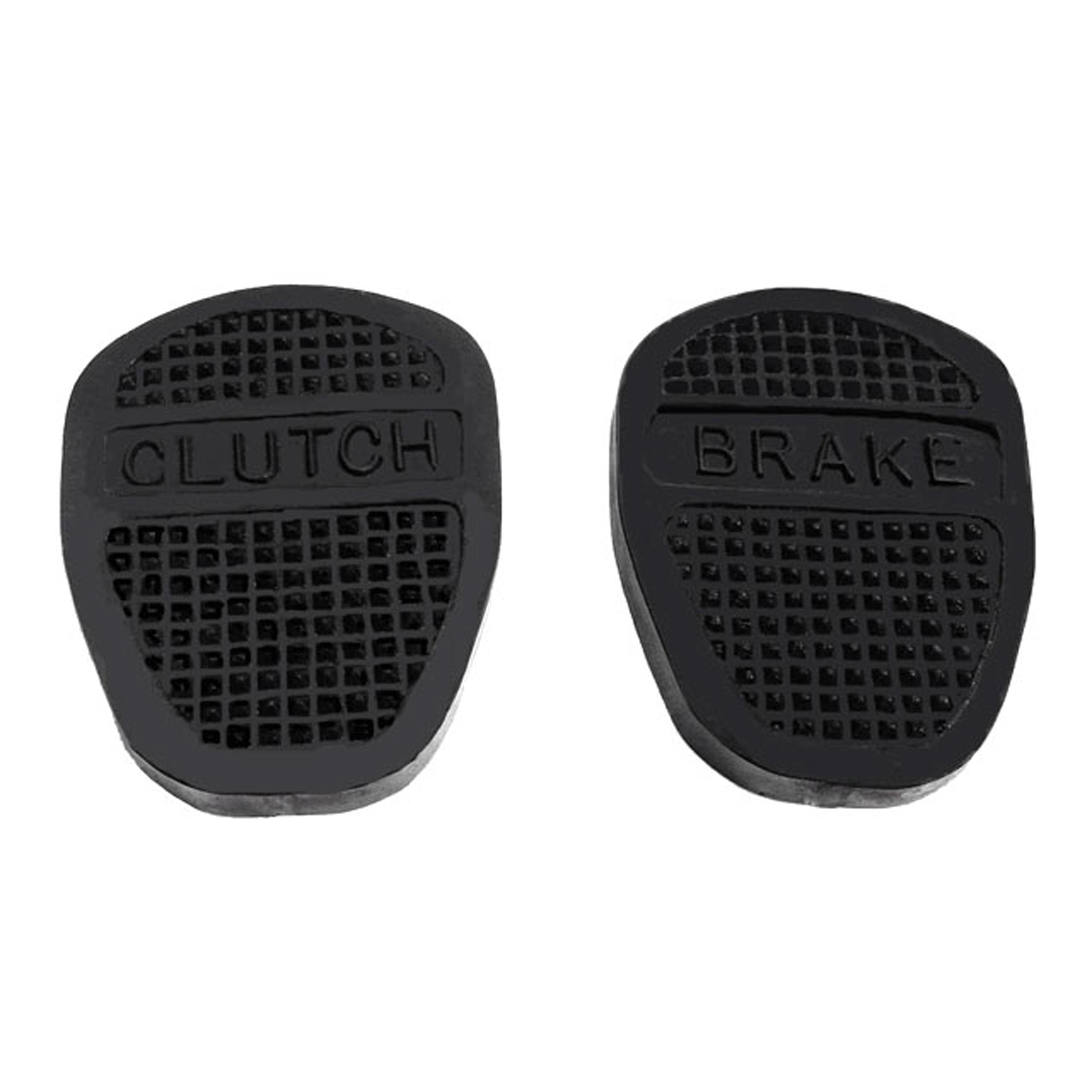 1933 Reo Flying Cloud Clutch and Brake Pedal Pads. Lettered "CLUTCH" and "BRAKE"-CB 38Clutch and Brake Pedal Pads. Lettered "CLUTCH" and "BRAKE". 3-1/4" wide X 4-3/8" long. Pair
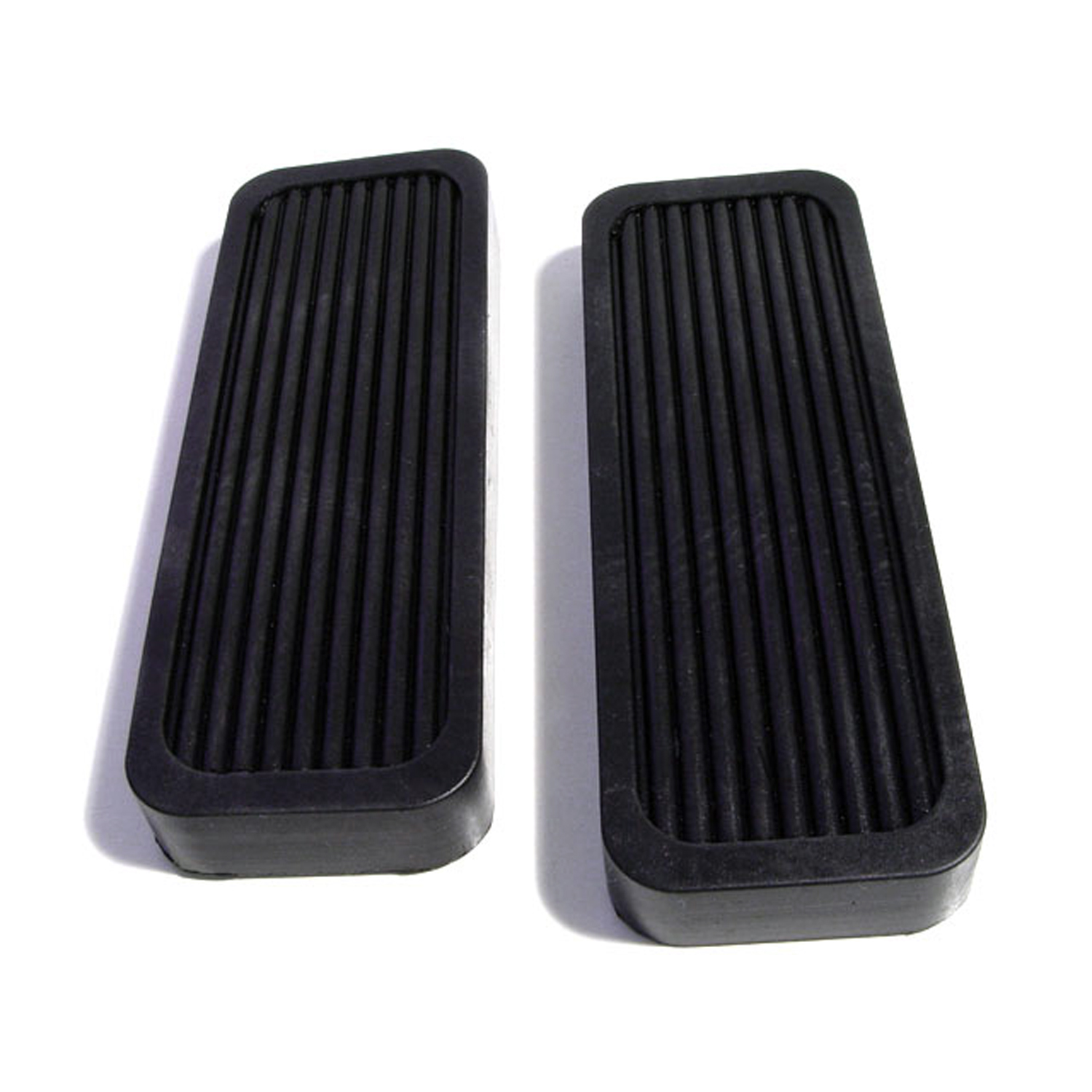 1933 Reo Flying Cloud Clutch and Brake Pedal Pads. 1-5/8" wide X 4-1/4" long-CB 39Clutch and Brake Pedal Pads. 1-5/8" wide X 4-1/4" long. Pair
Why Choose Metro?
For over 100 years, Metro Moulded Parts has been the pinnacle of quality in classic car restoration parts. Our commitment to precision and authenticity in every component ensures a perfect fit and an OEM-level appearance.
- Expert Craftsmanship & Quality: Each part is a testament to our dedication to reliability and perfection, crafted from original designs and thoroughly tested.
- Advanced Technology: We use cutting-edge techniques to create flawless, long-lasting parts that surpass others in performance.
- SuperSoft Sponge – The Ultimate Door Seal: Not only are our door seals 30% softer than competitors', but they're also guaranteed to never leak. They effectively reduce wind and road noise, enhancing your classic car's comfort and driving experience.
- Proudly American: Our parts are a product of American craftsmanship, made in the USA with a spirit of excellence and heritage.
- Unrivaled Warranty: We back our products with a 30-year industry-leading warranty, a testament to our confidence in their quality.
Join us in preserving the legacy of classic cars with parts that are crafted for perfection, not just made.