

Image of 1933 Reo Royale, Note: These illustrations use artistic license and may differ from actual historical models.
Performance Metrics
Fundamental Metrics
Emotional Appeal
MMP Rating
| Engine Specifications | |
|---|---|
| Engine: | Straight 8 |
| Displacement: | 5.9L (358 cu in) |
| Horsepower: | 125 HP |
| Torque: | Not available |
| Compression Ratio: | Not available |
| Ignition System: | Battery Ignition |
| Cooling System: | Liquid Cooled |
| Performance Specifications | |
| 0-60 Time: | Not available |
| 1/4 Mile Time: | Not available |
| Top Speed: | 85 mph |
| Transmission and Drive | |
| Drive Type: | Rear Wheel Drive |
| Transmission Type: | 3-speed manual |
| Fuel and Efficiency | |
| Fuel System Type: | Carburetor |
| MPG: | Not available |
| Dimensions and Brakes | |
| Brakes: | 4-wheel drum brakes |
| Wheelbase: | 135 in |
| Weight: | 4,700 lbs |
Note: Specifications for classic cars are given to the best of our ability, considering the limited and variant data available.
1933 REO Royale: A Depression-Era American Luxury Car
The 1933 REO Royale was a big, elegant straight-eight built by a company trying to prove that a Detroit independent could take on America’s luxury-car giants. Its long hood, formal cabin and substantial road presence made it a standout in a difficult decade, when the Great Depression was shrinking the market for expensive automobiles.
REO took its name from founder Ransom Eli Olds, the automotive pioneer who had earlier established Oldsmobile. Based in Lansing, Michigan, the company introduced the Royale in 1931 as its flagship. By 1933, the model represented REO’s bid for buyers considering Packard, Cadillac and Lincoln, but it arrived at a time when even wealthy customers were thinking carefully about major purchases.
One intriguing feature of the Royale’s story is its connection to REO’s experiments with easier driving. The company developed an early transmission called the Self-Shifter, an unusual alternative to the conventional manual gearbox. Availability and equipment varied, so a specific car’s original specification should be checked rather than assumed.
Long-Hood Styling and Coachbuilt Presence
The Royale wore the proportions expected of a premium American car: a tall, upright radiator at the front, a long engine hood, sweeping front fenders and a passenger compartment set well back from the nose. Its generous wheelbase gave the body a stately profile, while details such as brightwork, substantial bumpers and large headlamps added to its formal character. It looked substantial without relying on the flamboyant excess that would later define some prewar classics.
Inside, the Royale offered the space and finish buyers expected from a luxury automobile. Depending on body style and trim, the cabin could feature leather upholstery or durable cloth, polished wood appointments, handsome instrumentation and roomy seating. Materials and details were not necessarily identical across every car: body configuration, original order and later restoration all affect what a particular Royale has today.
Color choices also depended on the body and order. Conservative shades such as black, dark blue, maroon and green suited the car’s formal image, while two-tone schemes could emphasize the long fenders and flowing body lines. On a surviving example, original paint evidence is more informative than a general list of colors, since restorations may have changed the finish.
Royale body styles included closed sedans and more sporting open or coupe-style forms, with exact offerings varying by year and catalog. The four-door sedan is the most immediately recognizable expression of the Royale’s luxury mission: it makes the most of the car’s long wheelbase and formal proportions. More unusual body styles are especially appealing to collectors because they combine the Royale chassis with a less commonly seen silhouette.
Engineering in a Changing Era
At the heart of the 1933 Royale was a large inline eight-cylinder engine, generally listed at about 358 cubic inches and 125 horsepower. The smooth power delivery of a straight-eight was a selling point in luxury cars of the period. Rather than the sharper, more mechanical character of a smaller engine, it delivered its strength in a steady, relaxed manner well suited to a heavy touring car.
The Royale’s significance lies less in one invention than in the way it brought contemporary luxury-car expectations together in a REO. It offered a long, imposing chassis, eight-cylinder power and substantial passenger accommodation at a moment when American manufacturers were competing to make their cars quieter, smoother and more comfortable. Its engineering and presentation helped demonstrate that REO could build beyond its reputation as a maker of practical transportation.
The Self-Shifter is a notable footnote in that story. Early automatic and semi-automatic systems were still experimental, and REO’s effort reflected a broader industry interest in reducing the work of driving. It should not be confused with a modern automatic transmission. Most Royales encountered today have a conventional manual setup, and prospective buyers should verify the equipment on each individual car.
Performance and Road Manners
Published performance figures for individual 1933 Royales are not as consistent as modern test data. With roughly 125 horsepower and a substantial curb weight, a sound example was capable of highway speeds, with period and enthusiast estimates commonly putting maximum speed in the neighborhood of 80 to 85 mph. A precise factory 0-to-60-mph figure is difficult to establish; a reasonable estimate is roughly 20 to 25 seconds, depending on body, gearing, condition and load.
Those numbers need to be understood in context. The Royale was built for dignified distance, not quick launches or tight-circuit competition. Its long wheelbase helped it glide over broad dips and ordinary road imperfections, though worn suspension components, old tires or poorly maintained shocks can make any surviving example feel less composed. On winding roads, the car’s size and period steering geometry call for measured inputs. It rewards a smooth driver rather than abrupt cornering.
From behind the wheel, the straight-eight’s character is part of the appeal. Expect a subdued, even engine note that grows more pronounced as the car works uphill or accelerates, along with the mechanical sounds of a 1930s drivetrain. Steering, braking and gear changes require more attention than in a modern car. The result is a deliberate, involved driving experience, not effortless modern cruising.
Owning and Maintaining a Royale
A Royale today is best suited to touring, club events, concours displays and occasional pleasure drives. Its size and rarity make it a poor choice for routine commuting, while the value of a well-preserved example encourages careful use. A properly maintained car can be driven, but regular operation should be planned around its age, parts availability and the quality of its restoration.
Routine work is familiar in principle: ignition, lubrication, cooling, fuel delivery, tires and mechanical brakes all need regular attention. The challenge is finding correct parts and expertise for a low-production prewar car. Some service items can be repaired by a capable vintage-car owner, but engine, gearbox, chassis or coachwork work is better entrusted to a mechanic experienced with early American automobiles. Before buying, inspect the frame, body structure, cooling system, engine and drivetrain, and confirm that the car’s paperwork and identification details are consistent.
Common criticisms are the Royale’s considerable size, modest acceleration by modern standards and the difficulty of sourcing model-specific parts. It also lacks the broad support network enjoyed by more numerous marques. Those drawbacks are balanced by its rarity, distinctive straight-eight character and the satisfaction of owning a flagship from an important independent manufacturer.
Rare Cars, Unusual Details and Collector Values
The Royale was built during the Depression, so it was never a high-volume car. A precise, universally accepted production total for the 1933 model is difficult to establish. As a working estimate, think in terms of a few hundred or fewer for the model year, with surviving examples representing only a small fraction of that number. The estimate should be treated cautiously because period production records and later model-year counts do not always align neatly.
There is no widely recognized speed, sales or endurance record associated specifically with the 1933 Royale. Its story is more compelling as a rare luxury car from a manufacturer whose passenger-car business would soon face severe pressure. REO continued to build automobiles for a few more years, but the company’s long-term future increasingly centered on commercial vehicles.
For collectors, value depends heavily on body style, originality, restoration quality and documentation. A broad current-market estimate might place a usable or older-restoration example around $25,000 to $50,000, with well-restored cars often in the $50,000 to $90,000 range. Exceptional, unusually rare or especially well-documented examples could exceed that, while incomplete projects may sell for considerably less. These are guide estimates, not guaranteed sale prices, and the small number of transactions makes comparisons difficult.
Royale values are best described as selective rather than uniformly rising. The wider classic-car market can shift, and buyers often favor better-known luxury marques with stronger parts support. A high-quality, original or expertly restored Royale should remain attractive to the right collector, but its rarity does not automatically guarantee rapid appreciation.
Why the 1933 REO Royale Still Matters
The 1933 REO Royale paired a large straight-eight with formal styling, a roomy luxury-car body and an adventurous spirit at a difficult moment for the American auto industry. It was not a mass-market success or a record-setting racer. Its importance comes from what it represents: REO’s determined attempt to build a genuine flagship, and a glimpse of the engineering ambitions of an independent automaker under pressure.
For today’s enthusiast, the Royale offers more than a polished show field presence. It delivers a rare connection to the people, engineering and optimism behind prewar American motoring. A surviving 1933 example is not just an old luxury car; it is a rolling reminder that REO once aimed for the top of the road.
1933 Reo Royale Catalog of Parts
 1933 Reo Royale Accessory Floor Mat - 12"X17"-AC 36Accessory Floor Mat - made of high quality black rubber with molded original emblem. Also designed to be sewn into new carpets. 12"X17", Each
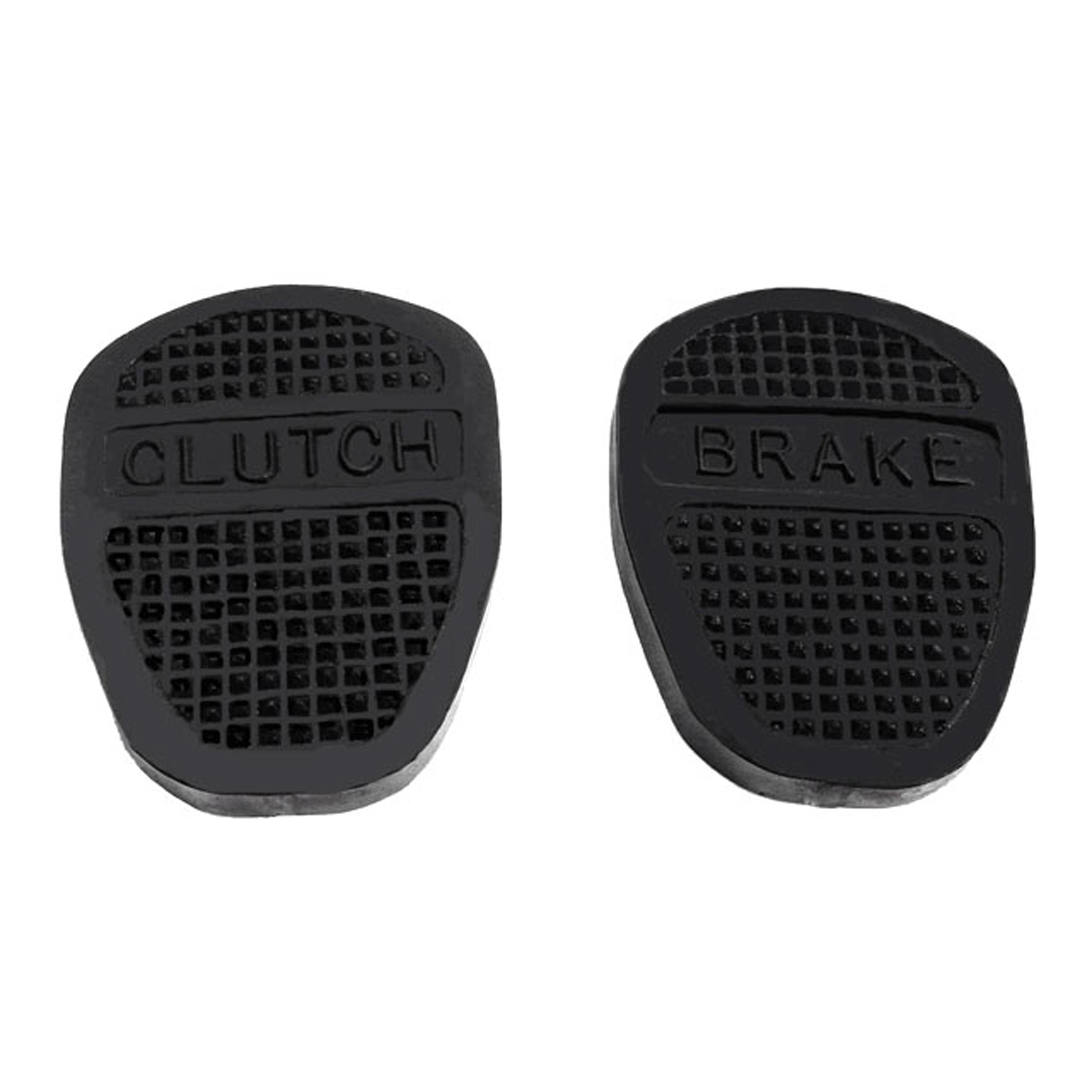 1933 Reo Royale Clutch and Brake Pedal Pads. Lettered "CLUTCH" and "BRAKE"-CB 38Clutch and Brake Pedal Pads. Lettered "CLUTCH" and "BRAKE". 3-1/4" wide X 4-3/8" long. Pair
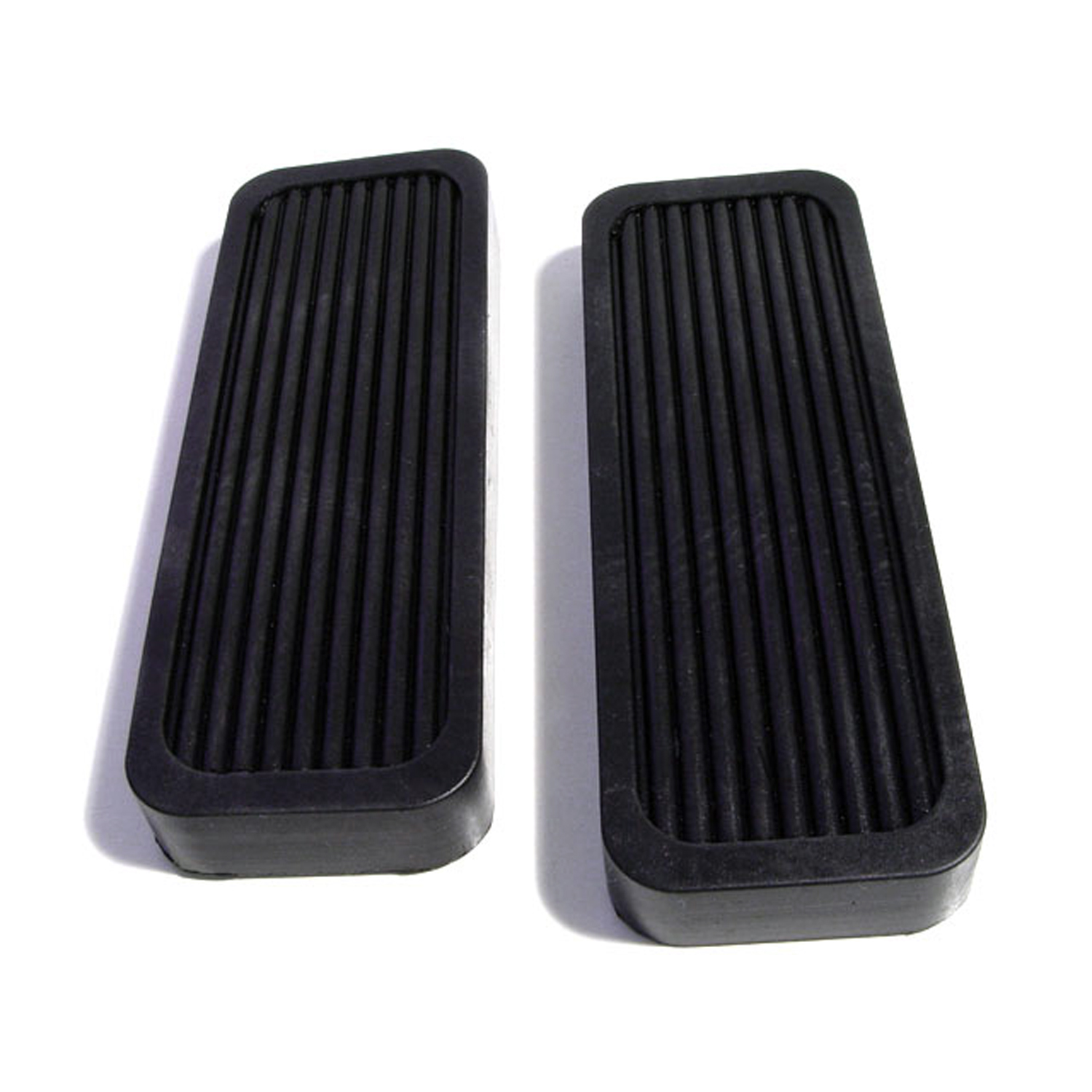 1933 Reo Royale Clutch and Brake Pedal Pads. 1-5/8" wide X 4-1/4" long-CB 39Clutch and Brake Pedal Pads. 1-5/8" wide X 4-1/4" long. Pair
Why Choose Metro?
For over 100 years, Metro Moulded Parts has been the pinnacle of quality in classic car restoration parts. Our commitment to precision and authenticity in every component ensures a perfect fit and an OEM-level appearance.
- Expert Craftsmanship & Quality: Each part is a testament to our dedication to reliability and perfection, crafted from original designs and thoroughly tested.
- Advanced Technology: We use cutting-edge techniques to create flawless, long-lasting parts that surpass others in performance.
- SuperSoft Sponge – The Ultimate Door Seal: Not only are our door seals 30% softer than competitors', but they're also guaranteed to never leak. They effectively reduce wind and road noise, enhancing your classic car's comfort and driving experience.
- Proudly American: Our parts are a product of American craftsmanship, made in the USA with a spirit of excellence and heritage.
- Unrivaled Warranty: We back our products with a 30-year industry-leading warranty, a testament to our confidence in their quality.
Join us in preserving the legacy of classic cars with parts that are crafted for perfection, not just made.