

Image of 1934 Reo Flying Cloud, Note: These illustrations use artistic license and may differ from actual historical models.
Performance Metrics
Fundamental Metrics
Emotional Appeal
MMP Rating
| Engine Specifications | |
|---|---|
| Engine Options: | Inline 6 |
| Displacement Range: | 3.7L |
| Horsepower Range: | Estimated 85-95 HP |
| Torque: | Not available |
| Compression Ratio: | Not available |
| Ignition System: | Distributor and coil |
| Cooling System: | Water-cooled |
| Performance Specifications | |
| 0-60 Time: | Not available |
| 1/4 Mile Time: | Not available |
| Top Speed: | 70-75 mph |
| Transmission and Drive | |
| Drive Type: | Rear-wheel drive |
| Transmission Type: | 3-speed manual |
| Fuel and Efficiency | |
| Fuel System Type: | Carburetor |
| MPG: | Not available |
| Dimensions and Brakes | |
| Brakes: | Mechanical drum brakes |
| Wheelbase: | 115 inches |
| Weight: | Estimated 2,800-3,000 lbs |
Note: Specifications for classic cars are given to the best of our ability, considering the limited and variant data available.
1934 REO Flying Cloud: The Independent American Classic
The 1934 REO Flying Cloud was a polished, six-cylinder American car built by a company whose founder had already helped put another famous name on the road: Ransom E. Olds, creator of Oldsmobile. Produced by REO Motor Car Company in Lansing, Michigan, the Flying Cloud paired substantial prewar construction with the streamlined styling and engineering ambition of the 1930s.
REO stood for R.E. Olds, who founded the company in 1904 after leaving Olds Motor Works. By the time the 1934 Flying Cloud arrived, REO was a respected independent manufacturer, also well known for its commercial vehicles and the celebrated REO Speed Wagon. The Flying Cloud was positioned as a comfortable, well-equipped passenger car, but it was being built during the Depression, when independent automakers faced a tough fight against the much larger Ford, General Motors, and Chrysler organizations.
One intriguing piece of REO history is its experimentation with the Self-Shifter, an early semiautomatic transmission offered within the company’s passenger-car range. It was not an automatic in the modern sense, but it showed that REO was willing to explore easier, less demanding ways to drive at a time when most cars still required the driver to operate a conventional clutch and gear lever.
Streamlined Fenders and a Thoughtful Cabin
The 1934 Flying Cloud had the upright presence expected of a prewar automobile, softened by flowing fenders and carefully rounded body contours. Its tall radiator grille gave the front end a dignified, almost formal look, while the long hood, separate fenders, running boards, and sweeping rear bodywork kept it unmistakably of its era. Bright trim and wheel covers added a touch of polish without the heavy ornamentation found on some more extravagant luxury cars.
Inside, the Flying Cloud emphasized comfort and practicality. Depending on body style and equipment, owners could expect a broad bench seat, a clearly arranged instrument panel, generous glass area, and trim in durable cloth or other period-appropriate materials. Higher-grade finishes and upholstery could vary with the body and specification. It was a cabin designed for real road travel, not just a short trip around town, with the upright seating position and spacious interior typical of a full-sized 1930s car.
Factory paint choices varied by year, body, and order, and surviving cars may have been repainted more than once. Period palettes commonly included restrained colors such as black, dark blue, maroon, and green, sometimes with contrasting details. Black had obvious appeal for its formal appearance and ease of upkeep, while richer colors helped show off the Flying Cloud’s curved fenders and body lines. Buyers should treat a current car’s paint as evidence of its own history, not necessarily proof of its original factory color.
The Flying Cloud range included closed and open body styles, with sedans and coupes among the choices offered across the model line. Exact availability depended on the specific series and catalog year. The four-door sedan is especially representative of the car’s role as a comfortable family and touring automobile, while coupes and open cars have a more sporting, less common appeal today.
Engineering in a Difficult Decade
For 1934, the Flying Cloud is generally associated with a straight-six engine of about 268 cubic inches, producing roughly 90 horsepower. Exact specifications can vary by series and reference source, so collectors should verify an individual car by its engine number, chassis details, and period literature. Power went through a conventional manual transmission, with the optional REO Self-Shifter available in the company’s passenger-car offerings on some configurations.
The car’s importance lies less in one revolutionary feature than in the way REO combined established engineering with a modernizing design. A substantial chassis, a smooth six-cylinder engine, and a roomy body made the Flying Cloud a credible alternative to cars from much larger manufacturers. Its shape also reflected the gradual shift away from strictly boxlike coachwork toward rounded fenders and more integrated-looking bodies.
REO’s independent status makes the Flying Cloud an interesting counterpoint to the better-known mass-market cars of the period. It was not produced in the numbers of a Ford or Chevrolet, and it did not have their vast sales and service networks. That relative scarcity is part of its present-day character: it represents a capable American automaker that tried to compete through quality and engineering while the Depression was reshaping the industry.
Road Manners and Real-World Performance
With around 90 horsepower in a substantial car, the Flying Cloud was built for steady touring rather than quick acceleration. A well-tuned example may reach approximately 75 to 80 mph, although age, gearing, engine condition, tires, and body style all affect its real-world top speed. A 0-to-60-mph time is best treated as an estimate rather than a factory promise: expect a leisurely run, likely in the neighborhood of 25 to 30 seconds or more.
On a smooth road, the long wheelbase and softly sprung suspension give the car a relaxed, floating character compared with a modern vehicle. Broken pavement and sharp bumps are absorbed with the deliberate movement typical of a heavy prewar car, though worn springs, tired shocks, old tires, or loose steering components can make the ride feel less composed. On winding roads, the Flying Cloud rewards a measured pace. Its size, period tires, and comparatively slow steering call for planning rather than quick directional changes.
The six-cylinder engine produces a low, even mechanical sound, with more purposeful rumble under load than the muted note of a modern sedan. The driver sits upright, works a traditional gear lever, and must allow room for the car’s mass and braking distances. That hands-on involvement is part of the pleasure. The Flying Cloud feels less like a machine that isolates its driver and more like a substantial piece of equipment that asks to be operated with attention.
Living With a 1934 REO
Today, most Flying Clouds are used as touring cars, weekend drivers, or show vehicles rather than daily transportation. A well-sorted example can take part in local events and leisurely club runs, but regular highway use requires careful preparation. Modern traffic moves faster, and the car lacks contemporary safety equipment, crash protection, and braking performance.
Routine work is straightforward for an experienced classic-car owner or mechanic familiar with prewar American vehicles. The engine and chassis use mechanical systems that can be serviced without diagnostic computers, and many repairs follow familiar principles. The greater challenge is finding correct parts, specialist knowledge, and body or trim pieces specific to REO. Before purchase, inspect the engine, cooling system, transmission, brakes, steering, frame, and wood or structural elements where applicable. Confirm that replacement parts are suitable and that any unusual transmission equipment is understood before driving.
Reliability depends heavily on maintenance and storage. A car that has been regularly exercised, properly lubricated, and kept dry is a very different proposition from one that has spent decades in a damp barn. Fuel-system updates, fresh tires, electrical repairs, and careful brake work are common needs on cars that have been dormant. For long trips, carrying basic tools and a few commonly needed spares is sensible vintage-car practice.
REO Flying Cloud Facts and Folklore
The Flying Cloud name was not new in 1934. REO had introduced it in the early 1930s, using the name for a line intended to suggest smooth, modern travel. Its sibling, the REO Speed Wagon, became far more famous in commercial service and later entered popular culture through the name of the rock band. The passenger cars and trucks came from the same company, but they served very different roles.
The Flying Cloud is not generally known for a major speed record or a headline-grabbing competition victory. Its story is instead one of independent engineering and survival through difficult economic conditions. REO eventually stopped building passenger cars in 1936 and concentrated on trucks, making the remaining Flying Clouds a reminder of a brief but ambitious chapter in the company’s history.
Common criticisms are familiar to owners of many low-volume prewar cars: parts can take time to find, specialist support is thinner than it is for Ford or Chevrolet, and the driving experience is slow by modern standards. The car’s size and age also make it poorly suited to contemporary commuting. Those drawbacks are balanced by its rarity, handsome proportions, and the satisfaction of owning something less predictable than the usual mass-produced classic.
Collector Values and Availability
There is no dependable, widely published production tally for every 1934 Flying Cloud body style. A reasonable working estimate is that total production was in the low thousands, perhaps roughly 2,000 to 4,000 cars, but that should be treated as an informed estimate rather than a confirmed factory figure. Surviving examples are uncommon, and a specific body style or a car with strong original documentation may be much harder to locate than the overall estimate suggests.
As a broad current-market guide, a project car may sell for around $8,000 to $15,000, while a usable driver or older restoration might fall in the $15,000 to $30,000 range. A high-quality restoration, an especially desirable body style, or an unusually original example could bring approximately $30,000 to $50,000 or more. Condition, provenance, completeness, and the quality of the work matter far more than a simple model-year average. These figures are estimates, not a substitute for recent comparable sales or a specialist appraisal.
Prices for rare prewar cars tend to be selective rather than uniformly rising. Exceptional examples can attract strong interest, but the buyer pool is smaller than for mainstream classics, and restoration costs can easily exceed a car’s resale value. The Flying Cloud’s rarity and history support its appeal, while its limited parts network and slower performance can restrain demand. Buyers should choose one because they enjoy the car, not simply because they expect rapid appreciation.
Why the 1934 Flying Cloud Still Matters
The 1934 REO Flying Cloud brings together a respected independent manufacturer, a substantial six-cylinder touring car, and the graceful bodywork of the prewar era. Its performance is relaxed, its engineering is hands-on, and its ownership asks for patience, but those qualities are central to its appeal. For collectors seeking an American classic with a story beyond the usual big-name marques, the Flying Cloud is a distinctive reminder of how much character the independent automakers brought to the road.
It may not have been the fastest or most famous car of its decade, but the Flying Cloud carried REO’s ambition in every mile. That makes it more than a rare survivor: it is a rolling piece of American automotive history.
1934 Reo Flying Cloud Catalog of Parts
 1934 Reo Flying Cloud Accessory Floor Mat - 12"X17"-AC 36Accessory Floor Mat - made of high quality black rubber with molded original emblem. Also designed to be sewn into new carpets. 12"X17", Each
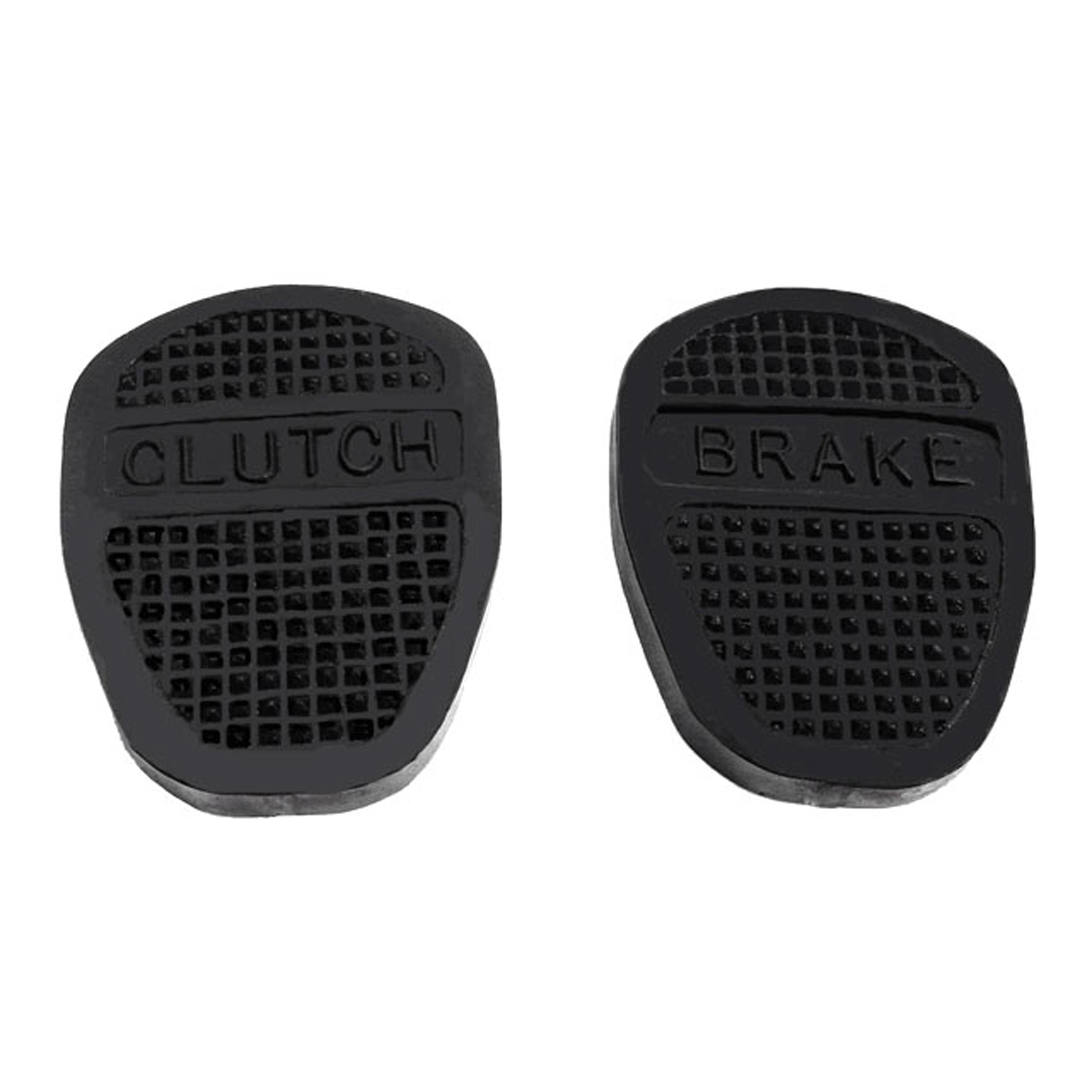 1934 Reo Flying Cloud Clutch and Brake Pedal Pads. Lettered "CLUTCH" and "BRAKE"-CB 38Clutch and Brake Pedal Pads. Lettered "CLUTCH" and "BRAKE". 3-1/4" wide X 4-3/8" long. Pair
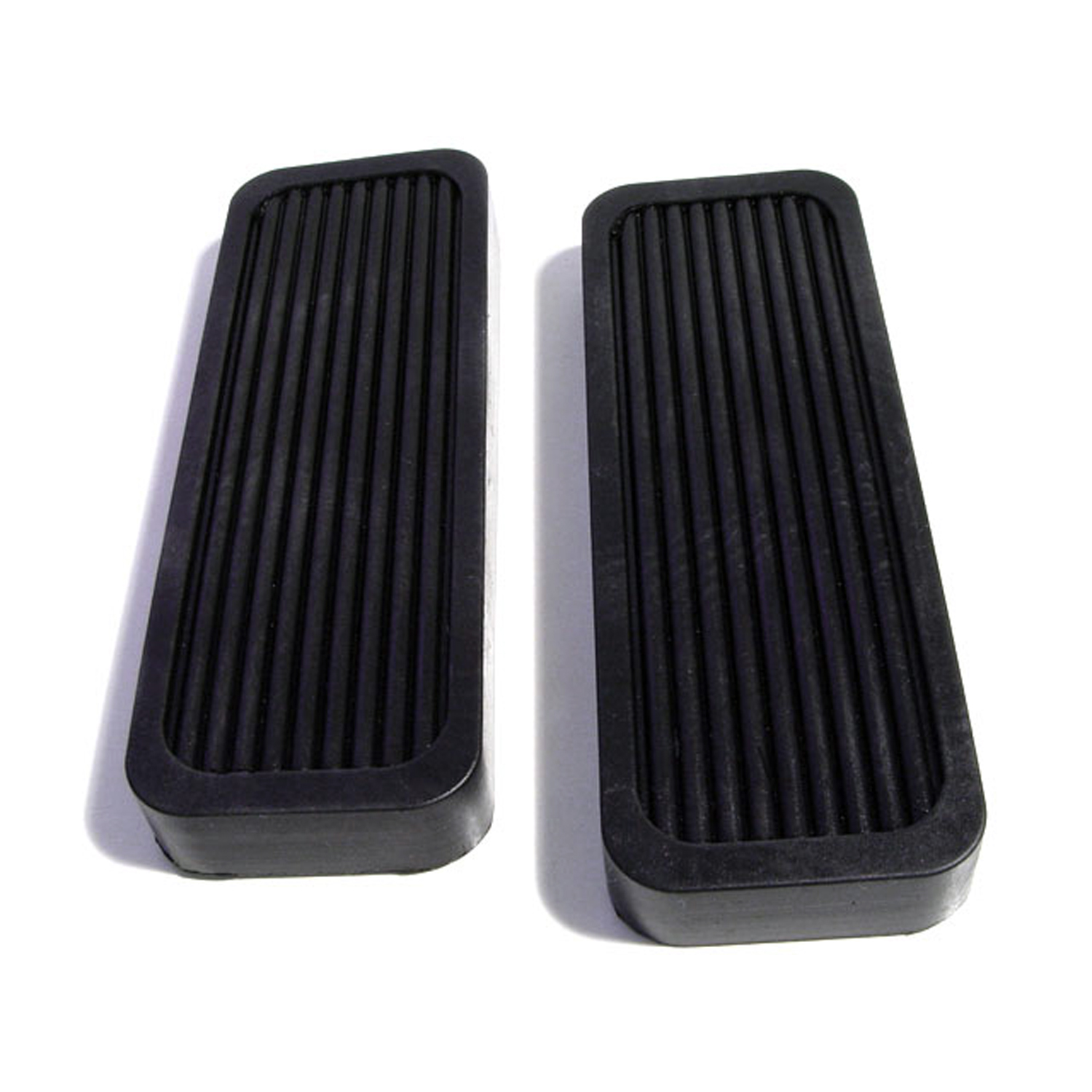 1934 Reo Flying Cloud Clutch and Brake Pedal Pads. 1-5/8" wide X 4-1/4" long-CB 39Clutch and Brake Pedal Pads. 1-5/8" wide X 4-1/4" long. Pair
Why Choose Metro?
For over 100 years, Metro Moulded Parts has been the pinnacle of quality in classic car restoration parts. Our commitment to precision and authenticity in every component ensures a perfect fit and an OEM-level appearance.
- Expert Craftsmanship & Quality: Each part is a testament to our dedication to reliability and perfection, crafted from original designs and thoroughly tested.
- Advanced Technology: We use cutting-edge techniques to create flawless, long-lasting parts that surpass others in performance.
- SuperSoft Sponge – The Ultimate Door Seal: Not only are our door seals 30% softer than competitors', but they're also guaranteed to never leak. They effectively reduce wind and road noise, enhancing your classic car's comfort and driving experience.
- Proudly American: Our parts are a product of American craftsmanship, made in the USA with a spirit of excellence and heritage.
- Unrivaled Warranty: We back our products with a 30-year industry-leading warranty, a testament to our confidence in their quality.
Join us in preserving the legacy of classic cars with parts that are crafted for perfection, not just made.