

Image of 1934 Reo Royale, Note: These illustrations use artistic license and may differ from actual historical models.
Performance Metrics
Fundamental Metrics
Emotional Appeal
MMP Rating
| Engine Specifications | |
|---|---|
| Engine: | Straight 8 |
| Displacement: | 5.9L |
| Horsepower: | Estimated 125 HP |
| Torque: | Information not available |
| Compression Ratio: | Information not available |
| Ignition System: | Standard for the period (likely a distributor and points system) |
| Cooling System: | Liquid-cooled |
| Performance Specifications | |
| 0-60 Time: | Information not available |
| 1/4 Mile Time: | Information not available |
| Top Speed: | 85 mph |
| Transmission and Drive | |
| Drive Type: | Rear Wheel Drive |
| Transmission Type: | 3-speed manual |
| Fuel and Efficiency | |
| Fuel System Type: | Carburetor |
| MPG: | Information not available |
| Dimensions and Brakes | |
| Brakes: | Drum brakes |
| Wheelbase: | 135 inches |
| Weight: | Estimated 4,600 lbs |
Note: Specifications for classic cars are given to the best of our ability, considering the limited and variant data available.
1934 REO Royale: A Depression-Era American Luxury Car
The 1934 REO Royale was a grand, hand-finished American automobile built when the country’s luxury-car makers were trying to keep elegance alive through the Great Depression. Produced by the REO Motor Car Company in Lansing, Michigan, it paired a powerful straight-eight engine with long, formal bodywork and a level of craftsmanship intended to put it among the finest cars on the road.
REO took its name from company founder Ransom Eli Olds, who had already established the Oldsmobile marque before leaving Olds Motor Works. The Royale was the company’s flagship, introduced in 1931 and styled with help from noted designer Amos Northup. By 1934, it was a sophisticated but costly offering in a market where buyers were increasingly cautious. REO stopped building passenger cars in 1936 and concentrated on trucks, giving the Royale a place as one of the company’s final great luxury cars.
One detail that makes the Royale especially interesting is its connection to coachbuilder Murray Corporation of America. Murray contributed body-building expertise to the project, while Northup helped give the car a distinctive, carefully shaped appearance. The result was not simply a larger version of an ordinary sedan. It was REO’s statement that a relatively small independent manufacturer could compete in the prestige market.
Long Lines and Carefully Finished Interiors
The Royale’s styling is all about proportion. Its long hood leads into a tall, upright radiator grille, while flowing front fenders sweep back toward the passenger compartment. A pronounced hood and long wheelbase give the car a stately profile. Details such as the brightwork, lamps, running boards, and sweeping fender lines add visual richness without making the design look fussy. From the front, the Royale has the formal presence expected of a luxury car; from the side, its extended body gives it a sense of motion even when parked.
Inside, buyers could expect an environment shaped by the body style and equipment ordered. Upholstery might be finished in fine cloth or leather, with polished wood trim, substantial door panels, and broad, comfortable seats. The dashboard was arranged for clear access to the instruments and controls, and the cabin was designed for quiet, relaxed travel rather than sporting minimalism. Materials and fittings varied with the body and specification, so original cars may differ noticeably from one another.
Paint choices also depended on the model and order. Period luxury cars were commonly offered in dark, dignified colors, as well as more expressive combinations and two-tone treatments. Black, deep blue, burgundy, and dark green are all fitting period-style choices, but a surviving car’s exact original color should be confirmed from factory records or traces beneath later paint. The body style and customer specification mattered as much as the color in defining a Royale’s character.
The Royale range included enclosed sedans and more specialized open or coupe-style bodies, with configurations and availability changing across the model years. The formal sedan best expresses the car’s luxury mission, while open-body versions have particular appeal to collectors who want the drama of the long hood and sweeping fenders in full view. Body availability can vary by catalog year, so an individual car’s original configuration is best checked against its identification plates and period documentation.
Engineering for the Open Road
At the heart of the 1934 Royale was a large-displacement inline eight, generally listed at about 357 cubic inches and rated at approximately 125 horsepower. Power went to the rear wheels through a manual transmission. The long, smooth-running engine was well suited to carrying a substantial luxury car at steady highway speeds, delivering the kind of effortless pull buyers expected from an upper-class automobile.
Equipment and specifications can differ by body style and build date, but the Royale was engineered as a complete luxury chassis rather than a simple engine upgrade. Its long wheelbase helped provide a spacious cabin and a settled ride. Period braking and suspension systems were designed for the roads and speeds of the day, not modern traffic, so present-day owners should confirm that an example’s brakes, steering, tires, and suspension are in sound condition before driving it regularly.
REO’s achievement was not one single headline-grabbing invention. The Royale’s appeal came from combining a refined straight-eight, substantial construction, distinctive styling, and coachbuilt presentation in a product from a smaller independent company. It showed how much design and engineering ambition could be packed into a low-volume American car during a difficult economic period.
Performance and Driving Character
Period performance figures are not consistently published for every 1934 Royale body style, and a large vintage car’s condition has a major effect on its speed. As a practical estimate, a well-maintained example might reach roughly 80 to 90 mph, with 0 to 60 mph taking around 20 to 25 seconds. Treat those numbers as informed estimates rather than guaranteed factory test results. The Royale was built for smooth, dignified travel, not quick acceleration or modern high-speed driving.
On the road, the straight-eight’s most memorable quality is its even, subdued rhythm. Rather than a sharp, high-revving sound, it produces a deep mechanical murmur that becomes more noticeable under acceleration. The car’s length and weight encourage a measured driving style. It should feel composed on decent pavement, while bumps and broken surfaces will remind the driver that the suspension, tires, and chassis are nearly a century old.
On winding roads, the Royale is best driven smoothly. Its size and period steering require more anticipation than a modern car, and tight corners are not its natural playground. A properly maintained example can be a rewarding touring car, but it asks the driver to plan braking distances, respect its dimensions, and avoid abrupt inputs. The experience is less about speed than about the view over the long hood and the sense of occasion every mile brings.
Ownership, Maintenance, and Reliability
Today, a 1934 REO Royale is most often used for touring, club events, concours displays, and private collections. It is too valuable and specialized for most owners to treat as an everyday driver. That said, a carefully sorted car can still be driven on suitable roads, provided the owner accepts its limitations and keeps up with regular inspection.
Maintenance is manageable for a mechanically experienced owner, but not necessarily easy for someone accustomed only to modern cars. The engine, ignition, fuel system, cooling system, brakes, and electrical equipment all require period-correct knowledge and parts. Some routine work is straightforward, yet rare trim, body panels, and model-specific components can take time and specialist help to source. Before purchasing, inspect the chassis for corrosion or poor repairs, verify that the engine and transmission are healthy, and check that any restoration has not obscured the car’s identity.
Reliability depends heavily on restoration quality and ongoing care. A well-maintained Royale can be a dependable event and touring car within its intended use, but age-related problems are always possible. Cooling performance, fuel delivery, brake condition, and the availability of correct tires deserve particular attention before a long trip.
Royale Facts and Common Misconceptions
The Royale is sometimes confused with the more familiar Oldsmobile because of Ransom Eli Olds’s connection to both companies. REO and Oldsmobile were separate manufacturers, however, and the Royale was a REO product built in Lansing. That distinction is part of its appeal: it represents the work of an independent automaker with a founder already famous in the early American car industry.
The Royale was not designed as a racing car, and there is no widely recognized speed or endurance record that defines the 1934 model. Its achievement was more unusual: REO continued to offer a serious luxury automobile during the Depression, when demand for expensive cars had contracted sharply. Its low-volume character, rather than a famous competition victory, is what makes it noteworthy today.
A common criticism is that the Royale’s size and luxury-car ambitions came with high cost and limited practicality, particularly during the economic conditions of the 1930s. It was also built in small numbers, so parts and specialist knowledge are less readily available than for popular mass-produced classics. Those drawbacks are real for owners, but they also help explain why a surviving Royale feels special.
1934 REO Royale Collector Values
Exact production totals for individual Royale years and body styles are difficult to establish from commonly available records. A reasonable working estimate is that only a few hundred 1934 examples were built, within a total Royale production run likely in the low thousands across the model’s 1931 to 1935 years. These are estimates, not confirmed factory totals, and survival rates are lower still. A particular body style, documented history, or exceptional original condition can make one example far harder to find than another.
As a broad current-market guide, a Royale needing significant restoration might fall around $25,000 to $50,000. A sound, presentable driver or older restoration could bring roughly $50,000 to $100,000, while a superb restoration, rare body style, or car with strong provenance may reach $100,000 to $175,000 or more. Actual auction results vary considerably with condition, originality, documentation, and the strength of the buyer pool.
Values for distinctive prewar cars have generally benefited from their rarity and historical interest, but the Royale is a specialist purchase rather than a guaranteed investment. Its market is narrower than that of better-known luxury marques, and restoration costs can exceed any eventual increase in value. The best examples are likely to retain the strongest appeal, especially when they preserve correct details and come with credible records.
Why the 1934 Royale Still Matters
The 1934 REO Royale brought together a smooth straight-eight engine, imposing proportions, carefully finished interiors, and the work of a respected designer and body builder. It stood apart from ordinary cars through its low-volume luxury character, while reflecting the financial pressures facing independent automakers during the Depression.
For collectors, the Royale offers something beyond rarity: a direct connection to REO’s ambitious final chapter as a passenger-car maker. It may not be as famous as some of its luxury-car rivals, but its blend of engineering, styling, and historical timing makes it a compelling piece of American automotive history. The long hood and quiet eight-cylinder engine still deliver the message REO intended: this was a car built to make every arrival feel important.
1934 Reo Royale Catalog of Parts
 1934 Reo Royale Accessory Floor Mat - 12"X17"-AC 36Accessory Floor Mat - made of high quality black rubber with molded original emblem. Also designed to be sewn into new carpets. 12"X17", Each
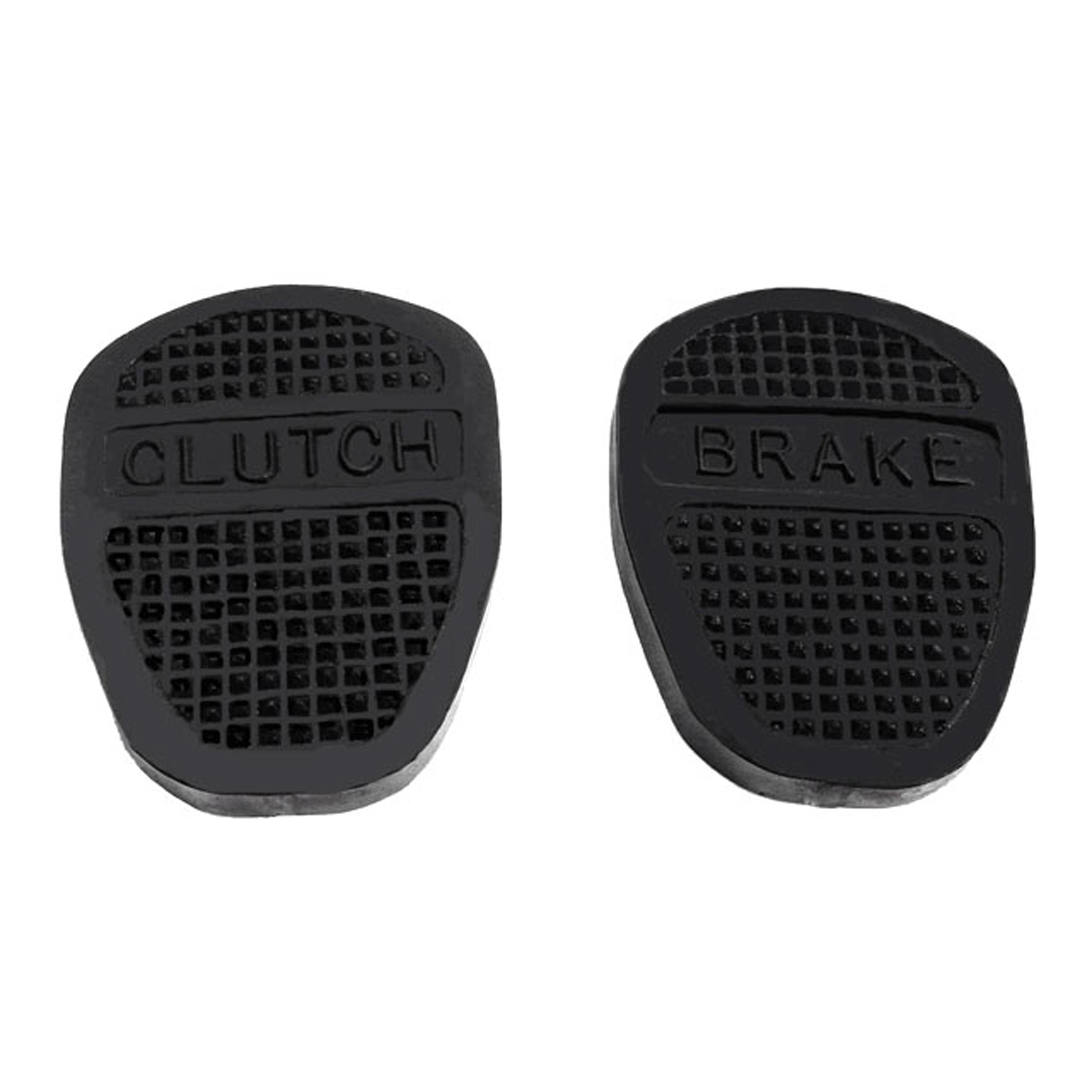 1934 Reo Royale Clutch and Brake Pedal Pads. Lettered "CLUTCH" and "BRAKE"-CB 38Clutch and Brake Pedal Pads. Lettered "CLUTCH" and "BRAKE". 3-1/4" wide X 4-3/8" long. Pair
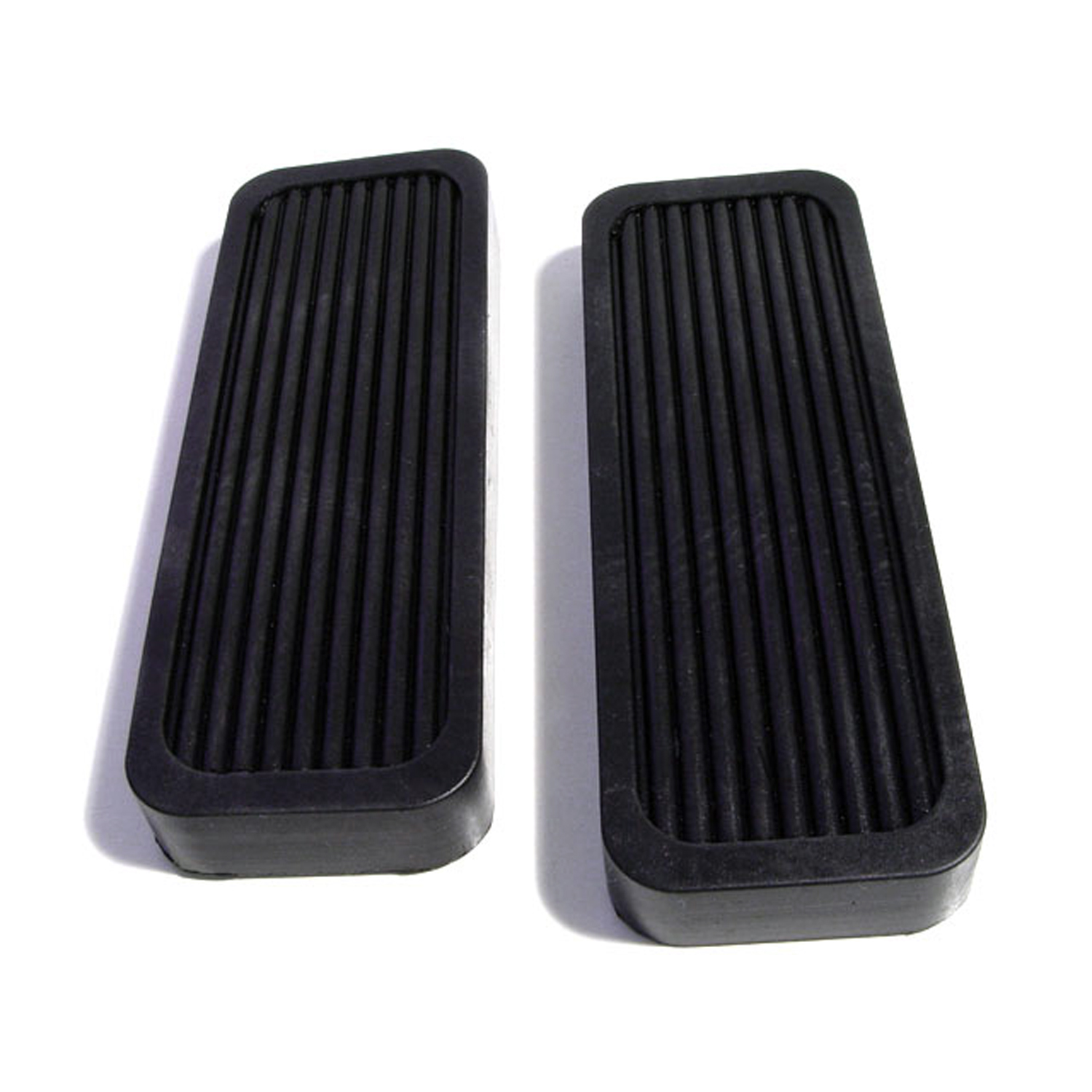 1934 Reo Royale Clutch and Brake Pedal Pads. 1-5/8" wide X 4-1/4" long-CB 39Clutch and Brake Pedal Pads. 1-5/8" wide X 4-1/4" long. Pair
Why Choose Metro?
For over 100 years, Metro Moulded Parts has been the pinnacle of quality in classic car restoration parts. Our commitment to precision and authenticity in every component ensures a perfect fit and an OEM-level appearance.
- Expert Craftsmanship & Quality: Each part is a testament to our dedication to reliability and perfection, crafted from original designs and thoroughly tested.
- Advanced Technology: We use cutting-edge techniques to create flawless, long-lasting parts that surpass others in performance.
- SuperSoft Sponge – The Ultimate Door Seal: Not only are our door seals 30% softer than competitors', but they're also guaranteed to never leak. They effectively reduce wind and road noise, enhancing your classic car's comfort and driving experience.
- Proudly American: Our parts are a product of American craftsmanship, made in the USA with a spirit of excellence and heritage.
- Unrivaled Warranty: We back our products with a 30-year industry-leading warranty, a testament to our confidence in their quality.
Join us in preserving the legacy of classic cars with parts that are crafted for perfection, not just made.