
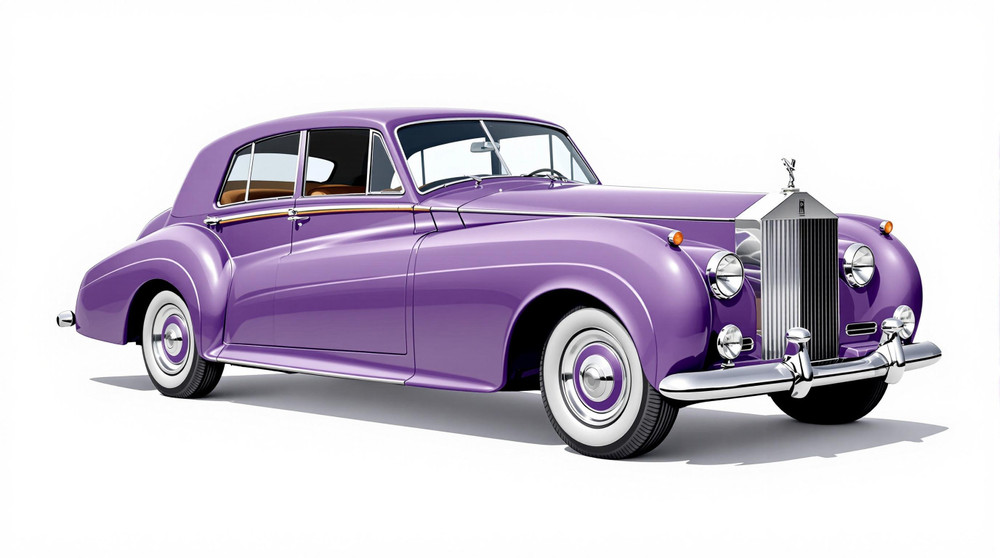
Image of 1956 Rolls-Royce Silver Cloud, Note: These illustrations use artistic license and may differ from actual historical models.
Performance Metrics
Fundamental Metrics
Emotional Appeal
MMP Rating
| Engine Specifications | |
|---|---|
| Engine Options: | 4.9L I6 |
| Displacement Range: | 4887 cc |
| Horsepower Range: | 155-178 hp |
| Torque: | Estimated 300 Nm |
| Compression Ratio: | 6.6:1 |
| Ignition System: | Coil and distributor |
| Cooling System: | Water-cooled |
| Performance Specifications | |
| 0-60 Time: | 13.5 seconds |
| 1/4 Mile Time: | Estimated 19 seconds |
| Top Speed: | 102 mph |
| Transmission and Drive | |
| Drive Type: | Rear-wheel drive |
| Transmission Type: | 4-speed automatic |
| Fuel and Efficiency | |
| Fuel System Type: | Twin SU carburetors |
| MPG: | Estimated 10-15 mpg |
| Dimensions and Brakes | |
| Brakes: | Drum brakes |
| Wheelbase: | 123 inches |
| Weight: | 2,040 kg |
Note: Specifications for classic cars are given to the best of our ability, considering the limited and variant data available.
1956 Rolls-Royce Silver Cloud: The Classic British Luxury Saloon
The 1956 Rolls-Royce Silver Cloud turned quiet confidence into an art form. Built by Rolls-Royce at its Crewe factory in England, it was a grand, carefully engineered saloon for buyers who wanted comfort and refinement rather than speed or spectacle. The first-generation Silver Cloud had arrived in 1955, replacing the Silver Dawn and giving postwar Rolls-Royce motoring a fresh, more modern face.
The Silver Cloud I shared its basic engineering with the Bentley S1, but its upright grille, flying lady mascot and carefully composed lines gave it a distinct identity. One intriguing detail is that buyers could choose a standard factory body or commission a coachbuilt version from a specialist firm. As a result, two Silver Clouds from the same year can look remarkably different.
Exterior Design and Coachbuilt Options
Designed under Rolls-Royce stylist John Blatchley, the Silver Cloud wore its size with restraint. Its long bonnet, gently rising front wings and rounded rear gave the car a poised, almost architectural shape. At the nose, the tall vertical grille made an unmistakable statement, while the Spirit of Ecstasy mascot completed the familiar Rolls-Royce profile. Broad chrome bumpers and subtle brightwork added polish without overwhelming the design.
The most common version was the four-door standard steel saloon, produced with Pressed Steel and finished at Crewe. The Silver Cloud retained a separate chassis, rather than adopting unitary construction. That traditional arrangement also gave coachbuilders room to create alternative bodies. Buyers could commission long-wheelbase saloons, elegant two-door coupes and drophead coupes from firms such as H.J. Mulliner, Park Ward and James Young. The standard saloon is the most recognizable and widely available, while coachbuilt cars are generally scarcer and more individual.
Paintwork could be specified in a broad range of colors, including bespoke combinations. Black, silver, dark blue, maroon and ivory were among the period favorites. Two-tone schemes suited the car especially well, emphasizing the sweep of the body without making it look flashy. As with any Rolls-Royce, the exact color and trim depended on the first owner’s preferences.
A Hand-Finished Interior
Inside, the Silver Cloud put comfort and craftsmanship ahead of novelty. Connolly leather covered the seats, burr walnut veneer dressed the dashboard and trim, and thick Wilton wool carpets softened the cabin. The woodwork was selected and finished to create a warm, formal atmosphere, while generous seating and a broad cabin made long journeys feel unhurried.
Equipment varied with specification. Buyers could order items such as a radio, division glass, power steering and, in some configurations, air conditioning. Many amenities that are standard in modern luxury cars were either optional or unavailable, so a well-equipped example can differ considerably from a more basic one. The cabin’s appeal lies less in modern gadgetry than in its materials, quietness and careful finish.
Engineering for a Quieter Kind of Progress
Under the bonnet sits a 4,887 cc, 4.9-litre inline-six. The engine was a refined development of Rolls-Royce’s established six-cylinder design, with an aluminum-alloy cylinder head and twin SU carburetors. Rolls-Royce did not make a habit of advertising an official horsepower figure, but period and later estimates commonly place output at around 155 bhp.
A four-speed automatic transmission made the car easy to drive in town and relaxed on the open road. The Silver Cloud also used independent front suspension with coil springs and a live rear axle on semi-elliptic springs. Hydraulic drum brakes with servo assistance provided period-appropriate stopping power. Taken together, these features prioritized a smooth, composed journey over sharp responses or sporting performance.
Performance and the Silver Cloud Driving Experience
Published performance figures vary by car, condition and measurement method, but a healthy Silver Cloud I typically reaches 60 mph from rest in about 13 to 14 seconds. Top speed is usually quoted at roughly 102 to 104 mph. Those numbers were impressive enough for a large luxury saloon of the period, but the car was never meant to be driven like a sports car.
On a straight highway, the six-cylinder engine works with a subdued, steady note, and the automatic transmission changes gears without asking the driver to do much. The steering is light for a car of this size, particularly when power assistance is fitted. The suspension is tuned for comfort, so it rounds off ordinary road imperfections and settles into a relaxed stride. On winding roads, the Silver Cloud feels substantial and deliberate rather than nimble. Its size, drum brakes and leisurely responses reward a smooth driving style and plenty of space.
That ease is central to the experience. The driver sits behind a broad bonnet, surrounded by polished wood and leather, while the car’s quiet cabin filters out much of the commotion outside. It is a car for arriving refreshed, not for chasing lap times.
Why the Silver Cloud Matters
The Silver Cloud helped define the postwar image of the British luxury saloon. It combined a traditional separate chassis and coachbuilding options with a more modern, standardized factory body. That balance gave customers a familiar level of customization while allowing Rolls-Royce to build the standard saloon in greater numbers than a purely hand-built body would have allowed.
It also captured an important moment for Rolls-Royce. The company was moving toward more modern production methods, yet still treated quietness, materials and finish as essential parts of the engineering brief. The Silver Cloud’s influence can be seen in later luxury cars that aimed to make performance feel effortless rather than dramatic. Its Bentley S1 counterpart shared much of the mechanical foundation, but the Rolls-Royce’s styling and presentation gave it a different character.
Ownership, Maintenance and Common Criticisms
Today, a Silver Cloud is most often used as a collector car, show car, wedding car or occasional touring car. Some owners do use them regularly, but the running costs and age of the components make them less practical as everyday transport than a modern luxury saloon. A well-maintained example can still cover long distances comfortably, provided it receives careful attention.
Maintenance is specialized, and routine work is not necessarily difficult for an experienced mechanic, but parts, labor and correct diagnosis can be expensive. The car’s age means that condition matters more than mileage alone. Prospective owners should have the engine, automatic transmission, brakes, steering, suspension and electrical system inspected by a specialist familiar with Rolls-Royce models. Rust, poor-quality past repairs and neglected mechanical work can quickly turn an attractive purchase into a costly project.
Common criticisms are mostly the result of comparing a 1950s car with modern expectations. Drum brakes need more distance and attention than contemporary disc systems, safety equipment is limited, and air conditioning is not universal. The car is also large and thirsty by modern standards. For careful owners who understand its age and purpose, these are manageable traits rather than surprises.
Silver Cloud Facts and Notable Details
The Silver Cloud I was produced from 1955 to 1958, and approximately 2,238 examples were built. That figure is a useful guide to its scale, though the number of surviving cars and the rarity of particular coachbuilt bodies vary. The Silver Cloud was not designed to set speed or endurance records. Its achievement was making quiet, long-distance luxury feel natural and dependable.
Silver Clouds have been associated with wealthy business owners, public figures and heads of state, and the model has appeared in period photography and film. Individual celebrity claims should be checked against a car’s documented history, since famous-owner stories are often repeated without strong evidence. The most unusual examples are usually not special factory editions, but coachbuilt cars with distinctive bodies and well-documented ownership.
Collector Values and Availability
As a broad 2026 guide, a Silver Cloud I in need of substantial work might sell for around $35,000 to $70,000 USD. A sound, usable standard saloon often falls in the $70,000 to $150,000 range, while exceptional, correctly restored examples can reach roughly $150,000 to $250,000 or more. Rare coachbuilt cars can exceed those figures, with value depending heavily on the maker, condition, originality and provenance. These are general estimates, not a substitute for a current appraisal.
Values have varied with condition, maintenance history and collector demand. In nominal terms, the best examples have generally held their appeal and may appreciate, while ordinary cars can be held back by restoration and running costs. After inflation and upkeep are considered, ownership is better viewed as a way to enjoy an important classic than as a guaranteed investment. Silver Clouds appear on the market regularly enough to be found, but well-preserved cars with strong records are much less common than rough or partially restored examples.
A Lasting Rolls-Royce
The 1956 Rolls-Royce Silver Cloud brought together stately styling, careful craftsmanship and relaxed performance at a turning point in postwar motoring. Its separate chassis and coachbuilt alternatives honored tradition, while its refined automatic transmission and factory saloon body pointed toward a more modern era. More than a prestigious old car, the Silver Cloud remains a memorable expression of what luxury meant when the journey itself was meant to be enjoyed.
1956 Rolls-Royce Silver Cloud Catalog of Parts
 1956 Rolls-Royce Silver Cloud Heel Pad. Initials "HJM"-RM 16Heel Pad. Initials "HJM". Made of high quality black rubber. 8" X 16". Each
Why Choose Metro?
For over 100 years, Metro Moulded Parts has been the pinnacle of quality in classic car restoration parts. Our commitment to precision and authenticity in every component ensures a perfect fit and an OEM-level appearance.
- Expert Craftsmanship & Quality: Each part is a testament to our dedication to reliability and perfection, crafted from original designs and thoroughly tested.
- Advanced Technology: We use cutting-edge techniques to create flawless, long-lasting parts that surpass others in performance.
- SuperSoft Sponge – The Ultimate Door Seal: Not only are our door seals 30% softer than competitors', but they're also guaranteed to never leak. They effectively reduce wind and road noise, enhancing your classic car's comfort and driving experience.
- Proudly American: Our parts are a product of American craftsmanship, made in the USA with a spirit of excellence and heritage.
- Unrivaled Warranty: We back our products with a 30-year industry-leading warranty, a testament to our confidence in their quality.
Join us in preserving the legacy of classic cars with parts that are crafted for perfection, not just made.