
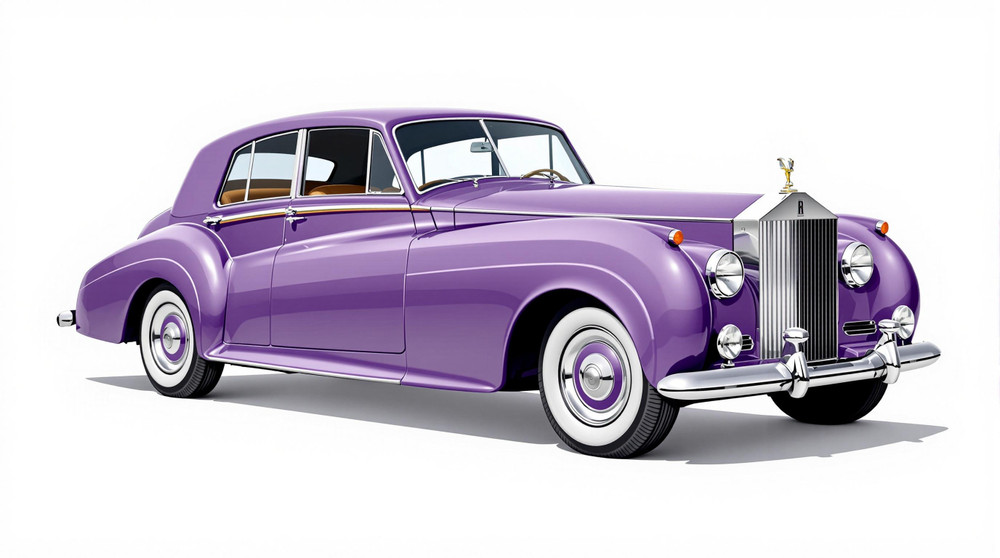
Image of 1957 Rolls-Royce Silver Cloud, Note: These illustrations use artistic license and may differ from actual historical models.
Performance Metrics
Fundamental Metrics
Emotional Appeal
MMP Rating
| Engine Specifications | |
|---|---|
| Engine: | Inline 6-cylinder engine |
| Displacement: | 4887 cc |
| Horsepower: | Estimated 178-200 hp |
| Torque: | 300 lb-ft |
| Compression Ratio: | Estimated 8.0:1 |
| Ignition System: | Coil ignition |
| Cooling System: | Water-cooled |
| Performance Specifications | |
| 0-60 Time: | 13.5 seconds |
| 1/4 Mile Time: | Estimated 19.5 seconds |
| Top Speed: | 106 mph |
| Transmission and Drive | |
| Drive Type: | Rear-wheel drive |
| Transmission Type: | 4-speed automatic |
| Fuel and Efficiency | |
| Fuel System Type: | Twin SU carburetors |
| MPG: | Estimated 10-15 mpg |
| Dimensions and Brakes | |
| Brakes: | Drum brakes |
| Wheelbase: | 123 inches |
| Weight: | 4300 lbs |
Note: Specifications for classic cars are given to the best of our ability, considering the limited and variant data available.
1957 Rolls-Royce Silver Cloud: A New Standard of Quiet Luxury
The 1957 Rolls-Royce Silver Cloud made effortless travel look like an art form. Built by Rolls-Royce at its Crewe factory in England, it combined formal British styling, painstaking craftsmanship and a remarkably smooth six-cylinder engine in a car designed to cover long distances with composure. The Silver Cloud was not a sports saloon or a status symbol built around speed. Its achievement was making a large, imposing automobile feel serene and easy to use.
Introduced in 1955 as the successor to the Silver Dawn, the Silver Cloud represented a modern chapter for Rolls-Royce. Its first version, now commonly called the Silver Cloud I, remained in production until 1959. A memorable detail from the series is that Rolls-Royce offered the car both as a complete factory-built saloon and as a chassis for specialist coachbuilders. Buyers could choose a polished, ready-to-drive motor car or commission a highly individual body from firms such as H.J. Mulliner, James Young or Park Ward.
Elegant Styling and Hand-Finished Luxury
The Silver Cloud’s shape is instantly recognisable: a long bonnet, upright radiator grille, gently rounded front wings and a spacious, almost architectural passenger compartment. The grille and Spirit of Ecstasy mascot give the front a dignified presence, while restrained chrome trim adds brightness without overwhelming the body. Compared with the more separate-looking bodies of earlier Rolls-Royces, the Silver Cloud’s integrated, flowing form looked distinctly modern in the mid-1950s.
The standard saloon body was designed and built by Rolls-Royce, with a substantial steel body structure and aluminium used for selected panels. The cabin was trimmed in high-grade leather, polished wood veneers and deep carpeting. Details such as the switchgear, door furniture and carefully fitted trim reflected the company’s emphasis on finish and quiet operation. The result was luxurious without relying on flamboyant ornament: the quality was in the materials, proportions and workmanship.
Rolls-Royce offered a broad range of paint and trim choices, and coachbuilt customers could request especially individual combinations. Traditional dark colors, including black, deep blue and maroon, suited the car’s formal character. Two-tone schemes were also popular, often pairing a darker lower body with a lighter upper section. Interior leather and veneer could be selected to complement the exterior, giving each car a personal specification.
The four-door standard saloon is the most familiar and widely recognised Silver Cloud I body style. A longer-wheelbase version, introduced during the series, offered extra rear passenger space and was especially suitable for chauffeur use. Buyers seeking something less conventional could commission coachbuilt bodies, including elegant drophead coupés and distinctive saloons. These custom versions are among the most visually striking, though the standard saloon remains the iconic image of the model.
Engineering for Effortless Progress
Power came from a 4,887 cc, 4.9-litre straight-six engine. It used an aluminium-alloy cylinder head and a traditional overhead-inlet, side-exhaust valve arrangement. Rolls-Royce did not promote an official horsepower figure in the usual way, but period estimates commonly put output at around 155 bhp. The engine was tuned for smooth, flexible pulling power rather than high-revving performance.
A four-speed automatic transmission sent power to the rear wheels, making the Silver Cloud easy to drive in town and relaxed on the open road. Other notable features included independent front suspension, power-assisted steering and servo-assisted hydraulic brakes. These were important ingredients in the car’s easygoing character: despite its size, it did not demand the heavy steering effort associated with many older luxury cars.
For its time, the Silver Cloud brought advanced convenience into a traditionally formal package. Its automatic transmission, steering assistance and modern suspension helped make long journeys less tiring. The emphasis was not on gadgets or headline-grabbing specifications. Instead, Rolls-Royce used engineering to make the car feel quiet, controlled and dependable in ordinary use.
Why the Silver Cloud Mattered
The Silver Cloud helped define the postwar luxury saloon. Its smoother, more integrated styling marked a clear shift from the visibly separate coachwork and running gear of earlier cars, while retaining the traditional upright grille and formal proportions customers expected. It showed that a Rolls-Royce could feel contemporary without abandoning the craftsmanship and visual identity that had built the marque’s reputation.
It also stood apart from many contemporaries through its focus on refinement rather than outright speed. The car’s strong low-speed torque, automatic gearbox and carefully controlled ride made it an exceptionally composed long-distance machine. The Silver Cloud’s influence can be seen in later luxury cars that combined traditional prestige with increasing comfort and ease of operation. It remains a defining example of the classic British luxury saloon: large, quiet and carefully made.
Performance and the Driving Experience
Performance figures vary by source and by the condition of individual cars. A healthy Silver Cloud I is generally credited with a top speed of about 100 to 102 mph and a 0-to-60 mph time in the neighbourhood of 13 to 14 seconds. Those figures were respectable for a heavy luxury car of the 1950s, but acceleration was never its main selling point. The engine’s smooth delivery and the gearbox’s unobtrusive shifts mattered more than rapid takeoffs.
On a smooth road, the Silver Cloud feels settled and quiet, with the straight-six delivering a subdued, even hum rather than a dramatic exhaust note. The suspension softens ordinary road imperfections, and the power steering makes low-speed manoeuvres more manageable than the car’s dimensions might suggest. At highway speeds, its long wheelbase and generous weight help it feel composed and reassuring.
On a winding road, however, the Silver Cloud rewards a measured approach. It is a substantial car with a live rear axle, and quick direction changes bring body roll and a reminder that this is a luxury saloon, not a sports car. On rougher surfaces, the ride remains comfortable, but worn suspension components can make an old example feel loose or unsettled. A well-maintained car should feel smooth and controlled, not vague or excessively floaty.
Living With a Silver Cloud
In period, the Silver Cloud could serve as personal transport, a chauffeur-driven car or a formal arrival vehicle. Today, owners most often use one for weekend drives, weddings, touring and classic-car events. Some are preserved as show cars, while others are enjoyed on the road. Its dignified appearance makes it a natural choice for special occasions, but a sound example is capable of covering meaningful distances.
Maintenance is a specialist undertaking rather than a casual do-it-yourself project for most owners. The basic mechanical layout is conventional enough for an experienced mechanic to understand, but the car’s weight, age and bespoke components demand appropriate parts, tools and knowledge. The automatic transmission, brakes, steering and cooling system should all be checked carefully before regular use. Interior restoration and coachbuilt body repairs can be especially costly.
Reliability depends heavily on upkeep. A properly serviced Silver Cloud can be a dependable touring car, but neglect can turn small issues into expensive repairs. Fuel consumption is also a consideration: depending on condition, tune and driving style, owners may see roughly 10 to 14 miles per US gallon. Parts and specialist labour are expensive, so prospective buyers should prioritise condition and service history over a low purchase price.
Silver Cloud Facts and Common Criticisms
Rolls-Royce produced approximately 2,238 Silver Cloud I cars between 1955 and 1959. That figure covers the series rather than the 1957 model year alone, and includes cars supplied in different body configurations. Coachbuilt examples are far less common than standard saloons, with their rarity and desirability depending on the coachbuilder, body style and documented history.
The Silver Cloud was not built to set speed records or compete in racing. Its notable achievement was a different one: it made high-speed road travel exceptionally refined for a large luxury car of its era. Its lasting reputation comes from craftsmanship, comfort and presence rather than competition results.
Common criticisms are practical ones. The car is large, heavy and thirsty, and its handling is not particularly agile by modern standards. Repairs can be expensive, while some custom-bodied cars require specialist parts or restoration skills. Buyers should also be wary of assuming that a prestigious badge guarantees a trouble-free example. Rust, tired mechanical systems and poor-quality restoration work can all compromise the experience.
Collector Values and Market Outlook
Silver Cloud I values vary considerably with condition, originality, provenance and body style. As a broad current-market estimate, a project or car needing substantial work might fall around $25,000 to $45,000. A usable, well-maintained standard saloon may be in the region of $50,000 to $100,000, while excellent or exceptionally well-documented examples can reach approximately $100,000 to $160,000 or more. Rare coachbuilt bodies, outstanding restorations and notable provenance can command higher prices.
The standard saloon is generally the most available version, but finding a genuinely sound car still takes patience. Coachbuilt cars are scarcer and can be more valuable, although their specialist bodywork may also make restoration more complicated. Prices do not move uniformly: exceptional cars remain attractive to collectors, while average examples can be held back by high maintenance costs and a relatively specialised buyer pool.
In the longer term, the Silver Cloud has enduring appeal as one of the most recognisable postwar Rolls-Royces. Values are best understood as condition-led rather than guaranteed to rise. A carefully maintained, correctly restored car with clear records is likely to hold its appeal better than a tired example purchased solely for its badge.
A Lasting Rolls-Royce Classic
The 1957 Rolls-Royce Silver Cloud brings together elegant postwar styling, a smooth 4.9-litre engine and the hand-finished comfort expected of the marque. Its automatic transmission and power assistance made it unusually approachable for a car of its size, while its coachbuilt alternatives offered owners a route to something truly individual.
More than a symbol of old-world luxury, the Silver Cloud is a thoughtful piece of automotive design: a car engineered to make distance feel effortless. Nearly seven decades later, its quiet confidence still explains why the name remains one of Rolls-Royce’s most enduring.
1957 Rolls-Royce Silver Cloud Catalog of Parts
 1957 Rolls-Royce Silver Cloud Heel Pad. Initials "HJM"-RM 16Heel Pad. Initials "HJM". Made of high quality black rubber. 8" X 16". Each
Why Choose Metro?
For over 100 years, Metro Moulded Parts has been the pinnacle of quality in classic car restoration parts. Our commitment to precision and authenticity in every component ensures a perfect fit and an OEM-level appearance.
- Expert Craftsmanship & Quality: Each part is a testament to our dedication to reliability and perfection, crafted from original designs and thoroughly tested.
- Advanced Technology: We use cutting-edge techniques to create flawless, long-lasting parts that surpass others in performance.
- SuperSoft Sponge – The Ultimate Door Seal: Not only are our door seals 30% softer than competitors', but they're also guaranteed to never leak. They effectively reduce wind and road noise, enhancing your classic car's comfort and driving experience.
- Proudly American: Our parts are a product of American craftsmanship, made in the USA with a spirit of excellence and heritage.
- Unrivaled Warranty: We back our products with a 30-year industry-leading warranty, a testament to our confidence in their quality.
Join us in preserving the legacy of classic cars with parts that are crafted for perfection, not just made.