

Image of 1933 Singer Nine Sports, Note: These illustrations use artistic license and may differ from actual historical models.
Performance Metrics
Fundamental Metrics
Emotional Appeal
MMP Rating
| Engine Specifications | |
|---|---|
| Engine: | 4-cylinder in-line |
| Displacement: | 972 cc |
| Horsepower: | Estimated 30-35 HP |
| Torque: | Not available |
| Compression Ratio: | Not available |
| Ignition System: | Coil ignition |
| Cooling System: | Water-cooled |
| Performance Specifications | |
| 0-60 Time: | Not available |
| 1/4 Mile Time: | Not available |
| Top Speed: | 65 mph |
| Transmission and Drive | |
| Drive Type: | Rear-wheel drive |
| Transmission Type: | 4-speed manual |
| Fuel and Efficiency | |
| Fuel System Type: | Carburetor |
| MPG: | Not available |
| Dimensions and Brakes | |
| Brakes: | Drum brakes |
| Wheelbase: | 90 inches |
| Weight: | 1,500 lbs |
Note: Specifications for classic cars are given to the best of our ability, considering the limited and variant data available.
1933 Singer Nine Sports: A Small Car with Big Ambitions
The 1933 Singer Nine Sports packed British club-racing spirit into a compact, hand-finished roadster. Built by Singer Motors in Coventry, England, it came from a manufacturer with deep roots in the bicycle trade: George Singer began making bicycles in 1874, then moved into motor cars at the turn of the 20th century. The Nine Sports was a livelier development of Singer’s small Nine, aimed at drivers who wanted nimble performance without the cost or bulk of a large sports car.
Its story is closely tied to the growing popularity of amateur motorsport between the wars. Singer developed more competition-focused versions of the Nine, including the better-known Nine Le Mans, and the family of cars helped establish the marque’s sporting reputation. A neat detail for enthusiasts: “Singer” was the name of its Coventry founder, not a connection to the much larger sewing-machine company.
Roadster Styling and Cockpit Details
The Nine Sports has the purposeful proportions of a classic pre-war roadster: a tall, upright radiator, long bonnet, separate front wings, narrow running boards and a compact passenger compartment set well back on the chassis. Wire wheels and cutaway sides give the body a lighter, more athletic look than a conventional small tourer. The result is handsome rather than flashy, with every element suggesting that the car was built for open-road motoring.
Inside, the cabin is simple and driver-focused. Expect a painted or wood-trimmed dashboard, a clear spread of period instruments, a large steering wheel and supportive, upright seats. Leather upholstery was typical of a sporting specification, though trim materials and finishes could vary with the car’s original order and subsequent restoration. There is little in the way of modern convenience equipment, but the exposed controls and uncluttered layout are part of the appeal.
Surviving cars appear in a range of period-inspired finishes, including dark green, blue, maroon, black and lighter cream shades. British racing green is a particularly popular choice today, although a correct factory color depends on the individual car’s records and history. The iconic form is the two-seat open sports body. Singer also offered other Nine models and body styles, while the related Nine Le Mans took the sporting theme further with competition-minded equipment. Buyers should distinguish those versions carefully because names and specifications are sometimes blurred in modern listings.
Engineering for a Sporting Nine
At the heart of the Nine Sports is a four-cylinder engine of about 972 cc. Singer’s use of overhead-camshaft engineering gave the small engine a more sophisticated character than its modest displacement might suggest. Output is commonly quoted at roughly 30 to 34 horsepower, depending on specification. A four-speed manual gearbox sends power to the rear wheels, and the car’s low weight helps it make useful progress without needing a large engine.
The technology is very much of its era. The Nine Sports uses a conventional chassis, a live rear axle and leaf-spring suspension, with mechanical braking rather than modern hydraulic systems. Its overhead camshaft was a notable feature for a small British car, but it should not be mistaken for a modern high-performance engine. The appeal is the thoughtful engineering and responsive feel of a lightweight pre-war machine.
Why the Singer Nine Sports Matters
The Nine Sports did not reinvent the automobile, nor was it the only small car of its day with sporting intentions. Its significance lies in how it brought a relatively advanced engine and genuine competition flavor to an accessible class of car. It sat between everyday transport and expensive, specialist sports machinery, giving owner-drivers a practical route into trials, rallies and club racing.
That combination helped shape the identity of Singer’s small cars. The company’s competition activity, including the Nine Le Mans program, gave the road-going models a useful sporting image. The Nine Sports is best viewed as part of that story: a light, mechanically interesting car that rewarded an involved driver. Its influence was more about encouraging affordable British motorsport than introducing a single technology that changed the industry.
Performance and Pre-War Road Manners
Period performance figures vary with engine tune, bodywork, gearing and condition. A well-sorted Nine Sports is generally associated with a top speed in the neighborhood of 65 to 70 mph. A modern 0-to-60 mph time is rarely documented consistently for this model; a rough estimate is around 25 to 30 seconds, and some cars may take longer. Treat those figures as a guide, not a factory guarantee.
On a smooth road, the Singer’s modest weight and direct mechanical character make it feel lively. Its narrow tires and relatively simple suspension mean bumps are felt clearly, especially on rough surfaces. On a winding lane, the car is at its best when driven smoothly and kept in the engine’s useful rev range. The steering asks for more effort than a modern car, and the brakes require anticipation. Its soundtrack is a busy, distinctive four-cylinder note, accompanied by the mechanical sounds of a car with little insulation between driver and machinery.
This is not a car for effortless high-speed cruising or wet-weather confidence by modern standards. It is a car for measured, attentive driving, where the pleasure comes from working the gearbox, listening to the engine and feeling the chassis respond.
Living with a Singer Nine Sports
Today, most Nine Sports are used for touring, vintage motoring events, club gatherings and concours displays. Some owners still exercise them on suitable roads, but they are seldom treated as everyday transport. Their modest pace, limited weather protection and lack of modern safety equipment make them better suited to occasional drives than commuting.
Maintenance can be manageable for an owner with mechanical experience, but parts availability and specialist knowledge matter. Routine tasks such as ignition service, lubrication and brake adjustment are straightforward in principle. The overhead-camshaft engine, however, needs correct setup and careful attention, and replacement components may require sourcing through marque specialists or fabrication. A pre-purchase inspection should cover engine condition, oil pressure, cooling, chassis corrosion, steering, brakes and the quality of any restoration.
Reliability depends heavily on maintenance and restoration quality. A properly rebuilt car can be enjoyable and dependable on short trips, but a century-old machine should never be judged by modern standards. Keep a tool kit, allow extra time and confirm that the mechanical brakes and tires are in excellent condition before longer outings.
Racing Roots, Rarity and Criticisms
Singer’s sporting Nines were associated with endurance racing and other forms of club competition, with the Nine Le Mans serving as the more explicitly competition-oriented relative. That link is a major part of the model’s appeal, but it is important not to assume that every Nine Sports has a racing history. Authentic competition provenance should be supported by period records, photographs or reliable ownership documentation.
There is no widely accepted production total for the 1933 Nine Sports alone. Production figures can be complicated by overlapping model names and body styles, so a precise number would be misleading. A reasonable estimate is that the specific Sports version was built in the hundreds to perhaps around a thousand examples, rather than in large mass-market numbers. Surviving, correctly identified cars are scarce, and examples may only appear on the market occasionally.
Common criticisms are familiar to anyone considering a pre-war sports car: limited weather protection, modest acceleration, demanding brakes and a small cabin. The open body can be noisy and tiring on long journeys, while restoration costs may exceed the car’s value if major work is required. On the other hand, those limitations are part of what makes the Singer feel so direct and historically distinctive.
Collector Values and Market Outlook
As a broad 2026 guide, a project or incomplete example might fall around $8,000 to $18,000, depending on identity, completeness and condition. A usable, sound car could sit in the $20,000 to $40,000 range, while a high-quality restoration with strong history may reach roughly $45,000 to $60,000 or more. These are estimates, not formal valuations: market, provenance, originality and whether the car is a Nine Sports or a more desirable competition-related variant can shift the price substantially.
Values for well-presented pre-war sports cars have generally benefited from their rarity and period character, but the market is selective. Cars with documented history, correct components and a sympathetic restoration tend to attract the strongest interest. The pool of buyers is also narrower than for later classics, and restoration bills do not automatically translate into higher sale prices. The Singer is best bought for the experience and the history, with potential appreciation treated as a bonus.
A Small Singer with Lasting Character
The 1933 Singer Nine Sports combines an advanced-for-its-class overhead-cam engine, purposeful roadster styling and a genuine connection to British club motorsport. It is neither fast nor comfortable by modern standards, and it asks its driver to participate rather than simply travel. That is exactly why it remains compelling: the Nine Sports turns an ordinary stretch of road into an engaging encounter with the mechanical world of pre-war motoring.
1933 Singer Nine Sports Catalog of Parts
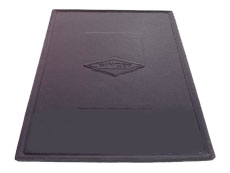 1933 Singer NINE SPORTS Accessory Floor Mat - 12"X17"-AC 48Accessory Floor Mat - made of high quality black rubber with molded original emblem. Also designed to be sewn into new carpets. 12"X17", Each
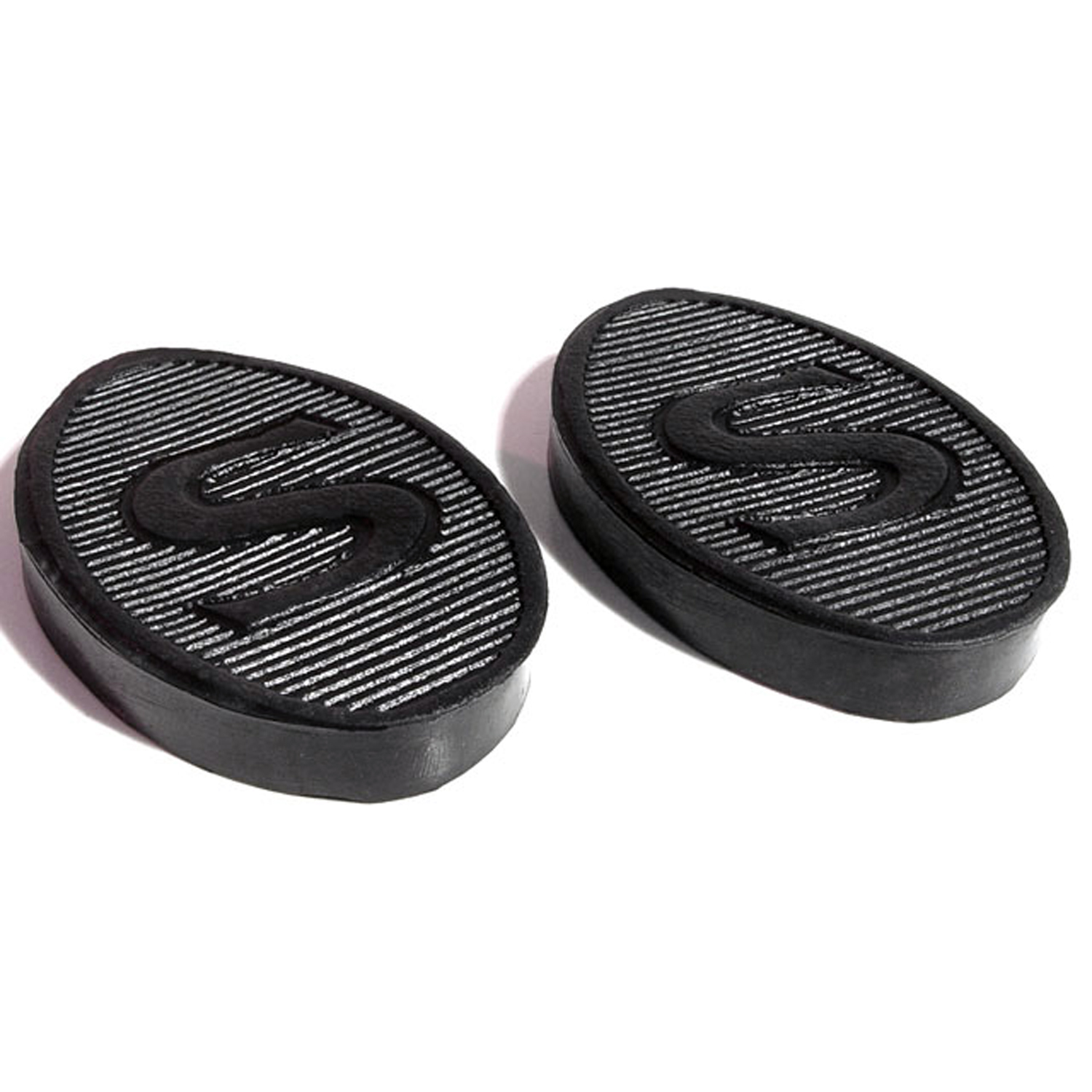 1933 Singer NINE SPORTS Clutch and Brake Pedal Pads. 1-3/4" wide X 3" long. Pair-CB 98Clutch and Brake Pedal Pads. 1-3/4" wide X 3" long. Pair
Why Choose Metro?
For over 100 years, Metro Moulded Parts has been the pinnacle of quality in classic car restoration parts. Our commitment to precision and authenticity in every component ensures a perfect fit and an OEM-level appearance.
- Expert Craftsmanship & Quality: Each part is a testament to our dedication to reliability and perfection, crafted from original designs and thoroughly tested.
- Advanced Technology: We use cutting-edge techniques to create flawless, long-lasting parts that surpass others in performance.
- SuperSoft Sponge – The Ultimate Door Seal: Not only are our door seals 30% softer than competitors', but they're also guaranteed to never leak. They effectively reduce wind and road noise, enhancing your classic car's comfort and driving experience.
- Proudly American: Our parts are a product of American craftsmanship, made in the USA with a spirit of excellence and heritage.
- Unrivaled Warranty: We back our products with a 30-year industry-leading warranty, a testament to our confidence in their quality.
Join us in preserving the legacy of classic cars with parts that are crafted for perfection, not just made.