

Image of 1928 Studebaker Commander, Note: These illustrations use artistic license and may differ from actual historical models.
Performance Metrics
Fundamental Metrics
Emotional Appeal
MMP Rating
| Engine Specifications | |
|---|---|
| Engine Options: | Straight-8 |
| Displacement Range: | 4.7L |
| Horsepower Range: | Estimated 100-115 HP |
| Torque: | Not available |
| Compression Ratio: | Not available |
| Ignition System: | Distributor and coil |
| Cooling System: | Water-cooled |
| Performance Specifications | |
| 0-60 Time: | Not available |
| 1/4 Mile Time: | Not available |
| Top Speed: | 60-70 mph |
| Transmission and Drive | |
| Drive Type: | Rear-wheel drive |
| Transmission Type: | 3-speed manual |
| Fuel and Efficiency | |
| Fuel System Type: | Carburetor |
| MPG: | Not available |
| Dimensions and Brakes | |
| Brakes: | Mechanical drum brakes |
| Wheelbase: | 125 inches |
| Weight: | Estimated 3500 lbs |
Note: Specifications for classic cars are given to the best of our ability, considering the limited and variant data available.
1928 Studebaker Commander: A Six-Cylinder With Something to Prove
The 1928 Studebaker Commander was built for drivers who wanted more than respectable transportation: it offered substantial six-cylinder power, handsome coachwork, and the sort of endurance reputation that made Studebaker a serious rival to better-known luxury and mid-priced marques. Produced by the Studebaker Corporation of South Bend, Indiana, the Commander sat between the company’s more affordable offerings and its prestigious President line.
Its timing mattered. American roads were improving, car ownership was expanding, and buyers increasingly expected their automobiles to cover long distances at a steady pace. Studebaker answered with a well-equipped, full-size car that looked polished in town but was also engineered for sustained use. A memorable chapter in the Commander’s story came through Studebaker’s celebrated high-mileage endurance runs, which helped publicize the durability of its cars and turned reliability into a selling point.
Art Deco-Era Style and Cabin Craftsmanship
The Commander’s styling carried the confident proportions of a late-1920s automobile: a tall, upright radiator, long hood, sweeping front fenders, exposed headlamps, and a gracefully tapered rear. Brightwork around the lamps, radiator, and body details added a dressy finish without making the car look excessively ornate. Its substantial stance and long hood gave it an unmistakable presence, especially beside smaller, more utilitarian cars of the period.
Inside, the Commander was designed to feel comfortable and carefully finished. Depending on body style and trim level, occupants could find broad upholstered seats in cloth or leather, wood-grain-finished dashboard trim, a large steering wheel, and clear, plainly arranged gauges. The materials and appointments varied, but the general impression was of a properly finished American touring car rather than a bare-bones transport.
Studebaker offered the Commander in several body styles during the period, with availability varying by catalog and market. Buyers could choose enclosed bodies such as sedans and coupes, as well as open touring-style cars. The sedan was a practical and popular choice for families, while the roadster and phaeton offered the most visual drama and open-air appeal. Closed cars were increasingly attractive as buyers came to expect protection from weather and road dust.
Paint choices depended on the body and trim combination, and surviving cars show a range of period colors rather than one signature hue. Dark blue, green, maroon, and black are all appropriate-looking choices for a restoration. Two-tone treatments could also accentuate the body lines. Original paint records and color charts are worth consulting before a concours restoration, since the precise combinations could differ by body style and production details.
Six-Cylinder Engineering for the Open Road
The 1928 Commander was powered by a large inline six, commonly listed at about 249 cubic inches and roughly 75 horsepower. It drove the rear wheels through a three-speed manual transmission. Exact published specifications can vary by source and configuration, but the basic recipe was clear: a generous-displacement engine, conventional rear-wheel drive, and gearing intended for smooth, steady travel.
For its time, the Commander’s appeal was not a single futuristic gadget. Its strengths came from combining a strong six-cylinder engine with a substantial chassis, usable passenger space, and equipment suited to longer journeys. Four-wheel mechanical brakes were typical of the era, as were a solid front axle, leaf-spring suspension, and a steering system that demanded more effort than a modern driver would expect. Studebaker’s attention to durability and its public endurance demonstrations helped give the car a technical reputation beyond its showroom appearance.
Why the Commander Mattered
The Commander helped establish Studebaker as a maker of cars that could compete on comfort, performance, and dependability. It occupied a useful middle ground: more substantial than an entry-level car, but generally less imposing and expensive than a top-tier luxury model. That balance made it appealing to buyers who wanted a capable touring car without stepping into the highest price brackets.
Studebaker also understood the power of proof. Its endurance publicity emphasized that a car could keep going over long distances, not merely look impressive on a showroom floor. Those demonstrations helped shape the brand’s identity and supported a broader automotive shift toward treating reliability and sustained performance as selling features. The Commander was not the only car of its era to offer a six-cylinder engine or handsome coachwork, but its combination of practical size, strong power, and conspicuous durability made it a convincing package.
Road Manners, Speed, and Driving Feel
Period performance figures are not perfectly consistent, and the condition of an individual car makes a major difference. A sound Commander could likely reach approximately 60 to 65 mph, with acceleration from 0 to 60 mph taking roughly 25 to 30 seconds. Those are estimates, not modern instrumented test results. Its strength was relaxed forward motion and the ability to maintain a useful cruising pace, rather than quick acceleration by today’s standards.
On a smooth road, the Commander feels substantial and composed. Its suspension takes the edge off ordinary bumps, though large potholes and broken surfaces still remind the driver that the chassis is nearly a century old. On winding roads, its size, high center of gravity, and period tires call for measured steering inputs. It is happiest when driven with anticipation rather than hurried through corners.
The driving experience is wonderfully mechanical. The inline six produces a steady, low-pitched rumble, while the manual gearbox requires deliberate shifts and a practiced feel for the clutch. Steering is heavier at low speed, and the brakes require more planning and pedal effort than a modern car’s. Behind the large wheel, the driver feels connected to the machinery in a way that has largely disappeared from contemporary motoring.
Owning and Maintaining a 1928 Commander
Today, most Commanders are used as show cars, touring vehicles, and occasional weekend drivers rather than daily transportation. A well-sorted example can participate in vintage-car tours and local events, but regular use requires patience, mechanical sympathy, and a willingness to keep up with maintenance.
Many repairs are straightforward for an experienced vintage-car owner. The engine and chassis use conventional mechanical systems, and specialist clubs, suppliers, and restoration shops can help locate parts and technical information. However, “simple” does not mean effortless: parts availability varies, some components need rebuilding rather than replacement, and body, trim, and interior pieces can be difficult to source. Before buying, inspect the engine, transmission, brakes, cooling system, frame, and wood or structural elements in the body, where applicable. A car that has been maintained and regularly exercised is generally a safer bet than one that has sat for decades.
Endurance Lore and Other Commander Trivia
Studebaker’s endurance publicity is among the most interesting parts of the Commander story. The company used long-distance and continuous-running demonstrations to promote the durability of its automobiles, including high-mileage runs associated with the late-1920s Commander. These events were carefully organized publicity efforts, but they still demanded reliable machinery and helped make the model’s name synonymous with stamina.
The Commander’s open body styles are especially eye-catching today, while well-preserved sedans can offer a more accessible route into ownership. There is no single celebrity association that defines the 1928 model in the way that a famous film car might. Its strongest claim to fame is its role in Studebaker’s broader reputation for endurance and engineering.
Common criticisms are typical of prewar cars: modest braking by modern standards, slow acceleration, heavy steering, and limited protection in a collision. The cabin can also be noisy and warm or cold depending on the weather and body style. These are part of the period experience, but they mean the Commander is best enjoyed with sensible driving habits and realistic expectations.
Collector Values and Market Availability
Values vary sharply with body style, condition, originality, and restoration quality. As a broad current-market estimate, a project or driver-quality Commander might sell for around $12,000 to $25,000. A clean, usable example could fall in the $25,000 to $45,000 range, while a high-quality restoration or especially desirable open car may bring roughly $45,000 to $75,000 or more. These are general estimates rather than a formal appraisal; exceptional cars and unusual body styles can move outside those ranges.
The 1928 Commander is uncommon but not necessarily unobtainable. Studebaker production records and model-year breakdowns are not always easy to compare, so a precise surviving-production count is difficult to state. A reasonable rough estimate for total Commander production across body styles is approximately 20,000 to 30,000 cars, though the number of surviving examples is much smaller. Open cars and cars with original, complete trim tend to be harder to find than ordinary sedans.
Market values are best described as condition-sensitive rather than uniformly fast-appreciating. Strong restorations and rare body styles remain attractive, but restoration costs can exceed a car’s eventual sale price. Buyers should prioritize sound structure, completeness, and documented work over assuming that every old car will rise steadily in value.
The Lasting Appeal of the 1928 Studebaker Commander
The 1928 Studebaker Commander combined handsome late-1920s styling, a substantial six-cylinder engine, comfortable coachwork, and a durability story backed by Studebaker’s endurance-minded publicity. It was a capable touring car in its day and remains an engaging classic for owners who enjoy mechanical character as much as polished paint.
More than a handsome survivor, the Commander represents Studebaker’s determination to build cars that could look refined and keep going. Its appeal today lies in that same balance: a confident presence, a rewarding vintage driving experience, and a place in the story of an independent American automaker that knew how to make its engineering count.
1928 Studebaker Commander Catalog of Parts
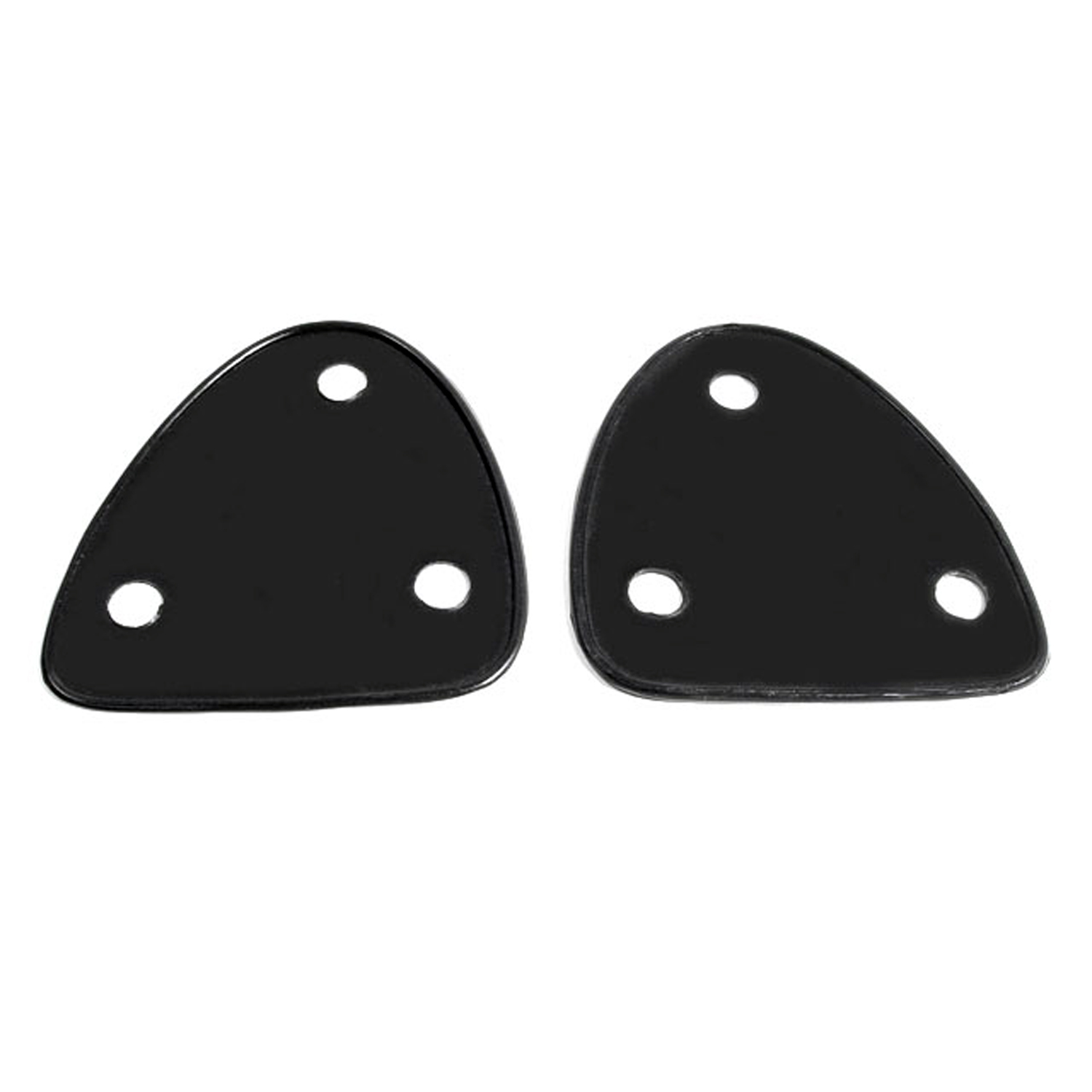 1928 Studebaker Commander Headlight Pads. 4-1/2" wide X 4-5/8" long. Pair R&L-MP 973Headlight Pads. 4-1/2" wide X 4-5/8" long. Pair R&L
Why Choose Metro?
For over 100 years, Metro Moulded Parts has been the pinnacle of quality in classic car restoration parts. Our commitment to precision and authenticity in every component ensures a perfect fit and an OEM-level appearance.
- Expert Craftsmanship & Quality: Each part is a testament to our dedication to reliability and perfection, crafted from original designs and thoroughly tested.
- Advanced Technology: We use cutting-edge techniques to create flawless, long-lasting parts that surpass others in performance.
- SuperSoft Sponge – The Ultimate Door Seal: Not only are our door seals 30% softer than competitors', but they're also guaranteed to never leak. They effectively reduce wind and road noise, enhancing your classic car's comfort and driving experience.
- Proudly American: Our parts are a product of American craftsmanship, made in the USA with a spirit of excellence and heritage.
- Unrivaled Warranty: We back our products with a 30-year industry-leading warranty, a testament to our confidence in their quality.
Join us in preserving the legacy of classic cars with parts that are crafted for perfection, not just made.