

Image of 1928 Studebaker Dictator, Note: These illustrations use artistic license and may differ from actual historical models.
Performance Metrics
Fundamental Metrics
Emotional Appeal
MMP Rating
| Engine Specifications | |
|---|---|
| Engine: | Inline 6 |
| Displacement: | 242 cubic inches |
| Horsepower: | Estimated 70 HP |
| Torque: | Not available |
| Compression Ratio: | Not available |
| Ignition System: | Distributor and coil |
| Cooling System: | Water-cooled |
| Performance Specifications | |
| 0-60 Time: | Not available |
| 1/4 Mile Time: | Not available |
| Top Speed: | 60 mph |
| Transmission and Drive | |
| Drive Type: | Rear-wheel drive |
| Transmission Type: | 3-speed manual |
| Fuel and Efficiency | |
| Fuel System Type: | Carburetor |
| MPG: | Not available |
| Dimensions and Brakes | |
| Brakes: | Mechanical drum brakes |
| Wheelbase: | 113 inches |
| Weight: | Estimated 2,800 lbs |
Note: Specifications for classic cars are given to the best of our ability, considering the limited and variant data available.
1928 Studebaker Dictator: A Six-Cylinder with a Bold Name
The 1928 Studebaker Dictator paired a confident, upright presence with the smooth power of a six-cylinder engine, offering American buyers a well-equipped car from one of the country’s oldest automakers. Built by the Studebaker Corporation of South Bend, Indiana, the Dictator sat in the company’s mid-priced range, below the Commander and President. Its unusual name was meant to suggest that the car set the standard for its class, not to make a political statement.
Studebaker had roots in wagon-making that stretched back to the nineteenth century, and that experience helped shape its reputation for sturdy, carefully finished vehicles. The Dictator name arrived in the 1920s and remained in use until 1937. A curious footnote is that the name’s political associations became increasingly awkward as dictatorships rose in Europe, although the car had been named years earlier for its intended leadership in the market.
Upright Styling and Comfortable Appointments
The 1928 Dictator wore the formal proportions typical of its era: a tall, bright-finished radiator, a long hood, prominent headlamps, and separate fenders curving over the wheels. Running boards connected the front and rear fenders, while a narrow windshield and upright cabin gave the car a stately profile. Details varied with body style and equipment, but the overall effect was substantial rather than flashy.
Inside, owners found a practical cabin trimmed with durable upholstery and finished with the wood, metal, and patterned fabrics expected of a quality late-1920s car. Closed models offered protection from weather and a more private passenger compartment; open cars made the ride more social but left occupants exposed to wind and dust. Leather was associated with some open-car interiors, while cloth was common in enclosed bodies. Exact trim depended on the body and specification.
Studebaker offered the Dictator in several body configurations over the period, with sedans and coupes among the most familiar choices. Roadster and phaeton-style open bodies, along with more formal closed variants, gave buyers options for personal use or family motoring. The sedan is arguably the most iconic today: it shows off the Dictator’s balanced proportions and was well suited to the practical, all-weather travel many buyers wanted.
Paint and trim combinations varied by body and production specification. Dark shades such as black, blue, green, and maroon suit the car’s formal lines, while contrasting details could add visual interest. A surviving car’s original paint scheme is best confirmed through period documentation or factory records rather than assumed from a general color list.
Period Technology and Studebaker’s Place in the Market
For its time, the Dictator combined a six-cylinder engine with a conventional three-speed manual transmission and rear-wheel drive. Studebaker also adopted hydraulic brakes early among major American manufacturers, a meaningful convenience compared with the purely mechanical braking systems still found on many cars of the period. Equipment and specifications could differ by version, so individual cars should be checked against their build details.
The Dictator did not introduce a single revolutionary technology that transformed the entire industry. Its significance lies more in bringing useful engineering and substantial construction to a broad market. Six-cylinder power made for smoother motoring than many four-cylinder rivals, while hydraulic braking helped reduce the physical effort required at the pedal. The model helped Studebaker compete with larger manufacturers by offering a well-rounded car rather than relying on novelty alone.
Its name remains the Dictator’s most memorable feature, but the car’s lasting interest goes beyond that talking point. It represents Studebaker’s effort to build a complete range, from accessible models to premium cars, and shows how quickly American manufacturers were improving comfort and drivability during the late 1920s.
1928 Dictator Performance and Road Manners
The Dictator’s six-cylinder engine displaced about 192 cubic inches, or 3.1 liters, and produced roughly 50 horsepower, depending on the exact specification. That output was respectable for a mid-priced car of the period. A healthy example might reach approximately 60 to 65 mph under favorable conditions, though age, gearing, road surface, tires, and mechanical condition make any top-speed figure an estimate.
There is no directly comparable modern factory 0-to-60 mph test for the 1928 Dictator. Based on its modest power, weight, and period gearing, a run to 60 mph would likely take well over 30 seconds, and some cars may struggle to reach that speed comfortably today. The figure is best treated as a broad estimate, not a guaranteed performance specification.
Behind the wheel, the Dictator is a car to drive deliberately. The engine’s steady six-cylinder note is more measured than urgent, and the manual gearbox rewards smooth shifts and a little patience. Steering is heavier at low speeds than a modern driver may expect, while the brakes require anticipation and a firm, progressive pedal. On rough roads, the tall tires and generous suspension travel soften sharp impacts, but the high seating position and body movement remind you that this is a car from a different era. On a winding road, its size and period steering favor a relaxed pace over quick direction changes.
Living with a Prewar Studebaker
Today, the Dictator is most often seen at classic-car shows, touring events, and historic motoring gatherings. Some owners take their cars on local drives, but regular modern commuting is generally impractical. Traffic speeds, limited crash protection, vintage lighting, and the need for careful maintenance make it better suited to planned outings than daily use.
Routine work is within reach of a mechanically confident owner. The engine, manual transmission, and running gear use straightforward period engineering, and many service tasks can be handled with ordinary tools and workshop knowledge. The larger challenge is finding correct parts, locating a specialist when needed, and dealing with decades of repairs or modifications. Before buying, inspect the frame, body structure, brakes, cooling system, electrical system, and engine carefully. A complete, well-maintained car is usually a better prospect than a cheap project missing hard-to-find trim.
Dictator Trivia and Common Criticisms
The model’s name is its standout piece of trivia. Studebaker used “Dictator” to convey that the car would dictate the standard in its class. The word’s later political associations made it less appealing, and Studebaker eventually replaced the name with Commander in 1937. The 1928 car is therefore part of a relatively short but distinctive chapter in the company’s history.
No widely recognized land-speed, endurance, or sales record is specifically associated with the 1928 Dictator. Nor is it best known for a major historic event or a famous owner. Its story is more representative than sensational: it was a capable, mainstream American car built during a period of rapid growth in private motoring.
Common criticisms are tied to its age rather than a unique design flaw. Compared with modern cars, it is slow, noisy, less secure, and demanding to drive in heavy traffic. Parts availability can also test an owner’s patience. On the other hand, its relatively straightforward mechanical layout and distinctive appearance make it rewarding for enthusiasts who enjoy hands-on preservation.
Collector Value and Availability
Production figures for the 1928 Dictator are not consistently reported as a single, dependable total across the model’s body styles. A reasonable working estimate is that production was in the tens of thousands, perhaps around 30,000 to 40,000 cars, but this should be treated as an informed estimate rather than a verified factory count. The number of surviving examples is much smaller, and condition, body style, originality, and documentation strongly affect availability.
As a broad U.S. market guide, a project car may fall around $3,000 to $8,000, while a running but imperfect example could be roughly $10,000 to $20,000. A well-restored or especially attractive car might sell in the $20,000 to $35,000 range, with exceptional examples potentially higher. These are approximate ranges, not appraisals: local demand, restoration quality, and the specific body style can move a sale considerably.
The Dictator is a niche collectible rather than a blue-chip classic, and its value has generally depended more on condition than on speculative demand. Interest in distinctive prewar cars supports a steady collector audience, but prices are not guaranteed to rise. Over time, a sound, authentic example may hold its appeal better than a poorly documented restoration or an incomplete project.
Why the 1928 Studebaker Dictator Still Matters
The 1928 Studebaker Dictator blends six-cylinder smoothness, early hydraulic-brake technology, and formal late-1920s styling into a memorable package. It was not a record-breaking racer or a revolutionary design, but it was a substantial, thoughtfully equipped car that helped Studebaker compete in a demanding market. Add a name that has become part of automotive lore, and the Dictator has a character few contemporaries can match. For collectors, it offers a tangible connection to the years when American motoring was changing fast, one carefully built six-cylinder car at a time.
1928 Studebaker Dictator Catalog of Parts
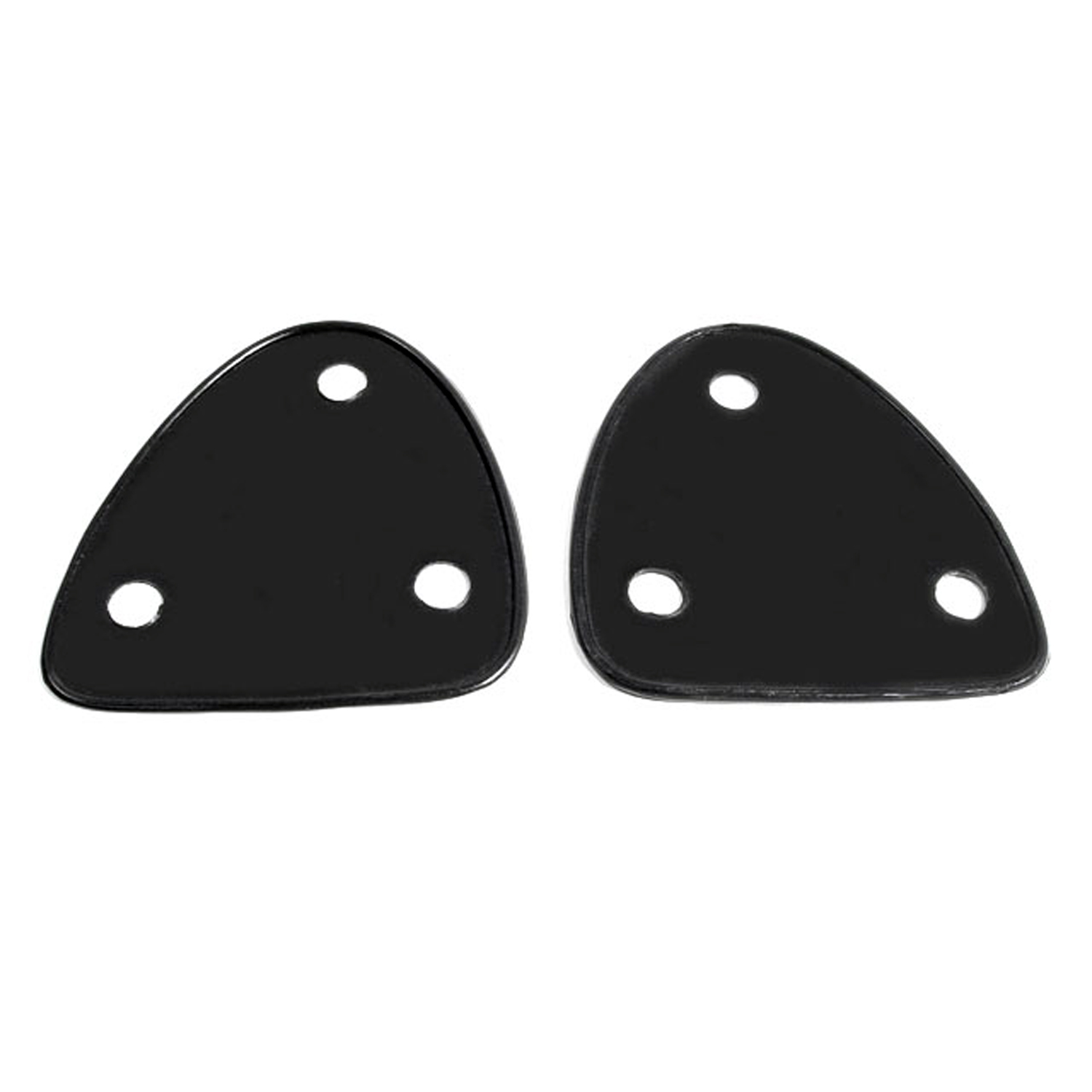 1928 Studebaker Dictator Headlight Pads. 4-1/2" wide X 4-5/8" long. Pair R&L-MP 973Headlight Pads. 4-1/2" wide X 4-5/8" long. Pair R&L
 1928 Studebaker Dictator Headlight Pads. 4-1/4" wide X 4-1/2" long. Pair-MP 974-CHeadlight Pads. 4-1/4" wide X 4-1/2" long. Pair
Why Choose Metro?
For over 100 years, Metro Moulded Parts has been the pinnacle of quality in classic car restoration parts. Our commitment to precision and authenticity in every component ensures a perfect fit and an OEM-level appearance.
- Expert Craftsmanship & Quality: Each part is a testament to our dedication to reliability and perfection, crafted from original designs and thoroughly tested.
- Advanced Technology: We use cutting-edge techniques to create flawless, long-lasting parts that surpass others in performance.
- SuperSoft Sponge – The Ultimate Door Seal: Not only are our door seals 30% softer than competitors', but they're also guaranteed to never leak. They effectively reduce wind and road noise, enhancing your classic car's comfort and driving experience.
- Proudly American: Our parts are a product of American craftsmanship, made in the USA with a spirit of excellence and heritage.
- Unrivaled Warranty: We back our products with a 30-year industry-leading warranty, a testament to our confidence in their quality.
Join us in preserving the legacy of classic cars with parts that are crafted for perfection, not just made.