

Image of 1911 Stutz Series A, Note: These illustrations use artistic license and may differ from actual historical models.
Performance Metrics
Fundamental Metrics
Emotional Appeal
MMP Rating
| Engine Specifications | |
|---|---|
| Engine Options: | T-head inline-4 |
| Displacement Range: | 390 cubic inches |
| Horsepower Range: | Estimated 50-60 HP |
| Torque: | Not available |
| Compression Ratio: | Not available |
| Ignition System: | Magneto |
| Cooling System: | Water-cooled |
| Performance Specifications | |
| 0-60 Time: | Not available |
| 1/4 Mile Time: | Not available |
| Top Speed: | 70 mph |
| Transmission and Drive | |
| Drive Type: | Rear-wheel drive |
| Transmission Type: | 3-speed manual |
| Fuel and Efficiency | |
| Fuel System Type: | Carburetor |
| MPG: | Not available |
| Dimensions and Brakes | |
| Brakes: | Mechanical drum brakes |
| Wheelbase: | 130 inches |
| Weight: | Estimated 2,800 lbs |
Note: Specifications for classic cars are given to the best of our ability, considering the limited and variant data available.
1911 Stutz Series A: The Racer That Built a Reputation
The 1911 Stutz Series A arrived with a racing reputation already taking shape, built around a simple promise: put serious speed and competition-bred toughness on the road. It came from the Stutz Motor Car Company, founded in Indianapolis in 1911 by engineer and entrepreneur Harry C. Stutz. The company’s first cars emerged from a city that was rapidly becoming a center of American automobile manufacturing and racing.
The name “Series A” is used in some references for Stutz’s earliest production cars, though period descriptions and later catalogs do not always use the model name consistently. It is best understood as an early Stutz passenger car from the company’s first season, closely related in spirit and engineering to the machines that established its sporting identity. It should not automatically be confused with the better-known Bearcat, which became a distinct Stutz model in the following years.
The company’s early claim to fame came at the 1911 Indianapolis 500. Stutz’s entry, driven by Gil Anderson, finished 11th in the demanding inaugural race. That result was not a victory, but it gave the young marque an extraordinary sales story. Stutz promoted the car as “The car that made good in a day,” linking its road cars to the durability and speed tested on the track.
Brass-Era Styling and Custom Coachwork
The Series A had the upright, purposeful look of a Brass Era automobile. Its tall radiator and hood sat well forward, while exposed lamps, narrow tires, running boards, and prominent fenders made the machinery part of the design rather than something to conceal. Depending on the body fitted, the car could look like a practical touring machine or a stripped-down sporting car ready for a long road run.
Like many expensive cars of the period, an early Stutz was not necessarily a complete, standardized package in the modern sense. Buyers could choose from body configurations and coachwork, with details varying by order and production run. Touring bodies, roadsters, and other open styles suited the era’s roads and the car’s sporting character. The open two-seat roadster is the most evocative choice today, although the 1911 Series A should not be casually labeled a Bearcat.
The cabin was functional rather than luxurious by modern standards. Owners sat on upholstered seats amid painted or finished metalwork, exposed controls, and a large steering wheel. Materials and trim could vary with the body and buyer’s specification. There was little in the way of weather protection, sound insulation, or convenience equipment, so the driving experience was close, noisy, and hands-on.
Early Stutz cars were commonly finished in dark, practical colors, but paint choices were not necessarily limited to a fixed factory palette. Black, dark red, and other deep shades suit the car’s period character, though the exact colors offered on a particular Series A are difficult to establish without its original documentation. A modern restoration should follow evidence from the individual car rather than assume one universal color scheme.
Engineering for the Open Road
Early Stutz specifications are not entirely uniform across surviving records. A commonly cited configuration for the first cars is a large four-cylinder engine of roughly 390 cubic inches, often described as a T-head design and associated with output in the neighborhood of 60 horsepower. Engine and equipment details can differ between cars, so an authentic chassis, engine number, and period records matter more than a specification copied from a later Stutz.
The car’s technology was advanced in its own way, but it remained firmly mechanical. The driver managed a manual transmission, clutch, ignition, and a range of levers and controls that demanded attention. There were no modern driver aids, synchromesh gearbox, power steering, or hydraulic brakes. The engineering priority was a robust powertrain and chassis capable of covering ground quickly for the period.
That racing connection mattered. Stutz was founded by a man with engineering and competition ambitions, and the Indianapolis experience helped the company promote durability as well as speed. The Series A was not simply a luxury car wearing sporting trim. It belonged to a young marque that used racing to establish credibility in a crowded market.
Performance and Driving Feel
Period performance figures are inconsistent, and reliable modern acceleration tests for a 1911 Series A are not readily available. A standard car is often associated with a top speed around 60 mph, with faster figures sometimes quoted for specially prepared or racing-related examples. These should be treated as period claims or estimates, not as results from a standardized test.
There is no trustworthy, model-specific 0-to-60 mph figure to quote. Early cars were not routinely tested using modern acceleration procedures, and today’s surviving examples differ in engine condition, gearing, tires, and body weight. Giving a precise number would suggest a level of certainty the historical record does not support. In practice, acceleration would feel deliberate by modern standards, with the driver working the gearbox and managing the engine rather than simply pressing a pedal.
On a smooth road, the Stutz’s long, substantial chassis and large engine would make it feel composed and muscular for its time. On rough surfaces, narrow tires, basic suspension, and limited weather protection put the driver in direct contact with every rut and bump. A winding road called for planning: steering effort, braking distances, and the car’s high center of gravity made it very different from a modern sports car.
The engine would deliver a deep, uneven mechanical beat, accompanied by valve and drivetrain noise, tire rumble, and wind. The driver’s job was active. Starting, shifting, braking, and keeping the car running all required attention, and a long drive was as much an exercise in mechanical sympathy as a test of speed.
Why the 1911 Stutz Matters
The Series A’s importance lies partly in timing. In 1911, the American automobile industry was still developing its manufacturing methods, road networks, and ideas about what a motorcar could be. Stutz entered that world with a direct link between competition and production. The company helped popularize the notion that a road car’s sporting credentials could be demonstrated on a public stage, not merely advertised in a catalog.
What set the early Stutz apart was the strength of that identity. Many manufacturers offered cars for transportation and status; Stutz made performance a central part of its public image from the start. Its Indianapolis campaign gave the young company a memorable story and helped prepare the ground for later sporting models, especially the Bearcat.
The 1911 car did not single-handedly invent the American sports car, and its technology was not a clean break from everything that came before. Its lasting influence was more about brand character: Stutz linked engineering, racing, and road-going performance in a way that became central to the company’s identity. That formula helped make the name recognizable well beyond its first year.
Ownership, Maintenance, and Reliability
A 1911 Stutz is now best suited to vintage motoring events, museum display, concours appearances, and carefully planned tours. It is not a practical daily driver. Even when mechanically sound, it is slow to start by modern expectations, vulnerable to traffic conditions, and most comfortable on roads where the owner can choose a relaxed pace.
Maintenance is hands-on and frequent compared with that of a modern car. Owners must pay close attention to lubrication, ignition, fuel delivery, cooling, fasteners, tires, and brake adjustment. Parts may need to be repaired or made to fit rather than ordered from a mainstream supplier. The mechanical layout is comparatively accessible, but that does not make restoration work simple: early components can be scarce, and correct machining or specialist knowledge is often essential.
Reliability depends heavily on the quality of restoration and the car’s authenticity. A well-sorted example can be enjoyable on appropriate tours, but a century-old engine should not be expected to tolerate neglect or sustained modern traffic speeds. For most owners, the best approach is preventive maintenance, short shakedown drives, and access to a mechanic familiar with brass-era automobiles.
Stutz Facts and Common Misconceptions
The 1911 Indianapolis 500 gave Stutz a useful headline from its very first year. Gil Anderson’s Stutz finished 11th, and the company turned that result into the slogan “The car that made good in a day.” It is a memorable example of early automotive marketing: a single race result became part of the marque’s long-term identity.
One common source of confusion is the Bearcat. The Bearcat became Stutz’s best-known early sports model, but the 1911 Series A and the later Bearcat are not interchangeable names. Their sporting heritage is connected, yet a collector should verify the exact model, chassis, body, and engine rather than rely on a broad label.
Another misconception is that a racing connection makes every early Stutz a race car. Most surviving road-going examples were built for customers, even if competition helped sell them. They also came with period compromises: exposed occupants, limited braking by modern standards, heavy controls, and little protection from weather. Those are part of the car’s character, but they are also genuine ownership considerations.
Rarity and Collector Values
Exact production totals for the 1911 Series A are difficult to separate from the broader output of Stutz’s first year, and surviving records do not support a precise model-by-model count. As a working estimate, the company may have built a few hundred cars across its early 1911 production, but the number of Series A examples today is likely very small. Authentic, well-documented survivors are rare, and cars with original or period-correct components are rarer still.
As a broad collector-market estimate, a complete but unrestored or substantially compromised example might fall around $250,000 to $500,000, while a high-quality, correctly restored car could plausibly bring $500,000 to $1 million or more. A documented competition history, exceptional provenance, or unusually original condition could push a car beyond that range. These are estimates, not a formal appraisal: early-car sales are infrequent, and body style, authenticity, restoration quality, and provenance can change the value dramatically.
Values for significant early American cars have generally been supported by their scarcity and historical importance, but the market is selective. Buyers increasingly scrutinize restoration quality and documentation, and a car with uncertain identity or extensive incorrect work may struggle even if it looks impressive. The best examples are likely to remain desirable, though prices can move sharply when a rare car comes to auction.
A Small Car Company with a Big First Act
The 1911 Stutz Series A combines the open, mechanical character of the Brass Era with the beginnings of one of America’s most recognizable performance-car stories. Its upright styling, substantial four-cylinder power, and Indianapolis connection made it more than a means of transport: it was an early statement of what Stutz wanted to represent.
For collectors, it offers a rare link to the company’s first season and to the era when racing could make a new automaker famous almost overnight. It asks for patience, skill, and careful stewardship, but rewards its owner with something few cars can match: the feeling of driving a piece of automotive history while that history is still very much alive.
1911 Stutz Series A Catalog of Parts
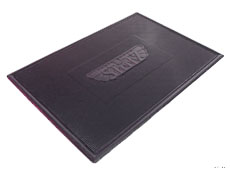 1911 Stutz Series A Accessory Floor Mat - 12"X17"-AC 41Accessory Floor Mat - made of high quality black rubber with molded original emblem. Also designed to be sewn into new carpets. 12"X17", Each
Why Choose Metro?
For over 100 years, Metro Moulded Parts has been the pinnacle of quality in classic car restoration parts. Our commitment to precision and authenticity in every component ensures a perfect fit and an OEM-level appearance.
- Expert Craftsmanship & Quality: Each part is a testament to our dedication to reliability and perfection, crafted from original designs and thoroughly tested.
- Advanced Technology: We use cutting-edge techniques to create flawless, long-lasting parts that surpass others in performance.
- SuperSoft Sponge – The Ultimate Door Seal: Not only are our door seals 30% softer than competitors', but they're also guaranteed to never leak. They effectively reduce wind and road noise, enhancing your classic car's comfort and driving experience.
- Proudly American: Our parts are a product of American craftsmanship, made in the USA with a spirit of excellence and heritage.
- Unrivaled Warranty: We back our products with a 30-year industry-leading warranty, a testament to our confidence in their quality.
Join us in preserving the legacy of classic cars with parts that are crafted for perfection, not just made.