
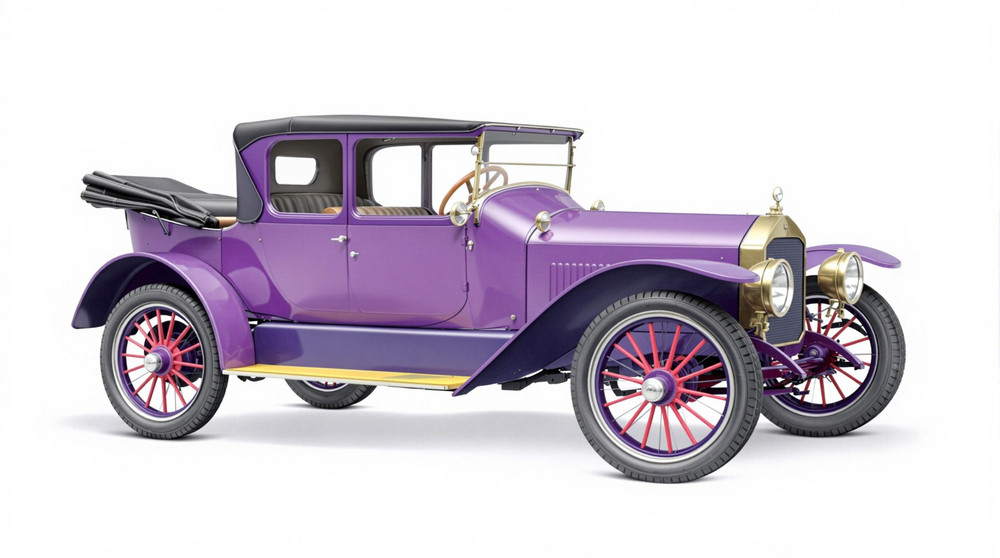
Image of 1914 Stutz Model 6e, Note: These illustrations use artistic license and may differ from actual historical models.
Performance Metrics
Fundamental Metrics
Emotional Appeal
MMP Rating
| Engine Specifications | |
|---|---|
| Engine: | T-head inline 4-cylinder engine |
| Displacement: | 390 cubic inches |
| Horsepower: | Estimated 60 HP |
| Torque: | Not available |
| Compression Ratio: | Not available |
| Ignition System: | Magneto ignition system |
| Cooling System: | Water-cooled |
| Performance Specifications | |
| 0-60 Time: | Not available |
| 1/4 Mile Time: | Not available |
| Top Speed: | 70 mph |
| Transmission and Drive | |
| Drive Type: | Rear-wheel drive |
| Transmission Type: | 3-speed manual |
| Fuel and Efficiency | |
| Fuel System Type: | Carburetor |
| MPG: | Not available |
| Dimensions and Brakes | |
| Brakes: | Mechanical drum brakes |
| Wheelbase: | 130 inches |
| Weight: | Estimated 2,800 lbs |
Note: Specifications for classic cars are given to the best of our ability, considering the limited and variant data available.
1914 Stutz Model 6E: A Six-Cylinder Stutz With Racing DNA
The 1914 Stutz Model 6E brought the Indianapolis marque’s sporting reputation to a larger, more refined six-cylinder automobile. Built by the Stutz Motor Car Company of Indianapolis, Indiana, it combined substantial engine power with the imposing presence and hand-finished coachwork expected of an expensive American car of the period.
Stutz had been founded by engineer and racer Harry C. Stutz. The company was still young in 1914, but its name already carried the glamour of competition. The Model 6E was not the famous Bearcat, and that distinction matters: it was a larger six-cylinder model intended to deliver speed and comfort in a more spacious package. Its appeal lies in that blend of sporting ambition and early luxury.
One intriguing piece of context is the phrase associated with Stutz racing, “The car that made good in a day.” It referred to the company’s dramatic debut at the 1911 Indianapolis 500, where a Stutz finished 11th. That achievement helped make the marque famous almost overnight, even though the Model 6E itself was a road-going production car rather than a purpose-built race machine.
Long Lines, Open Air, and Hand-Finished Details
The 6E looked like a serious motorcar. Its tall radiator, upright brass-era lamps, narrow wheels, running boards, and long bonnet gave it the purposeful profile typical of a high-end automobile before streamlined styling took hold. The open touring versions were especially dramatic, with exposed front fenders and a high, formal seating position that made the car seem larger still.
Interior appointments depended on the body and the original buyer’s specification. An open touring car would typically have leather upholstery, a substantial steering wheel, polished metal fittings, and painted or varnished wood trim. These were materials chosen for durability and appearance, but they still required regular care. The top, side curtains, and weather protection could make a touring body more practical, though they could not provide the quiet, sealed cabin of a modern car.
Stutz offered the 6E in open body configurations, with touring and roadster-style forms among the most familiar. Exact offerings could vary by year, market, and coachwork order, so the body fitted to a surviving example should be checked against its chassis records and period documentation. The five-passenger touring layout is the most recognizable choice for a car of this type, while a two-seat roadster gives the same mechanical package a more sporting character.
There is no single, well-documented color palette that applies to every 1914 Model 6E. Buyers could specify finishes, and surviving cars have often been restored in colors that suit their period appearance, including black, dark green, and deep red or maroon. Those shades look convincing, but an individual car’s original color is best established through paint layers, build records, or other provenance rather than assumption.
Six-Cylinder Power in the Brass Era
The Model 6E’s defining feature was its six-cylinder engine, commonly described in period and later references as a roughly 60-horsepower unit. Exact specifications can vary across surviving literature and modern listings, so an individual car’s engine identification and displacement should be verified rather than inferred from the model name alone. Power went to the rear wheels through a manual transmission, with the driver doing all the work of shifting and coordinating engine speed.
For 1914, six cylinders brought a smoother delivery than the four-cylinder engines still common in many cars. The 6E also had the robust chassis construction and substantial running gear expected of a premium automobile. It did not offer modern conveniences such as electric starting, hydraulic brakes, or independent suspension. Starting, shifting, braking, and routine adjustment were hands-on parts of motoring.
What Set the Model 6E Apart
The 6E helped broaden Stutz’s identity beyond compact, competition-minded cars. It carried the company’s sporting image into a larger and more comfortable class, at a time when American buyers were beginning to expect greater power, smoother engines, and more usable touring range. Its significance is therefore not that it invented a single technology, but that it represented Stutz’s effort to pair performance with the scale and finish of an upmarket touring car.
Stutz’s racing success gave its road cars an important marketing advantage. Competition was a public proving ground, and the company used its Indianapolis credentials to suggest strength and speed to buyers. The 6E was part of that wider brand story, though it should not be confused with a Bearcat or with a specific Stutz racing entry. Its lasting importance comes from its place in the marque’s early growth and from the engineering confidence that defined the company’s prewar cars.
Road Manners: Strong, Mechanical, and Demanding
A healthy Model 6E was capable of brisk travel by 1914 standards. A reasonable period-informed estimate for top speed is around 65 to 70 mph, depending on gearing, body, condition, and tire choice. A reliable factory-published 0-to-60-mph figure is not readily available. Given the car’s weight, gearing, and period tires, an approximate 20-to-30-second run to 60 mph is more plausible than a modern performance-car comparison, and should be treated as an estimate rather than a recorded factory result.
The driving experience is direct and physical. The engine’s six-cylinder note is likely smoother than that of many contemporary four-cylinder cars, but it remains a mechanical sound, with induction, exhaust, and drivetrain noise close at hand. The driver sits high, steers with a large wheel, shifts manually, and must anticipate stops well in advance. Braking performance is modest by current standards, so leaving generous space is essential.
On a smooth road, the 6E’s long wheelbase and substantial chassis can make it feel composed. On rough surfaces, solid axles and leaf springs transmit movement into the body, while tall tires cushion some of the sharper impacts. Winding roads demand measured inputs: the car is large, its steering is not modern in precision, and its period tires provide less grip and feedback than contemporary rubber. Crosswinds can also affect an open touring body, especially at speed.
Ownership: More Weekend Touring Than Daily Duty
Today, a 1914 Stutz Model 6E is best suited to vintage rallies, local shows, historic motoring events, and carefully planned tours. It can be driven, but it is not a practical daily driver. Its size, open body, mechanical controls, limited braking, and sensitivity to traffic make it most enjoyable on quiet roads with a driver who understands brass-era machinery.
Maintenance is part of ownership. The engine, ignition, lubrication system, cooling system, tires, and mechanical brakes all need regular inspection. Parts may require specialist sourcing or fabrication, and repair work is easier for an owner familiar with prewar cars than for a general repair shop. The car is mechanically approachable in principle, but its age, rarity, and value mean that correct restoration and reliable operation often call for experienced vintage-car technicians.
Reliability depends heavily on the quality of the restoration and the care given to the car. A properly sorted example can be used for touring, but old materials, period electrical components, and long periods of storage can create problems. Before a drive, owners should check fluids, fasteners, tires, brakes, and fuel and ignition systems. A shakedown close to home is wiser than setting out immediately on a long trip.
Racing Stories, Records, and Common Misconceptions
The 6E benefits from the Stutz name’s racing heritage, but there is no need to assign it a racing record of its own. The celebrated 1911 Indianapolis result belongs to the company’s early competition history, not to a production Model 6E. Likewise, the Bearcat’s fame can sometimes overshadow the larger Stutz models, leading to confusion about which cars were built for what purpose.
There is no widely established production total for the 1914 Model 6E, and exact surviving numbers are difficult to confirm. A cautious estimate is that production was likely in the low hundreds rather than the thousands, with far fewer cars surviving today. That is a best guess, not a factory figure. Individual cars with documented ownership, original components, or unusual coachwork are especially important to researchers and collectors.
One common criticism of cars from this era is that their driving demands can be romanticized. The 6E may be powerful and impressive, but it is not effortless transport: braking distances are long, weather protection is limited, and maintenance is ongoing. Another frequent misconception is that every early Stutz is a Bearcat. The 6E is a distinct, larger six-cylinder model, and its appeal is more about grand touring than stripped-down racing style.
Collector Value and Market Outlook
Because the Model 6E is rare and prices depend strongly on condition, provenance, and body style, any value estimate should be treated as a broad guide. A project or substantially incomplete car might fall around $50,000 to $100,000. A usable, well-presented example could reasonably be in the $100,000 to $200,000 range, while an exceptional restoration with strong documentation could reach approximately $200,000 to $300,000 or more. These are informed estimates, not a formal appraisal, and actual auction results can vary considerably.
Early Stutz cars have enduring appeal, but the market is selective. The best examples tend to attract buyers who value American automotive history, prewar engineering, and the company’s racing associations. Over the long term, top-quality, well-documented cars are more likely to hold their appeal than poorly restored or incomplete examples. Prices can still move with broader collector-car trends, restoration costs, and the availability of specialist support, so appreciation is never guaranteed.
Why the 1914 Stutz Model 6E Still Matters
The 1914 Stutz Model 6E captures a pivotal moment when American manufacturers were turning powerful, open motorcars into serious long-distance machines. Its six-cylinder engine, imposing touring presence, and connection to a young marque with Indianapolis ambitions make it more than a handsome antique. It is a reminder that early motoring was a blend of engineering, craftsmanship, and driver skill.
For collectors, the 6E offers a distinctive alternative to the better-known Bearcat: larger, more substantial, and built for spirited touring rather than pure sporting minimalism. Its rarity and mechanical character reward careful ownership. A Stutz Model 6E does not simply preserve an old car; it brings the bold, hands-on beginnings of American performance motoring back to life.
1914 Stutz Model 6e Catalog of Parts
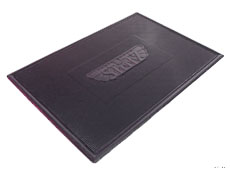 1914 Stutz Model 6E Accessory Floor Mat - 12"X17"-AC 41Accessory Floor Mat - made of high quality black rubber with molded original emblem. Also designed to be sewn into new carpets. 12"X17", Each
Why Choose Metro?
For over 100 years, Metro Moulded Parts has been the pinnacle of quality in classic car restoration parts. Our commitment to precision and authenticity in every component ensures a perfect fit and an OEM-level appearance.
- Expert Craftsmanship & Quality: Each part is a testament to our dedication to reliability and perfection, crafted from original designs and thoroughly tested.
- Advanced Technology: We use cutting-edge techniques to create flawless, long-lasting parts that surpass others in performance.
- SuperSoft Sponge – The Ultimate Door Seal: Not only are our door seals 30% softer than competitors', but they're also guaranteed to never leak. They effectively reduce wind and road noise, enhancing your classic car's comfort and driving experience.
- Proudly American: Our parts are a product of American craftsmanship, made in the USA with a spirit of excellence and heritage.
- Unrivaled Warranty: We back our products with a 30-year industry-leading warranty, a testament to our confidence in their quality.
Join us in preserving the legacy of classic cars with parts that are crafted for perfection, not just made.