

Image of 1915 Stutz Model 4f, Note: These illustrations use artistic license and may differ from actual historical models.
Performance Metrics
Fundamental Metrics
Emotional Appeal
MMP Rating
| Engine Specifications | |
|---|---|
| Engine: | T-head inline 4-cylinder engine |
| Displacement: | 390 cubic inches |
| Horsepower: | Estimated 60-80 HP |
| Torque: | Not available |
| Compression Ratio: | Not available |
| Ignition System: | Magneto ignition |
| Cooling System: | Water-cooled |
| Performance Specifications | |
| 0-60 Time: | Not available |
| 1/4 Mile Time: | Not available |
| Top Speed: | 70 mph |
| Transmission and Drive | |
| Drive Type: | Rear-wheel drive |
| Transmission Type: | 3-speed manual |
| Fuel and Efficiency | |
| Fuel System Type: | Carburetor |
| MPG: | Not available |
| Dimensions and Brakes | |
| Brakes: | Mechanical drum brakes |
| Wheelbase: | 130 inches |
| Weight: | Estimated 3,200 lbs |
Note: Specifications for classic cars are given to the best of our ability, considering the limited and variant data available.
1915 Stutz Model 4F: The American Sporting Car with Racing Blood
The 1915 Stutz Model 4F was built for drivers who wanted more than dependable transportation: it brought the spirit of American road racing to the open road. Produced by the Stutz Motor Car Company of Indianapolis, Indiana, it belonged to a marque that had made its name through speed, engineering ambition, and the famous Stutz Bearcat.
Stutz was founded by engineer and racing enthusiast Harry C. Stutz. The company’s reputation took off after its car competed in the inaugural Indianapolis 500 in 1911. That racing connection became central to the brand’s identity, summed up by its memorable slogan, “The car that made good in a day.” The Model 4F arrived in a period when American motoring was changing quickly. The Ford Model T was making car ownership more accessible, while Stutz offered a more powerful, more sporting alternative.
A Model 4F is especially intriguing because the model designation can be less familiar than the Bearcat name. The Bearcat was the best-known Stutz sporting body style, but Model 4F refers to the car’s model or chassis series, not necessarily one single body configuration. That distinction matters to collectors: a 4F roadster and a 4F touring car can have quite different character and value.
Stutz Styling and Open-Air Craftsmanship
The 4F has the unmistakable proportions of an early performance car: a long bonnet, upright radiator, exposed lamps, narrow running boards, and tall, slim wheels. Its bodywork sits high by modern standards, and the driver is positioned close to the elements, with little between the occupants and the road. The overall effect is purposeful rather than polished. This is a car whose visual drama comes from its mechanical presence and racing associations.
The most iconic Stutz body style was the Bearcat, a compact, open two-seat roadster with a close-coupled body and a sporting stance. Touring bodies offered more seating and room for passengers, while other coachwork could be supplied according to the model and period. Buyers of the era could often order a car in a configuration suited to their needs, so surviving examples may differ in body details and equipment.
Cabins were practical and exposed, not lavish by modern luxury-car standards. Depending on the body and specification, occupants could find leather upholstery, simple seating, wood trim, and metal fittings finished in period-appropriate brightwork. A folding top and windscreen offered some protection, but neither made an open Stutz a quiet or weatherproof place to travel.
Paint choices depended on the model, coachwork, and buyer. Dark colors such as black, deep blue, and dark green are often associated with early automobiles, while brighter sporting finishes could also be chosen. There is no single color that defines every Model 4F, and a car’s present paint may not reflect its original finish. For a restoration, period documentation and evidence from the individual vehicle are more reliable guides than assumptions about a universal factory palette.
Period Engineering and Racing Influence
At the heart of the Model 4F was a large four-cylinder engine. Published specifications commonly associate the series with a displacement of about 390 cubic inches and an output in the neighborhood of 60 horsepower, although figures can vary by source and specification. That was substantial power for a road car of the period. A manual transmission, rear-wheel drive, and mechanical controls connected the driver directly to the machinery.
Compared with a mass-market car such as the Model T, the Stutz was a more specialized and costly machine. Its appeal rested on performance, engineering, and sporting image rather than low purchase price or simple mass production. The company’s competition work helped reinforce the idea that a production car could draw credibility from racing, a marketing strategy that later became common across the automobile industry.
The 4F also belongs to an important transition in automotive design. Early cars were still evolving from carriage-like forms, but Stutz’s low, compact sporting bodies and performance focus pointed toward a more distinctly automotive identity. The Model 4F was not the sole cause of that change, but it represents the American high-performance tradition in its formative years.
Model 4F Performance on the Road
Period performance figures are not as consistent as modern test data. Depending on gearing, body style, mechanical condition, and road surface, a well-prepared Model 4F is generally associated with a top speed in roughly the 65-to-75-mph range. Some accounts and individual cars may suggest higher speeds, but those should not be treated as a guaranteed factory figure for every example.
There is no dependable, standardized 0-to-60-mph time for the 1915 Model 4F. A cautious estimate for a sound car would be somewhere around 20 to 30 seconds, with considerable variation from one vehicle to another. Its large engine was designed to deliver useful pulling power, not the repeatable acceleration expected from a modern performance car. In practice, condition, gearing, tires, and the driver’s skill matter more than a single number.
On a smooth road, the Stutz feels energetic and mechanical. The engine’s exhaust note is deep and uneven by modern standards, and the controls require more deliberate effort than those of a contemporary car. Steering is not power-assisted, braking is modest, and the driver must anticipate stops rather than rely on late, hard braking.
Rough roads bring the limitations of early suspension and tall, narrow tires into focus. The car can jostle over bumps, and its open body leaves occupants exposed to wind, dust, and weather. On winding roads, its weight and period steering call for measured inputs. The reward is an unusually direct connection to the car: every change in surface, engine note, and chassis movement reaches the driver without much isolation.
Owning and Maintaining a 1915 Stutz
A Model 4F is best thought of as a collector car, touring car, or event vehicle, not as everyday transportation. Owners may drive one on vintage rallies, local shows, and carefully chosen tours. Long outings can be memorable, but modern traffic speeds, braking distances, and road conditions require planning.
Maintenance is hands-on and calls for knowledge of early automotive systems. Ignition, fuel delivery, lubrication, cooling, tires, and mechanical brakes all need regular attention. Many components can be understood and repaired by a skilled owner or experienced vintage-car mechanic, but parts are not interchangeable with those of a modern car. Finding correct components, locating a specialist, and preserving original details can take time and money.
Reliability depends heavily on the quality of the restoration and the care the car receives. A properly sorted example can be enjoyable on suitable roads, but a century-old car should not be expected to behave like a modern vehicle. Before purchase, a buyer should seek an inspection from a mechanic familiar with brass-era and early veteran cars, along with documentation of the car’s history and restoration.
Stutz 4F Facts and Common Misconceptions
The Model 4F’s most famous connection is the Stutz Bearcat, the marque’s celebrated sporting roadster. The name became so prominent that people sometimes use “Bearcat” as though it described every Stutz of the period. It does not. Model designation, body style, and the car’s present configuration should be checked separately when researching a specific example.
Stutz’s racing reputation began with its early Indianapolis competition, including the company’s entry in the first Indianapolis 500 in 1911. The Model 4F itself is part of the broader story of a manufacturer that used competition to distinguish its road cars. It is not known for holding a single, universally cited production-car speed or endurance record in the way some later racing machines did.
One common criticism is that early Stutz cars can be uncomfortable, noisy, and demanding to drive. That is fair by modern standards. They also require specialist upkeep and have limited weather protection. For enthusiasts, however, those compromises are part of the appeal: the car offers a vivid sense of how performance motoring felt before enclosed bodies, synchronized transmissions, and modern braking systems became commonplace.
Collector Value and Rarity
Exact Model 4F production totals are difficult to establish from commonly available references, and surviving cars may have been altered, rebodied, or described under different model names over time. A reasonable working estimate is that production was in the hundreds to perhaps around a thousand cars, rather than tens of thousands. That is an informed estimate, not a confirmed factory total. The number of surviving, correctly identified examples is smaller still.
Values vary sharply with body style, authenticity, condition, restoration quality, provenance, and whether the car is a genuine Bearcat or another 4F configuration. As a broad 2026 market estimate, a presentable Model 4F touring or roadster might fall in the region of $100,000 to $300,000. A well-documented, authentic Bearcat can command roughly $300,000 to $700,000 or more, with exceptional examples potentially exceeding that range. These figures are estimates, not appraisals, and individual auction results can differ substantially.
Early Stutz cars have long-term appeal because of their scarcity, competition heritage, and recognizable name. Their prices can strengthen when top-quality examples attract major collectors, but the market is selective. Restoration costs are high, and a car with uncertain history or incorrect components may be harder to sell. Condition and authenticity usually matter more than a dramatic asking price or a broad claim that every Stutz is a Bearcat.
Why the 1915 Stutz Model 4F Still Matters
The 1915 Stutz Model 4F brings together the defining traits of an early American sporting car: a powerful four-cylinder engine, open-air bodywork, direct mechanical controls, and a brand shaped by racing. Its road manners demand patience, and ownership takes specialist knowledge, but the car rewards enthusiasts with an unusually close encounter with motoring’s formative years.
More than a century later, the Model 4F remains compelling because it does not separate performance from experience. Its long bonnet, resonant engine, and exposed driving position make every trip feel like an event. It is a reminder that the American performance-car story began not in a showroom, but on the road and the racetrack.
1915 Stutz Model 4f Catalog of Parts
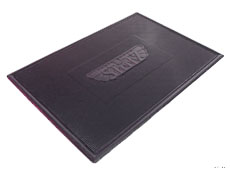 1915 Stutz Model 4F Accessory Floor Mat - 12"X17"-AC 41Accessory Floor Mat - made of high quality black rubber with molded original emblem. Also designed to be sewn into new carpets. 12"X17", Each
Why Choose Metro?
For over 100 years, Metro Moulded Parts has been the pinnacle of quality in classic car restoration parts. Our commitment to precision and authenticity in every component ensures a perfect fit and an OEM-level appearance.
- Expert Craftsmanship & Quality: Each part is a testament to our dedication to reliability and perfection, crafted from original designs and thoroughly tested.
- Advanced Technology: We use cutting-edge techniques to create flawless, long-lasting parts that surpass others in performance.
- SuperSoft Sponge – The Ultimate Door Seal: Not only are our door seals 30% softer than competitors', but they're also guaranteed to never leak. They effectively reduce wind and road noise, enhancing your classic car's comfort and driving experience.
- Proudly American: Our parts are a product of American craftsmanship, made in the USA with a spirit of excellence and heritage.
- Unrivaled Warranty: We back our products with a 30-year industry-leading warranty, a testament to our confidence in their quality.
Join us in preserving the legacy of classic cars with parts that are crafted for perfection, not just made.