

Image of 1915 Stutz Model H.c.s, Note: These illustrations use artistic license and may differ from actual historical models.
Performance Metrics
Fundamental Metrics
Emotional Appeal
MMP Rating
| Engine Specifications | |
|---|---|
| Engine: | T-head inline 4-cylinder engine |
| Displacement: | 390 cubic inches |
| Horsepower: | Estimated 50-60 HP |
| Torque: | Not available |
| Compression Ratio: | Not available |
| Ignition System: | Magneto ignition system |
| Cooling System: | Water-cooled |
| Performance Specifications | |
| 0-60 Time: | Not available |
| 1/4 Mile Time: | Not available |
| Top Speed: | 70 mph |
| Transmission and Drive | |
| Drive Type: | Rear-wheel drive |
| Transmission Type: | 3-speed manual transmission |
| Fuel and Efficiency | |
| Fuel System Type: | Carburetor |
| MPG: | Not available |
| Dimensions and Brakes | |
| Brakes: | Mechanical drum brakes |
| Wheelbase: | 130 inches |
| Weight: | Estimated 2,800 lbs |
Note: Specifications for classic cars are given to the best of our ability, considering the limited and variant data available.
1915 Stutz Model H.C.S.: An American Performance Car
The 1915 Stutz Model H.C.S. was built for drivers who wanted more than comfortable transportation: it offered the speed, mechanical muscle, and sporting character that made the Stutz name famous. Produced by the Stutz Motor Car Company of Indianapolis, Indiana, it belonged to an ambitious young American marque founded by engineer and entrepreneur Harry C. Stutz. Its initials are commonly understood to refer to the founder himself.
Stutz had already made headlines with its racing efforts. In the 1911 Indianapolis 500, a Stutz finished 11th, a result that helped establish the company’s reputation for building fast, durable cars. The phrase “The car that made good in a day” became part of its early identity. The Model H.C.S. arrived in a period when the automobile was evolving from a novelty into a serious form of transport, while still demanding considerable skill from its driver.
One useful distinction for today’s enthusiasts: the Model H.C.S. is a Stutz in its own right, but it should not automatically be called a Bearcat. The Bearcat was the company’s best-known sporting model, and the two share the brand’s performance-minded reputation, but they are not interchangeable names.
Stutz Styling and Coachbuilt Details
The H.C.S. carried the purposeful proportions typical of a high-end American car of its era. Its long hood, upright radiator, exposed lamps, sweeping fenders, and tall wheels made it look ready to cover ground. Depending on the body, the passenger compartment sat well behind the engine, giving the car a distinctly athletic profile. Wire wheels and period-appropriate lamps added to the impression of a machine built for serious road work, not just a slow trip around town.
Like many expensive cars of the 1910s, the Stutz was offered in multiple body configurations, and coachwork could vary by year and order. Touring cars and open roadsters were among the most recognizable forms, with enclosed bodies available for buyers who wanted greater protection from weather and road dust. The open touring style best suited the car’s sporting image and offered room for passengers and luggage, while the roadster emphasized a more direct, driver-focused experience.
Inside, expect function and craftsmanship rather than modern convenience. Depending on the body and specification, occupants might find leather upholstery, carefully finished wood trim, substantial metal fittings, and a large steering wheel. Materials were selected to look appropriate in a premium automobile, but they also had to withstand vibration, dust, and frequent use. There was no climate control or sound insulation as we know it today. The cabin was part of the outdoor experience.
Factory paint choices could vary, and surviving cars may have been repainted or restored in later years. Dark colors such as black, deep blue, maroon, and green suit the car’s period character, but a particular color should not be treated as original without documentation. Bright trim, polished lamps, and carefully finished coachwork could make even a dark-bodied Stutz striking.
Engineering for the Road
Period specifications commonly associate the Model H.C.S. with a large four-cylinder engine of roughly 390 cubic inches and a contemporary rating of about 60 horsepower. Those figures should be treated as representative rather than universal: exact equipment and specifications can differ by car, and early horsepower ratings do not translate neatly to modern measurement. The engine’s substantial displacement was intended to provide useful pulling power, especially on the rough, hilly roads of the day.
A manual transmission, rear-wheel drive, and mechanical controls made the driver an active part of the machine. Starting, shifting, braking, and steering all required more effort and attention than they do in a modern car. Electrical equipment and controls varied across early automobiles and individual specifications, so a particular car’s starting and lighting systems should be checked against its build records and present configuration.
For 1915, the H.C.S. represented an important shift in expectations. Buyers were beginning to demand cars that could travel quickly and reliably beyond smooth city streets. Stutz’s emphasis on engineering and competition helped make performance a selling point, not merely a racing curiosity. The company’s approach also reflected a broader American trend toward larger engines, sturdier chassis, and automobiles designed to cover distance.
Top Speed and Driving Feel
There is no dependable modern 0-to-60 mph test figure for a standard 1915 Model H.C.S. Period manufacturers did not measure acceleration the way today’s publications do, and surviving cars vary in condition, gearing, bodywork, and mechanical specification. As a broad estimate, a healthy example might reach approximately 60 to 70 mph, while acceleration to 60 mph could take around 20 to 30 seconds or more. These are informed estimates, not guaranteed factory figures, and a century-old car should never be pushed to them without a thorough mechanical inspection.
On a smooth road, the Stutz would feel lively for its age, with the big four-cylinder engine delivering a steady, low-frequency beat and useful torque. The driver would hear mechanical noises that a modern car filters out: engine pulses, gear whine, tire noise, and the rattle of fittings over rough pavement. On bumps, the tall tires and period suspension soften some impacts, but the car still responds more directly to ruts and uneven surfaces than a modern touring vehicle.
On winding roads, the H.C.S. rewards measured inputs. Steering is likely to feel heavy at low speed, and the car’s height, narrow tires, and period brakes call for a deliberate approach to corners. Braking distances are long by modern standards, especially compared with a contemporary vehicle equipped with four-wheel disc brakes and electronic safety systems. The satisfying part is the driver’s connection to the road: every shift and correction is felt, and keeping the car flowing smoothly is an accomplishment in itself.
Why the Model H.C.S. Matters
The Model H.C.S. reflects Stutz’s effort to turn competition credibility into a road-car identity. Racing helped the company demonstrate speed and durability, while production models brought those ideas to customers who wanted a capable car for touring and everyday travel. The H.C.S. was part of an era when performance was often proved through engineering, road use, and racing results rather than electronic systems or laboratory figures.
Stutz also helped shape the image of the American sporting automobile. Its cars combined large engines with purposeful styling and a reputation for toughness. That formula influenced how later generations thought about performance cars: a machine could be both a practical road car and a statement of speed. The H.C.S. is less famous than the Bearcat, but it belongs to the same broader story of Stutz’s early rise.
Its historical context matters, too. In 1915, roads were often unpaved, fuel and service facilities were less dependable, and a long-distance drive required preparation. A strong chassis and an engine with ample displacement were genuine advantages. A Stutz was not simply a fast car for a smooth boulevard; it was intended to handle the imperfect reality of early motoring.
Ownership, Maintenance, and Reliability
Today, a 1915 Stutz Model H.C.S. is best suited to touring events, concours displays, historic motoring gatherings, and carefully planned drives. It can be roadworthy, but it is not a sensible modern daily driver. Traffic, high cruising speeds, limited braking performance, and the scarcity of replacement parts all demand a conservative owner and a suitable route.
Maintenance is hands-on and specialized. Regular attention may include lubrication, ignition adjustment, carburetor tuning, cooling-system checks, tire inspection, and careful monitoring of the transmission and chassis. Many repairs are mechanically understandable to an experienced vintage-car enthusiast, but finding correct parts and preserving original components can be the harder challenge. A specialist familiar with brass- and nickel-era American cars is often more valuable than a general repair shop.
Reliability depends heavily on restoration quality and ongoing care. A properly sorted Stutz can participate in events and make enjoyable tours, but age alone makes every example a project to assess. Before purchase, a buyer should inspect the frame, engine, transmission, brakes, steering, and bodywork, and should verify that major components are correct for the car. A recent restoration is not automatically a good restoration; documentation and workmanship matter.
Stutz Facts and Common Misconceptions
The Stutz name is closely tied to the Indianapolis 500 and the company’s early racing program, often associated with its “White Squadron” racers. Those competition cars helped build the marque’s image, but they were not necessarily production Model H.C.S. automobiles. It is more accurate to say that the H.C.S. benefited from the brand’s racing reputation than to claim that this specific model set a particular racing record.
Another common mix-up is the Bearcat connection. The Bearcat became Stutz’s iconic open sports car, but not every early Stutz roadster or touring car is a Bearcat. Model names, body styles, and equipment could be confused in later descriptions, so original sales literature, factory records, and chassis details are especially useful when identifying a car.
One fair criticism of the H.C.S. is that its sporting character comes with period compromises. It can be noisy, physically demanding to operate, and slow to stop compared with modern traffic. Parts and specialist labor can also be expensive. These are not flaws unique to Stutz; they are part of the ownership reality for a prewar automobile.
Rarity and Collector Value
Reliable production totals for the 1915 Model H.C.S. are difficult to establish, and surviving records do not support a precise figure. As a cautious estimate, production may have been in the hundreds, potentially somewhere around 300 to 800 cars across relevant configurations. That is a reasoned guess, not a confirmed factory count. The number of surviving, well-documented examples is likely much smaller.
Values depend on body style, originality, restoration quality, provenance, and mechanical condition. As a broad current-market estimate, a project or incomplete example might fall around $75,000 to $150,000, while a sound, restored car could bring roughly $150,000 to $300,000. An exceptional example with rare coachwork, strong documentation, or an important history could exceed that range. These figures are estimates rather than appraisals, and auction results can vary sharply.
Over the long term, significant early American cars have benefited from growing interest in brass- and nickel-era motoring, but the market is selective. The best-preserved and most authentic cars tend to attract the strongest demand. Restoration costs can be high, so a beautifully restored example may not always sell for more than the full cost of its restoration. Buyers should focus on condition and provenance rather than assuming that rarity alone guarantees appreciation.
A Stutz Built for Its Moment
The 1915 Stutz Model H.C.S. brings together the qualities that made early Stutz automobiles memorable: a substantial engine, a sporting outlook, and a close connection to American racing culture. Its open body styles and purposeful design make it visually compelling, while its manual controls and mechanical character offer a vivid reminder of how involved driving once was.
It is not a modern performance car, and it should not be judged by modern standards of comfort or safety. Its appeal lies in what it represents: an era when speed, engineering, and adventure were being combined on the open road. A well-preserved H.C.S. is more than a rare antique. It is a rolling piece of the story that helped put American performance motoring on the map.
1915 Stutz Model H.c.s Catalog of Parts
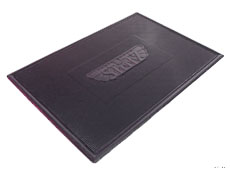 1915 Stutz Model H.C.S Accessory Floor Mat - 12"X17"-AC 41Accessory Floor Mat - made of high quality black rubber with molded original emblem. Also designed to be sewn into new carpets. 12"X17", Each
Why Choose Metro?
For over 100 years, Metro Moulded Parts has been the pinnacle of quality in classic car restoration parts. Our commitment to precision and authenticity in every component ensures a perfect fit and an OEM-level appearance.
- Expert Craftsmanship & Quality: Each part is a testament to our dedication to reliability and perfection, crafted from original designs and thoroughly tested.
- Advanced Technology: We use cutting-edge techniques to create flawless, long-lasting parts that surpass others in performance.
- SuperSoft Sponge – The Ultimate Door Seal: Not only are our door seals 30% softer than competitors', but they're also guaranteed to never leak. They effectively reduce wind and road noise, enhancing your classic car's comfort and driving experience.
- Proudly American: Our parts are a product of American craftsmanship, made in the USA with a spirit of excellence and heritage.
- Unrivaled Warranty: We back our products with a 30-year industry-leading warranty, a testament to our confidence in their quality.
Join us in preserving the legacy of classic cars with parts that are crafted for perfection, not just made.