

Image of 1916 Stutz Model C, Note: These illustrations use artistic license and may differ from actual historical models.
Performance Metrics
Fundamental Metrics
Emotional Appeal
MMP Rating
| Engine Specifications | |
|---|---|
| Engine: | T-head inline 4-cylinder engine |
| Displacement: | 360 cubic inches |
| Horsepower: | Estimated 60-80 HP |
| Torque: | Not available |
| Compression Ratio: | Not available |
| Ignition System: | Magneto ignition system |
| Cooling System: | Water-cooled |
| Performance Specifications | |
| 0-60 Time: | Not available |
| 1/4 Mile Time: | Not available |
| Top Speed: | 70 mph |
| Transmission and Drive | |
| Drive Type: | Rear-wheel drive |
| Transmission Type: | 3-speed manual transmission |
| Fuel and Efficiency | |
| Fuel System Type: | Carburetor |
| MPG: | Not available |
| Dimensions and Brakes | |
| Brakes: | Mechanical drum brakes |
| Wheelbase: | 130 inches |
| Weight: | Estimated 3,200 lbs |
Note: Specifications for classic cars are given to the best of our ability, considering the limited and variant data available.
1916 Stutz Model C: A Road Car with Racing in Its Blood
The 1916 Stutz Model C was built for drivers who wanted more than a comfortable way to get from town to town: it brought the spirit of American racing to the open road. Made by the Stutz Motor Car Company of Indianapolis, Indiana, the Model C belonged to a marque that had built its reputation on speed, toughness, and competition.
Stutz was founded by engineer and entrepreneur Harry C. Stutz in 1911. That same year, a Stutz race car competed in the inaugural Indianapolis 500, helping establish the young company’s sporting credentials. The famous Bearcat roadster became the best-known expression of that performance image. A 1916 Model C is often associated with the Bearcat, although the Model C designation refers to the car’s model or chassis family, and surviving cars may have different bodywork.
One detail that makes the Model C especially intriguing is how closely its identity was tied to Stutz’s racing story. The company’s early reputation was built quickly, and its slogan, “The car that made good in a day,” captured the excitement surrounding its competitive debut. The Model C carried that reputation into an era when a fast road car was still a demanding, hands-on machine.
Bearcat Looks and Open-Air Craftsmanship
The Model C’s styling is lean and purposeful. Its long hood, upright radiator, exposed lamps, slim fenders, and narrow running boards give it the unmistakable profile of a prewar American performance car. Rather than hiding its mechanical parts beneath heavy bodywork, the car puts its machinery on display. The result is less polished grand touring car and more road-going racer, with a tall steering wheel and an open cockpit that places the driver in the action.
The Bearcat roadster is the most iconic body style associated with Stutz. It typically has a compact two-seat layout and minimal weather protection, prioritizing low weight and sporting character over passenger capacity. Touring bodies and other coachwork were also available across the Stutz range, so not every Model C has the same configuration. Body availability could vary by year and order, and surviving cars may have been restored or rebodied over time.
Inside, luxury was understated. A period-correct car generally features leather upholstery, a simple instrument panel, and exposed metal fittings rather than the extensive trim found in a later luxury automobile. Materials and finish could differ with body style and customer order. The emphasis was on durable, serviceable construction, not a quiet, insulated cabin.
Factory color records for individual Model C cars are not consistently available, so a single “correct” color list is difficult to establish. Buyers could encounter different paint and trim combinations, and restoration colors may reflect later choices as much as original specification. Dark body colors and contrasting upholstery suit the car’s period appearance, but any specific color should be checked against the history of the individual car.
Four-Cylinder Power and Period Engineering
Commonly published specifications for the 1916 Model C describe a large, four-cylinder T-head engine of about 361 cubic inches, or roughly 5.9 liters, with a period rating of around 60 horsepower. Specifications can differ among references and individual cars, so the engine number and factory documentation are the best guides for a particular example.
That displacement is enormous by modern standards, but the engine’s character was not about high revs. It made its power in a steady, substantial way, suited to a heavy chassis and the rough roads of the period. The Model C used a manual transmission and rear-wheel drive, with mechanical controls that required attention and practice. Equipment such as lighting and instrumentation could vary with the car’s build date and later updates.
For its time, the Model C’s appeal lay in the combination of a large engine, sporting chassis, and racing-derived image. It was not a modern sports car with sophisticated electronics or independent suspension. Instead, its engineering reflected the priorities of early performance motoring: strong power, straightforward mechanical systems, and a chassis intended to take hard use.
How the Model C Changed the American Sports Car
The Stutz Model C did not invent the sports car, nor did it introduce a single technology that transformed the industry. Its significance was more practical and cultural. Stutz helped show American buyers that a home-built car could be fast, competitive, and rugged enough to earn attention on the racetrack as well as the highway.
That racing connection mattered. In the early 1910s, competition was a public test of engineering, and a strong showing could build confidence in a new manufacturer. Stutz used that association to distinguish itself from brands selling transportation first and performance second. The Bearcat became a particularly clear example of the idea: a relatively direct, open road car with the presence and attitude of a competition machine.
The Model C’s lasting influence is visible in the American performance-car tradition that followed. It helped popularize the notion that a sporting road car should look purposeful, feel mechanically direct, and carry a credible connection to racing. Later cars would become faster, safer, and more comfortable, but the Stutz recipe of power, character, and competition heritage remained compelling.
Speed, Steering, and the Driving Experience
Period performance figures are not as standardized as modern test results. A well-sorted Model C is often described as capable of roughly 70 to 80 mph, depending on its gearing, condition, body style, and setup. A dependable factory 0-to-60 mph figure is not generally documented. Any precise acceleration number should be treated as an estimate, not a verified period test result.
Driving one is a physical experience. The engine produces a deep, deliberate beat, and the driver works the clutch, gear lever, steering wheel, and brakes without the assistance modern motorists take for granted. The open cockpit lets the driver hear the mechanical rhythm directly, while wind, road noise, and engine vibration are part of the trip rather than things to be screened out.
On uneven roads, the car’s period suspension and tall tires offer a ride that can feel busy by modern standards. It is best driven with care over potholes and sharp edges. On a winding road, its narrow tires and relatively simple chassis reward smooth inputs rather than abrupt steering. The Model C can feel lively, but it is not a modern corner-carver. Its controls demand anticipation, especially when slowing or changing direction.
Top speed is only one part of the story. The Model C’s real charm is the sense of involvement: the driver manages the machinery, listens for changes in the engine, and reads the road well ahead. It makes even a short outing feel like a proper motoring event.
Owning a Stutz Model C Today
Today, a Model C is primarily a collector car, show car, and occasional touring or vintage-event participant. Its open body and striking profile make it a natural centerpiece at concours events and prewar motoring gatherings. Regular modern commuting is possible only in the broadest sense. Traffic speed, weather exposure, braking distances, and the value of the car all argue for selective use.
Maintenance is manageable for a skilled vintage-car mechanic, but the Model C is not a plug-and-play classic. Owners need to understand lubrication, ignition, fuel delivery, cooling, and the care of period mechanical controls. Parts may require specialist suppliers, club contacts, or careful reproduction. Many repairs are mechanically straightforward compared with modern automotive work, but age, scarcity, and the risk of damaging original components make expertise important.
Reliability depends heavily on restoration quality and regular use. A properly maintained car can be enjoyed on suitable roads, while a poorly sorted example may suffer from overheating, ignition trouble, worn steering components, or braking issues. Before buying, an inspection by someone familiar with early Stutz cars is essential. Engine identity, chassis condition, body originality, and the quality of previous restoration work can all have a major effect on value.
Stutz Trivia and Common Misconceptions
The Model C’s most famous association is the Bearcat, but the terms are not always interchangeable. “Model C” identifies a model or chassis designation, while “Bearcat” refers to a particularly celebrated sporting body style. A car advertised as a Model C Bearcat should be assessed on its individual documentation, configuration, and history rather than its name alone.
Stutz’s racing image began with its early Indianapolis competition, including the first Indianapolis 500 in 1911. The company’s success in attracting attention through racing helped turn the name into a symbol of American performance. It is safer, however, to assess claims of specific race results or records against contemporary documentation, since later accounts sometimes blur the history of different Stutz models and racing cars.
There is no dependable, widely accepted production total for the 1916 Model C alone. As a rough estimate, production was likely in the hundreds rather than the thousands, but that should be treated as an informed approximation, not a factory-confirmed figure. Surviving, correctly identified examples are much scarcer than ordinary mass-produced cars of the same period.
A common criticism is that the Model C is uncomfortable and demanding by modern standards. That is fair: it offers little weather protection, limited convenience, and none of the safety systems expected today. Its historical value is precisely that it reflects an earlier idea of performance, when driving meant managing the car directly rather than relying on electronic assistance.
Collector Value and Market Outlook
Values vary sharply with originality, condition, provenance, engine specification, and whether the car is an authentic Bearcat or another Model C configuration. As a broad current-market estimate, a restored, correctly documented Model C could fall around $250,000 to $600,000. Exceptional Bearcats with strong provenance or unusually original features may exceed that range, while incomplete projects or cars with uncertain histories can be worth considerably less.
The market for significant prewar performance cars is specialized. Well-documented, high-quality examples tend to attract serious collectors, but sales are infrequent and prices can move substantially from one transaction to another. Over the long term, the Model C’s historical importance and rarity support its appeal. In the short term, values are better described as condition- and provenance-driven than as reliably rising year after year.
Because production totals are uncertain and few cars appear on the open market, availability is limited. Buyers should prioritize authenticity and mechanical condition over a dramatic paint finish. A detailed history, credible restoration records, and verification by a marque specialist can make the difference between a compelling collector car and an expensive puzzle.
Why the 1916 Stutz Model C Still Matters
The 1916 Stutz Model C combines a large four-cylinder engine, purposeful prewar styling, and a direct connection to American racing. It was fast for its day, demanding to drive, and far less insulated from the road than a modern car. Its place in history comes not from a single technical breakthrough, but from helping make performance a defining part of the American automobile.
More than a century later, the Model C still delivers the sensation Stutz set out to create: a car that feels alive, mechanical, and ready to run. It is not simply a relic of early motoring. It is a reminder that the American sports car began with grit, noise, and a driver willing to take the wheel.
1916 Stutz Model C Catalog of Parts
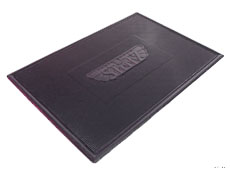 1916 Stutz Model C Accessory Floor Mat - 12"X17"-AC 41Accessory Floor Mat - made of high quality black rubber with molded original emblem. Also designed to be sewn into new carpets. 12"X17", Each
Why Choose Metro?
For over 100 years, Metro Moulded Parts has been the pinnacle of quality in classic car restoration parts. Our commitment to precision and authenticity in every component ensures a perfect fit and an OEM-level appearance.
- Expert Craftsmanship & Quality: Each part is a testament to our dedication to reliability and perfection, crafted from original designs and thoroughly tested.
- Advanced Technology: We use cutting-edge techniques to create flawless, long-lasting parts that surpass others in performance.
- SuperSoft Sponge – The Ultimate Door Seal: Not only are our door seals 30% softer than competitors', but they're also guaranteed to never leak. They effectively reduce wind and road noise, enhancing your classic car's comfort and driving experience.
- Proudly American: Our parts are a product of American craftsmanship, made in the USA with a spirit of excellence and heritage.
- Unrivaled Warranty: We back our products with a 30-year industry-leading warranty, a testament to our confidence in their quality.
Join us in preserving the legacy of classic cars with parts that are crafted for perfection, not just made.