

Image of 1921 Stutz Series K, Note: These illustrations use artistic license and may differ from actual historical models.
Performance Metrics
Fundamental Metrics
Emotional Appeal
MMP Rating
| Engine Specifications | |
|---|---|
| Engine: | T-head inline 4 |
| Displacement: | 360 cu in (5.9 L) |
| Horsepower: | Estimated 80 hp |
| Torque: | Not available |
| Compression Ratio: | Not available |
| Ignition System: | Battery and coil |
| Cooling System: | Water-cooled |
| Performance Specifications | |
| 0-60 Time: | Not available |
| 1/4 Mile Time: | Not available |
| Top Speed: | Estimated 70 mph |
| Transmission and Drive | |
| Drive Type: | Rear-wheel drive |
| Transmission Type: | 3-speed manual |
| Fuel and Efficiency | |
| Fuel System Type: | Carburetor |
| MPG: | Not available |
| Dimensions and Brakes | |
| Brakes: | 2-wheel mechanical drum |
| Wheelbase: | 130 in (3,302 mm) |
| Weight: | Estimated 3,200 lbs |
Note: Specifications for classic cars are given to the best of our ability, considering the limited and variant data available.
1921 Stutz Series K: Indianapolis Speed for the Open Road
The 1921 Stutz Series K brought Indianapolis racing ambition to the public highway, wrapped in the long hood, upright radiator, and commanding presence of an American luxury car. Built by the Stutz Motor Car Company of Indianapolis, Indiana, it belonged to a marque that had made its reputation on the track and wanted every owner to feel a little of that competition-bred spirit.
Stutz was founded by engineer and racer Harry C. Stutz. The company’s early racing success helped establish its identity, and its famous slogan, “The Car That Made Good in a Day,” grew out of the company’s 1911 Indianapolis racing debut. By 1921, Stutz had moved beyond its early four-cylinder cars to powerful straight-eight models. The Series K sat in this high-performance tradition during a period when American roads were rough, long-distance motoring was an adventure, and a fast car was also a symbol of status.
One reason the Series K still catches enthusiasts’ attention is that its sporting character was not just a marketing flourish. Its advanced-for-the-period overhead-cam engine and purposeful chassis reflected Stutz’s determination to build a road car with a genuine connection to racing.
Long Hood, Hand-Finished Cabin
The Series K has the unmistakable proportions of an early-1920s performance car: a tall, nearly vertical radiator, a long engine hood, separate sweeping fenders, exposed running boards, and large headlamps mounted prominently at the front. Depending on the body, a spare tire might be carried at the rear or mounted along the side. Wire wheels and substantial tires completed a look that was elegant but never delicate.
Inside, the experience depended on the body style and the coachwork ordered. Open cars typically had a simple instrument panel, a large steering wheel, durable upholstery, and folding or removable weather protection. More enclosed versions offered greater comfort and privacy. Leather upholstery, quality trim, and carefully finished wood or metal details were appropriate to a car in Stutz’s premium class, though exact materials and fittings varied with the original specification and any later restoration.
There was no single universal color palette for every Series K. Buyers could choose paint and trim combinations through the factory or coachbuilder, and surviving cars may have been repainted over their lives. Deep green, dark blue, maroon, black, and subdued gray tones suit the period and are popular choices today. The most visually iconic configuration is the open, low-slung roadster associated with the Bearcat name, although a specific car’s original identity should be checked against its records rather than assumed from its appearance.
Body styles across Stutz’s range included open roadsters and touring cars as well as more enclosed coachwork such as coupes and sedans. The sporty roadster is the version most closely tied to Stutz’s racing image. Touring bodies, with extra seating and room for passengers, were a practical choice for owners who wanted performance without giving up the usefulness of a larger open car.
Overhead-Cam Engineering and Racing Roots
The Series K’s defining mechanical feature was its large inline eight-cylinder engine. Common specifications for the Stutz eight of this era cite a displacement of about 361 cubic inches, or 5.9 liters, and output commonly listed at around 80 horsepower. It used overhead-camshaft valve gear, an advanced layout for a production car of the early 1920s. Exact specifications can vary by model description and surviving car, so historians and restorers rely on factory literature and the vehicle’s own documentation when identifying details.
That engine helped distinguish Stutz from many contemporaries that relied on less sophisticated side-valve layouts. The overhead camshaft was not a novelty for its own sake: it suited the company’s sporting ambitions and helped the engine breathe at speed. A multi-speed manual transmission gave the driver more control over the engine’s power, while the car’s substantial chassis and mechanical controls demanded attention and skill.
Stutz’s larger influence was as much about identity as engineering. It helped popularize the idea that an American luxury car could also be a serious performance machine. The Series K arrived as brands such as Mercer and Duesenberg were competing for the attention of wealthy drivers who valued speed as well as comfort. Its combination of racing pedigree, advanced engine design, and coachbuilt variety made it part of that distinctly American performance-luxury movement.
Performance: Fast for Its Time, Hands-On to Drive
Period performance figures are not always consistent, and factory claims should not be confused with modern instrumented testing. A healthy Series K is generally associated with a top speed in the neighborhood of 75 to 80 mph, depending on body style, gearing, mechanical condition, and road surface. There is no dependable factory 0-to-60-mph figure. As a broad modern estimate, acceleration to 60 mph might take roughly 20 to 25 seconds, but the result would vary considerably with the car’s weight, tune, and the driver’s familiarity with its transmission.
On a smooth road, the Stutz feels substantial and composed, with the long wheelbase helping it settle into a steady cruising rhythm. On broken pavement, the tall tires and period suspension absorb some roughness, but this is not modern isolation: the driver and passengers feel the road, and the chassis can pitch or jostle over sharp bumps. On a winding route, the car rewards measured inputs. Its size, steering effort, drum brakes, and narrow tires call for more planning than a modern sports car, especially when slowing for a turn.
The engine’s sound is part of the appeal. Rather than a quiet, high-revving modern note, the straight eight delivers a deep mechanical hum that builds into a purposeful growl as the car gathers speed. The driver works the controls directly, listens to the engine, and anticipates shifts and braking. It is an involved experience, closer to piloting a piece of machinery than simply pointing a car down the road.
Living With a Series K
A 1921 Stutz is best suited to touring, vintage motoring events, concours displays, and carefully planned drives. It can be driven on the road when properly maintained, but modern traffic, highway speeds, and everyday parking make it a poor choice for routine commuting. Its age alone makes regular use a matter of preparation, not just turning the key and leaving.
Maintenance is manageable for a capable enthusiast, but it is not as simple as servicing a common postwar classic. The engine, ignition, lubrication, cooling system, transmission, and brakes all require knowledgeable attention. Parts may be scarce or require specialist sourcing, and correct restoration can involve period-correct machining and careful research. Many basic jobs are approachable for an experienced home mechanic, but a first-time owner should budget for expert help and avoid assuming that a visually tidy car is mechanically ready for touring.
Reliability depends heavily on the individual car. A well-restored example with a documented service history can be rewarding, while an incomplete or poorly repaired car can become an expensive project. Before purchase, a specialist inspection should cover the engine’s condition, chassis and frame, steering, brakes, cooling, transmission, and the authenticity of major components.
Stutz Trivia and Common Misconceptions
The Bearcat name is the best-known part of the Stutz story, but it should not be applied casually to every open Stutz roadster. Model names, series designations, and body configurations can be blurred in later advertising and collector conversation. Establishing what a particular 1921 car was when new means checking its serial numbers, factory records where available, and period documentation.
Stutz’s racing reputation began early. The company’s 1911 Indianapolis effort helped create the “Car That Made Good in a Day” story, a memorable piece of automotive marketing rooted in the brand’s debut at the famous race. The Series K itself is better understood as a road-going expression of that racing identity than as a direct record-setting race car.
Common criticisms are practical rather than mysterious: the cars are demanding to drive by modern standards, enclosed-body versions can be cumbersome in tight spaces, and finding correct parts or qualified service may take time. The open cars also offer limited protection from weather. Those tradeoffs are part of the period experience, but they matter when considering the car as more than a showpiece.
Collector Value and Rarity
Values depend on body style, originality, provenance, restoration quality, and mechanical condition. As a broad current-market estimate, a presentable 1921 Stutz Series K might fall around $150,000 to $500,000. A highly desirable, correctly identified Bearcat-style example with exceptional history and a high-quality restoration could reach $500,000 to $1 million or more. Less complete projects or cars with uncertain identity can fall well below the strongest examples. These are guide ranges, not appraisals, and auction results can vary sharply.
Stutz production in this period was modest compared with mass-market manufacturers, but an exact Series K production total is difficult to state confidently without a definitive model-by-model factory count. A reasonable working estimate is that production across the relevant Series K range was in the low thousands, with far fewer cars surviving in original or well-documented condition. The most sought-after body styles are particularly scarce.
Over the long term, significant Stutz models have benefited from their racing heritage and the limited supply of authentic cars. Values do not rise in a straight line, however. Restoration costs, changing collector tastes, and the difference between a genuine example and a later recreation all affect prices. Well-documented cars in strong condition are generally the safest proposition, while a neglected car can require an investment that exceeds its eventual market value.
Why the 1921 Stutz Still Matters
The 1921 Stutz Series K combines a powerful overhead-cam straight eight, coachbuilt styling, and an unmistakable link to America’s early racing culture. Its long hood and open-roadster profile make it a standout, while its hands-on driving character reminds us how much skill motoring once demanded. It is not a practical modern daily driver, and it is not meant to be. The Series K is a rolling expression of an era when speed, craftsmanship, and mechanical ambition came together on the open road.
1921 Stutz Series K Catalog of Parts
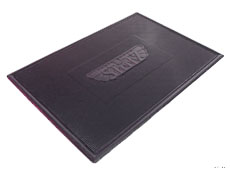 1921 Stutz Series K Accessory Floor Mat - 12"X17"-AC 41Accessory Floor Mat - made of high quality black rubber with molded original emblem. Also designed to be sewn into new carpets. 12"X17", Each
Why Choose Metro?
For over 100 years, Metro Moulded Parts has been the pinnacle of quality in classic car restoration parts. Our commitment to precision and authenticity in every component ensures a perfect fit and an OEM-level appearance.
- Expert Craftsmanship & Quality: Each part is a testament to our dedication to reliability and perfection, crafted from original designs and thoroughly tested.
- Advanced Technology: We use cutting-edge techniques to create flawless, long-lasting parts that surpass others in performance.
- SuperSoft Sponge – The Ultimate Door Seal: Not only are our door seals 30% softer than competitors', but they're also guaranteed to never leak. They effectively reduce wind and road noise, enhancing your classic car's comfort and driving experience.
- Proudly American: Our parts are a product of American craftsmanship, made in the USA with a spirit of excellence and heritage.
- Unrivaled Warranty: We back our products with a 30-year industry-leading warranty, a testament to our confidence in their quality.
Join us in preserving the legacy of classic cars with parts that are crafted for perfection, not just made.