

Image of 1924 Stutz Speedway Four, Note: These illustrations use artistic license and may differ from actual historical models.
Performance Metrics
Fundamental Metrics
Emotional Appeal
MMP Rating
| Engine Specifications | |
|---|---|
| Engine: | T-head inline 4-cylinder engine |
| Displacement: | 360 cubic inches |
| Horsepower: | Estimated 80-88 HP |
| Torque: | Not available |
| Compression Ratio: | Not available |
| Ignition System: | Battery and coil |
| Cooling System: | Water-cooled |
| Performance Specifications | |
| 0-60 Time: | Not available |
| 1/4 Mile Time: | Not available |
| Top Speed: | 70-75 mph |
| Transmission and Drive | |
| Drive Type: | Rear-wheel drive |
| Transmission Type: | 3-speed manual |
| Fuel and Efficiency | |
| Fuel System Type: | Carburetor |
| MPG: | Not available |
| Dimensions and Brakes | |
| Brakes: | 4-wheel mechanical drum brakes |
| Wheelbase: | 130 inches |
| Weight: | Estimated 3,200 lbs |
Note: Specifications for classic cars are given to the best of our ability, considering the limited and variant data available.
1924 Stutz Speedway Four: A Racing-Bred American Classic
The 1924 Stutz Speedway Four brings the spirit of the racetrack to the open road, pairing a large, sophisticated four-cylinder engine with the purposeful proportions of an early American speedster. It came from the Stutz Motor Car Company of Indianapolis, a manufacturer that built its reputation on performance and competition. One intriguing wrinkle for collectors is that “Speedway Four” is not always used consistently in period records: surviving cars and modern listings may use the name for specially bodied Stutz fours rather than one clearly documented, standardized production model.
Stutz was founded by Harry C. Stutz in 1911, the same year an early Stutz finished the inaugural Indianapolis 500. The result helped inspire the company’s memorable slogan, “The car that made good in a day.” By 1924, Stutz had become known for engineering-heavy, high-performance automobiles, and its four-cylinder cars carried a racing reputation into an era increasingly dominated by larger-volume manufacturers.
Purposeful Styling and Craftsmanship
A Speedway Four has the lean, purposeful look of a car built to move quickly. A long hood covers the substantial engine, while a narrow radiator, upright windscreen, exposed running boards and separate fenders give the body a distinctly prewar profile. Wire wheels, slim tires and a low, open cockpit reinforce the impression that the car belongs on a road course as much as on a country lane. Details vary from car to car, especially where a vehicle has been rebodied or restored.
In an open speedster or roadster configuration, the cabin is simple and driver-focused. Expect a large steering wheel, prominent instruments and straightforward controls rather than the plush appointments of a formal limousine. Stutz used quality materials for its period, including carefully finished wood and leather in better-appointed bodies, but competition-minded examples typically favored lightness and practicality over elaborate trim.
Period Stutz cars could be ordered in a range of body styles and finishes, though the exact choices depended on model, coachwork and customer order. Open touring bodies, roadsters, speedsters, coupes and sedans were among the kinds of forms associated with the marque. A low, open speedster or Bearcat-style body is the most evocative match for the Speedway name. There is no single reliable color list for every Speedway Four; dark, conservative colors were common across the era, while individual owners could commission more distinctive paint and trim.
Four Valves per Cylinder, Racing Intent
The car’s defining technical feature is its Stutz four-cylinder engine. The marque’s famous 16-valve four used four valves per cylinder, an advanced arrangement for a production-based American automobile of the period. Depending on the exact engine and specification, displacement is commonly cited at about 361 cubic inches, or 5.9 liters, with output often given near 80 horsepower. Figures can differ among references and individual cars, so engine number and specification matter when assessing a particular example.
That multi-valve design helped the engine breathe more effectively at speed than a basic side-valve unit. Stutz paired it with a robust chassis and mechanical systems intended for sustained performance. The result was not modern technology in the contemporary sense: there were no disc brakes, electronic controls or synchromesh conveniences. Instead, its sophistication lay in the engine’s breathing, the strength of its construction and the company’s experience in competition.
Why the Speedway Four Matters
The Speedway Four represents an important moment in the evolution of American performance cars. In the early 1920s, speed and engineering distinction were becoming powerful selling points, and Stutz used its racing heritage to set itself apart from mainstream makers. Its advanced four-cylinder engine showed that performance did not depend solely on adding more cylinders or simply increasing displacement.
Stutz also helped popularize the idea that a road car could carry genuine competition credentials. That connection between the showroom and the racetrack became a familiar marketing strategy in later decades. The Speedway Four’s lasting appeal lies less in a claim that it transformed the entire industry than in its clear expression of a period when small specialist manufacturers competed through engineering, craftsmanship and speed.
Speed, Steering and the Open-Road Experience
Period performance figures are not as standardized as modern test results. Depending on gearing, bodywork, mechanical condition and whether the car is a competition special or a road-going example, a Speedway-style Stutz may be capable of speeds around 90 to 100 mph. That is a strong figure for a car from 1924. A factory-verified 0-to-60-mph time is not generally available; a rough modern estimate might fall in the 12-to-18-second range, but it should be treated as an approximation, not a period test result.
Behind the wheel, the car asks for active participation. The driver works a manual gearbox, manages a heavy steering wheel at low speeds and plans braking well ahead. On a smooth road, the chassis feels purposeful and stable for its age. Broken pavement brings the limitations of narrow tires, early suspension and a relatively simple cabin into sharp focus. On winding roads, the car rewards anticipation and smooth inputs rather than abrupt steering or braking.
The engine is a major part of the experience. Rather than the muted hum of a modern car, expect a deep mechanical note that rises into a hard-edged roar as revs build. The cockpit is exposed to wind, road noise and engine heat, making even a short drive feel like an event. It is engaging, but it is not effortless transportation.
Living with a Stutz
Today, a Speedway Four is best suited to vintage rallies, concours events, historic demonstrations and carefully chosen drives. It can cover roads under its own power, but using a valuable, nearly century-old car as a daily driver would be impractical. Weather protection, lighting, braking performance and the availability of replacement parts all fall short of modern expectations.
Maintenance is manageable for an experienced vintage-car owner, but it is not a casual weekend project for everyone. The engine’s specialized valve gear and the car’s age call for knowledgeable servicing, careful lubrication and regular inspection. Many repairs are mechanical rather than electronic, which is an advantage, but specialist components may need to be rebuilt or fabricated. A pre-purchase inspection by someone familiar with Stutz cars is essential, especially to verify the engine, chassis and any claimed competition history.
Rare Details and Racing Lore
Stutz’s early Indianapolis success remains central to the company’s identity. The 1911 entry’s finish helped launch the “made good in a day” slogan, a line that captures how quickly racing could shape a young automaker’s reputation. The 1924 Speedway Four belongs to that broader competition-minded tradition, even though the name itself may describe a specific car’s body or use rather than a uniform factory series.
There is no dependable published production total for cars specifically identified as Speedway Fours. If the term refers to specially prepared or specially bodied Stutz fours, the number built was likely small, perhaps in the single digits to low dozens. That is an informed estimate, not a verified factory count. Surviving examples are rarer still, and documentation can be as important to a car’s identity as its visible equipment.
Common criticisms are familiar to anyone who has driven a prewar performance car: heavy controls, modest braking by modern standards, limited weather protection and the need for frequent maintenance. Those drawbacks are also part of its character. The car offers a direct, mechanical driving experience that a modern sports car cannot reproduce.
Collector Values and Availability
Values depend heavily on originality, condition, provenance, engine specification and whether the car is an authentic period competition machine or a later recreation. As a broad estimate, a sound, correctly represented Stutz four-cylinder speedster might fall around $200,000 to $500,000. A well-documented, highly original or historically significant example could exceed that range, while a car with substantial restoration needs or uncertain identity may sell for less. These are guide figures, not a formal valuation.
Availability is limited. Such cars seldom appear on the open market, and many circulate privately or through specialist auctions. The strongest examples have generally benefited from the continuing interest in Brass Era and prewar performance cars, although the market can be uneven. Long-term collector appeal is supported by rarity and engineering distinction, but condition and provenance will have a much greater effect on an individual car’s price than the Speedway name alone.
A Small Car with a Big-Track Reputation
The 1924 Stutz Speedway Four combines advanced four-cylinder engineering, open-air period style and the unmistakable heritage of an Indianapolis automaker. Its exact identity and specification should be checked car by car, but its appeal is clear: this is a machine from an era when a driver, a powerful engine and a demanding road made speed feel wonderfully tangible.
For collectors, it is more than a rare prewar automobile. It is a vivid reminder that American performance history began long before the modern muscle car, with determined manufacturers like Stutz building road cars that carried the racetrack in their DNA.
1924 Stutz Speedway Four Catalog of Parts
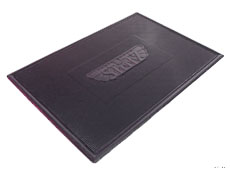 1924 Stutz Speedway Four Accessory Floor Mat - 12"X17"-AC 41Accessory Floor Mat - made of high quality black rubber with molded original emblem. Also designed to be sewn into new carpets. 12"X17", Each
Why Choose Metro?
For over 100 years, Metro Moulded Parts has been the pinnacle of quality in classic car restoration parts. Our commitment to precision and authenticity in every component ensures a perfect fit and an OEM-level appearance.
- Expert Craftsmanship & Quality: Each part is a testament to our dedication to reliability and perfection, crafted from original designs and thoroughly tested.
- Advanced Technology: We use cutting-edge techniques to create flawless, long-lasting parts that surpass others in performance.
- SuperSoft Sponge – The Ultimate Door Seal: Not only are our door seals 30% softer than competitors', but they're also guaranteed to never leak. They effectively reduce wind and road noise, enhancing your classic car's comfort and driving experience.
- Proudly American: Our parts are a product of American craftsmanship, made in the USA with a spirit of excellence and heritage.
- Unrivaled Warranty: We back our products with a 30-year industry-leading warranty, a testament to our confidence in their quality.
Join us in preserving the legacy of classic cars with parts that are crafted for perfection, not just made.