

Image of 1928 Stutz Series Bb, Note: These illustrations use artistic license and may differ from actual historical models.
Performance Metrics
Fundamental Metrics
Emotional Appeal
MMP Rating
| Engine Specifications | |
|---|---|
| Engine: | Inline 8 |
| Displacement: | 298 cu in (4.9 L) |
| Horsepower: | Estimated 95-115 hp |
| Torque: | Not available |
| Compression Ratio: | Not available |
| Ignition System: | Battery and coil |
| Cooling System: | Water-cooled |
| Performance Specifications | |
| 0-60 Time: | Not available |
| 1/4 Mile Time: | Not available |
| Top Speed: | 80 mph |
| Transmission and Drive | |
| Drive Type: | Rear-wheel drive |
| Transmission Type: | 3-speed manual |
| Fuel and Efficiency | |
| Fuel System Type: | Carburetor |
| MPG: | Not available |
| Dimensions and Brakes | |
| Brakes: | 4-wheel hydraulic drum brakes |
| Wheelbase: | 130 in (3,302 mm) |
| Weight: | Estimated 3,200-3,500 lbs |
Note: Specifications for classic cars are given to the best of our ability, considering the limited and variant data available.
1928 Stutz Series BB: An American Luxury Car with Racing Blood
The 1928 Stutz Series BB paired the presence of a coachbuilt luxury car with the mechanical ambition of a racing machine. Built by the Stutz Motor Car Company of Indianapolis, Indiana, it belonged to a marque that had made its name competing at the Indianapolis 500 and was determined to challenge Europe’s finest in both performance and prestige.
Stutz was founded by Harry C. Stutz in 1911. By the late 1920s, the company was known for powerful straight-eight engines, distinctive styling, and a sporting reputation. The Series BB was part of that effort, offering an eight-cylinder Stutz in a range of substantial, carefully finished bodies. One intriguing piece of context: in 1928, a Stutz racing car finished second at the 24 Hours of Le Mans, strengthening the company’s reputation for speed and endurance. That racer was not simply a production BB, but its achievement helped burnish the name shared by Stutz road cars.
Long Hood, Upright Grille, Coachbuilt Style
The BB had the unmistakable proportions of a grand American automobile: a long hood, upright radiator, sweeping front fenders, and a tall passenger compartment set well behind the engine. Large headlamps flanked the radiator, while running boards connected the front and rear fenders. Depending on the body, the result could look formal and imposing or open and athletic. Its stance was substantial, but the long bonnet and carefully shaped coachwork gave it a sense of motion even at rest.
Inside, the experience depended on the body and coachbuilder, but the standard of finish was aimed squarely at the luxury market. Owners could expect quality upholstery, polished wood trim, substantial door hardware, and carefully presented instruments. Open cars emphasized polished metal and exposed craftsmanship; enclosed sedans and limousines offered a quieter, more private cabin. These were hand-finished automobiles, so details could differ from one example to another.
There was no single universal paint palette for every BB. Buyers could choose from restrained dark shades such as black, deep blue, and maroon, as well as more individual combinations arranged to suit the body and owner. Two-tone treatments were especially effective on open and sporting bodies, where contrasting fenders or body panels highlighted the car’s shape.
Stutz offered the BB with a variety of body styles, including roadsters, phaetons, coupes, sedans, and more formal limousine-style configurations. Coachwork could come from outside specialists, and surviving cars may carry bodies by firms such as LeBaron, Rollston, or other prominent American coachbuilders. No single style was the universal favorite, but the open roadster and phaeton best expressed the BB’s sporting character, while the sedan and limousine suited buyers seeking greater privacy and comfort.
Engineering for the 1920s
At the center of the Series BB was Stutz’s “Vertical Eight,” a straight-eight engine of roughly 4.7 liters, or 289 cubic inches. The design used a single overhead camshaft and four valves per cylinder, an advanced arrangement for a production car of the period. Output is commonly cited at around 115 horsepower, although specifications can vary by year and source. The engine’s breathing and high-revving character reflected the company’s competition experience.
The BB also offered four-wheel braking and a four-speed manual transmission, features that helped make a large, powerful car more manageable. Exact equipment could vary with specification and body. The combination of an overhead-cam, multi-valve engine and a sporting chassis set the Stutz apart from many luxury rivals that relied on less sophisticated side-valve engines.
What Set the Stutz BB Apart
Many luxury cars of the late 1920s emphasized smoothness, size, and quiet prestige. Stutz wanted those qualities, but it also wanted its cars to be taken seriously as performance machines. The BB’s engine technology and the marque’s competition program gave it a more sporting identity than a typical chauffeur-driven limousine.
Stutz’s Le Mans result in 1928 was an important part of that story. The company’s second-place finish demonstrated that an American manufacturer could compete in a demanding European endurance race. It did not mean every road-going BB was a race car, but it gave the model a meaningful connection to an era when manufacturers used competition to prove the durability and speed of their engineering.
The BB did not create the overhead-camshaft or multi-valve engine, but it helped bring those ideas into the conversation around American luxury cars. Its lasting appeal comes from that blend of advanced mechanical design, bespoke coachwork, and genuine motorsport ambition.
Performance and the Open-Road Experience
Period road tests and modern estimates are not consistent enough to assign every Series BB the same performance figures. A well-tuned example is often estimated to reach roughly 85 to 90 mph, with 0 to 60 mph taking somewhere in the neighborhood of 20 seconds. Those are broad estimates, not guaranteed factory figures. A heavy limousine would be slower than a lighter roadster, and gearing, engine condition, tires, and altitude all make a difference.
Behind the wheel, the BB feels like a substantial machine rather than a nimble modern sports car. The straight-eight delivers a smooth, mechanical rush as it gathers speed, accompanied by a deep exhaust note and the subdued sounds of a large engine working through its gears. The four-speed gearbox asks for deliberate shifts, and the driver must plan ahead when slowing or overtaking.
On rough roads, the long wheelbase and mass help the car settle over broad undulations, though its vintage suspension cannot disguise sharp potholes or broken pavement. On winding roads, the driver needs to respect the car’s size, steering effort, and period tires. A roadster may feel more responsive than a closed body, but neither version should be driven like a modern sports sedan. The best experience is a measured one: smooth inputs, unhurried cornering, and room to let the engine work.
Living with a Stutz Series BB
Today, a BB is best suited to touring, concours events, historic motoring gatherings, and occasional pleasure drives. Its size, age, and value make it an impractical daily driver for most owners. A carefully maintained example can be used on suitable roads, but regular traffic, modern highway speeds, and limited parts availability call for thoughtful planning.
Maintenance is manageable for an experienced vintage-car mechanic, but the BB is not an ideal first restoration project. The engine’s overhead-cam and multi-valve design is more complex than that of a basic period car, and specialist knowledge can be important when setting up or repairing the valve gear. As with any prewar automobile, the condition of the cooling system, ignition, fuel delivery, brakes, and tires matters as much as the model’s reputation.
Parts support is far smaller than it is for mass-produced classics. Owners often rely on marque clubs, specialist suppliers, and craftspeople who understand early Stutz engineering. Routine service is straightforward in principle, but a major repair or restoration can be costly, particularly if original components or coachwork need attention.
Stutz BB Facts and Racing Connections
The Series BB’s most famous historical connection is the Stutz marque’s second-place finish at Le Mans in 1928. The endurance racer was a competition car, not an ordinary showroom BB, so it is more accurate to call the result a triumph for Stutz engineering and reputation than a direct production-car victory.
Another Stutz story from the same year involves the Black Hawk Special, a purpose-built record-attempt car driven by Frank Lockhart. It was a specialized racing machine, not a BB road car, and Lockhart’s attempt ended in a fatal crash at Daytona Beach. The episode illustrates the era’s intense pursuit of speed, but should not be confused with the Series BB’s production history.
Stutz production figures for individual series are not always neatly documented, and surviving cars may have been rebodied or substantially altered. A reasonable working estimate is that roughly 1,000 to 1,500 Stutz automobiles of various types were built during 1928, but that is not a confirmed count of BBs alone. The number of surviving, correctly identified Series BBs is considerably smaller.
A common criticism of the BB is that its sophistication can make ownership expensive. The engine is impressive, but it demands knowledgeable care, and the car’s weight limits its agility. Some buyers may also find its scale and formal styling less approachable than those of smaller sporting cars. For enthusiasts, however, those traits are part of its appeal: the BB is a serious, imposing machine from a manufacturer willing to take mechanical risks.
Collector Value and Availability
Series BB values depend heavily on body style, provenance, originality, restoration quality, and the identity of the coachbuilder. As a broad current-market estimate, a project or incomplete example might fall around $75,000 to $150,000. A sound, well-restored car could be worth approximately $150,000 to $350,000, while a rare or especially desirable coachbuilt example with strong provenance may exceed $400,000 and, in exceptional cases, reach considerably higher.
These are guide ranges rather than guaranteed sale prices. A car with an undocumented history, non-original body, or major mechanical needs may sell below them; exceptional craftsmanship and significant provenance can push a car well above them. Series BBs appear infrequently on the open market, and buyers may need patience to find the right body style and condition.
Over the long term, important prewar American luxury cars have generally benefited from their rarity and historical character. However, the market is selective. Top-quality, well-documented examples are more likely to hold attention than cars requiring extensive restoration. Like other high-end classics, the BB’s value can move with collector tastes, auction results, and the cost of specialist work.
Why the 1928 Stutz Series BB Still Matters
The 1928 Stutz Series BB brought together an advanced straight-eight engine, four-wheel braking, custom coachwork, and a performance-minded identity. Its racing connections gave the marque credibility, while its variety of body styles allowed owners to choose between sporting flair and formal luxury.
It was never a common car, and it was never an inexpensive one to maintain. But the BB remains a vivid example of American automotive ambition in the late 1920s: a handcrafted luxury automobile engineered not just to arrive in style, but to make its presence felt on the open road.
1928 Stutz Series Bb Catalog of Parts
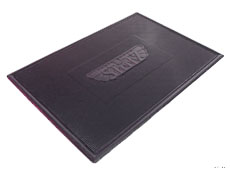 1928 Stutz Series BB Accessory Floor Mat - 12"X17"-AC 41Accessory Floor Mat - made of high quality black rubber with molded original emblem. Also designed to be sewn into new carpets. 12"X17", Each
Why Choose Metro?
For over 100 years, Metro Moulded Parts has been the pinnacle of quality in classic car restoration parts. Our commitment to precision and authenticity in every component ensures a perfect fit and an OEM-level appearance.
- Expert Craftsmanship & Quality: Each part is a testament to our dedication to reliability and perfection, crafted from original designs and thoroughly tested.
- Advanced Technology: We use cutting-edge techniques to create flawless, long-lasting parts that surpass others in performance.
- SuperSoft Sponge – The Ultimate Door Seal: Not only are our door seals 30% softer than competitors', but they're also guaranteed to never leak. They effectively reduce wind and road noise, enhancing your classic car's comfort and driving experience.
- Proudly American: Our parts are a product of American craftsmanship, made in the USA with a spirit of excellence and heritage.
- Unrivaled Warranty: We back our products with a 30-year industry-leading warranty, a testament to our confidence in their quality.
Join us in preserving the legacy of classic cars with parts that are crafted for perfection, not just made.