

Image of 1929 Stutz Model M, Note: These illustrations use artistic license and may differ from actual historical models.
Performance Metrics
Fundamental Metrics
Emotional Appeal
MMP Rating
| Engine Specifications | |
|---|---|
| Engine: | Straight-8 |
| Displacement: | 322 cu in (5.3 L) |
| Horsepower: | Estimated 113-156 hp |
| Torque: | Not available |
| Compression Ratio: | Not available |
| Ignition System: | Battery and coil |
| Cooling System: | Water-cooled |
| Performance Specifications | |
| 0-60 Time: | Not available |
| 1/4 Mile Time: | Not available |
| Top Speed: | 80-100 mph |
| Transmission and Drive | |
| Drive Type: | Rear-wheel drive |
| Transmission Type: | 3-speed manual |
| Fuel and Efficiency | |
| Fuel System Type: | Carburetor |
| MPG: | Not available |
| Dimensions and Brakes | |
| Brakes: | 4-wheel drum brakes |
| Wheelbase: | 145 in (3,683 mm) |
| Weight: | Estimated 4,500 lbs |
Note: Specifications for classic cars are given to the best of our ability, considering the limited and variant data available.
1929 Stutz Model M: Indianapolis Luxury with a Sporting Edge
The 1929 Stutz Model M was built for drivers who wanted imposing American luxury without giving up the thrill of a powerful, competition-bred engine. Produced by the Stutz Motor Car Company of Indianapolis, Indiana, it belonged to a marque whose reputation had been shaped by both hand-finished road cars and hard-fought racing.
Stutz was founded by engineer and racer Harry C. Stutz in 1911. The company made its name with fast, carefully engineered cars, including the celebrated Bearcat. By the late 1920s, Stutz was competing in the same prestige market as Cadillac, Packard, and Duesenberg. The Model M brought that sporting reputation to a substantial luxury chassis, with bodywork ranging from practical enclosed sedans to more open, elegant designs.
One useful distinction for enthusiasts: the 1929 Model M should not be confused with the later Stutz DV-32. The DV-32, introduced in the early 1930s, had a more elaborate 32-valve engine. The Model M came earlier, carrying Stutz’s own advanced straight-eight engineering into the final, exuberant years before the Great Depression reshaped the American luxury-car market.
Long Lines and Hand-Finished Luxury
The Model M’s proportions did much of the talking. Its long hood, upright radiator, sweeping fenders, and substantial wheelbase gave it the formal presence expected of a high-end American automobile. A narrow, tall radiator and carefully shaped hood announced the engine beneath, while running boards and large, separate fenders emphasized its prewar construction. Depending on the body, the result could look stately and chauffeur-ready or leaner and more sporting.
Model M buyers could choose from a range of body configurations and coachwork. Enclosed sedans and limousine-style bodies suited owners who valued comfort and privacy. Coupes and close-coupled sedans offered a more personal profile, while open touring cars, phaetons, and roadster-style bodies put passengers closer to the weather and the mechanical soundtrack. Exact offerings varied by year and coachwork. The formal sedan is among the most recognizable expressions of the Model M, while open bodies best display its long hood and sporting character.
Inside, the Model M was furnished to match its price and status. Depending on body style and specification, owners could expect leather upholstery, quality cloth or broadcloth, polished wood trim, substantial door panels, and carefully finished metal fittings. Rear-seat accommodations in sedans and limousines could be especially generous. These were not mass-market interiors: materials, colors, and details could vary, and some cars received custom touches from their coachbuilders or first owners.
Paint choices were similarly shaped by the individual car and its coachwork rather than by one universal Model M palette. Black and other deep, formal colors suited chauffeur-driven sedans, while dark blue, green, and maroon were period-appropriate choices for a more distinctive finish. Two-tone schemes could emphasize a body’s beltline or contrasting panels. On surviving cars, original paint documentation is the best guide, since later restorations may reflect modern taste rather than the car’s original specification.
Engineering Ahead of Its Era
At the heart of the Model M was Stutz’s straight-eight, generally listed at about 322 cubic inches, or 5.3 liters, and approximately 115 horsepower. Period specifications and surviving-car details can differ, so figures should be checked against a particular chassis. The engine’s overhead-camshaft design was a notable feature for a luxury car of the period. It reflected the company’s interest in breathing and performance, rather than relying on displacement and weight alone.
The Model M also offered the sort of substantial chassis and transmission expected in a premium car. Many specifications cite a four-speed manual gearbox, giving the driver more ratios to work with than the three-speed gearboxes common on many contemporary cars. Starting and electrical equipment were modern conveniences for the era, but driving still required hands-on attention. Gear changes, steering, braking, and engine management all demanded more involvement than they do in a modern car.
Stutz’s racing background mattered even when a Model M was wearing a closed sedan body. The company had spent years developing fast, durable machinery and building a public identity around competition. The Model M was not itself the famous Bearcat, nor should its road performance be confused with a purpose-built racing car. Rather, it translated some of the marque’s sporting character into a more refined, versatile automobile.
On the Road: Power with Presence
Reliable, model-specific acceleration tests are scarce, and body weight, gearing, engine condition, and tire choice make a large difference today. As a period luxury car with roughly 115 horsepower, a Model M was capable of brisk travel for its class. A reasonable modern estimate for 0 to 60 mph is roughly 20 to 25 seconds, but that should be treated as an informed estimate, not a verified factory figure. Depending on gearing and body style, a sound example may have been capable of approaching 90 to 100 mph under favorable conditions. Those are estimates too, not a recommendation to test a nearly century-old car at its limits.
On a smooth road, the Model M feels substantial and composed rather than light or agile. Its long wheelbase helps it settle into a steady rhythm, but the size of the car is always present. Over broken pavement, the chassis and tall tires absorb some of the road’s roughness, though modern expectations of ride isolation would be misplaced. On winding roads, the driver must plan ahead. The steering is unassisted, and the car’s mass and period suspension reward smooth inputs rather than abrupt changes of direction.
The straight-eight’s character is part of the appeal. At a relaxed pace, its exhaust note is a deep, even mechanical murmur. Under acceleration, the sound becomes more purposeful, accompanied by the unmistakable presence of a large engine working through a manual gearbox. Operating one is a physical experience: the driver listens, feels the controls, selects gears deliberately, and leaves plenty of room for braking. It is less about effortless speed than about being connected to the machinery.
Why the Model M Matters
The Model M arrived at a moment when American luxury cars were becoming longer, more powerful, and more finely appointed. What distinguished Stutz was its attempt to combine that comfort with a serious engineering identity. Its overhead-cam straight-eight and the company’s racing heritage gave it a sporting edge that helped separate it from more conservative luxury offerings.
That combination also reflects a broader shift in automotive design. Luxury was no longer defined only by a quiet cabin and imposing size. Buyers increasingly expected strong performance, confident road manners, and technical sophistication alongside fine materials. The Model M is a strong example of that ambition, even though the economics of the Depression would soon make such costly automobiles harder to sell.
Stutz’s wider racing story adds context, but it is important not to assign every marque achievement to the Model M. Stutz cars competed in major events, and the company’s racing identity helped sell its road cars. The Model M itself is best understood as a luxury production car shaped by that performance-minded culture, not as a record-setting race model.
Living with a 1929 Stutz
Today, a Model M is most often used for club events, concours displays, touring rallies, and carefully planned recreational drives. It is rarely a sensible daily driver. The car is large, parts are not as readily available as they are for more common American classics, and modern traffic can make its size and braking distances a challenge.
Maintenance is manageable for an experienced vintage-car mechanic, but it is not always simple for an average owner accustomed to modern vehicles. Regular lubrication, ignition and fuel-system attention, careful cooling-system upkeep, and correct adjustment of the drivetrain are essential. A specialist familiar with early Stutz cars is a major advantage, especially when sourcing parts or diagnosing an engine or transmission problem. Repairs can be straightforward in principle, but original components and coachwork details may require skilled restoration rather than a quick replacement.
Reliability depends heavily on the quality of the restoration and how consistently the car has been maintained. A well-sorted Model M can tour reliably at sensible speeds, but age, infrequent use, and decades of modifications can create trouble. Before purchase, a buyer should have the engine, chassis, brakes, cooling system, and body structure inspected by someone who understands prewar automobiles.
Stutz Model M Facts and Myths
The Model M’s most intriguing trivia is its position between two famous Stutz chapters: the company’s earlier Bearcat years and the later, technically ambitious DV-32 era. It is a reminder that Stutz was not a one-model marque. The company built a range of serious luxury cars, and the Model M brought its engineering reputation to buyers seeking a more formal automobile.
There is no widely accepted, Model M-specific production total that can be treated as definitive. Factory records and model breakdowns are not consistently reported in the sources commonly used by collectors. A reasonable working estimate is several hundred to around 1,000 Model M chassis, but that is an informed estimate rather than a confirmed production figure. Surviving examples are scarce, and complete, correctly restored cars are scarcer still.
A common criticism of the Model M, especially when compared with smaller sporting cars, is its size and weight. It is not a nimble modern sports car, and it demands space, planning, and driver attention. Another challenge is that a prestigious badge does not guarantee easy ownership: restoration quality and parts availability matter more than the name on the radiator. The same qualities that make the car impressive also make it a demanding machine to preserve.
Collector Values and Availability
Values vary considerably with body style, originality, restoration quality, provenance, and mechanical condition. As a broad current-market estimate, a project or heavily compromised example might fall around $50,000 to $100,000. A sound, usable car could be roughly $100,000 to $250,000, while an exceptional restoration, rare body, or well-documented example may reach $250,000 to $400,000 or more. These ranges are estimates, not a formal appraisal, and auction results can vary sharply from one car to another.
Model M values are best described as condition-sensitive rather than guaranteed to rise. Top-quality prewar Stutz automobiles have a durable appeal among collectors, but the market is selective, and expensive restoration work does not always return its full cost at resale. Over the long term, the rarest and best-documented examples are likely to remain the most desirable. Buyers should compare recent sales of similar bodies and examine the car itself rather than relying on a broad price guide.
A Lasting Indianapolis Original
The 1929 Stutz Model M combined an imposing American luxury-car presence with the engineering confidence of a company shaped by racing. Its straight-eight, formal coachwork, and carefully finished cabin made it a serious premium automobile, while its size, manual controls, and mechanical character keep it firmly rooted in another era.
For collectors, the Model M is more than a rare prewar sedan or touring car. It captures Stutz at a turning point, just before economic upheaval changed the future of American luxury motoring. A Model M does not simply arrive; it announces itself, then asks its driver to take part in the journey.
1929 Stutz Model M Catalog of Parts
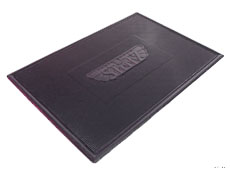 1929 Stutz Model M Accessory Floor Mat - 12"X17"-AC 41Accessory Floor Mat - made of high quality black rubber with molded original emblem. Also designed to be sewn into new carpets. 12"X17", Each
Why Choose Metro?
For over 100 years, Metro Moulded Parts has been the pinnacle of quality in classic car restoration parts. Our commitment to precision and authenticity in every component ensures a perfect fit and an OEM-level appearance.
- Expert Craftsmanship & Quality: Each part is a testament to our dedication to reliability and perfection, crafted from original designs and thoroughly tested.
- Advanced Technology: We use cutting-edge techniques to create flawless, long-lasting parts that surpass others in performance.
- SuperSoft Sponge – The Ultimate Door Seal: Not only are our door seals 30% softer than competitors', but they're also guaranteed to never leak. They effectively reduce wind and road noise, enhancing your classic car's comfort and driving experience.
- Proudly American: Our parts are a product of American craftsmanship, made in the USA with a spirit of excellence and heritage.
- Unrivaled Warranty: We back our products with a 30-year industry-leading warranty, a testament to our confidence in their quality.
Join us in preserving the legacy of classic cars with parts that are crafted for perfection, not just made.